



The Industrial Safety and Health Analytics Dashboard provide a comprehensive analytical framework for monitoring workplace safety, risk exposure, incident severity, and corrective action effectiveness across industrial environments. Developed using the Dashtera no-code business intelligence platform, the dashboard leverages MongoDB aggregation pipelines to enable dynamic, real-time exploration of safety data through advanced visualizations.
In modern industrial operations, ensuring worker safety and regulatory compliance is increasingly complex. Organizations must monitor multiple dimensions such as incident frequency, risk levels, injury severity, compliance scores, and corrective actions. Failure to effectively manage these factors can result in operational disruptions, financial losses, and reputational damage.
This dashboard addresses these challenges by transforming raw incident data into structured insights for risk assessment, safety performance evaluation, and decision-making. The solution is organized into three analytical dashboard pages:
Together, these dashboards provide a holistic, data-driven view of industrial safety performance.
The dataset used in this project is obtained from Kaggle:
https://www.kaggle.com/datasets/ihmstefanini/industrial-safety-and-health-analytics-database
This dataset represents industrial incident records across multiple regions, departments, and operational contexts. It captures detailed information about workplace incidents, including injury types, risk levels, costs, and corrective actions.
The primary objective of the dataset is to support:
The dataset consists of structured incident-level records capturing various aspects of industrial safety, including operational, financial, and compliance-related variables. Each record represents a workplace incident with associated contextual information such as location, department, and time of occurrence.
Key attributes include incident identifiers, dates, and geographical information (country and region), enabling temporal and spatial analysis. Risk-related variables such as risk score and risk band classify incidents into categories ranging from low to critical, while severity score and injury nature describe the impact of incidents on workers. Injury classifications include first aid, medical treatment, lost time injuries, and fatalities, providing insight into the seriousness of incidents.
The dataset also incorporates financial indicators such as total cost, medical cost, and property damage cost, allowing evaluation of the economic impact of safety failures. Operational impact is further represented by lost days, which quantify productivity loss due to incidents.
Compliance and audit-related variables, including compliance score and safety audit score, provide measures of adherence to safety standards. Additionally, corrective action data, such as action status, duration, and effectiveness score, enable analysis of response mechanisms following incidents.
Binary indicators, including recordable incidents, lost time injuries, and near misses, support KPI calculations and trend analysis. Using MongoDB aggregation pipelines, these variables were transformed into derived metrics such as monthly trends, categorical groupings, and pivot-based datasets to support advanced dashboard visualizations.
Dashtera is a powerful no-code business intelligence platform that supports MongoDB-based analytics and advanced visualizations.
Key Features
Advantages
The dashboard is divided into three analytical pages, each focusing on a specific dimension of industrial safety performance.
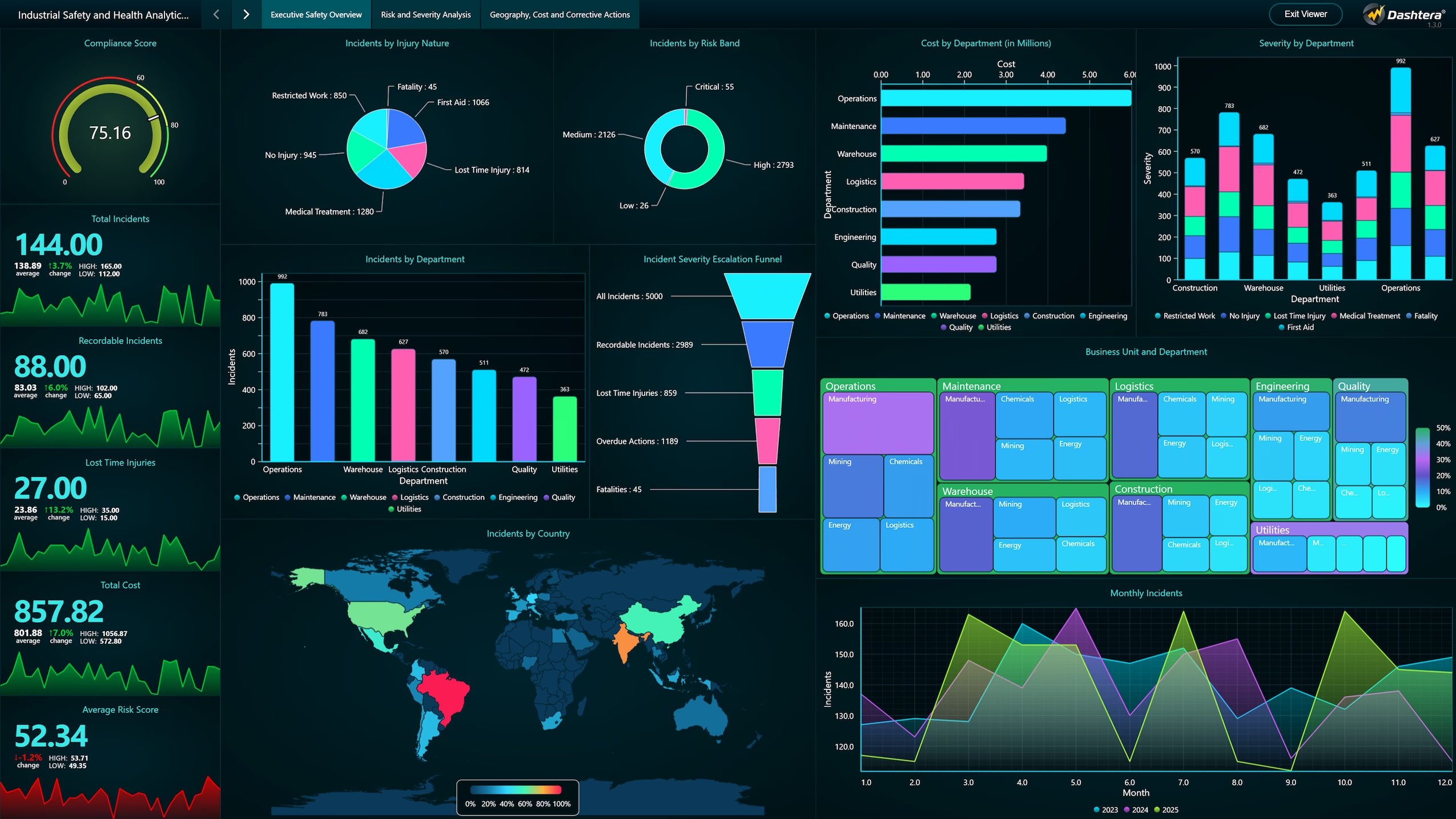
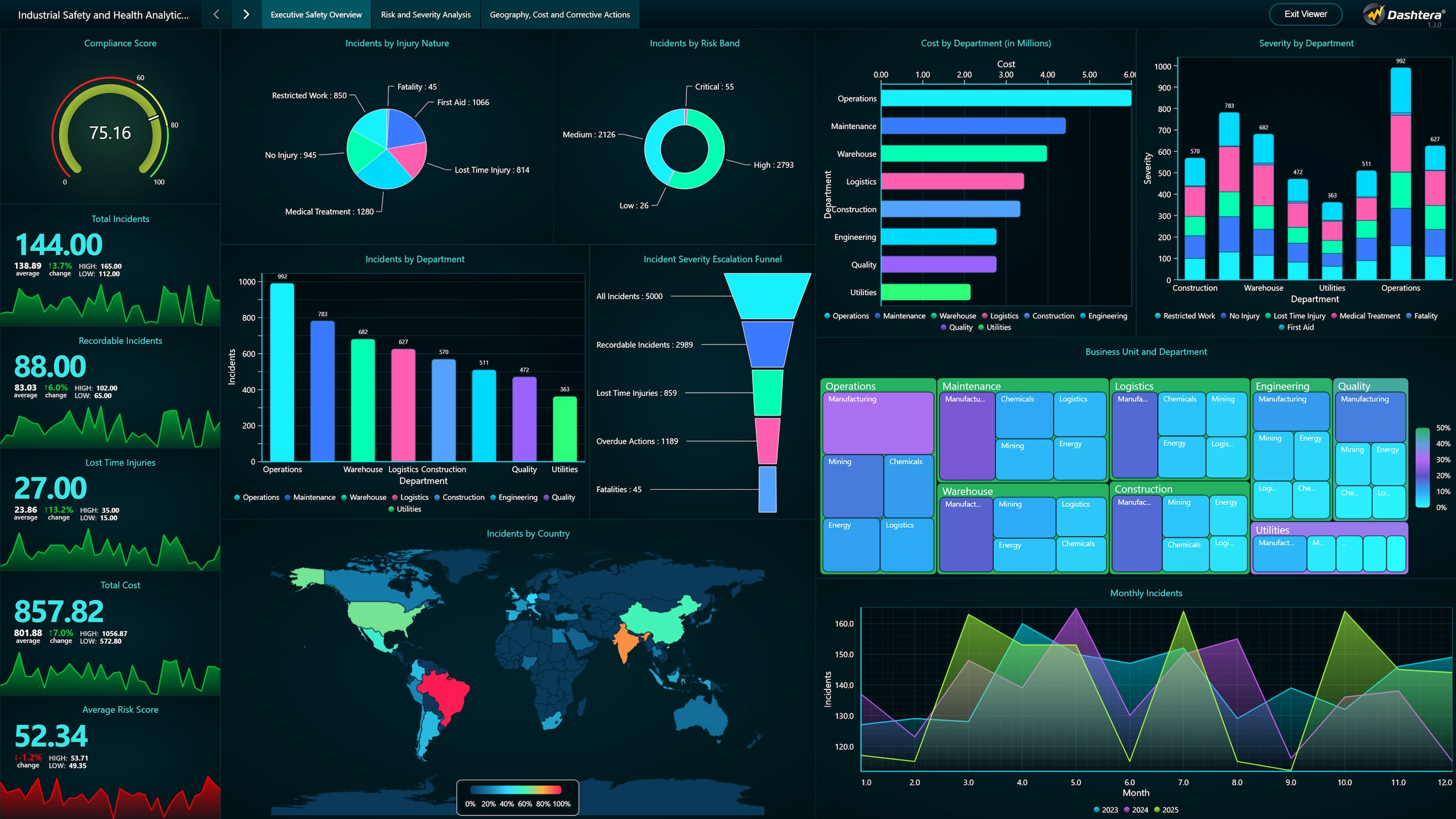
The Executive Safety Overview page presents a consolidated view of key safety performance indicators. The compliance score is observed at 75.16, indicating a moderate level of adherence to safety standards. The total number of incidents is 144, exceeding the average baseline of approximately 138.89, reflecting a 3.7% increase in incident occurrence.
Recordable incidents account for 88 cases, compared to an average of 83.03, representing a 6.0% increase, while lost time injuries total 27, slightly above the average of 23.86, indicating a 13.2% rise. These figures suggest that not only the frequency but also the severity of incidents has increased.
The total cost associated with incidents is approximately 857.82 (scaled), significantly higher than the average of 801.88, indicating a 7.0% increase in financial impact. The average risk score is 52.34, slightly lower than the average of 53.71, reflecting a marginal 1.2% decrease, suggesting that although risk levels have slightly improved, incident frequency and cost remain high.
Analysis of injury types shows that medical treatment incidents (1280 cases) and lost time injuries (814 cases) constitute a substantial proportion of incidents, while fatalities remain relatively low at 45 cases. Risk band distribution reveals that high-risk incidents dominate (2793 cases), followed by medium-risk (2126 cases), with minimal representation in low and critical categories.
Departmental analysis indicates that Operations (992 incidents) and Maintenance (783 incidents) are the most affected departments, highlighting potential operational inefficiencies. The incident escalation funnel shows a reduction from 5000 total incidents to 859 lost time injuries and 45 fatalities, illustrating the progression of incident severity.
Overall, this page highlights increased incident frequency, rising financial impact, and concentration of safety issues in specific departments.
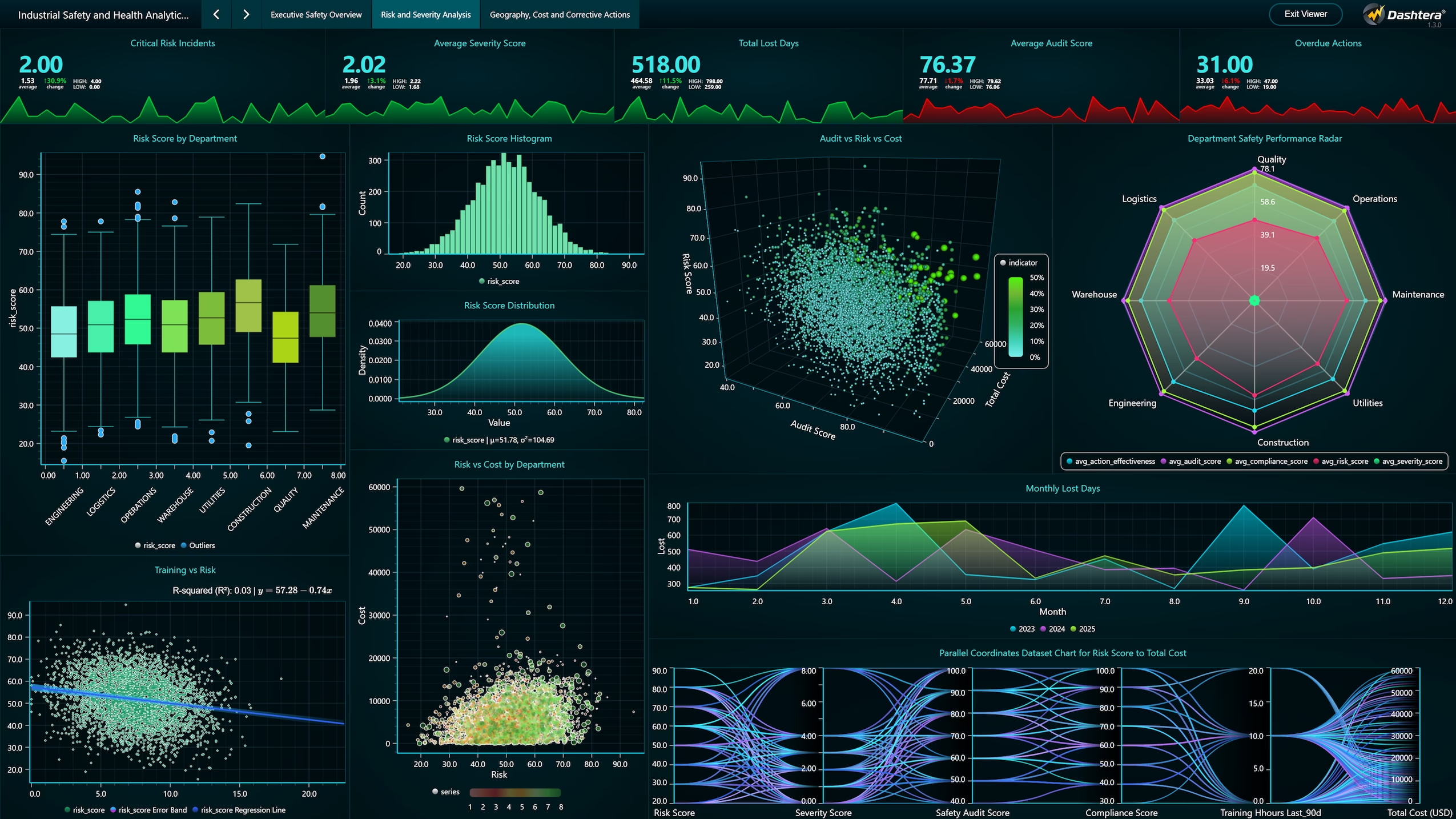
The Risk and Severity Analysis page focuses on understanding patterns in risk exposure and incident severity. Critical risk incidents are relatively low at 2 cases, indicating limited occurrence of extreme events. The average severity score is 2.02, slightly above the baseline of 1.96, representing a 3.1% increase, suggesting marginally higher injury impact.
Total lost days amount to 518, significantly higher than the average of 464.58, reflecting an 11.5% increase, which indicates a growing impact on workforce productivity. The average audit score is 76.37, slightly below the average of 77.71, showing a 1.7% decrease, suggesting a decline in safety audit performance.
Overdue corrective actions total 31, compared to an average of 33.03, indicating a 6.1% reduction, which suggests slight improvement in action management, although delays remain significant.
Risk distribution analysis shows that risk scores are concentrated around the mid-range, with values typically between 40 and 70, indicating moderate variability. Department-level box plot analysis reveals that departments such as Construction and Operations exhibit higher median risk scores, along with greater dispersion, suggesting inconsistent safety practices.
The three-dimensional analysis of audit score, risk score, and cost demonstrates that higher risk levels are generally associated with increased financial impact. The radar chart comparing departmental performance shows that departments differ significantly in terms of audit score, compliance, risk, and severity, with some departments consistently underperforming.
Regression analysis between training and risk score indicates a negative relationship, suggesting that increased training contributes to reduced risk exposure. Parallel coordinates analysis further reveals that higher compliance and audit scores are associated with lower risk and cost values.
Overall, this page highlights increasing severity impact, moderate improvements in corrective action management, and strong relationships between training, audit performance, and risk reduction.
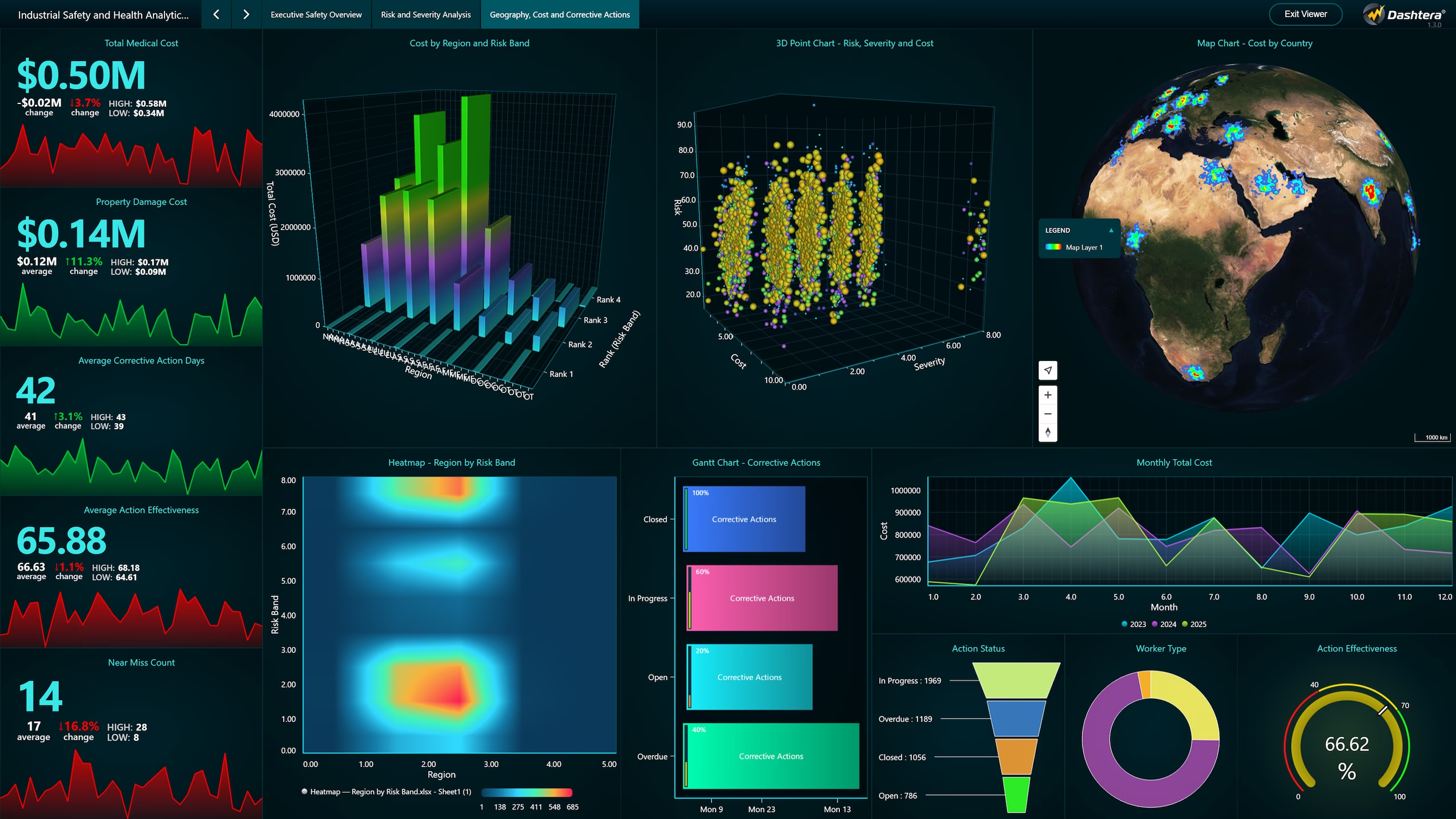
The third dashboard page evaluates geographical patterns, financial impact, and corrective action effectiveness. Total medical cost is approximately $0.50 million, while KPI panel averages indicate $0.14 million, suggesting variability in cost distribution across incidents.
The number of near-miss incidents is 42, slightly above the average of 41, indicating a 3.1% increase, which may reflect improved reporting rather than increased risk. The average corrective action effectiveness score is 65.88, slightly below the average of 66.63, representing a 1.1% decrease, indicating marginal decline in action effectiveness.
The cost distribution by region and risk band shows that high-risk incidents contribute disproportionately to total cost, particularly in regions with dense industrial activity. The three-dimensional scatter analysis confirms the relationship between cost, risk, and severity, with higher severity incidents incurring significantly higher costs.
Heatmap analysis of region versus risk band reveals that certain regions exhibit higher concentrations of medium and high-risk incidents, indicating geographical disparities in safety performance.
Corrective action analysis shows that 1969 actions are in progress, 1189 are overdue, 1056 are closed, and 786 remain open, indicating that a significant proportion of actions are not completed in a timely manner. The Gantt chart further highlights delays in action completion, suggesting inefficiencies in response processes.
Monthly cost trends show fluctuations, with peak values exceeding $1 million, indicating periods of increased incident severity or frequency.
Overall, this page highlights significant financial impact, regional disparities in risk, and delays in corrective action implementation.
The dashboard is powered by MongoDB, utilizing aggregation pipelines for all analytical operations. Key transformations include grouping, projection, categorical mapping, time-series aggregation, and pivot restructuring. This approach ensures efficient processing of large datasets, real-time updates, and scalability for industrial applications.
The analysis reveals that industrial safety performance is influenced by multiple interconnected factors, including risk exposure, compliance levels, training, and corrective action effectiveness. Although compliance scores indicate moderate adherence to safety standards, the increasing number of incidents and associated costs suggest underlying inefficiencies.
The relationship between training and risk reduction highlights the importance of preventive measures. Similarly, the correlation between risk and cost emphasizes the financial implications of inadequate safety management.
Delays in corrective actions remain a critical concern, as overdue actions contribute to prolonged exposure to hazards. Additionally, departmental and regional disparities indicate the need for targeted interventions.
This study demonstrates the applicability of integrating Dashtera with MongoDB for industrial safety analytics. The developed dashboard provides a comprehensive analytical framework for evaluating incident patterns, risk distribution, and operational performance.
The findings indicate that while moderate compliance levels are maintained, incident frequency and financial impact remain significant challenges. The analysis highlights the importance of proactive risk management, continuous training, and timely corrective actions in improving safety outcomes.
Furthermore, the use of MongoDB aggregation pipelines enables efficient handling of complex industrial datasets, supporting scalable and real-time analytics. The dashboard facilitates data-driven decision-making, allowing organizations to identify inefficiencies, allocate resources effectively, and enhance overall safety performance.
In conclusion, the proposed dashboard serves as a practical tool for industrial safety management, contributing to improved operational efficiency, reduced risk exposure, and enhanced workplace safety.