



The Wearables History Data Visualization Analysis Dashboard presents a comprehensive analytical exploration of performance, usability, and technological characteristics of modern wearable health devices using the Wearable Health Device Performance Dataset (June 2025). Developed on the Dashtera no-code analytics platform, the dashboard enables interactive exploration of device specifications, performance indicators, and market distribution patterns across multiple wearable categories.
The dataset comprises 2,375 performance records covering 330 unique wearable products from 10 major global brands, including Apple, Garmin, Samsung, Fitbit, Huawei, Amazfit, Polar, Withings, WHOOP, and Oura. The dashboard is structured across multiple analytical pages, each designed to reveal insights into market composition, device capabilities, performance trade-offs, and category-wise differentiation.
Through pie charts, bar charts, Pareto analyses, spider charts, histograms, distribution plots, and comparative summaries, the dashboard supports data-driven understanding of how wearable devices differ across categories such as smartwatches, sports watches, fitness trackers, fitness bands, and smart rings.
The dataset used in this project is sourced from a publicly available Kaggle repository
The data is synthetically generated to reflect realistic 2025 market conditions and includes daily performance evaluations conducted between June 1, 2025, and June 26, 2025. While the dataset is not derived from clinical trials or physical device testing, it is structured to closely mimic real-world wearable specifications, user satisfaction trends, and performance behaviors.
This dataset is well-suited for exploratory analysis, benchmarking, and visualization-driven insights into the digital health and consumer electronics market.
Key Characteristics
Core Variables
The dataset spans 17 attributes, including:
To enhance interpretability, several categorical transformations were applied, including:
These transformations enable effective grouping, filtering, and comparative visualization within Dashtera.
Dashtera is a cloud-based, no-code analytics platform designed to support the visual exploration and analysis of complex datasets. The platform enables users to construct interactive dashboards without programming, allowing for efficient examination of multidimensional data through line plots, bar charts, maps, regressions, and statistical summaries. Its interface allows data to be filtered, compared, and inspected from multiple perspectives, which makes it suitable for exploratory data analysis tasks.
Key Features
Wearables Devices Overview
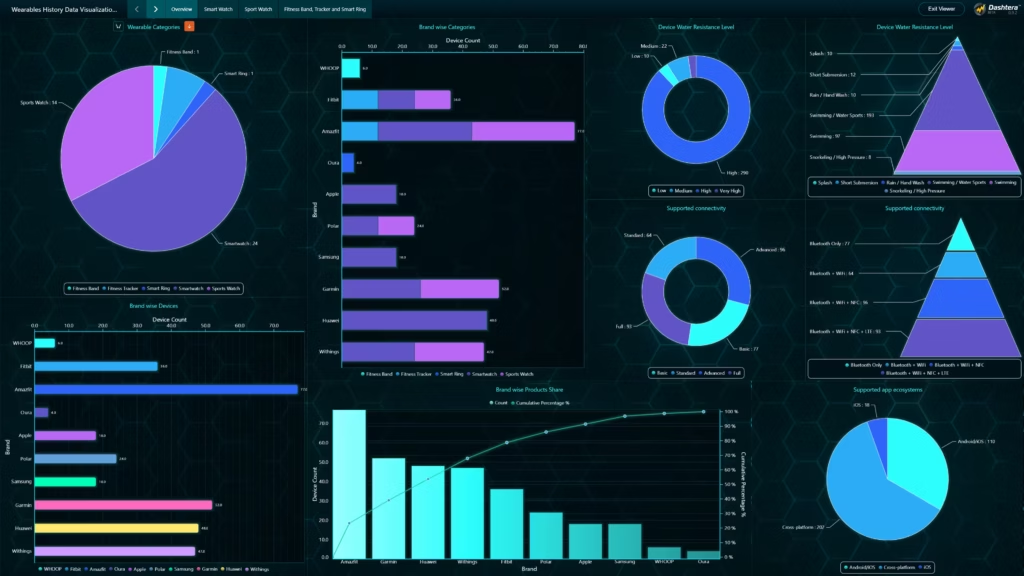
The first dashboard provides a market-level overview of wearable device distribution, brand dominance, durability characteristics, connectivity support, and ecosystem compatibility.
Device Category Distribution
The category-wise pie chart reveals a strong dominance of Smartwatches (24) and Sports Watches (14) among the 43 analyzed category groupings. Fitness trackers and smart rings represent smaller but strategically important segments, highlighting the diversification of wearable form factors.
Brand-wise Device Presence
Horizontal bar charts show that Amazfit (77 devices) leads the market in product count, followed by Garmin (52), Huawei (48), and Withings (47). Apple and Samsung, despite their strong brand equity, maintain comparatively smaller but premium-focused product portfolios.
Pareto Analysis of Brand Share
The Pareto chart illustrates that the top four brands-Amazfit, Garmin, Huawei, and Withings-account for nearly 54% of all devices, confirming a classic long-tail distribution in the wearable market.
Water Resistance Analysis
Pie and pyramid charts categorize devices into meaningful resistance levels:
This highlights that most wearables are optimized for daily and recreational water exposure rather than extreme conditions.
Connectivity Support
Connectivity analysis reveals a balanced distribution:
This indicates a strong industry shift toward standalone wearable capabilities.
App Ecosystem Support
Cross-platform compatibility dominates the market (202 devices), while Android/iOS dual support accounts for 110 devices. Apple’s ecosystem remains tightly integrated, with iOS-only support limited to 18 devices.
Smartwatch Analysis
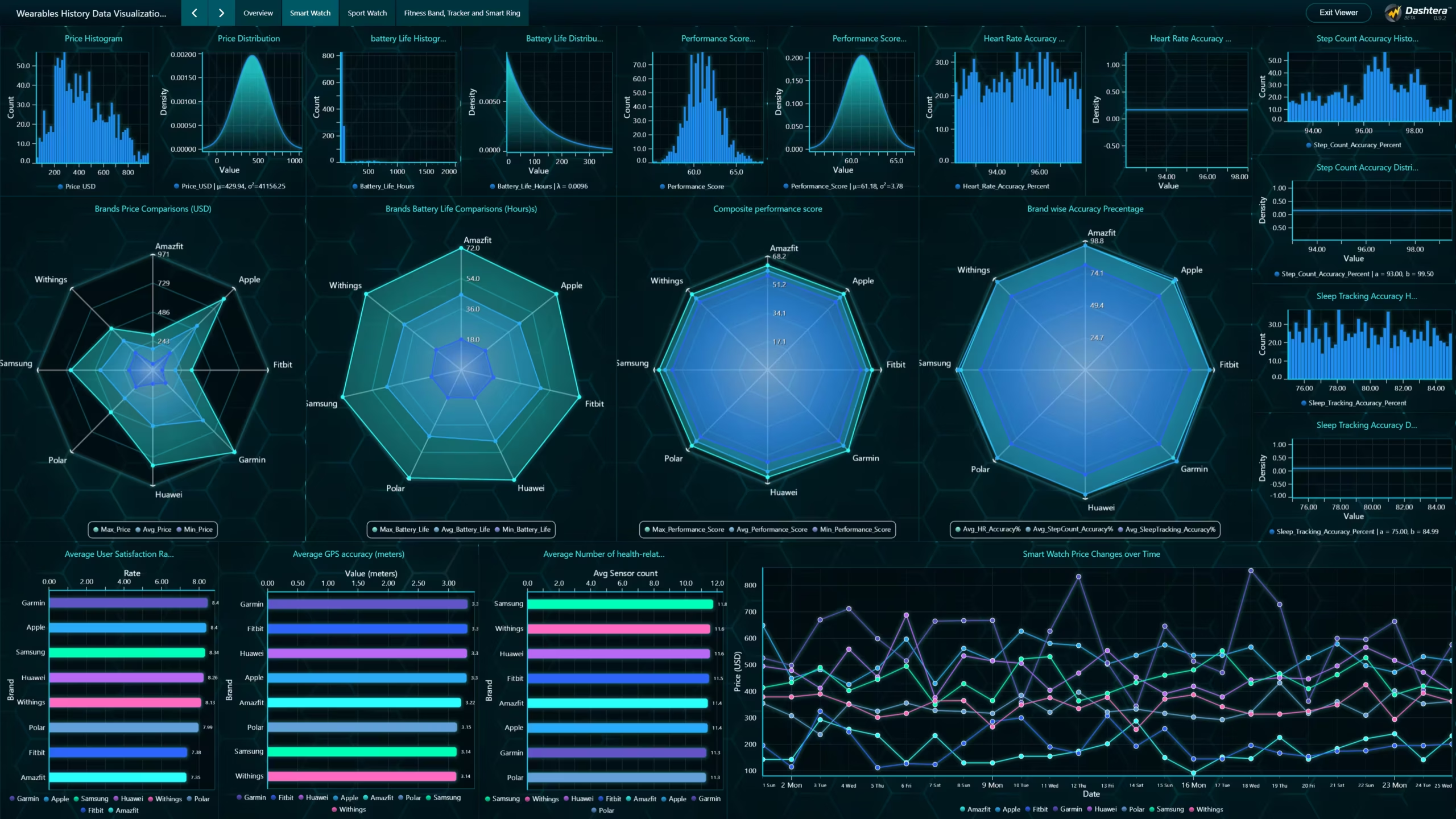
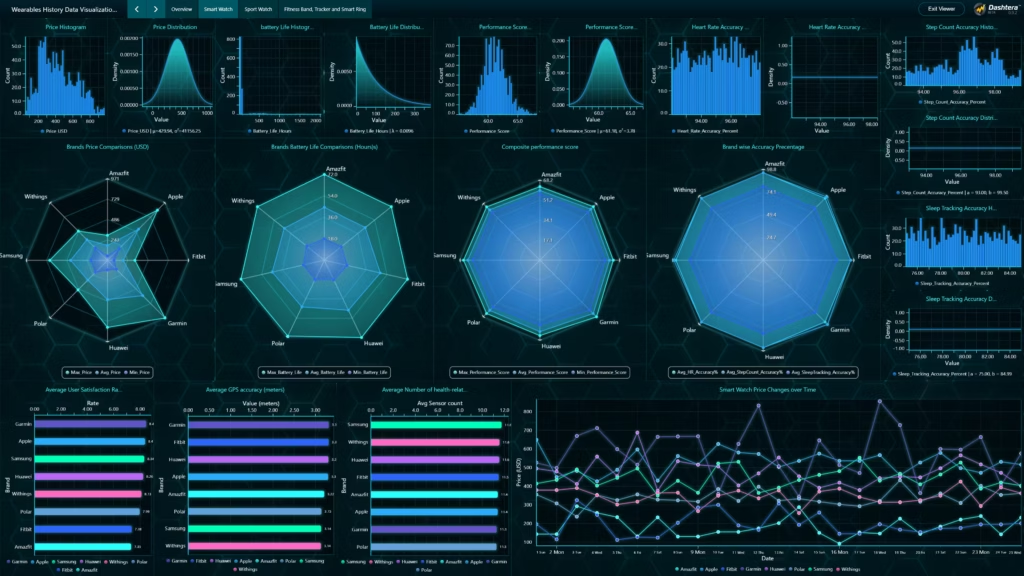
The second dashboard focuses exclusively on Smartwatches, offering deep comparative insights across brands.
Price and Battery Life Patterns
Spider charts and distribution plots reveal significant price stratification. Garmin leads in both maximum and average battery life, with endurance-focused models far exceeding competitors. Apple and Samsung emphasize premium pricing with moderate battery life, reflecting design and ecosystem priorities.
Performance and Accuracy Metrics
Across brands, heart rate accuracy remains consistently high (~95%), while step count accuracy peaks with Garmin and Samsung devices. Sleep tracking accuracy remains stable across brands, indicating maturity in sleep analytics.
User Satisfaction and GPS Accuracy
Horizontal bar charts show Garmin, Apple, and Samsung achieving the highest average user satisfaction scores. GPS accuracy remains tightly clustered around 3 meters, reflecting industry-standard GNSS performance.
Sensor Density and Performance Score
Garmin leads in sensor count and composite performance score, reinforcing its positioning as a high-performance smartwatch brand. Apple and Samsung follow closely, balancing performance with user experience.
Sports Watch Analysis
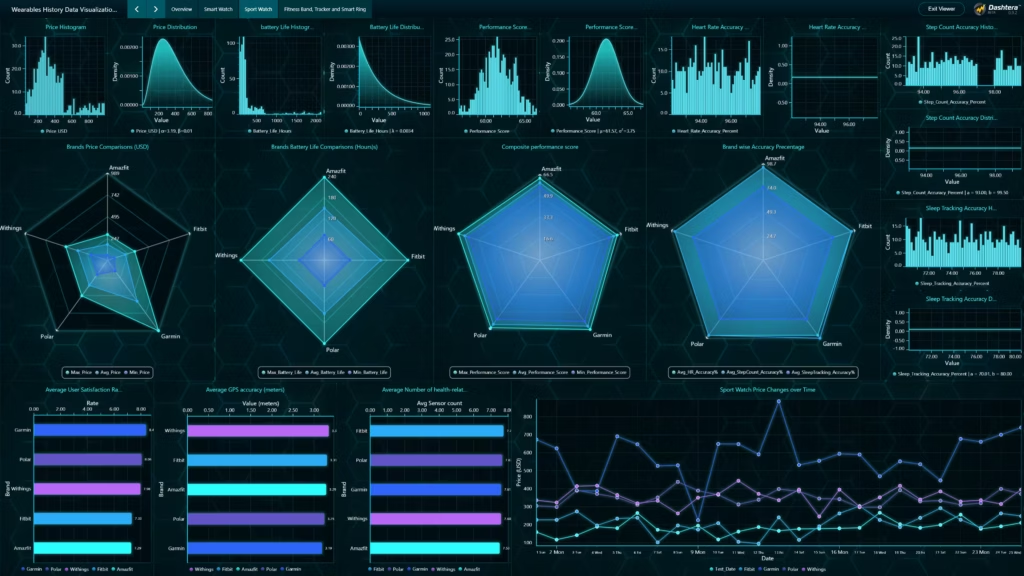
The third dashboard evaluates Sports Watches, emphasizing endurance, outdoor accuracy, and performance consistency.
Battery Life Leadership
Garmin again dominates with exceptionally high maximum and average battery life, making it ideal for endurance athletes. Polar and Withings occupy the mid-range, offering balanced performance profiles.
Accuracy and Satisfaction Trends
Accuracy metrics remain tightly grouped, while user satisfaction scores consistently favor Garmin and Polar. Performance scores highlight Garmin’s leadership, with Polar and Withings forming a competitive second tier.
Fitness Band, Fitness Tracker, and Smart Ring Analysis
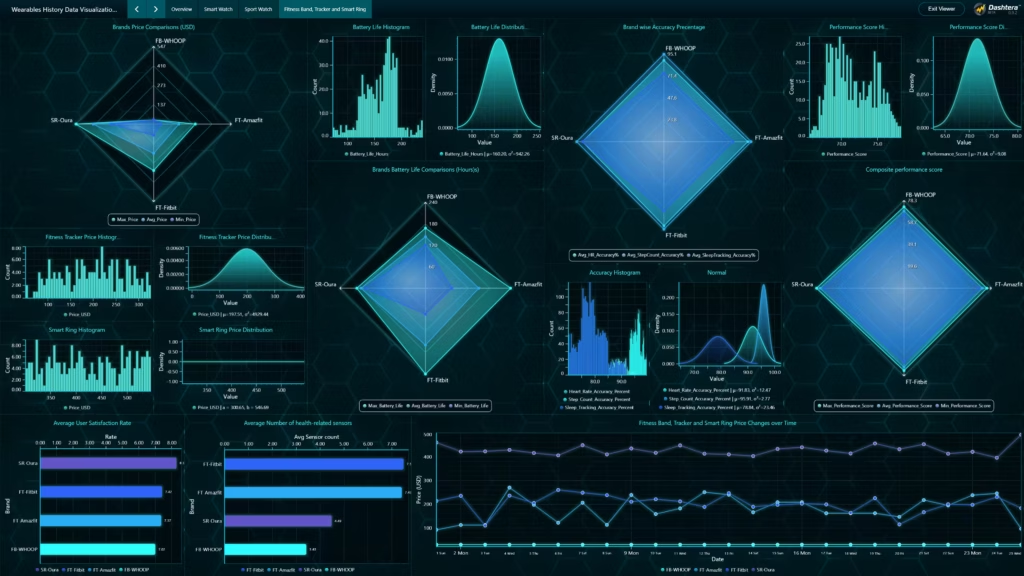
The last dashboard analyzes compact wearables focused on convenience and long battery life.
Fitness Bands
WHOOP fitness bands exhibit strong battery endurance and competitive performance scores despite limited connectivity and sensor counts, reflecting a focused recovery and wellness use case.
Fitness Trackers
Amazfit and Fitbit trackers show balanced pricing and battery performance, with Fitbit slightly leading in accuracy and performance consistency.
Smart Rings
Oura smart rings command premium pricing but excel in sleep tracking accuracy and user satisfaction. Their long battery life and minimalist design position them as lifestyle-focused health monitoring devices.
The dashboard reveals several meaningful patterns. First, the wearable market shows clear segmentation between performance-oriented brands (Garmin, Polar) and ecosystem-centric brands (Apple, Samsung). Second, battery life remains a key differentiator, especially in sports watches and fitness bands.
Water resistance and connectivity capabilities indicate that most devices are designed for everyday durability rather than extreme environments. Additionally, cross-platform app support has become a market standard, enhancing accessibility and user adoption.
Finally, composite performance scores align strongly with sensor density, battery endurance, and accuracy consistency, reinforcing the value of holistic device design.
The Wearables History Data Visualization Analysis Dashboard demonstrates how Dashtera enables rich, multi-dimensional exploration of wearable device performance without requiring programming expertise.
The dashboard supports:
This project provides a scalable analytical framework for researchers, product managers, and analysts seeking to understand trends in wearable health technology and supports informed decision-making in product development and consumer research.
Share: