



The Manufacturing Production Performance Analysis Dashboard provides a comprehensive analytical framework for evaluating production efficiency, operational bottlenecks, and resource utilization in hybrid manufacturing systems. Developed using the Dashtera no-code business intelligence platform, the dashboard enables interactive exploration of production data through advanced visualizations and SQL-driven analytics.
In modern manufacturing environments, especially Hybrid Manufacturing Systems (HMS) that combine additive and subtractive processes, managing production efficiency is complex. Factors such as machine availability, scheduling delays, energy consumption, and processing time significantly impact overall performance. Inefficiencies in any of these areas can lead to production delays, increased costs, and reduced throughput.
This dashboard addresses these challenges by offering structured insights into production operations, job execution, machine performance, and efficiency optimization. The solution is organized into three analytical dashboard pages:
Together, these dashboards provide a holistic and data-driven view of manufacturing operations.
The dataset used in this project is obtained from Kaggle:
https://www.kaggle.com/datasets/ziya07/manufacturing-production-data
This dataset represents production planning and execution data from Hybrid Manufacturing Systems (HMS). It includes job-level records capturing machine operations, scheduling data, processing time, and efficiency classifications.
The primary objective of the dataset is to support:
The dataset consists of structured production records with 1000 jobs and multiple variables covering operations, scheduling, and performance metrics.
Production and Scheduling Variables
Operational Metrics
Performance Indicators
Derived metrics such as completion rate, delay rate, average delays, and utilization metrics were calculated using PostgreSQL queries to support dashboard visualizations.
Dashtera is a powerful no-code business intelligence platform designed for interactive dashboard development using SQL
Key Features
Advantages
The developed dashboard is structured into three analytical pages, each addressing a distinct dimension of manufacturing performance: production throughput, operational delays, and efficiency optimization. The analysis integrates key performance indicators (KPIs) with advanced visualizations to provide a comprehensive evaluation of the Hybrid Manufacturing System.
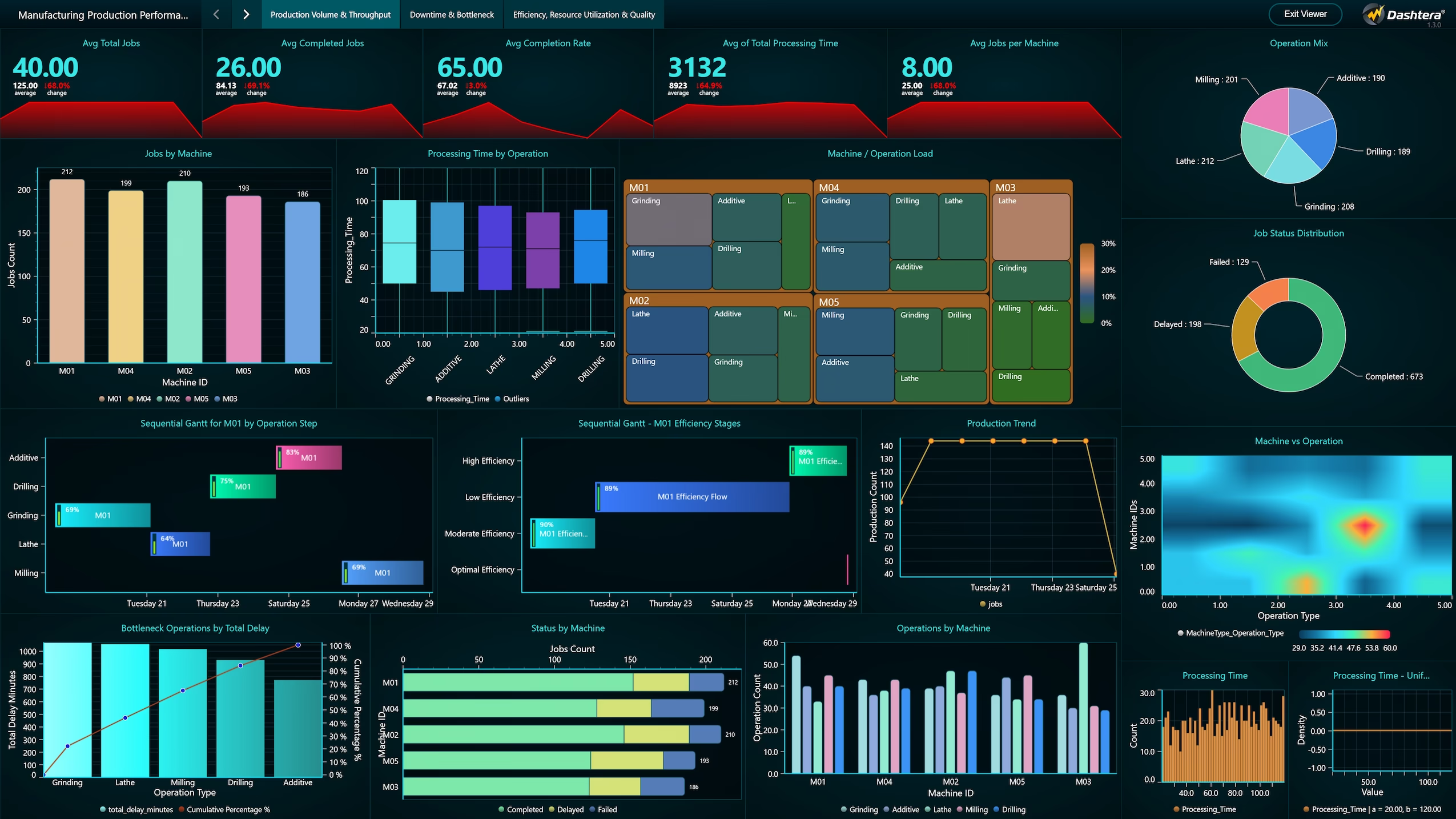
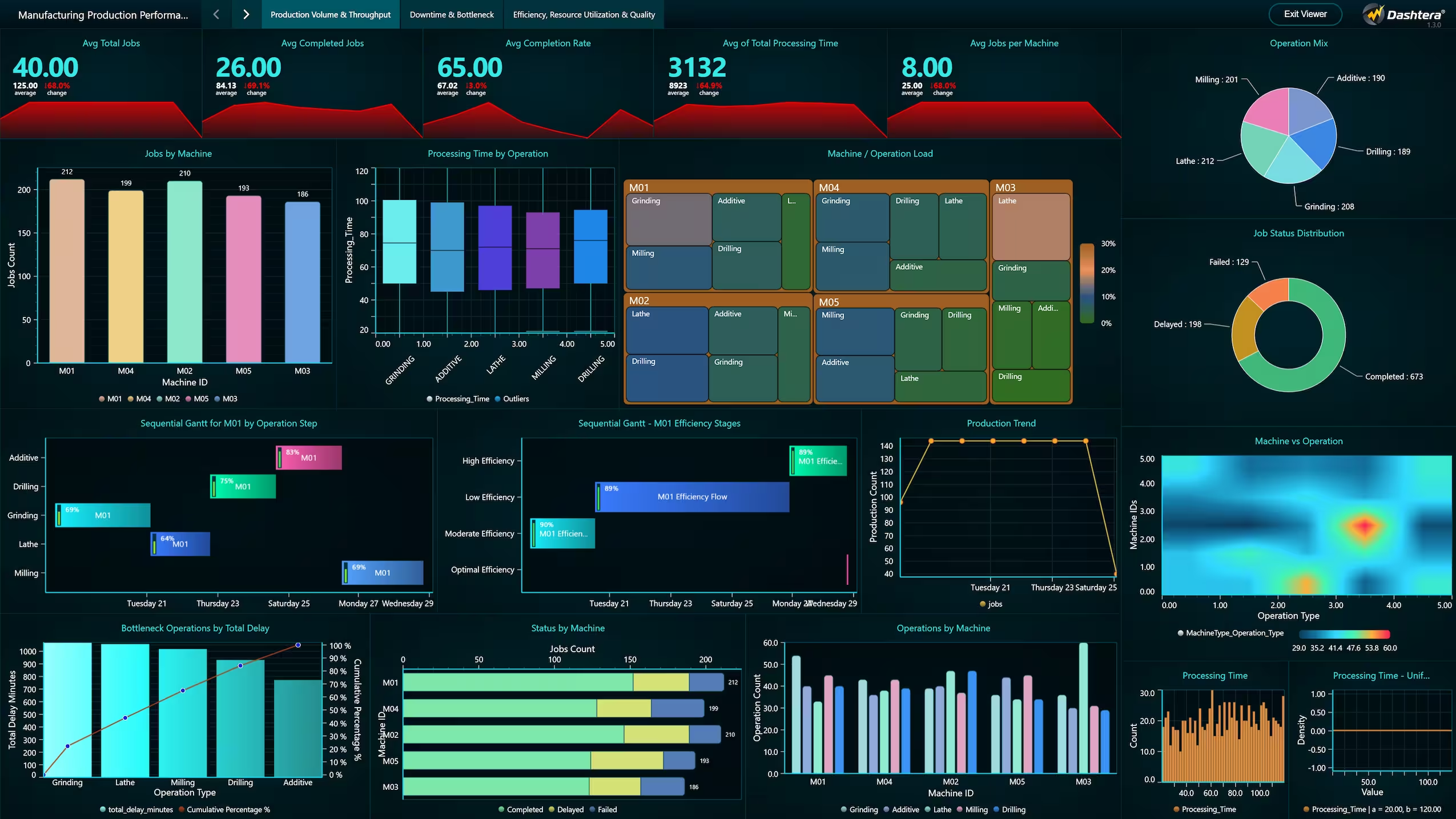
The first dashboard page presents an overview of production performance and throughput efficiency. The analysis indicates that the system processed 40 jobs, compared to an average of 125 jobs, reflecting a 68.0% decrease in production volume. Similarly, the number of completed jobs is 26, significantly lower than the average of 84.13, corresponding to a 69.1% decline.
The completion rate is 65.00%, slightly below the average of 67.02%, indicating a marginal 3.0% reduction in execution efficiency. In terms of operational workload, the total processing time is 3132 units, compared to an average of 8923, showing a substantial 64.9% decrease. The jobs per machine metric is 8.00, significantly below the average of 25.00, indicating underutilization of machine capacity.
The Jobs by Machine bar chart demonstrates uneven workload distribution, with certain machines handling more jobs than others. The Processing Time by Operation box plot reveals variability across operation types, with noticeable dispersion and presence of outliers, indicating inconsistent execution times.
The Machine–Operation Load Treemap highlights the allocation of operations across machines, showing that specific machines specialize in certain operations, which may contribute to localized bottlenecks. The Operation Mix pie chart indicates that operations such as Lathe (212 jobs), Grinding (208), Milling (201), Additive (190), and Drilling (189) are relatively balanced, suggesting no single dominant operation but potential cumulative inefficiencies.
Sequential analysis using the Gantt Chart for M01 demonstrates that operations follow a structured execution flow, where each step begins after the completion of the previous one. The Efficiency Stages Gantt Chart further reveals transitions between efficiency categories, highlighting fluctuations in operational performance over time.
The Production Trend line chart shows temporal variation in job execution, indicating periods of stable output followed by declines. The Pareto analysis of bottleneck operations identifies Grinding, Lathe, and Milling as the primary contributors to cumulative delays. Additionally, the Status by Machine stacked chart indicates variations in completion, delay, and failure rates across machines.
The Heatmap Chart and Processing Time distributions (Histogram and Uniform plots) provide further insight into processing variability, confirming the presence of non-uniform execution patterns.
Overall, this page highlights reduced production throughput, underutilization of machines, and variability in processing times, indicating opportunities for workload balancing and process optimization.
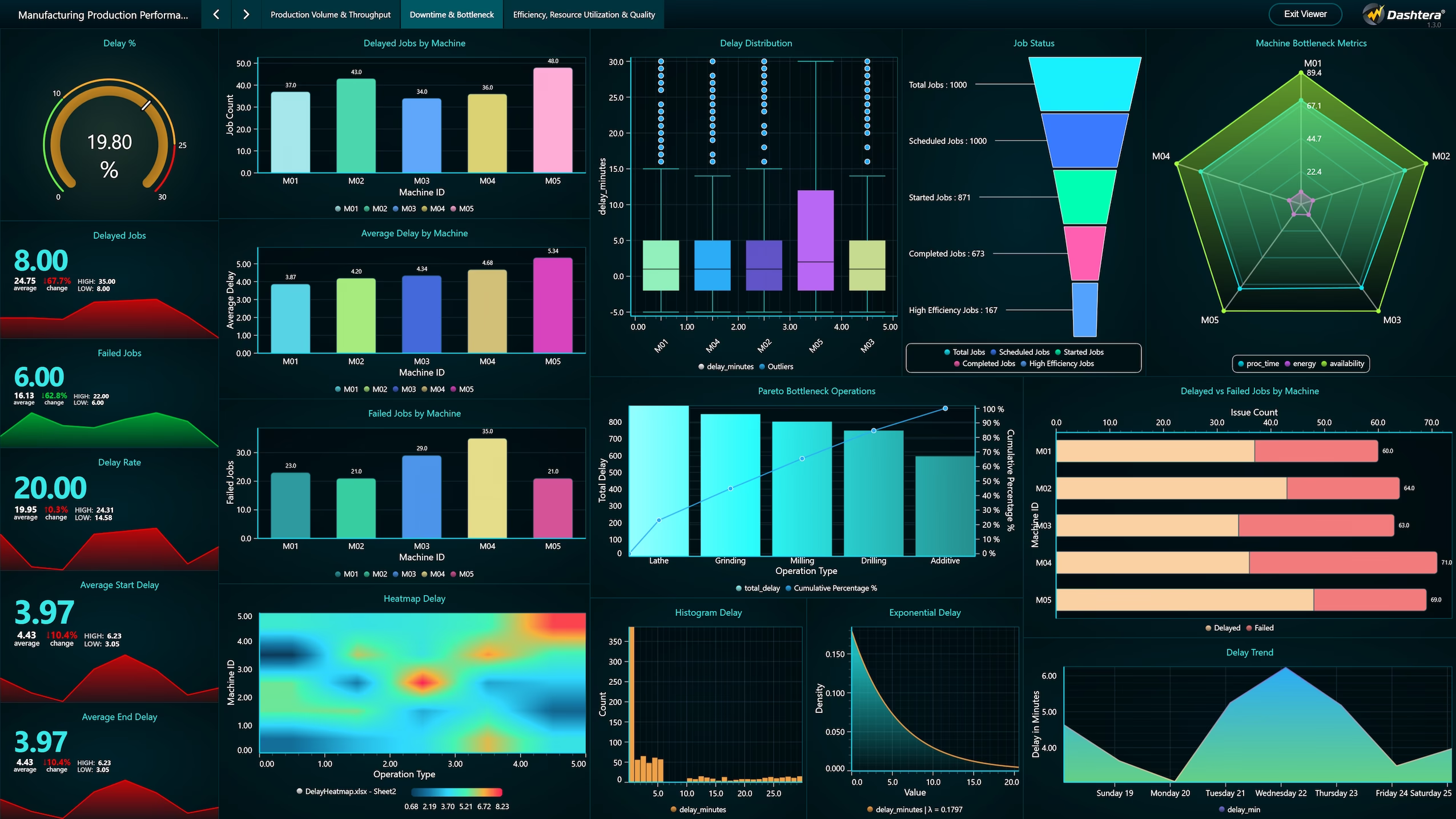
The second dashboard page focuses on delays, failures, and bottleneck identification. The delay percentage is 19.80%, with 8 delayed jobs, significantly lower than the average of 24.75, representing a 67.7% decrease. Similarly, failed jobs total 6, compared to an average of 16.13, reflecting a 62.8% reduction.
Despite the reduction in counts, the delay rate is 20.00%, slightly higher than the average of 19.95%, indicating a 0.3% increase, suggesting that delays remain proportionally significant. The average start delay is 3.97 minutes, compared to 4.43 minutes, showing a 10.4% improvement, and the average end delay exhibits the same reduction, indicating improved scheduling accuracy.
The Delayed Jobs by Machine bar chart shows that delays are unevenly distributed, with certain machines exhibiting higher delay counts. The Average Delay by Machine chart indicates variability in delay durations, with some machines experiencing significantly longer delays.
The Failed Jobs by Machine visualization highlights machine-specific reliability issues. The Delay Heatmap identifies combinations of machines and operations that contribute most to delays, providing a clear view of inefficiency hotspots.
The Delay Distribution box plot reveals the presence of both negative and positive delays, indicating early completions as well as significant overruns. The Histogram and Exponential distribution charts further confirm that delays follow a skewed distribution with long tails, suggesting occasional extreme delays.
The Funnel Chart illustrates the progression from total jobs (1000) to scheduled jobs (1000), started jobs (871), and completed jobs (673), clearly highlighting efficiency losses during execution stages.
The Machine Bottleneck Metrics (Spider Chart) provides a multi-dimensional comparison of processing time, energy consumption, and availability across machines, identifying M02 and M05 as potential bottleneck contributors.
The Pareto Bottleneck Analysis confirms that a small number of operations contribute disproportionately to total delay, aligning with the Pareto principle. The Delayed vs Failed Jobs chart further emphasizes machine-specific performance issues.
Finally, the Delay Trend line chart shows temporal fluctuations in delays, indicating periods of increased inefficiency.
Overall, this page demonstrates that while absolute delay counts have decreased, proportional delay impact remains significant, and bottlenecks are concentrated in specific operations and machines.
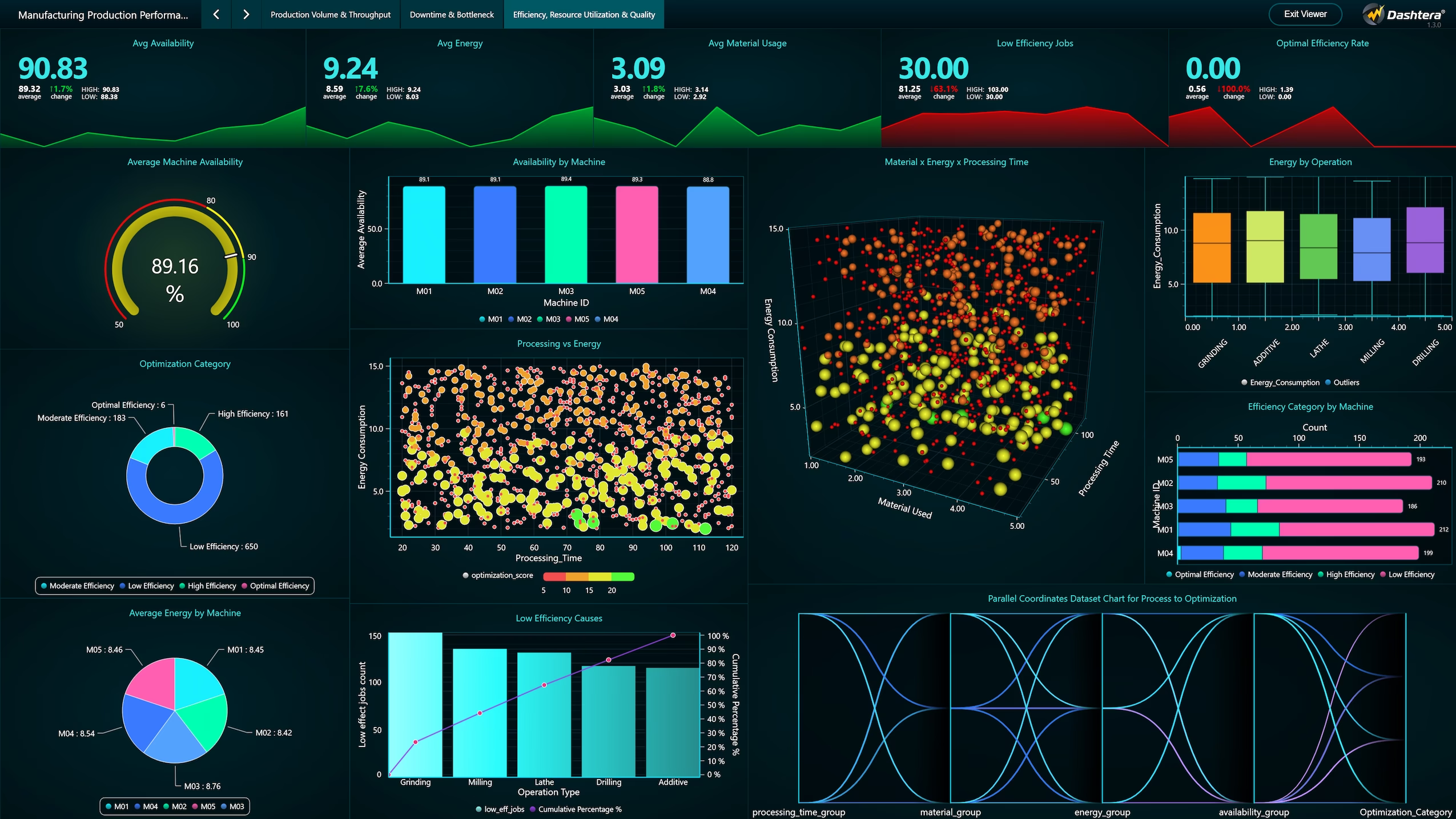
The third dashboard page evaluates system efficiency and resource utilization. The average machine availability is 90.83%, slightly above the average of 89.32%, indicating a 1.7% improvement. This suggests that machines are generally operational and accessible.
The average energy consumption is 9.24 units, compared to 8.59, reflecting a 7.6% increase, indicating higher energy usage per job. Similarly, the average material usage is 3.09 units, slightly higher than the average of 3.03, showing a 1.8% increase.
The number of low-efficiency jobs is 30, significantly below the average of 81.25, representing a 63.1% reduction, which indicates improvement in efficiency distribution. However, the optimal efficiency rate is 0.00%, compared to an average of 0.56%, showing a 100% decline, indicating that no jobs achieved optimal efficiency.
The Gauge Chart for Machine Availability confirms high operational readiness. The Optimization Category pie chart shows that the majority of jobs fall within low and moderate efficiency categories, with very few achieving high or optimal efficiency.
The Availability by Machine and Energy by Machine charts indicate variation across machines, suggesting differences in operational conditions and performance.
The Processing vs Energy scatter plot reveals a positive relationship between processing time and energy consumption, indicating that longer operations require more energy. The 3D scatter plot (Material, Energy, Processing Time) further demonstrates multi-dimensional relationships, highlighting clusters of low and high efficiency.
The Energy by Operation box plot shows variability in energy consumption across operation types, indicating that certain operations are more energy-intensive.
The Efficiency Category by Machine stacked chart shows how efficiency levels vary across machines, identifying machines with higher proportions of low-efficiency jobs.
The Pareto analysis of low-efficiency causes identifies Grinding and Milling as major contributors to inefficiency. The Parallel Coordinates Chart provides a multi-variable comparison, showing that high efficiency is associated with lower processing time, lower energy consumption, and higher availability.
Overall, this page reveals that although machine availability is high, efficiency optimization remains a challenge, with no jobs reaching optimal performance levels and resource consumption showing increasing trends.
The dashboard is fully powered by PostgreSQL as the backend engine.
Complex transformations such as:
are handled directly within SQL, making the system scalable and reliable.
The Manufacturing Production Performance Dashboard demonstrates how production data can be transformed into meaningful operational insights.
Key Findings
A significant insight is the disconnect between availability and efficiency, suggesting that:
are critical areas for improvement.
Advanced visualizations such as Gantt charts, Pareto analysis, and Parallel Coordinates provide deep insights into process behavior and performance patterns.
This project demonstrates the effectiveness of combining Dashtera and PostgreSQL for manufacturing analytics.
The three-page dashboard provides a structured analytical flow:
Key Benefits
The analysis highlights the importance of:
Overall, this dashboard provides a scalable and practical solution for smart manufacturing environments, enabling organizations to improve productivity, reduce costs, and enhance operational performance.
Share: