



The Manufacturing Dashboard Examples showcased in the UCI SECOM Manufacturing Quality Analysis Dashboard illustrate a comprehensive analytical framework for monitoring, diagnosing, and improving semiconductor manufacturing quality.
As one of the more advanced Manufacturing Dashboard Examples, this solution is developed using the Dashtera no-code business intelligence platform, enabling engineers and analysts to explore process behavior, identify failure patterns, and evaluate operational performance through interactive visualizations and SQL-driven analytics.
Among modern Manufacturing Dashboard Examples, semiconductor applications stand out due to their complexity and precision requirements. In semiconductor manufacturing, maintaining high yield and minimizing defects are critical objectives.
However, process complexity and multi-variable interactions make it challenging to detect root causes of failures in real time. Like many Manufacturing Dashboard Examples, this approach addresses variability in process conditions, equipment performance, and environmental factors that can lead to defects impacting production efficiency and cost.
This entry in Manufacturing Dashboard Examples demonstrates how structured analytics can transform manufacturing performance. The proposed dashboard addresses these challenges by providing clear, actionable insights into production outcomes, process conditions, and failure behavior.
As seen in top Manufacturing Dashboard Examples, the analysis is organized into three interconnected dashboard pages: production overview, process and sensor analysis, and failure and quality analysis. These components work together to provide a holistic view of manufacturing performance.
Overall, this example from leading Manufacturing Dashboard Examples highlights how integrated data visualization enables data-driven decision-making and continuous process optimization.
The dataset used in this study is based on the UCI SECOM manufacturing dataset, available through Kaggle. The dataset represents a semiconductor manufacturing process, capturing multiple sensor measurements and process variables associated with production outcomes. It includes both normal and faulty production instances, enabling analysis of failure patterns and quality deviations.
The primary objective of the dataset is to identify factors contributing to production failures and to support quality improvement initiatives by analysing relationships between process variables and output outcomes.
Dataset Description
The dataset consists of manufacturing records enriched with additional contextual attributes for dashboard analysis. It includes variables representing production outcomes, process conditions, equipment behaviour, and quality indicators.
Production Variables
Process and Sensor Variables
Quality and Failure Variables
To enhance interpretability, the dataset was structured into monthly and quarterly aggregations. Derived metrics such as failure rate, cumulative failure contribution, and normalized sensor values were calculated to support advanced analytical visualizations, including Pareto charts and parallel coordinate analysis.
The dashboard is organized into three analytical sections: production overview, process and sensor analysis, and failure and quality analysis.
Production Overview
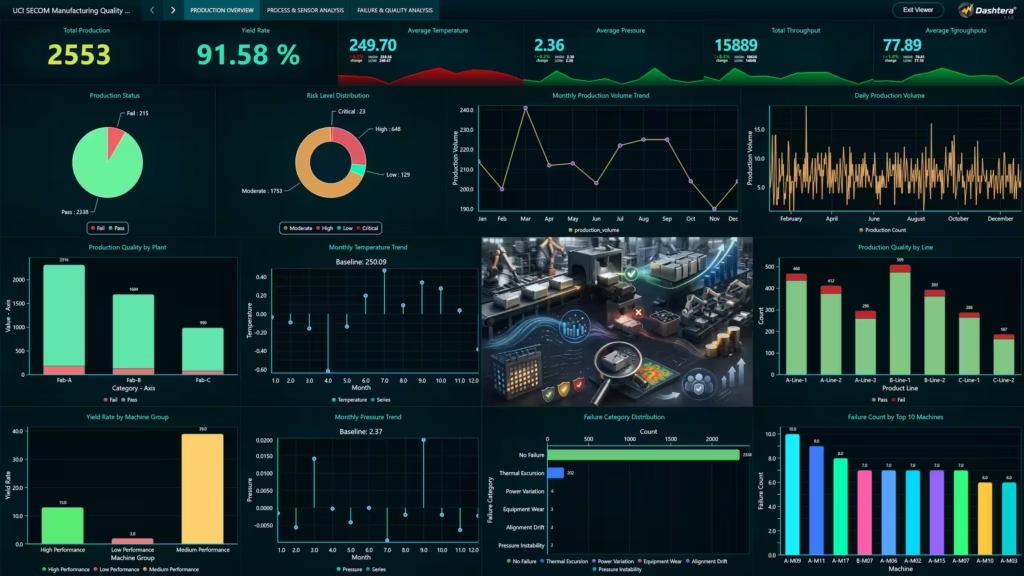
The first dashboard page presents a high-level assessment of manufacturing performance, focusing on production volume, yield, and process stability.
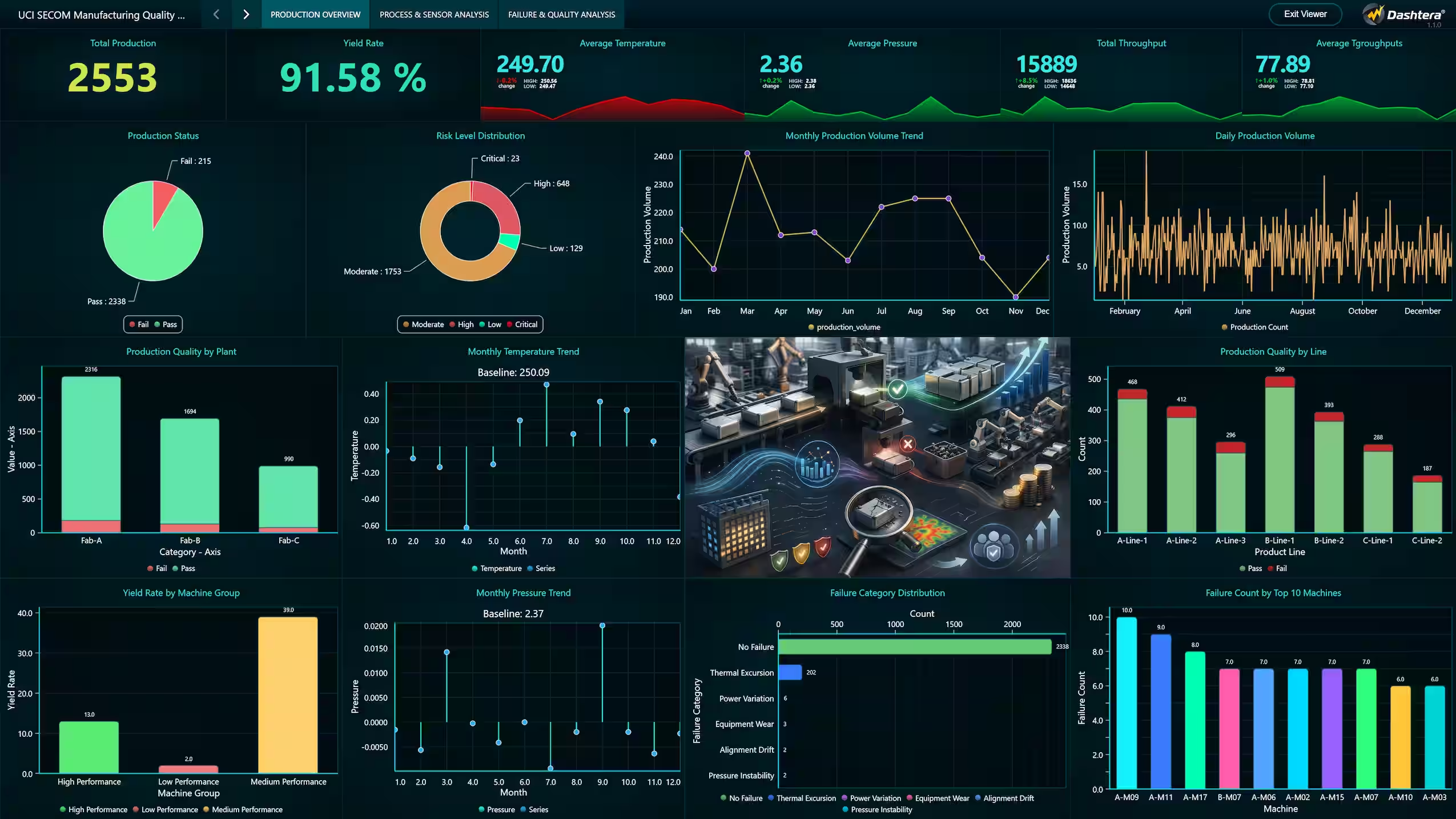
A total of 2,553 production instances were recorded, with a yield rate of 91.58%, indicating strong production efficiency. Despite this, failures remain a notable concern.
Process conditions are stable. The average temperature is 249.70°C, varying slightly between 249.47°C and 250.56°C, with a small decrease of 0.2%. Similarly, average pressure is 2.36, showing a marginal increase of 0.2%, indicating controlled operating conditions.
Throughput metrics reflect production performance. The total throughput is 15,889 wafers, increasing by 8.5%, while the average throughput is 77.89 wafers/hour, with a 1.0% improvement. These trends suggest improved operational efficiency.
Monthly and daily production trends show fluctuations in output, while plant- and line-level analysis reveals differences in performance across manufacturing units. Machine-level yield analysis indicates variability in equipment efficiency.
Failure distribution and top machine analysis show that a small number of machines contribute disproportionately to failures, highlighting opportunities for targeted optimization.
Overall, this page provides a concise view of production efficiency, stability, and quality performance.
Process and Sensor Analysis
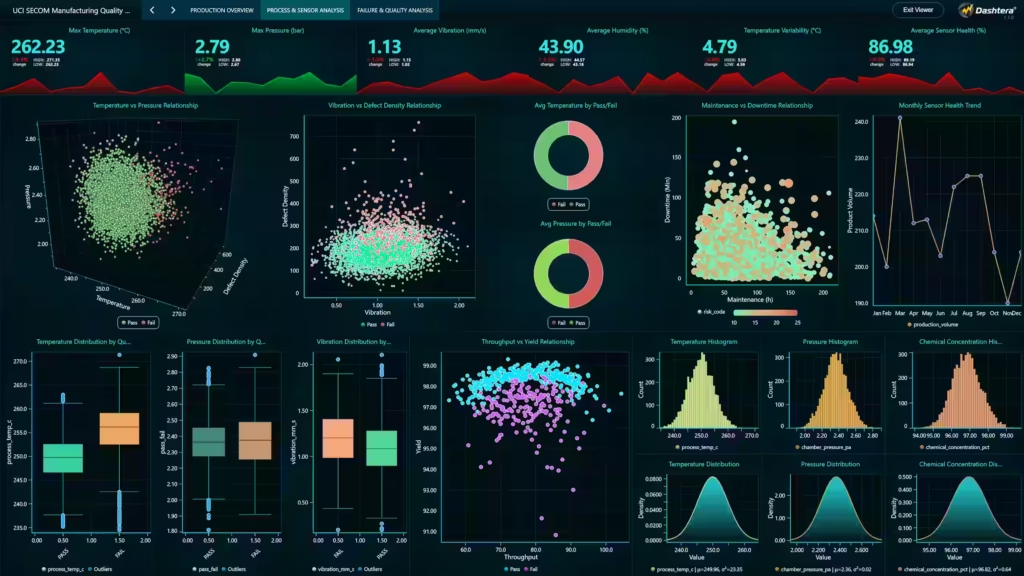
The second dashboard page examines process conditions and sensor behavior, focusing on operational stability and variability.
The maximum temperature is 262.23°C, decreasing by 1.3%, while the maximum pressure is 2.79, increasing by 2.7%, indicating shifts in operating limits.
Sensor metrics show stable conditions. The average vibration is 1.13 and humidity is 43.90, both decreasing slightly (1.5%), suggesting consistent environmental and mechanical performance.
Process variability has improved, with temperature variability at 4.79, decreasing by 2.6%, indicating better process control. The sensor health score averages 86.98, with a minor decline of 0.7%, reflecting generally reliable sensor performance.
Relationship-based analyses reveal interactions between variables. Temperature-pressure relationships highlight process dynamics, while vibration and defect density analysis suggests mechanical factors influence product quality.
Comparisons between pass and fail conditions show differences in process behavior, while maintenance and downtime analysis emphasizes the role of equipment condition. Temporal trends and distribution analyses further help identify variability and abnormal conditions.
Overall, this page highlights the importance of stable process conditions and reliable sensors for consistent manufacturing performance.
Failure and Quality Analysis
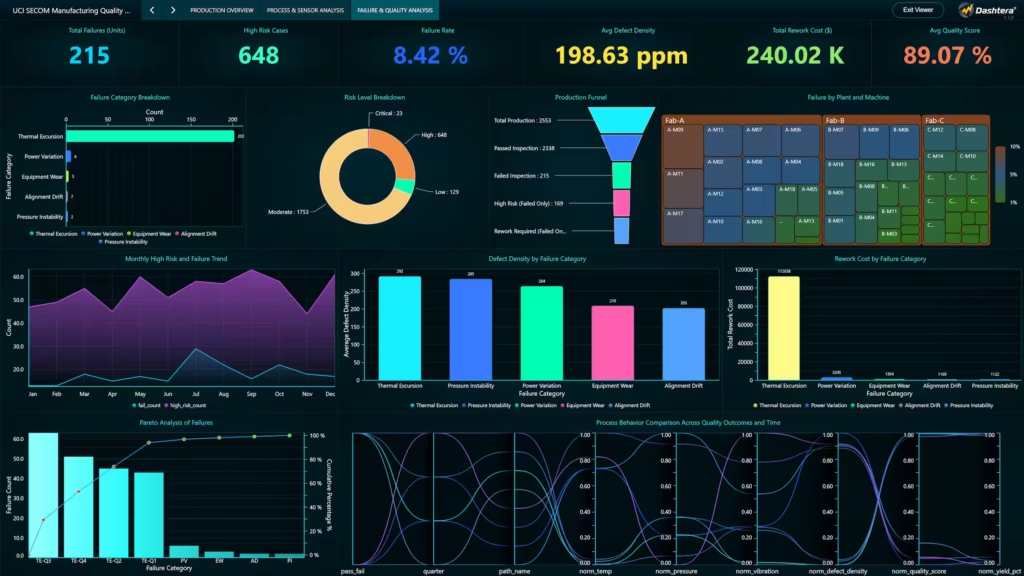
The third dashboard page focuses on failure behavior, risk distribution, and quality impact. A total of 215 failures were recorded, with a failure rate of 8.42%, while 648 instances are classified as high risk, indicating significant risk exposure.
Quality metrics show an average defect density of 198.63 ppm and an average quality score of 89.07. The total rework cost is approximately $240,000, highlighting the financial impact of failures.
Pareto analysis reveals that failures are highly concentrated in a single dominant category, while other categories contribute minimally. This suggests that addressing key failure drivers can significantly improve performance.
The production funnel illustrates the progression from total production to failures and rework, emphasizing the proportion of defective units. Monthly trends show fluctuations in failure and risk levels, indicating periods of higher operational stress.
Plant and machine-level analysis identifies specific sources of failure, while defect density and cost analysis highlight the severity of different failure categories.
Overall, this page provides a focused view of failure patterns, risk exposure, and quality performance, supporting targeted improvements and cost reduction.
Dashtera Integration with PostgreSQL
The dashboard is fully integrated with PostgreSQL, which serves as the backend data processing engine.
All calculations, aggregations, and transformations are executed using SQL queries. This approach ensures efficient handling of large datasets, real-time filtering, and consistent analytical results.
The integration supports scalable and reproducible analysis, making it suitable for industrial applications where data reliability and performance are essential.
Among leading Manufacturing Dashboard Examples, the UCI SECOM Manufacturing Quality Analysis Dashboard clearly demonstrates how complex manufacturing data can be transformed into actionable insights using modern business intelligence tools.
This case stands out within Manufacturing Dashboard Examples by showcasing how structured analytics and intuitive visualization can simplify highly complex production environments.
Like other effective Manufacturing Dashboard Examples, the production overview highlights key performance metrics and helps identify periods of instability across operations. In addition, the process and sensor analysis, common in advanced Manufacturing Dashboard Examples,provides deeper insight into operational variability and its direct impact on product quality. The failure analysis component, frequently emphasized in top Manufacturing Dashboard Examples, reveals dominant root causes and quantifies their financial implications.
One of the most critical insights emerging from this entry in Manufacturing Dashboard Examples is the overwhelming contribution of Thermal Excursion to both failure count and rework cost, clearly indicating a high-priority area for process improvement.
Similar to other data-driven Manufacturing Dashboard Examples, temporal analysis also uncovers patterns, showing that specific periods, particularly Q3, require closer monitoring and tighter process control.
Overall, this example reinforces how the best Manufacturing Dashboard Examples integrate multiple layers of analysis into a unified view. By combining production, process, and failure insights, the dashboard enables a comprehensive understanding of manufacturing performance and supports continuous, data-driven optimization.
This project demonstrates the effectiveness of combining Dashtera and PostgreSQL for analysing semiconductor manufacturing data.
The structured three-page dashboard provides a logical progression from production monitoring to process analysis and failure diagnosis. It enables early detection of issues, identification of root causes, and evaluation of operational efficiency.
The analysis highlights the importance of process stability, targeted failure reduction, and cost optimization in manufacturing environments. By focusing on dominant failure drivers and leveraging data-driven insights, organizations can significantly improve production quality and reduce operational costs.
Overall, the study illustrates the value of business intelligence tools in industrial applications, contributing to enhanced decision-making and improved manufacturing performance.
Share: