



The Machine Predictive Maintenance Classification Dashboard presents a comprehensive descriptive and statistical analysis of industrial machine operations, health risk modeling, failure classification, and maintenance cost implications within a simulated manufacturing environment. The dashboard was developed using the Dashtera no-code business intelligence platform and is designed to enable structured, multi-layered exploration of predictive maintenance data through advanced visual analytics.
By integrating executive-level operational indicators, probabilistic modeling, regression analysis, distribution fitting, and multivariate statistical visualization across three structured dashboard pages, the system supports both engineering-oriented insights and applied statistical understanding. The project demonstrates how industrial telemetry data can be transformed into coherent analytical narratives using Dashtera’s visualization capabilities, making it suitable for predictive maintenance analytics, reliability engineering studies, and applied statistical learning.
You can access and interact with the Machine Predictive Maintenance Classification Dashboard.
The dataset used in this project is the Machine Predictive Maintenance Classification Dataset derived from the AI4I 2020 Predictive Maintenance Dataset. Because real-world predictive maintenance datasets are rarely publicly accessible due to industrial confidentiality, this synthetic dataset was constructed to replicate realistic operational conditions and machine failure mechanisms.
The dataset contains 10,000 machine observations, each representing a discrete operational state captured at a specific timestamp. It includes sensor measurements, engineered mechanical indicators, machine condition metrics, and two target variables: a binary failure indicator and a multiclass failure type classification.
Although synthetic, the dataset reflects statistically consistent behavior such as normally distributed torque, stochastic temperature variation, controlled rotational speed behavior, and count-based tool wear progression. This makes it well-suited for educational applications in predictive analytics and industrial reliability modeling.
Dataset description
Each observation represents a machine state characterized by operational, mechanical, and risk-related attributes.
Operational variables include air temperature, process temperature, rotational speed, torque, and tool wear measurements. Contextual attributes such as shift (Night, Morning, Evening), machine age, and cycle count enable temporal segmentation.
Derived features such as temperature difference, power estimate, RPM-to-torque ratio, thermal stress index, wear rate, health score, and failure probability extend the dataset beyond raw telemetry into predictive modeling space.
Maintenance indicators, including maintenance requirements, maintenance type, downtime minutes, repair cost, and production loss units, quantify operational consequences. This multidimensional structure enables integrated analysis of machine health, failure mechanisms, and economic impact.
Dashtera is a cloud-based, no-code analytics platform designed to facilitate structured data exploration through interactive dashboards. The platform supports descriptive analytics, regression modeling, probability distribution visualization, and advanced multivariate statistical techniques without requiring programming expertise.
Key features utilized in this project include:
Dashtera’s statistical flexibility makes it particularly suitable for predictive maintenance visualization and reliability-focused analytics.
The Predictive Maintenance Dashboard is organized into three analytical pages. Together, these pages form a structured progression from operational monitoring to predictive health assessment and finally to maintenance and cost impact modeling.
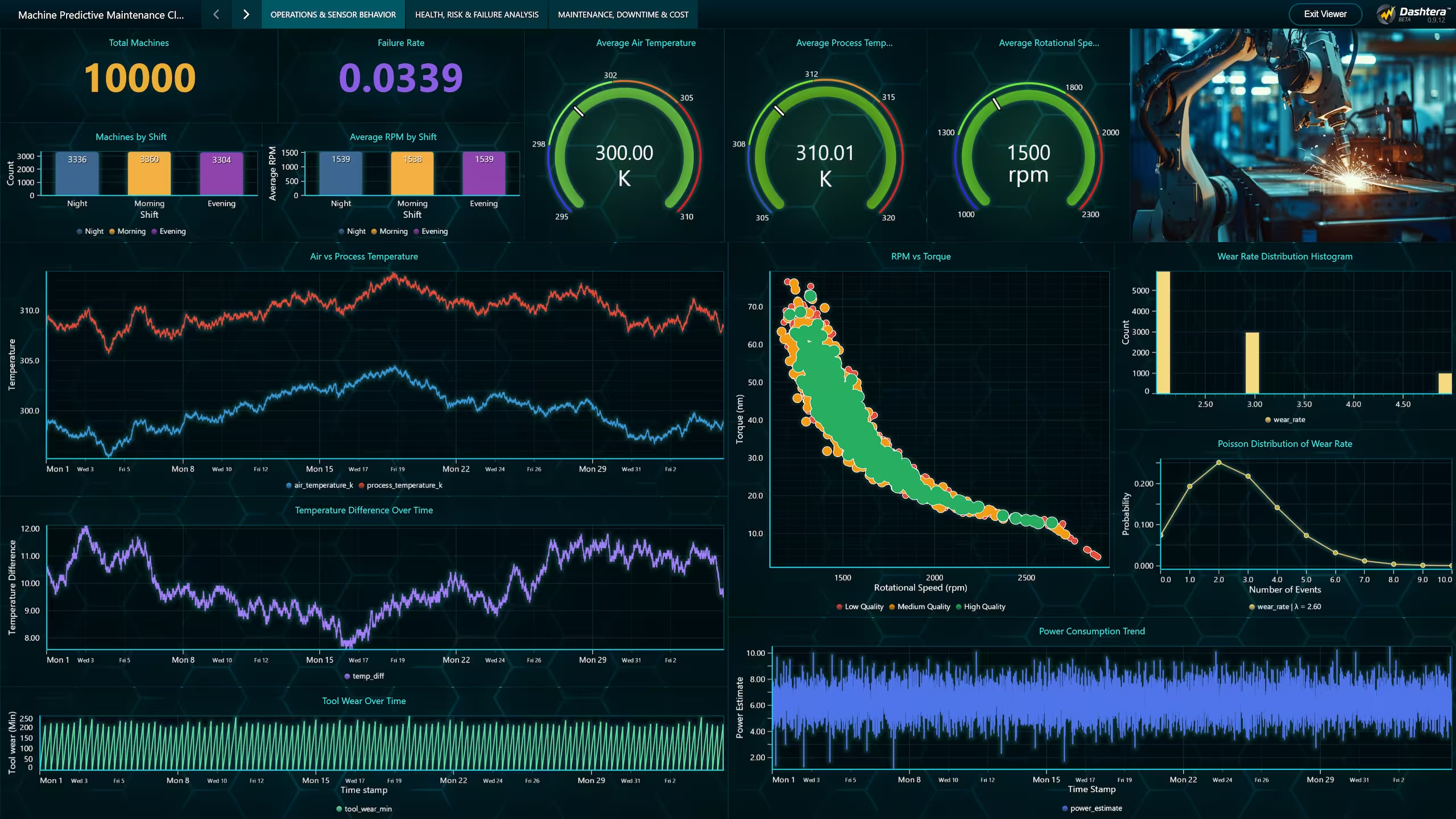
The first dashboard page provides a high-level overview of machine operations and sensor-based behavior. Its objective is to establish operational stability and mechanical variability before transitioning to predictive risk analysis.
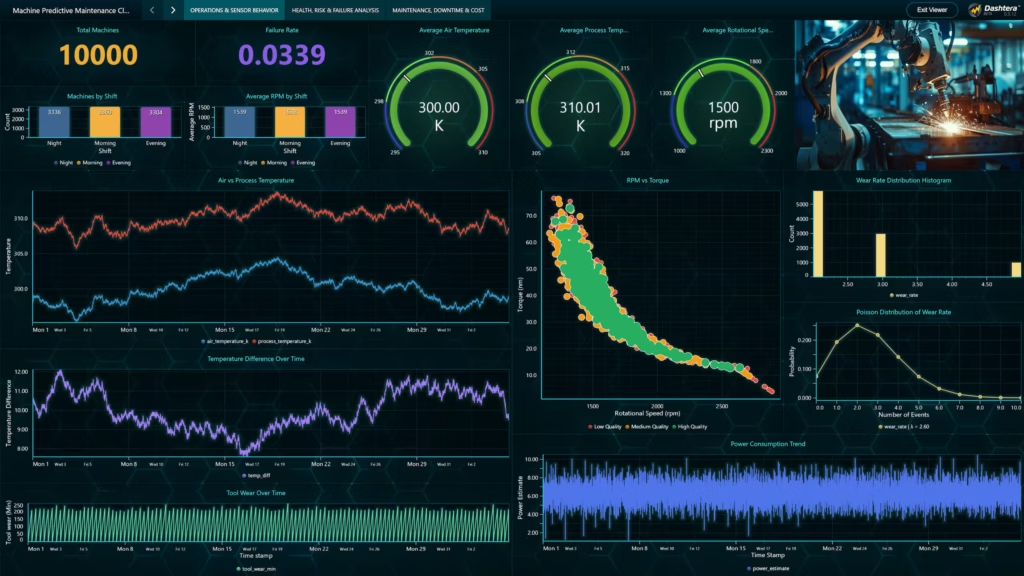
The system consists of 10,000 machines with a failure rate of 0.0339, reflecting realistic industrial reliability conditions. Machine distribution across Night, Morning, and Evening shifts is balanced, ensuring unbiased temporal analysis. Average rotational speed remains highly consistent across shifts, indicating stable process control.
Gauge meters summarize average air temperature (300 K), process temperature (310.01 K), and rotational speed (1500 RPM). The stable temperature differential illustrates predictable thermal generation within machinery.
Line charts comparing air and process temperature, along with temperature difference over time, reveal controlled thermal fluctuation patterns. The RPM versus torque scatter plot segmented by machine quality illustrates mechanical clustering behavior.
Wear rate distribution is explored through a histogram and Poisson modeling, reflecting the discrete nature of degradation. Tool wear progression and power consumption trends demonstrate gradual mechanical stress accumulation. Overall, Page 1 establishes the descriptive operational baseline necessary for predictive modeling.
The second dashboard page transitions from operational metrics to predictive classification and health modeling.
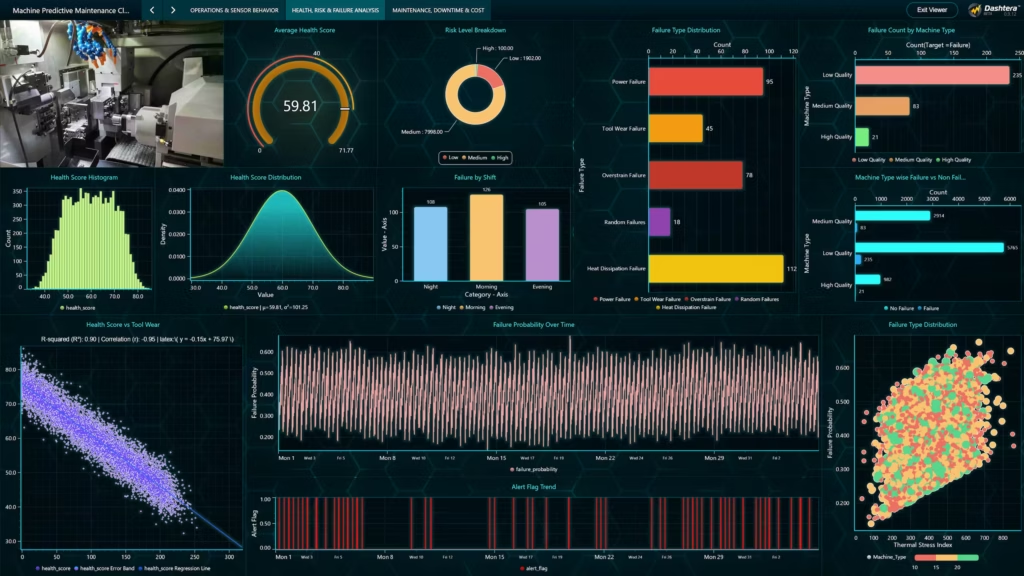
The average health score is 59.81, indicating a moderate system condition. Risk level segmentation shows the majority of machines in the medium-risk category, with smaller proportions classified as low and high risk. Histogram and normal distribution fitting confirm approximate bell-shaped health behavior.
Failure frequency varies slightly by shift, with the Morning shift exhibiting marginally higher failure counts. Failure type distribution reveals heat dissipation failure as the most common mechanism, followed by power and overstrain failures.
Grouped comparisons between machine types highlight quality-based reliability differences. Regression analysis between health score and tool wear demonstrates a strong negative correlation, confirming degradation-driven health decline.
Time-series visualization of failure probability and alert flag trends illustrates dynamic risk progression. Scatter analysis of thermal stress index versus failure probability further validates predictive maintenance theory by showing increased failure likelihood under elevated stress.
Page 2, therefore, integrates classification logic, regression modeling, and probabilistic interpretation.
The final dashboard page evaluates operational consequences and financial implications of failure events.
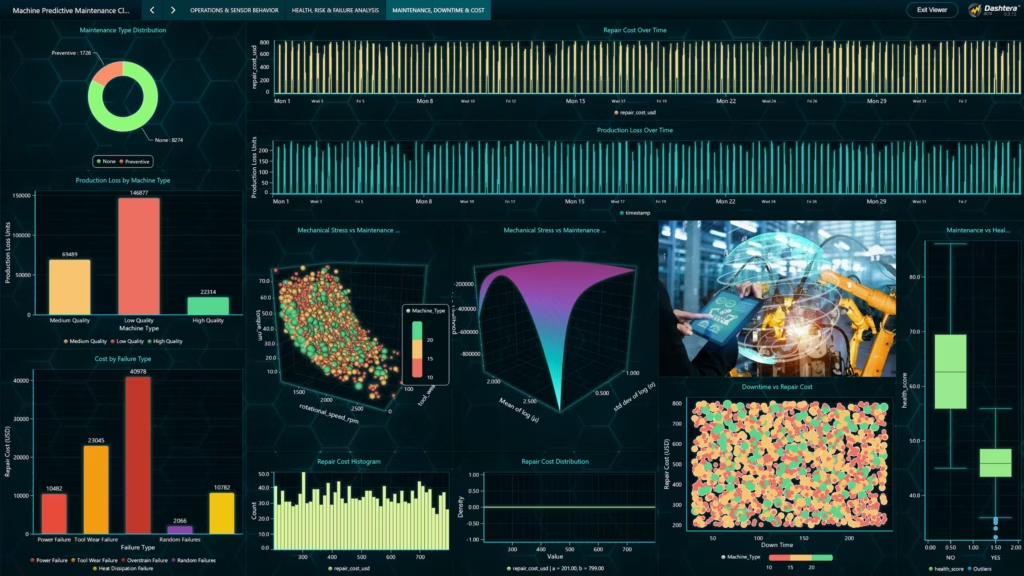
Preventive maintenance accounts for 1,726 observations, while the majority require no intervention. Production loss analysis indicates significantly higher loss among low-quality machines compared to medium and high-quality categories.
Cost analysis by failure type quantifies economic impact differences across failure mechanisms. Time-series visualization of repair cost and production loss demonstrates variability in operational burden.
The repair cost histogram and uniform distribution modeling illustrate dispersion behavior. A scatter plot of downtime versus repair cost confirms a positive relationship, reinforcing the economic impact of extended downtime.
Advanced three-dimensional MLE modeling of mechanical stress versus maintenance impact provides multivariate statistical insight. A box plot comparing maintenance requirements against health score clearly shows lower health levels among machines requiring intervention.
Page 3 completes the analytical narrative by connecting predictive classification with operational cost outcomes.
The three-page Predictive Maintenance Dashboard demonstrates a structured analytical framework progressing from descriptive operational monitoring to predictive health classification and finally to economic consequence modeling.
The integration of statistical distributions, regression analysis, risk segmentation, and multivariate visualization illustrates how predictive maintenance datasets can support engineering decision-making and statistical learning simultaneously.
By transforming machine telemetry into interpretable visual narratives, the dashboard provides comprehensive insight into reliability dynamics and maintenance strategy effectiveness.
The Machine Predictive Maintenance Classification Dashboard highlights the capability of Dashtera as a no-code platform for industrial analytics and predictive maintenance visualization.
Through the combination of operational KPIs, sensor analytics, risk modeling, failure classification, and maintenance cost evaluation, the dashboard establishes a coherent analytical system applicable to manufacturing environments.
The framework may be extended toward real-time anomaly detection, predictive failure forecasting, remaining useful life estimation, and optimization-based maintenance scheduling. As such, it serves both as an academic demonstration and as a conceptual prototype for enterprise-level predictive maintenance of intelligence systems.
Share: