



The Steel Industry Energy Consumption Analytics Dashboard provides a comprehensive analytical framework for monitoring industrial electricity usage, operational load behavior, power quality indicators, and carbon emissions within steel manufacturing environments. Developed using the Dashtera no-code business intelligence platform, the dashboard integrates MongoDB aggregation pipelines with advanced visualizations to enable interactive, real-time exploration of industrial energy data.
Energy management has become a critical concern for modern steel industries due to increasing electricity costs, sustainability requirements, and pressure to reduce carbon emissions. Steel manufacturing processes consume large amounts of electrical power under varying operational conditions, making it essential to monitor load behavior, reactive power, energy efficiency, and emission patterns continuously.
Traditional monitoring systems often provide only raw operational metrics without deeper analytical capabilities. This dashboard addresses these limitations by transforming raw industrial energy consumption records into actionable insights through dynamic charts, KPI panels, heatmaps, regression models, and multidimensional analytical visualizations.
The solution is organized into three analytical dashboard pages:
Together, these dashboards provide a holistic analytical environment for evaluating industrial energy performance, operational efficiency, and sustainability indicators.
The dataset used in this project was obtained from Kaggle:
https://www.kaggle.com/datasets/csafrit2/steel-industry-energy-consumption
The dataset represents electricity consumption records collected from a steel manufacturing industry. The data originates from cloud-based monitoring systems integrated with the Korea Electric Power Corporation (KEPCO) energy monitoring infrastructure.
The dataset captures operational energy consumption at fine-grained time intervals throughout an entire year, allowing detailed analysis of daily, weekly, monthly, and hourly energy usage behavior.
The primary objectives of the dataset include:
The dataset enables organizations to analyze how operational conditions influence energy consumption and identify opportunities for improving industrial energy efficiency.
The dataset consists of 35,040 time-series records representing industrial electricity consumption measurements collected at regular operational intervals.
Each record contains energy usage information along with reactive power indicators, power factor measurements, operational load classifications, and temporal attributes.
Key Dataset Attributes
Temporal Attributes
These variables support time-series analysis, operational pattern recognition, and trend analysis.
Energy Consumption Variables
These variables enable monitoring of operational energy demand and load distribution.
Power Quality Variables
These variables provide insight into electrical efficiency, reactive power behavior, and power quality performance.
Sustainability Variable
This variable supports environmental impact analysis and sustainability monitoring. Using MongoDB aggregation pipelines, these raw operational measurements were transformed into derived metrics such as:
These transformations support advanced analytical visualizations and operational decision-making.
Dashtera is a powerful no-code business intelligence platform that supports MongoDB-based analytics and advanced visualizations.
Key Features
Advantages
The dashboard is divided into three analytical pages, each focusing on a different dimension of industrial energy performance.
The Energy Consumption Overview page presents a consolidated summary of industrial energy consumption patterns and operational usage behavior.
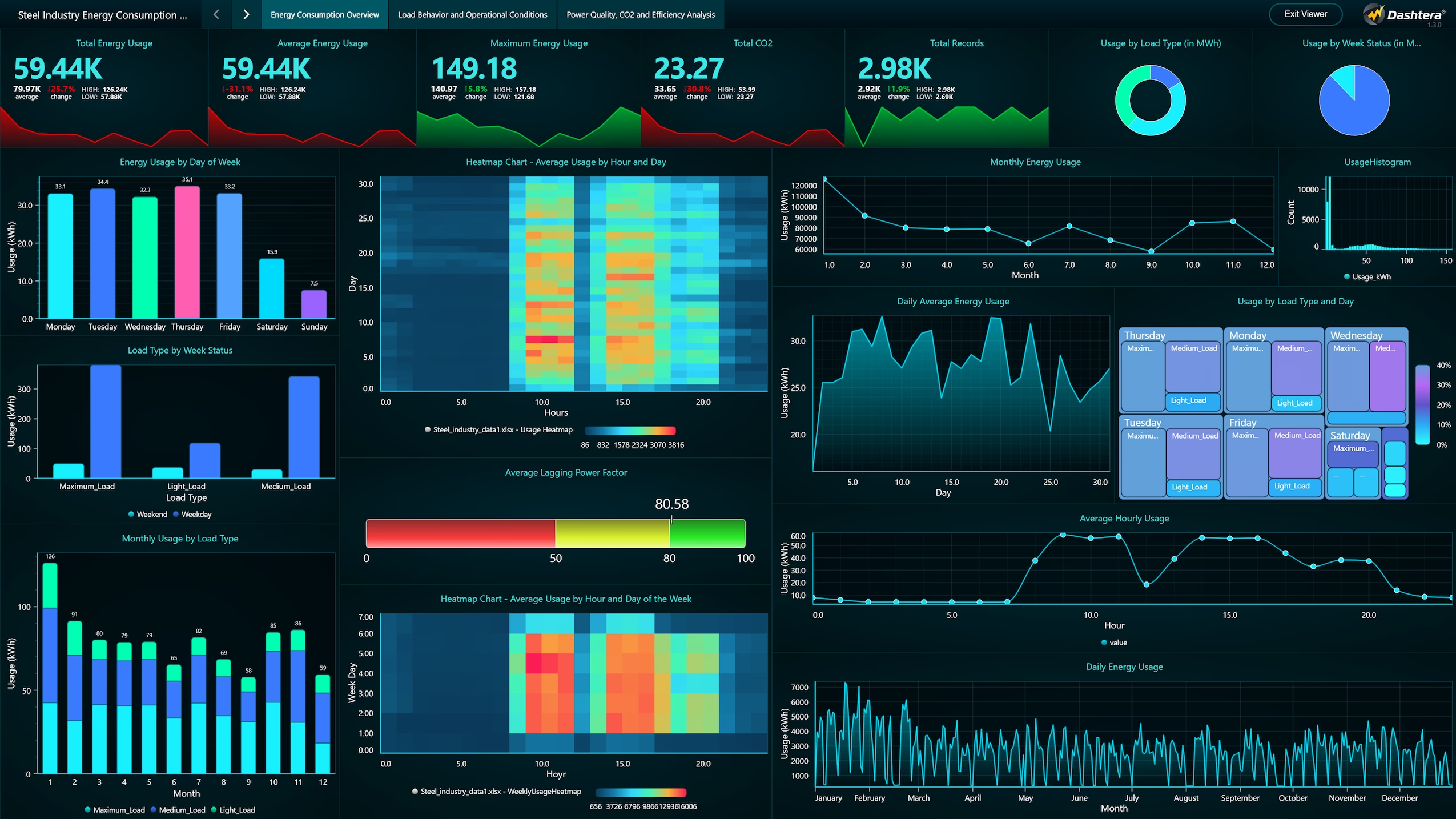
The dashboard reports a total energy usage of approximately 959.64 MWh, indicating substantial industrial electricity demand throughout the monitoring period. The average energy usage is approximately 59.44 kWh per operational interval, while maximum energy usage reaches 149.18 kWh, reflecting periods of high operational intensity.
The total CO2 emission is approximately 23.27 tCO2, highlighting the environmental impact associated with industrial electricity consumption. Total records exceed 2.98K aggregated operational measurements in the dashboard view.
Analysis of load type distribution shows that Maximum_Load contributes the largest proportion of energy consumption at approximately 430.98 MWh, followed by Medium_Load at 372.77 MWh and Light_Load at 155.89 MWh. This indicates that high-load industrial operations dominate electricity demand.
Weekly operational analysis reveals that weekdays consume significantly more energy compared to weekends, reflecting production scheduling and operational intensity during working days.
The day-of-week energy usage chart demonstrates that energy consumption remains relatively stable from Monday through Friday, with average usage values above 30 kWh. However, consumption decreases substantially during Saturday and Sunday, indicating reduced industrial activity during weekends.
Heatmap analysis of hourly energy usage reveals strong operational concentration during daytime working hours. Energy demand intensifies between approximately 9 AM and 8 PM, corresponding to active manufacturing periods. Lower consumption is observed during nighttime operations.
Monthly energy usage analysis shows noticeable fluctuations throughout the year. January exhibits the highest energy demand, exceeding 120,000 kWh, while lower consumption appears during June and September. These variations may reflect seasonal production changes, maintenance schedules, or operational adjustments.
The histogram distribution of energy usage indicates that most operational intervals consume relatively low-to-moderate electricity levels, while extremely high consumption events occur less frequently.
Treemap analysis further highlights how different weekdays contribute to energy demand under varying load types, providing a hierarchical view of operational electricity distribution.
The average lagging power factor is observed at approximately 80.58, indicating moderate electrical efficiency. Although the value remains within acceptable industrial operating ranges, opportunities may exist for improving power factor correction and reducing reactive power losses.
Overall, this page highlights the dominant influence of operational load type and working-hour schedules on industrial electricity demand.
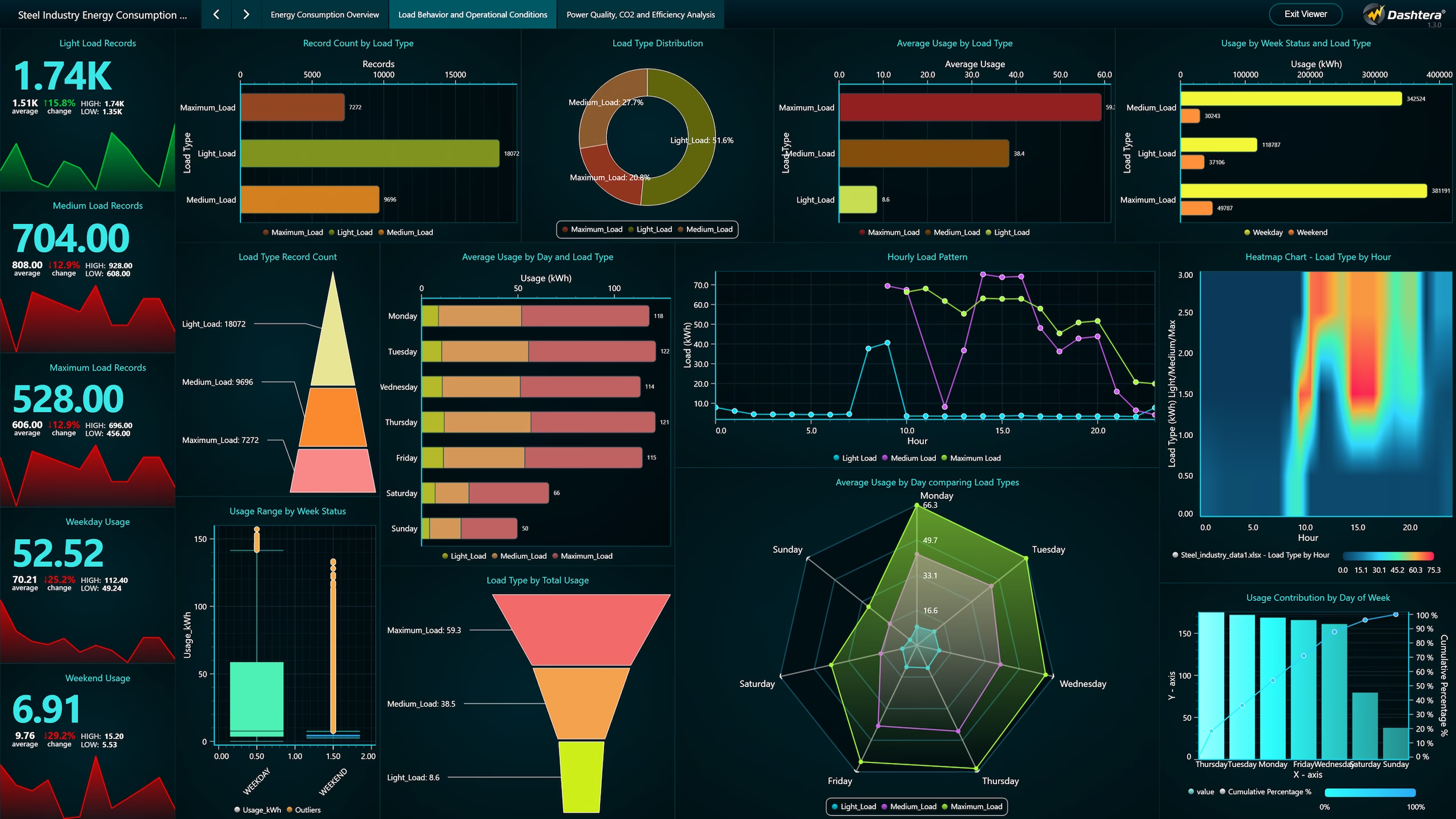
The Load Behavior and Operational Conditions page focuses on operational load patterns, energy demand variability, and usage behavior across different production conditions.
The dashboard indicates approximately 1.74K Light_Load records, 704 Medium_Load records, and 528 Maximum_Load records. Light_Load conditions occur most frequently, although Maximum_Load conditions contribute disproportionately to overall energy consumption.
Load distribution analysis shows that Light_Load operations account for over 50% of total operational intervals, while Maximum_Load operations represent approximately 20.8%. Despite their lower frequency, Maximum_Load operations consume substantially higher amounts of electricity.
Average energy usage analysis demonstrates strong variation across operational conditions. Maximum_Load operations exhibit average energy usage values exceeding 59 kWh, while Medium_Load operations average approximately 38.4 kWh. Light_Load operations consume significantly lower energy levels at approximately 8.6 kWh.
Weekday and weekend comparisons reveal that operational energy demand is substantially higher during weekdays across all load types. Maximum_Load weekday usage exceeds 381K kWh, while weekend usage remains comparatively low.
Hourly load pattern analysis reveals distinct operational behaviors for each load category. Maximum_Load operations dominate daytime industrial hours, particularly between 8 AM and 8 PM, while Light_Load conditions occur more consistently throughout the day.
The heatmap visualization of load type by hour further confirms the concentration of high-demand operations during daytime manufacturing periods. Maximum and Medium load intensities increase sharply after morning operational startup and gradually decline during evening hours.
The box chart comparing usage ranges between weekday and weekend operations shows significantly higher variability during weekdays, indicating fluctuating production intensity under active operational schedules.
The funnel chart representing load type by total usage demonstrates the dominance of Maximum_Load operations in overall industrial electricity demand.
The spider chart comparing average usage across weekdays and load types highlights operational consistency patterns. Maximum_Load operations remain consistently high during weekdays, while Light_Load conditions exhibit relatively stable low-demand behavior.
Pareto analysis of energy contribution by weekday reveals that Thursday, Tuesday, Monday, and Friday contribute the largest shares of overall industrial energy consumption. Weekend contributions remain comparatively low.
Overall, this page highlights the strong relationship between operational load conditions and industrial electricity demand.
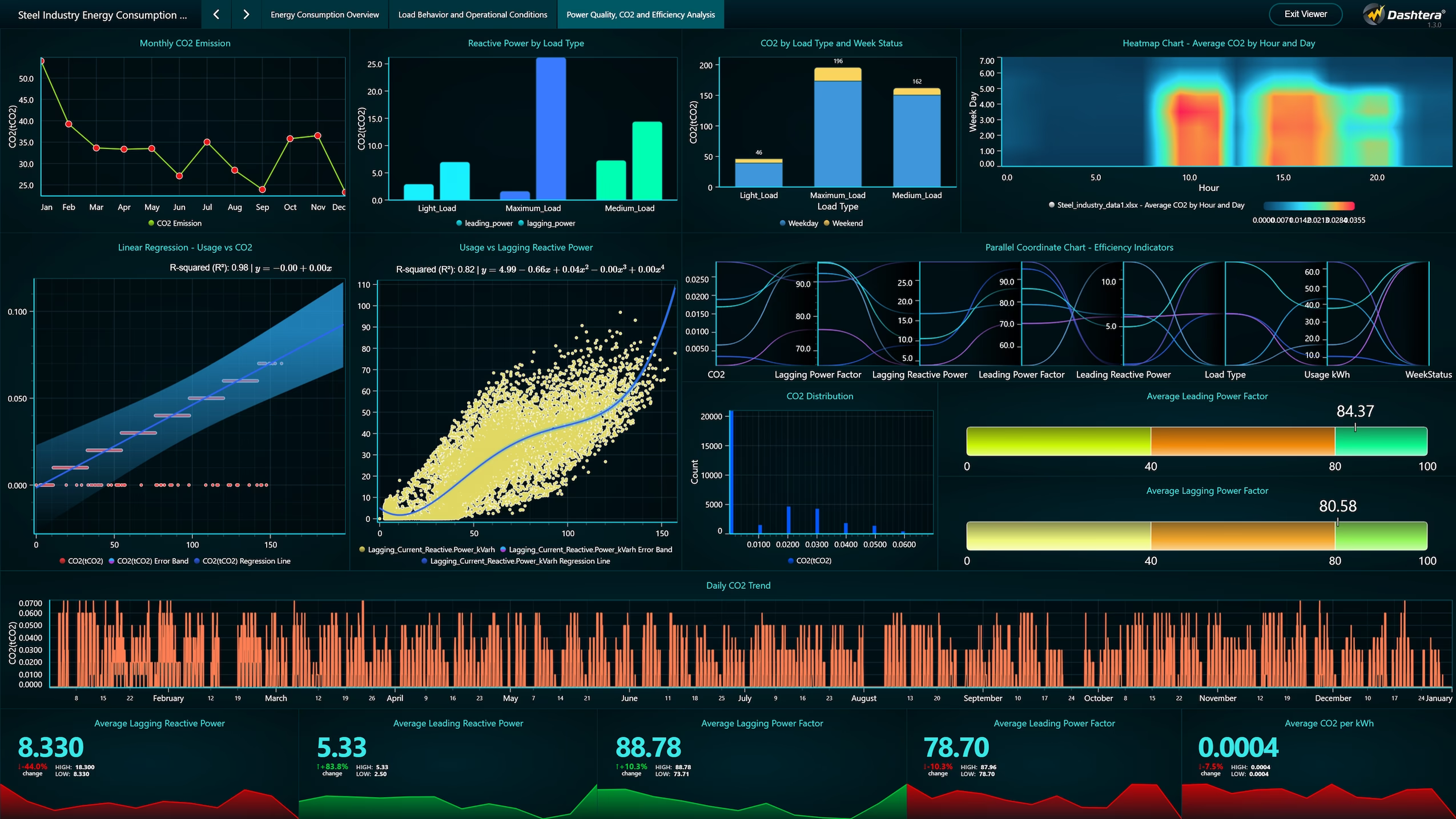
The Power Quality, CO2 and Efficiency Analysis page evaluates electrical efficiency, reactive power behavior, carbon emissions, and relationships between operational variables.
Monthly CO2 emission analysis shows that January records the highest carbon emissions, exceeding 50 tCO2, while September exhibits the lowest values. These trends closely mirror monthly energy consumption patterns, confirming the direct relationship between electricity usage and environmental impact.
Reactive power analysis by load type demonstrates that Maximum_Load operations exhibit substantially higher lagging reactive power levels compared to Light_Load operations. This indicates increased reactive power demand during heavy industrial activity.
The stacked CO2 distribution by load type and week status shows that Maximum_Load weekday operations contribute the largest proportion of total emissions. Weekend emissions remain comparatively low across all load categories.
Heatmap analysis of average CO2 by hour and weekday reveals concentrated emission intensity during daytime operational periods. The strongest emission patterns occur during active production hours between approximately 9 AM and 8 PM.
Regression analysis between Usage_kWh and CO2 emissions demonstrates a strong positive relationship, with an R-squared value near 0.98. This indicates that carbon emissions increase proportionally with electricity consumption.
The regression analysis between energy usage and lagging reactive power also reveals a strong nonlinear relationship, suggesting that reactive power demand increases significantly under higher industrial load conditions.
The parallel coordinate chart provides a multidimensional comparison of efficiency indicators, including:
This visualization demonstrates how operational conditions influence electrical efficiency and environmental impact simultaneously.
The CO2 distribution histogram indicates that most operational intervals produce relatively low emission values, while high-emission events occur less frequently. Average leading power factor is observed at approximately 84.37, while average lagging power factor remains near 80.58. These values indicate moderate power efficiency but also suggest opportunities for improving reactive power compensation.
The daily CO2 trend chart highlights substantial variability in emission intensity throughout the year, reflecting changing operational loads and production schedules.
KPI panels further summarize key efficiency indicators:
Overall, this page highlights the close relationship between industrial load behavior, electrical efficiency, and environmental sustainability.
The dashboard is powered by MongoDB, utilizing aggregation pipelines for all analytical operations. Key transformations include grouping, projection, categorical mapping, time-series aggregation, and pivot restructuring. This approach ensures efficient processing of large datasets, real-time updates, and scalability for industrial applications.
The analysis demonstrates that industrial energy consumption is strongly influenced by operational load conditions and production schedules. Maximum_Load operations contribute the largest share of electricity demand and CO2 emissions, while weekday operations dominate overall industrial activity.
The regression analysis confirms a strong positive relationship between energy consumption and carbon emissions, indicating that higher production intensity directly increases environmental impact. Reactive power and power factor analysis further reveal opportunities for improving electrical efficiency through better power management strategies.
The dashboard also highlights the effectiveness of integrating MongoDB aggregation pipelines with Dashtera for real-time industrial analytics. Advanced visualizations such as heatmaps, regression charts, and parallel coordinate charts enable multidimensional analysis of operational behavior and sustainability indicators.
This study demonstrates the successful application of Dashtera and MongoDB for industrial energy consumption analytics within steel manufacturing environments. The developed dashboard provides a comprehensive framework for monitoring electricity usage, operational load behavior, power quality, and CO2 emissions.
The findings indicate that industrial energy demand is highly concentrated during maximum load operations and weekday production periods. The analysis further reveals strong relationships between energy consumption, reactive power behavior, and carbon emissions.
By utilizing MongoDB aggregation pipelines and advanced Dashtera visualizations, the proposed solution enables scalable, real-time, and data-driven industrial energy analysis. The dashboard supports operational optimization, sustainability monitoring, and improved decision-making for industrial energy management.
Share: