



The Supply Chain Analysis Dashboard provides a comprehensive analytical framework for examining the performance, efficiency, and operational dynamics of a supply chain system. Developed using the Dashtera no-code business intelligence platform, the dashboard enables analysts, logistics managers, and business decision-makers to explore supply chain data through interactive visualizations and SQL-driven insights.
Modern supply chains involve multiple interconnected stages, including production, inventory management, order processing, transportation, and final sales. Understanding how these stages interact is critical for improving operational efficiency, reducing costs, and maximizing profitability.
This dashboard leverages PostgreSQL as the backend database, allowing real-time querying and aggregation of supply chain data. The analysis is structured across three dashboard pages, covering sales performance, logistics operations, and manufacturing quality. Together, these pages provide a holistic view of the supply chain lifecycle, enabling data-driven decision-making and performance optimization.
The dataset used in this project is sourced from a supply chain analysis dataset available on Kaggle, containing detailed operational data related to product sales, logistics, and manufacturing processes.
The dataset captures key supply chain components, including product types, pricing, inventory levels, supplier details, transportation modes, shipping costs, production volumes, and quality metrics such as defect rates and inspection results.
With approximately 5000 records, the dataset supports various analytical objectives, including:
Dataset Description
The dataset represents the end-to-end supply chain process, capturing multiple dimensions of business operations. Core variables include product type, SKU, price, availability, number of products sold, and revenue generated, which together describe sales performance.
Logistics-related variables include shipping times, shipping carriers, transportation modes, routes, and shipping costs, enabling analysis of delivery efficiency and cost structures. Supplier and location attributes provide insight into geographic and vendor-based performance differences.
Manufacturing-related variables such as production volumes, manufacturing lead time, manufacturing costs, and inspection results allow for evaluation of production efficiency and product quality. Additionally, defect rates provide a quantitative measure of quality performance.
Derived metrics such as profit and inventory turnover were incorporated to support business-oriented analysis, allowing the dataset to be explored from financial, operational, and efficiency perspectives. These variables collectively enable multi-dimensional analysis across the entire supply chain lifecycle.
Dashtera is a cloud-based no-code business intelligence platform that enables users to build interactive dashboards using direct SQL queries without requiring advanced programming skills.
Key Features
Advantages
The dashboard is organized into three analytical pages, each focusing on a distinct aspect of the supply chain.
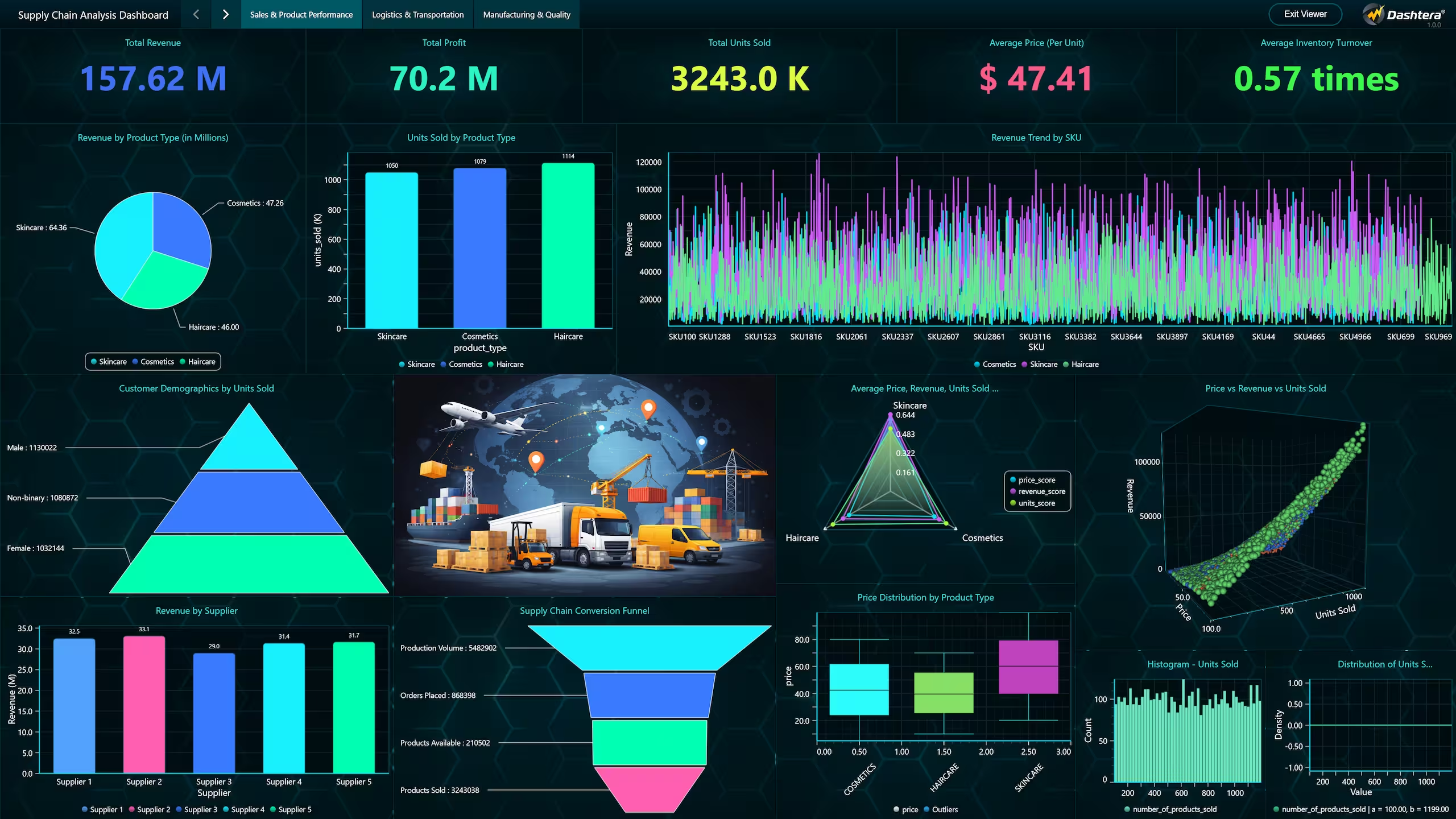
The first dashboard page provides an overview of sales performance and product-level insights. The total revenue generated across the dataset is approximately 157.62 million, while the total profit stands at 70.2 million, indicating strong profitability. The total number of units sold is approximately 3.24 million, with an average product price of 47.41 and an average inventory turnover ratio of 0.57.
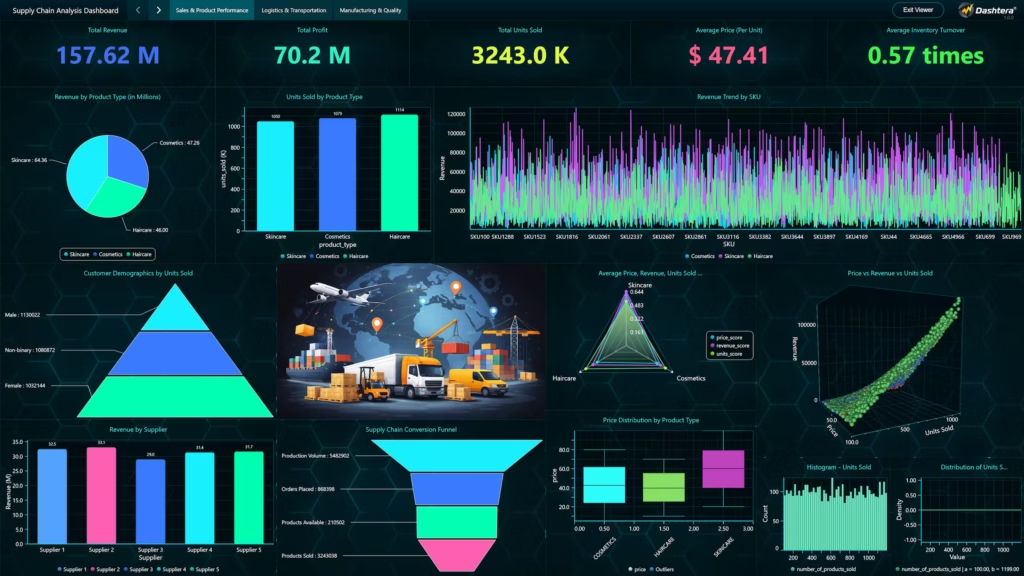
Revenue distribution across product types shows that Skincare products generate the highest revenue (64.36 million), followed by Cosmetics and Haircare. However, unit sales are relatively balanced across all product categories, suggesting consistent demand across product lines.
Customer demographic analysis reveals that male customers contribute the most units sold, followed by non-binary and female customers. This insight can help businesses tailor marketing strategies and product offerings.
The Supply Chain Conversion Funnel illustrates the flow of products through different stages. While production volume is high at approximately 5.48 million units, there is a significant drop in availability, indicating potential inefficiencies in inventory management or distribution.
Advanced visualizations such as spider charts and 3D scatter plots highlight relationships between price, revenue, and sales, while box plots and histograms reveal that unit sales follow a relatively uniform distribution. These insights help identify pricing strategies and product performance patterns.
The second dashboard page focuses on logistics performance and transportation efficiency. The average shipping cost is approximately 8.57, while the average shipping time is 8.60 days. The total transport cost across all operations is approximately 10.82 million, and the average lead time is 22.14 days.
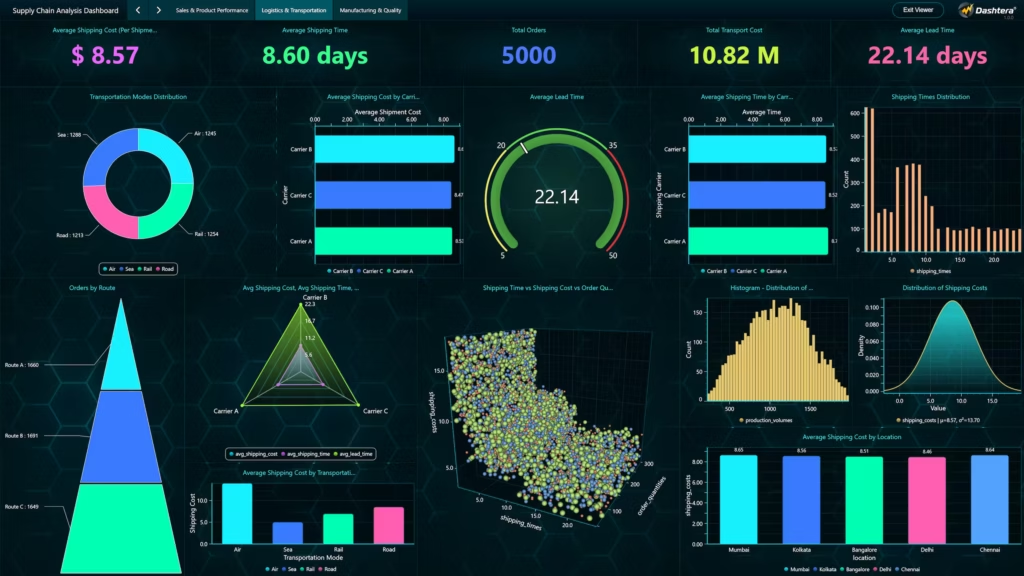
Transportation mode distribution shows a balanced usage across Air, Sea, Rail, and Road, indicating a diversified logistics strategy. Among shipping carriers, costs are relatively similar, suggesting competitive pricing and consistent service levels.
Route-based analysis reveals that orders are evenly distributed across major routes, indicating efficient route planning. Location-based analysis shows minor variations in shipping costs across cities such as Mumbai, Kolkata, Bangalore, Delhi, and Chennai.
The distribution of shipping costs follows a normal distribution, indicating stable logistics pricing without extreme outliers. Overall, this page highlights a well-balanced logistics system with opportunities for optimizing lead time and cost efficiency.
The third dashboard page explores manufacturing efficiency and product quality. The average manufacturing cost is 23.68, while the average manufacturing lead time is 11.05 days. The average defect rate is 3.99, and total production volume reaches approximately 5.48 million units.
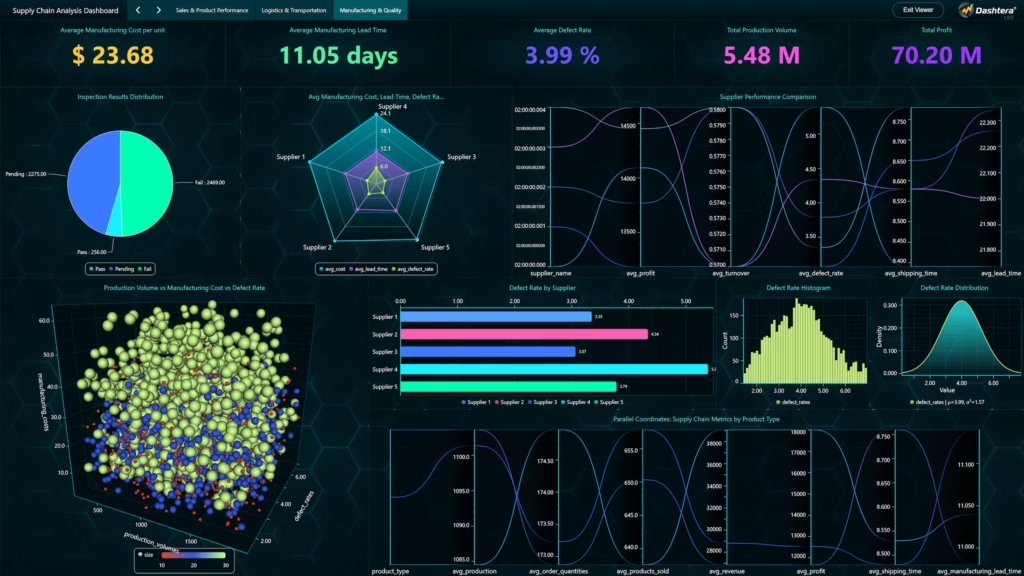
Inspection results indicate that a large portion of products fall under “Pending” and “Fail” categories, suggesting potential quality control challenges. Supplier-level analysis reveals variation in defect rates, with some suppliers performing better than others in maintaining product quality.
Advanced visualizations such as spider charts and parallel coordinates provide multi-dimensional comparisons of supplier performance, highlighting trade-offs between cost, quality, and efficiency. The parallel coordinates charts effectively illustrate supply chain flow metrics across product types and suppliers, enabling deeper operational insights.
The defect rate distribution follows a normal pattern, indicating consistent quality performance with manageable variability. 3D scatter plots further reveal relationships between production volume, manufacturing cost, and defect rates, helping identify efficiency opportunities.
The dashboard relies on PostgreSQL as the core data storage and analytical engine. All raw and transformed data are stored within the database, allowing Dashtera to execute SQL queries directly for visualization.
This integration enables efficient computation of key metrics, real-time filtering, and dynamic aggregation without requiring external data processing. PostgreSQL provides scalability, flexibility, and consistency, ensuring reliable and reproducible analytical results.
The Supply Chain Analysis Dashboard demonstrates how complex operational data can be transformed into meaningful business insights using modern business intelligence tools. The first dashboard page highlights revenue and product performance, revealing balanced demand across product categories and opportunities for improving inventory efficiency.
The second page focuses on logistics operations, showing a well-distributed transportation system with consistent cost structures. The third page provides deeper insights into manufacturing and quality, identifying supplier-level variations and opportunities for improving defect rates.
Overall, the dashboard illustrates the importance of integrating sales, logistics, and manufacturing data to gain a comprehensive understanding of supply chain performance.
The Supply Chain Analysis Dashboard showcases the power of combining Dashtera and PostgreSQL to analyze and visualize complex supply chain data. By integrating multiple operational dimensions into a structured dashboard, the project enables data-driven decision-making across sales, logistics, and manufacturing processes.
The three-page dashboard design provides a logical progression from high-level performance metrics to detailed operational insights and advanced analytical views. This approach demonstrates how business intelligence platforms can support supply chain optimization, cost reduction, and quality improvement.
The project highlights the value of transforming raw operational data into actionable insights, making it a valuable tool for supply chain analysts, business managers, and decision-makers.
Share: