





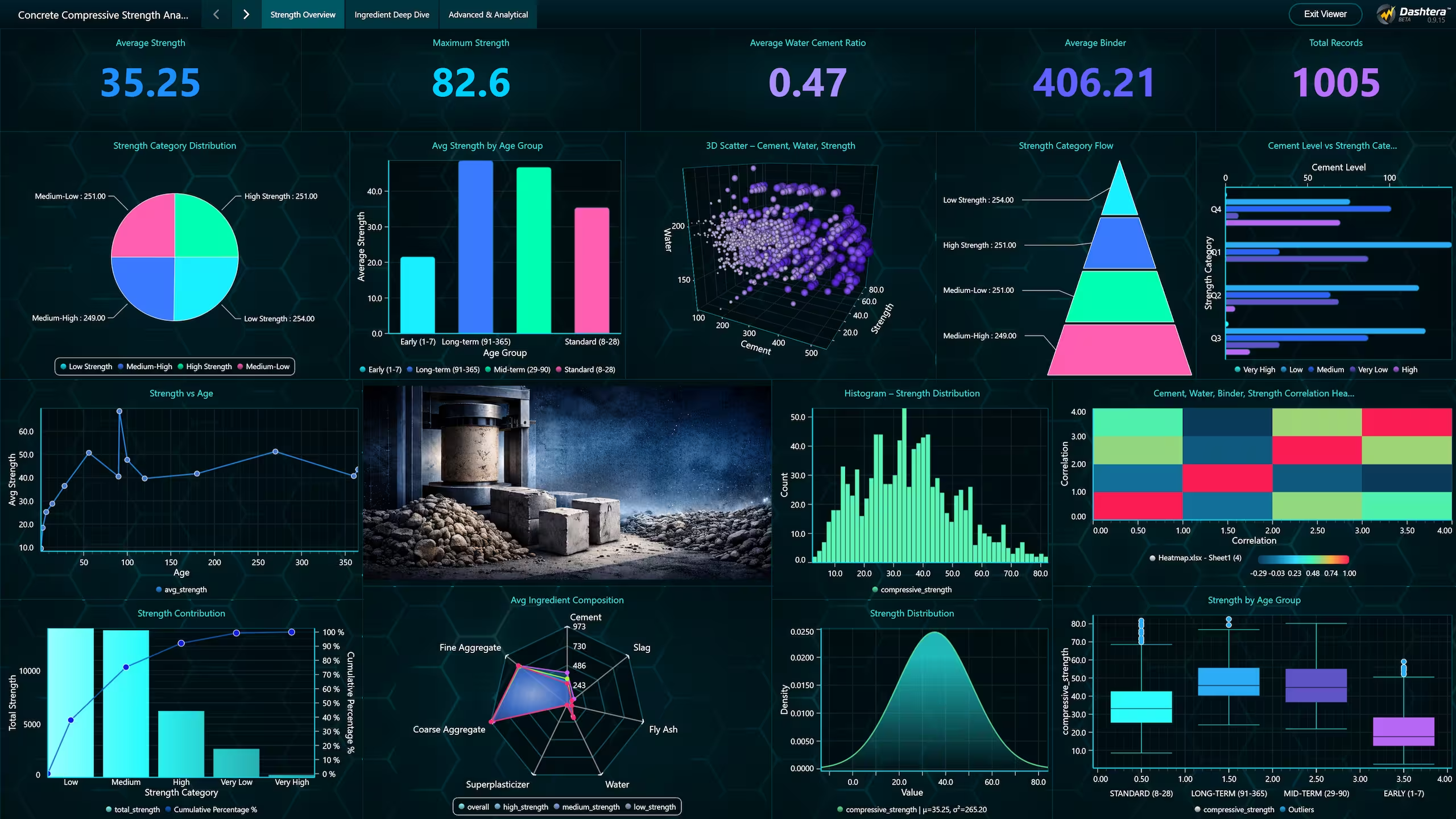
The Concrete Compressive Strength Analysis Dashboard provides a structured analytical framework for exploring the relationships between concrete ingredients, curing age, and resulting compressive strength. Developed using the Dashtera no-code business intelligence platform, the dashboard enables engineers, material scientists, and construction analysts to investigate complex material behaviour through interactive visual analytics.
Concrete compressive strength is influenced by multiple factors, including cement content, water content, aggregate composition, mineral additives such as fly ash and slag, and curing time. Understanding how these variables interact is essential for optimizing mix designs, improving durability, and achieving cost-efficient structural performance.
The dashboard uses PostgreSQL as the centralized data storage system, allowing Dashtera to query the dataset directly through SQL aggregations and analytical computations. Across three analytical pages, the dashboard integrates material composition analysis, curing effects, strength distribution, and advanced statistical metrics to provide meaningful insights into concrete performance.
This project demonstrates how material science datasets can be transformed into an interactive decision-support dashboard, supporting engineering analysis, mix optimization, and data-driven quality control in construction materials.
You can access and interact with the Concrete Compressive Strength Analysis Dashboard.
The dataset used in this project originates from experimental studies on concrete compressive strength, where multiple ingredient combinations were tested to evaluate their influence on structural performance.
Concrete compressive strength represents the maximum load a concrete specimen can withstand under compression, typically measured in megapascals (MPa). It is one of the most critical parameters used in structural engineering and quality assurance in construction.
The dataset contains 1005 experimental concrete mix designs, with varying quantities of cement, water, slag, fly ash, superplasticizer, and aggregates. Each observation also includes the curing age of the concrete sample, which significantly affects strength development.
The dataset supports multiple analytical objectives, including:
Dataset Description
The dataset captures the composition of concrete mixes and the resulting compressive strength values measured under laboratory conditions. Ingredient variables include cement, blast furnace slag, fly ash, water, superplasticizer, coarse aggregate, and fine aggregate, each measured in kilograms per cubic meter. These components represent the primary materials used in concrete production and collectively determine the mixture’s mechanical properties. In addition to ingredient quantities, each observation includes the curing age of the concrete sample measured in days, which significantly influences strength development due to ongoing hydration reactions.
Beyond the raw dataset variables, several derived analytical features were generated using SQL transformations in PostgreSQL to support deeper statistical analysis. These include binder content, aggregate ratios, water-binder ratios, interaction terms between ingredients, and logarithmic transformations of strength and age. Additional categorical variables, such as age groups and strength categories, were introduced to enable grouped visual analysis within the dashboard. These derived metrics allow the dataset to be explored from multiple analytical perspectives, including distribution analysis, correlation studies, and performance efficiency evaluation.
Dashtera is a modern cloud-based no-code business intelligence platform designed for building interactive dashboards and data exploration environments without complex programming.
The platform integrates directly with PostgreSQL databases, allowing users to run SQL queries and instantly visualize aggregated data in various charts.
Key Features
Advantages
he Concrete Compressive Strength Dashboard is organized into three analytical pages that progressively explore the dataset from general performance patterns to deeper material interactions and statistical insights. Each page focuses on a distinct aspect of the dataset, allowing users to examine concrete strength behavior from multiple perspectives.
The first page provides a comprehensive overview of compressive strength characteristics across the dataset. The overall average compressive strength is observed to be approximately 35.25 MPa, while the maximum recorded strength reaches 82.6 MPa. The average water–cement ratio is approximately 0.47, and the mean binder content across all mixes is about 406.21 kg/m³. These indicators provide an initial understanding of the dataset’s overall material composition and structural performance range across 1005 experimental observations.
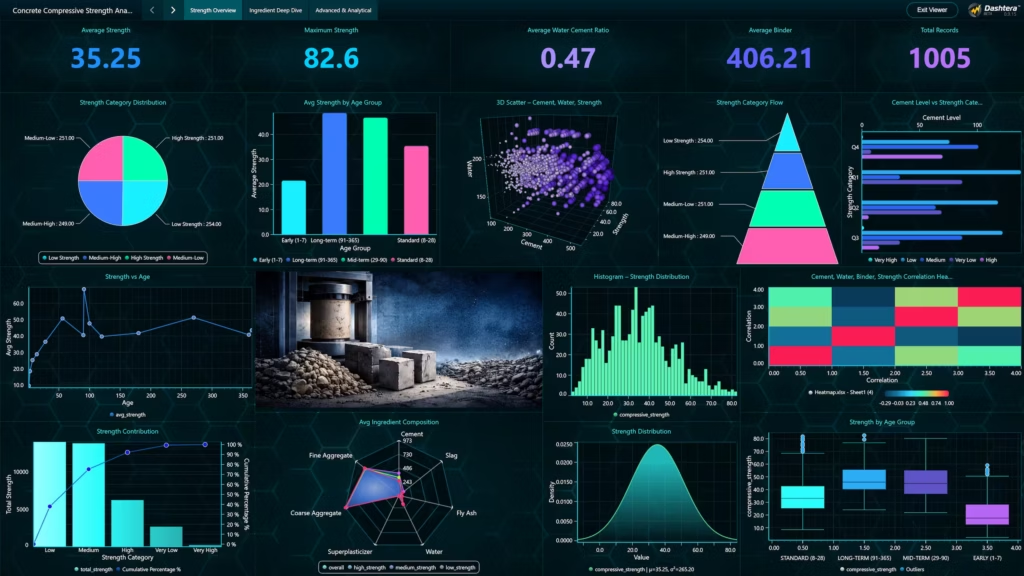
The distribution of strength categories shows that the dataset is relatively balanced across low, medium-low, medium-high, and high strength classes. This balanced distribution enables meaningful comparisons between different strength levels during subsequent analysis. Age-based analysis further reveals a clear progression in compressive strength as curing time increases. Concrete specimens cured for early periods of one to seven days exhibit significantly lower strength compared to those cured for longer durations.
Specimens in the standard curing range of eight to twenty-eight days demonstrate moderate strength development, while mid-term and long-term curing periods show substantially higher average strength values. This trend aligns with established engineering knowledge that concrete strength increases over time as hydration reactions continue within the material matrix.
Multivariate visualizations further illustrate the relationships between ingredient composition and compressive strength. Three-dimensional scatter plots reveal that mixes containing higher cement content combined with moderate water levels tend to produce stronger concrete.
Histogram and statistical distribution charts indicate that compressive strength values follow an approximately normal distribution across the dataset, suggesting that regression and predictive modeling approaches are suitable for analyzing the data.
Correlation heatmaps highlight significant relationships between binder content, cement proportion, and strength outcomes, confirming that binder composition is a key driver of concrete performance.
The second dashboard page focuses on a detailed analysis of ingredient composition and its influence on compressive strength. Examination of the dataset reveals that the average cement content across all mixes is approximately 281.2 kg/m³, while the average water content is approximately 181.6 kg/m³. When supplementary cementitious materials such as slag and fly ash are included, the average total binder content increases to roughly 409.3 kg/m³.
The average superplasticiser-to-binder ratio is approximately 0.015, while the aggregate-to-binder ratio averages around 0.80, indicating that aggregates constitute the majority of the material volume in concrete mixes.
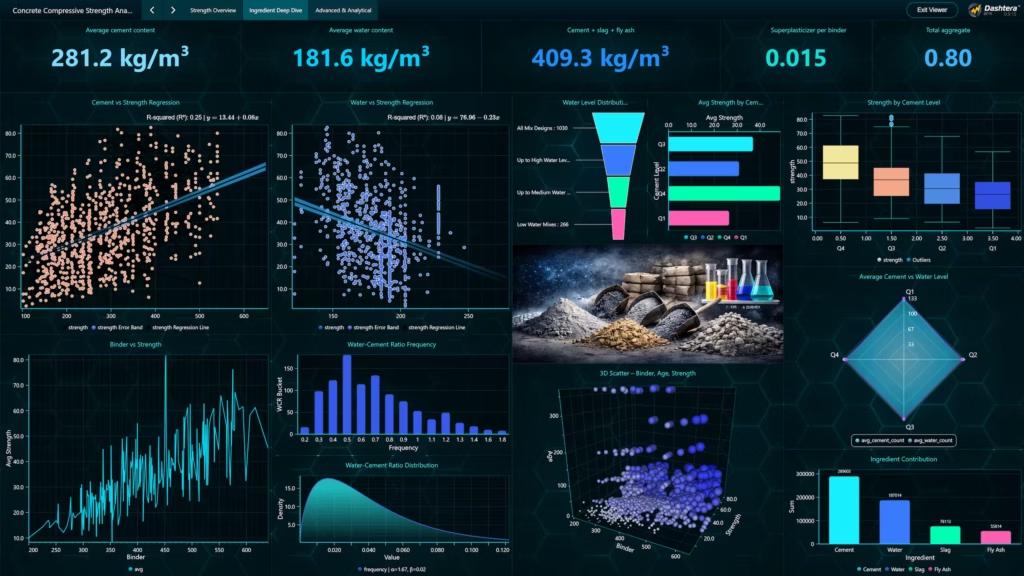
Regression analyses presented on this page explore the relationships between key ingredients and compressive strength. Increasing cement content generally leads to higher compressive strength, reflecting cement’s fundamental role as the primary binding agent in concrete. In contrast, higher water content often reduces strength due to increased porosity in the hardened concrete structure. Binder-strength analysis further demonstrates that the combined influence of cement, slag, and fly ash contributes significantly to the final mechanical performance of the material.
Additional visualizations explore the distribution of water–cement ratios within the dataset and their impact on compressive strength outcomes. Concrete mixes categorized by cement content levels demonstrate a clear pattern in which higher cement quartiles produce higher average strength values. Multivariate scatter plots combining binder content, curing age, and compressive strength further reveal the complex interactions between material composition and time-dependent strength development.
Aggregate ingredient contributions are also analyzed, demonstrating that cement and aggregates account for the majority of material composition, while supplementary materials play a secondary yet important role in enhancing performance characteristics.
The third dashboard page introduces more advanced analytical metrics designed to explore nonlinear relationships and statistical characteristics within the dataset. Logarithmic transformations of age and strength are used to analyze strength growth patterns across curing durations.
The average logarithmic strength value is approximately 3.485, while derived efficiency metrics indicate that the average strength produced per unit of binder is approximately 0.086 MPa per kilogram per cubic meter. These metrics provide insights into how efficiently binder materials contribute to compressive strength development.
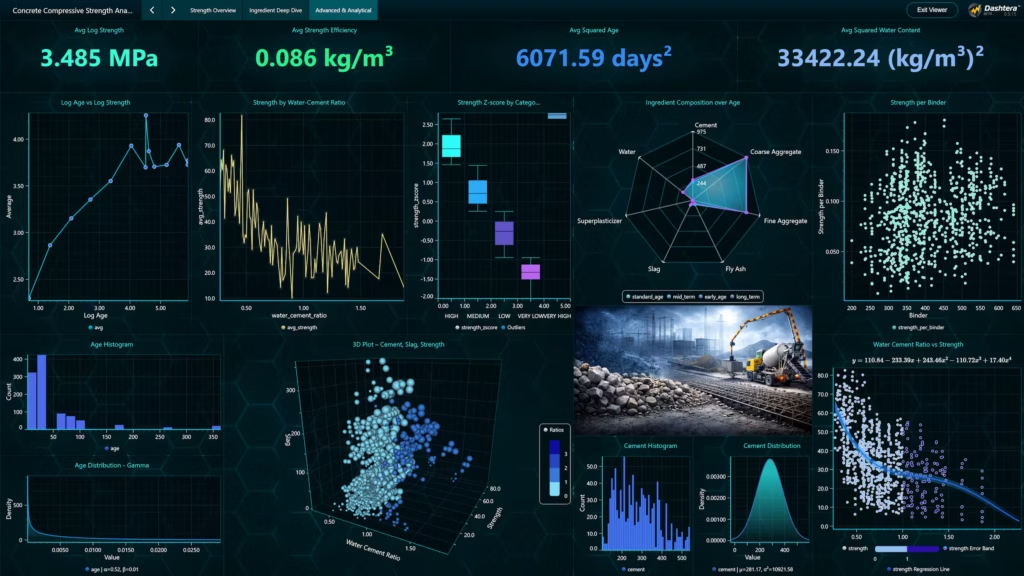
Additional derived indicators include squared transformations of age and water content, which support nonlinear modeling and trend analysis. The average squared curing age value within the dataset is approximately 6071.59 days², while the squared water content metric averages around 33422.24 (kg/m³)². These transformations allow analytical models to capture nonlinear growth patterns and interaction effects that may not be visible in simple linear analysis.
Visualizations on this page further explore the relationships between ingredient ratios and strength outcomes. Line charts demonstrate how compressive strength varies with the water–cement ratio, highlighting the inverse relationship between these variables.
Box plots of standardized strength scores allow strength values to be compared across different categorical groups in a normalized form. Additional scatter plots examine strength efficiency relative to binder usage, revealing variability in how effectively different mix designs convert material inputs into mechanical performance.
Distribution plots of cement content further illustrate the variability of mix compositions within the dataset and their influence on structural outcomes.
The dashboard architecture relies on PostgreSQL as the primary data storage and analytical processing engine. All raw data and derived analytical features are stored within the database, allowing Dashtera to perform SQL queries directly for visualization and aggregation. This integration enables efficient computation of statistical measures, filtering operations, and categorical transformations without requiring intermediate data processing steps.
Using PostgreSQL as the backend data repository provides several advantages for dashboard development. It allows scalable storage of experimental data, supports complex analytical queries, and enables real-time updates within the dashboard environment. By eliminating manual data export and transformation workflows, the integration ensures that analytical results remain consistent and reproducible throughout the project.
The Concrete Compressive Strength Dashboard demonstrates how experimental material science data can be transformed into an integrated analytical framework for engineering insights.
The first dashboard page establishes an overview of strength distributions and curing behavior, confirming known relationships between curing time and compressive strength development. The second page focuses on ingredient composition and highlights the significant influence of cement content and water-cement ratios on concrete performance. The final page introduces advanced statistical analysis and derived metrics that provide deeper insights into efficiency and nonlinear strength behavior.
Together, these analytical views illustrate the value of combining engineering datasets with business intelligence visualization platforms. The interactive nature of the dashboard allows engineers and analysts to explore complex relationships between material composition, curing conditions, and structural performance in an intuitive and visually interpretable manner.
The Concrete Compressive Strength Analysis Dashboard illustrates how Dashtera and PostgreSQL can be combined to transform raw experimental datasets into meaningful analytical tools for materials engineering. By integrating ingredient composition, curing age, and compressive strength measurements into a structured dashboard environment, the project enables detailed exploration of the factors influencing concrete performance.
The three-page dashboard structure provides a logical progression from general strength overview to ingredient analysis and advanced statistical insights. This approach demonstrates the effectiveness of modern business intelligence platforms in supporting engineering research, construction analytics, and data-driven decision making in materials science.
Share: