The Building Energy Efficiency Dashboard provides a structured, multi-dimensional exploration of residential building performance, focusing on geometry, glazing, thermal loads, and energy efficiency. Developed using the Dashtera no-code business intelligence platform, the dashboard allows engineers, architects, and energy analysts to interpret complex building simulation data through visually intuitive analytical views.
Leveraging PostgreSQL as the centralized data repository, Dashtera queries the building dataset directly using SQL for aggregation and visualization. Across three analytical pages, the dashboard integrates geometric characteristics, thermal energy demands, glazing impacts, and design optimization metrics, providing actionable insights into building efficiency, energy consumption patterns, and performance trade-offs.
This project demonstrates how high-dimensional building simulation data can be transformed into a structured analytical narrative, suitable for energy performance studies, sustainable design optimization, and decision-support dashboards.
Each record captures eight features: Relative Compactness, Surface Area, Wall Area, Roof Area, Overall Height, Orientation, Glazing Area, and Glazing Distribution, alongside two target outputs: Heating Load and Cooling Load. These variables allow both regression and classification analyses to assess building energy efficiency.
The dataset supports:
Building performance evaluation and optimization
Energy demand analysis for design decision support
Sustainable architecture and policy planning
Business intelligence dashboard development
Dataset Description
The dataset records building-level simulation outcomes for 768 configurations, capturing geometry, glazing, thermal loads, and efficiency metrics.
Analytical Domains:
Building Geometry: Relative Compactness, Surface Area, Wall Area, Roof Area, and Overall Height define building form and envelope characteristics.
Glazing & Orientation: Glazing Area, Glazing Distribution, and Orientation impact daylighting, heat gain, and thermal loads.
Thermal & Energy Metrics: Heating Load, Cooling Load, Total Load, Efficiency Ratio, Energy Performance Score, and Glazing Impact quantify energy demand and design efficiency.
These domains collectively enable comprehensive analysis of building design impacts on energy performance, supporting both descriptive and prescriptive insights for sustainable architecture.
Dashtera
Dashtera is a cloud-based, no-code BI platform designed for visual analytics and decision-support dashboards. The platform supports PostgreSQL, CSV, and API data sources, enabling dynamic querying, aggregation, and visualization.
Key Features:
Wide range of visualizations, including heatmaps, Pareto charts, scatter plots, line charts, and radar charts
Combines advanced analytics with a user-friendly interface
Flexible, lightweight platform for real-time energy performance analysis
Dashboard Analysis
The Building Energy Efficiency Dashboard comprises three pages, each providing a distinct analytical perspective: building characteristics, thermal performance, and design optimization.
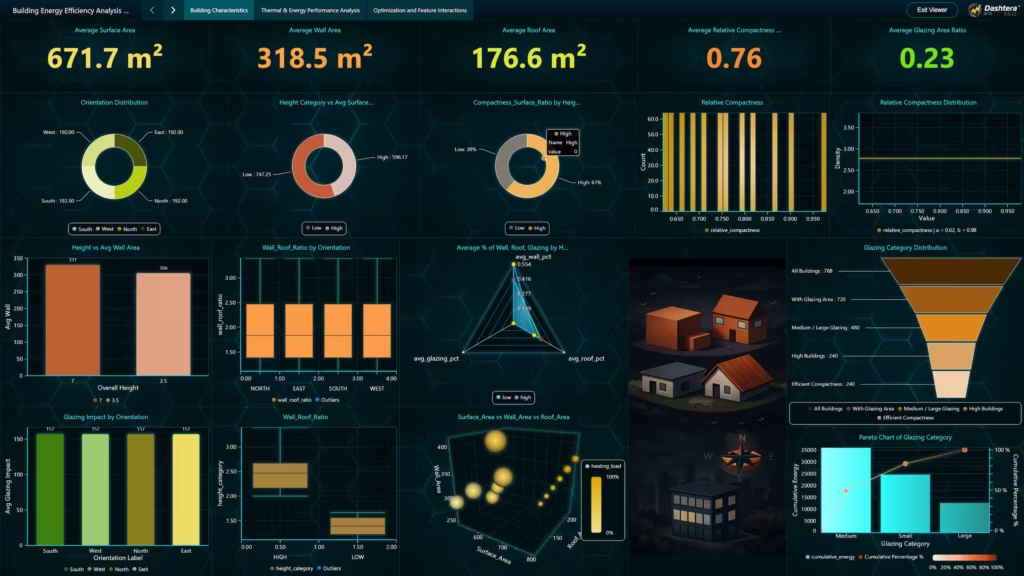
Building Characteristics
Page 1 presents macro-level insights into building geometry and glazing distributions. KPIs indicate an average Surface Area of 671.7m², Wall Area of 318.5m², Roof Area of 176.6m², Relative Compactness of 0.76, and Glazing Area of 0.23.
Orientation distributions are uniform across South, West, North, and East (192 buildings each). Low-height buildings exhibit a larger average surface area (747.25m²) compared to High-height buildings (596.17m²). Bar charts show taller buildings (7m) have slightly higher average wall areas (330.75m²) than shorter buildings (3.5m, 306.25m²).
Funnel analysis highlights the distribution of glazing categories, with all buildings (768) filtered to designs with glazing, medium/large glazing, and efficient compactness. Pareto charts identify Large glazing designs as the dominant energy contributor (34.87%), followed by Small (33.38%) and Medium (31.75%). Bar charts indicate average glazing impact remains consistent across orientations (~157.43kWhm⁻²). Compactness-to-surface ratio analysis reveals higher efficiency in taller buildings, confirming that design form influences energy distribution.
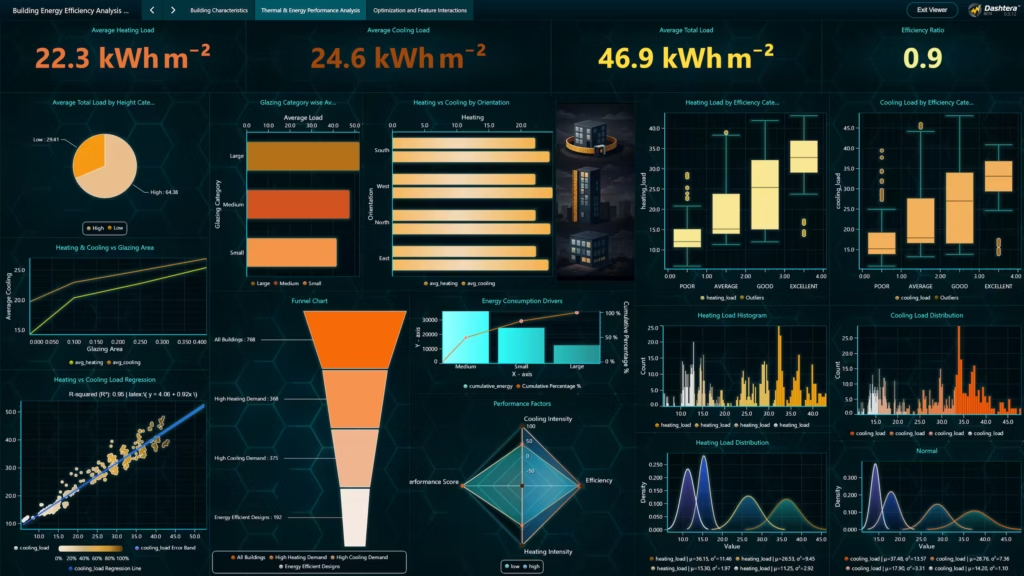
Thermal & Energy Performance Analysis
Page 2 focuses on heating, cooling, and total energy demand. Thermal KPIs report Heating Load of 22.3kWhm⁻², Cooling Load of 24.6kWhm⁻², Total Load of 46.9kWhm⁻², and Efficiency Ratio of 0.9.
Regression and distribution visualizations show linear relationships between heating and cooling loads. Height category analysis highlights that High-height buildings consume more total energy (64.38kWhm⁻²) than Low-height buildings (29.41kWhm⁻²). Bar charts confirm large glazing areas increase total load (Large: 52.32kWhm⁻² vs Medium: 47.65kWhm⁻² vs Small: 41.74kWhm⁻²). Line charts demonstrate energy increases systematically with glazing area (0.4 → Heating 25.41kWhm⁻², Cooling 26.91kWhm⁻²).
Stacked bar charts show that orientation minimally influences load distribution, while funnel and Pareto analyses identify high-demand and energy-efficient designs. Spider/radar charts normalize performance metrics, showing Low-height buildings have lower energy loads (33–39%) but higher efficiency (87.5%) and performance (100%) relative to High-height buildings.
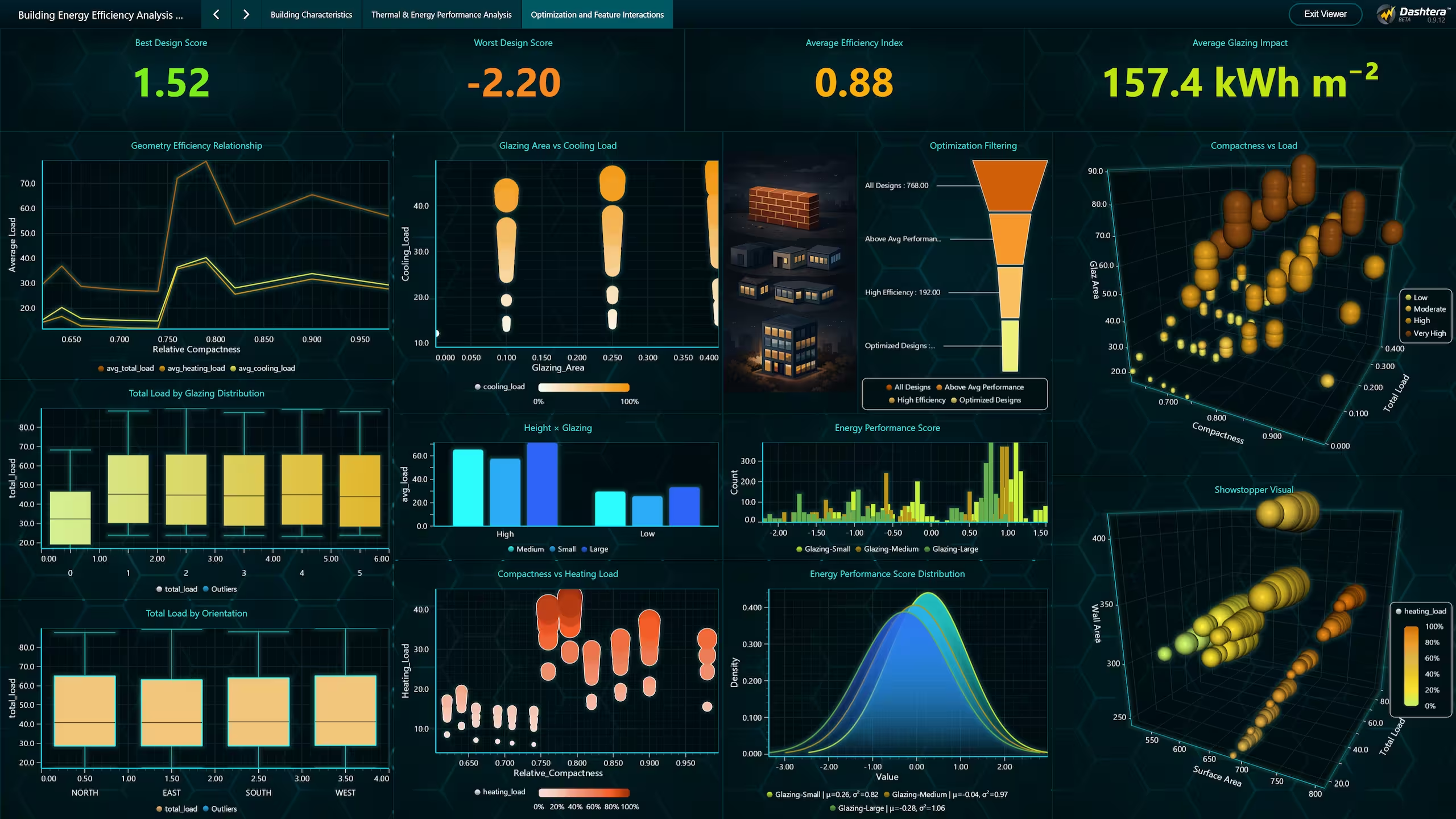
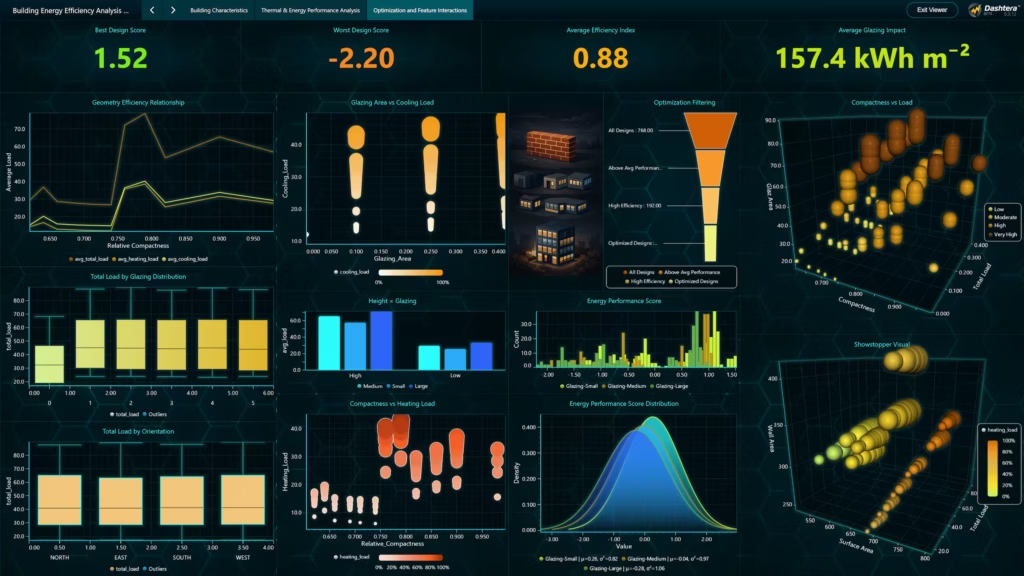
Design Optimization and Interactions
Page 3 integrates performance metrics, optimization filters, and design interactions. KPIs indicate a Best Design Score of 1.52, Worst Design Score of -2.20, Average Efficiency Index of 0.88, and Glazing Impact of 157.4kWhm⁻².
Stacked bar and line charts explore the combined influence of Height Category and Glazing Category on energy load. High-height and large-glazing buildings exhibit the highest loads (71.28kWhm⁻²), while Low-height small-glazing buildings remain minimal (25.82kWhm⁻²). Funnel analysis filters 768 total designs to 397 above-average performance, 192 high-efficiency, and 65 optimized designs, providing actionable design insights for sustainable building configurations.
Heatmaps and statistical summaries on this page reveal correlation structures between geometry, glazing, and thermal performance, supporting evidence-based design optimization and energy efficiency improvements.
Dashtera Integration with PostgreSQL
The dashboard uses PostgreSQL as a centralized data warehouse. Dashtera connects directly to this database for real-time querying, aggregation, and visualization.
Benefits:
Eliminates manual data export workflows
Enables real-time exploration of building simulation data
Supports scalable analytical computations and filtering
Facilitates rapid dashboard deployment and iterative analysis
Discussion
The Building Energy Efficiency Dashboard demonstrates that simulated building performance data can be transformed into actionable design intelligence. Page 1 validates geometric and glazing assumptions, Page 2 highlights thermal loads and efficiency trade-offs, and Page 3 guides optimization decisions based on energy performance metrics.
The combination of KPIs, funnel charts, Pareto analyses, spider/radar plots, and heatmaps enables a comprehensive view of energy behavior, supporting architects, engineers, and sustainability analysts in evidence-based decision-making.
Conclusion
The dashboard illustrates how Dashtera, in combination with PostgreSQL, can deliver meaningful, real-time insights into residential building energy performance. By integrating building geometry, glazing, thermal loads, and design optimization into three cohesive analytical pages, the dashboard provides a scalable framework for sustainable architecture, energy efficiency analysis, and performance-driven design.