



The Medical Symptoms & Diagnosis Analysis Dashboard presents a comprehensive analytical investigation of population characteristics, disease prevalence, symptom–severity relationships, and clinical risk indicators using a structured synthetic healthcare dataset. The dashboard was developed using the Dashtera no-code business intelligence platform and is designed to support interactive, multi-dimensional exploration of patient demographics, diagnostic patterns, symptom behavior, and physiological indicators.
By integrating demographic analysis, symptom mapping, disease severity evaluation, and clinical vitals and laboratory interpretation across four structured dashboard pages, the system enables meaningful exploratory healthcare analytics. The project demonstrates how medical-style datasets can be transformed into structured analytical narratives using visual methods, making it suitable for healthcare analytics learning, epidemiological exploration, and data visualization practice.
The dataset used in this project is obtained from Kaggle under the title Synthetic Medical Symptoms and Diagnosis Dataset. The dataset simulates patient-level healthcare information and includes demographic variables, diagnostic categories, symptom indicators, disease severity levels, clinical vitals, and laboratory results.
Although synthetic in origin, the dataset exhibits realistic distributions and relationships commonly observed in healthcare data, including variation in age groups, disease prevalence, symptom patterns, and physiological measurements. This makes it suitable for educational healthcare analytics, dashboard design, exploratory data analysis, and visualization-based interpretation of medical-style data.
Dataset Overview
The dataset consists of 3,000 patient records and includes a structured combination of demographic, clinical, and diagnostic attributes. Each patient record contains age, gender, and assigned age group, alongside one of five diagnoses: COVID-19, Dengue, Influenza, Malaria, or Pneumonia.
Eleven symptoms are encoded as binary indicators, including fever, cough, fatigue, headache, muscle pain, nausea, vomiting, diarrhea, skin rash, loss of smell, and loss of taste. In addition, each patient is assigned a disease severity category (None, Mild, Moderate, Severe).
The dataset further includes clinical vitals such as body temperature, oxygen saturation, heart rate, and blood pressure, as well as laboratory biomarkers including white blood cell count, platelet count, C-reactive protein level, and hemoglobin concentration. This multidimensional structure enables comprehensive exploration across population characteristics, clinical risk factors, and diagnostic behavior.
Dashtera is a cloud-based, no-code analytics platform designed to support the visual exploration and analysis of complex datasets. The platform enables users to construct interactive dashboards without programming, allowing for efficient examination of multidimensional data through line plots, bar charts, maps, regressions, and statistical summaries. Its interface allows data to be filtered, compared, and inspected from multiple perspectives, which makes it suitable for exploratory data analysis tasks.
Key Features
Dashtera’s flexibility makes it particularly suitable for exploratory data analysis and predictive insight presentation in healthcare and insurance domains.
The dashboard is organized into four analytical pages, each designed to examine a distinct dimension of the medical dataset. Together, these pages provide a structured analytical narrative progressing from population-level characteristics to symptom behavior and finally to clinical risk interpretation.
The first dashboard page focuses on understanding the demographic structure of the population and the overall distribution of diseases and symptoms. The top-level KPIs indicate that the dataset consists of 3,000 patients, with an average age of 43.68 years and a nearly balanced gender distribution, where males represent 51.4% of the population. The dataset includes five disease categories and eleven symptoms.
The patient age histogram demonstrates that the age distribution is approximately uniform across the population. This is further supported by the age group distribution, which shows representation across six life-stage categories: Child, Teen, Young Adult, Adult, Senior, and Elderly. Adults constitute the largest proportion of patients (22%), followed by Elderly (20%) and Young Adults (19%). This structured segmentation enables comparative analysis of disease patterns across age groups.
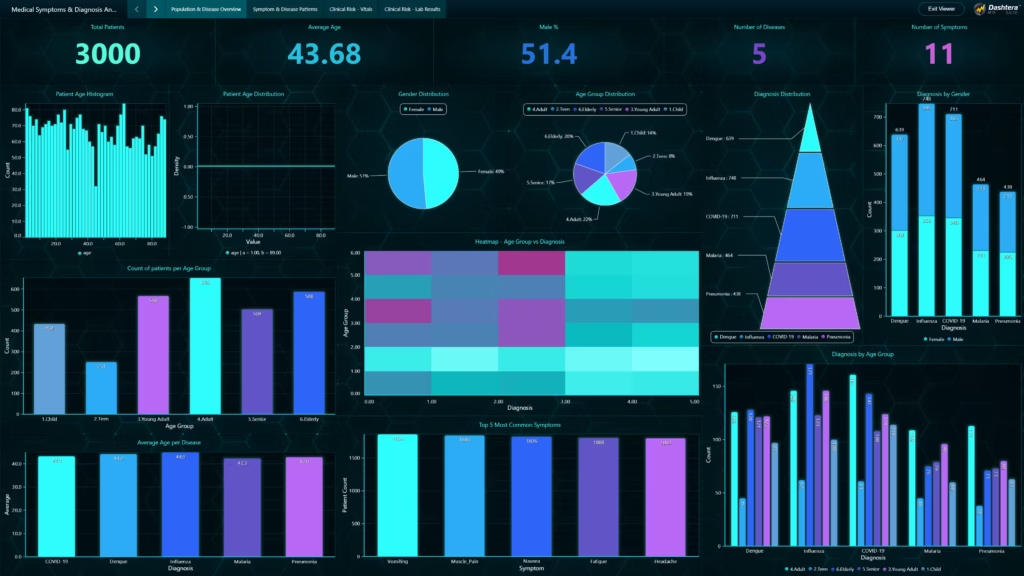
The analysis of disease prevalence across age groups is further enhanced through a heatmap that displays patient counts for each diagnosis within each age category. This visualization reveals how diseases are distributed across life stages and provides insight into relative disease burden within different demographic groups.
Symptom prevalence analysis identifies vomiting, muscle pain, nausea, fatigue, and headache as the five most common symptoms across the population. This suggests that the dataset reflects common clinical symptom patterns observed in infectious diseases.
Additional visualizations on this page, including diagnosis distribution, diagnosis by gender, and diagnosis by age group, allow multidimensional examination of disease behavior across demographic variables. Collectively, this page establishes the population context and baseline structure for the deeper clinical analyses presented in subsequent sections.
The second dashboard page focuses on examining the relationships between symptoms, disease severity, and diagnostic categories. A central component of this analysis is the severity–symptom heatmap, which illustrates how the presence of symptoms varies across severity levels (None, Mild, Moderate, Severe). This visualization supports the identification of symptoms that tend to intensify as disease severity increases.
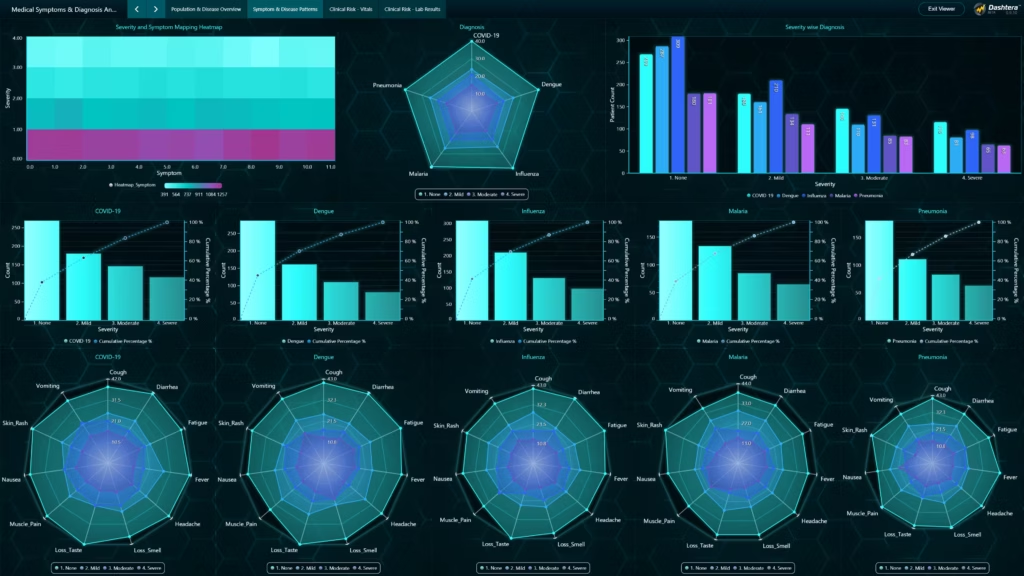
Diagnosis-wise severity distributions are visualized using spider charts, which show that the proportion of patients across severity categories remains relatively consistent across all five diseases. This consistency reinforces the internal coherence of the dataset and supports its suitability for comparative analytical exploration.
Pareto charts further illustrate the distribution of severity levels within each diagnosis. These charts demonstrate that the majority of cases fall within the None and Mild categories, while Severe cases form a smaller but clearly identifiable proportion.
The most detailed level of analysis on this page is provided by symptom–severity spider charts constructed separately for each diagnosis. These charts visualize the distribution of severity levels across all eleven symptoms, enabling comparative interpretation of symptom behavior within and across diseases. This approach supports pattern recognition and offers a structured way to explore how symptom profiles evolve with increasing disease severity.
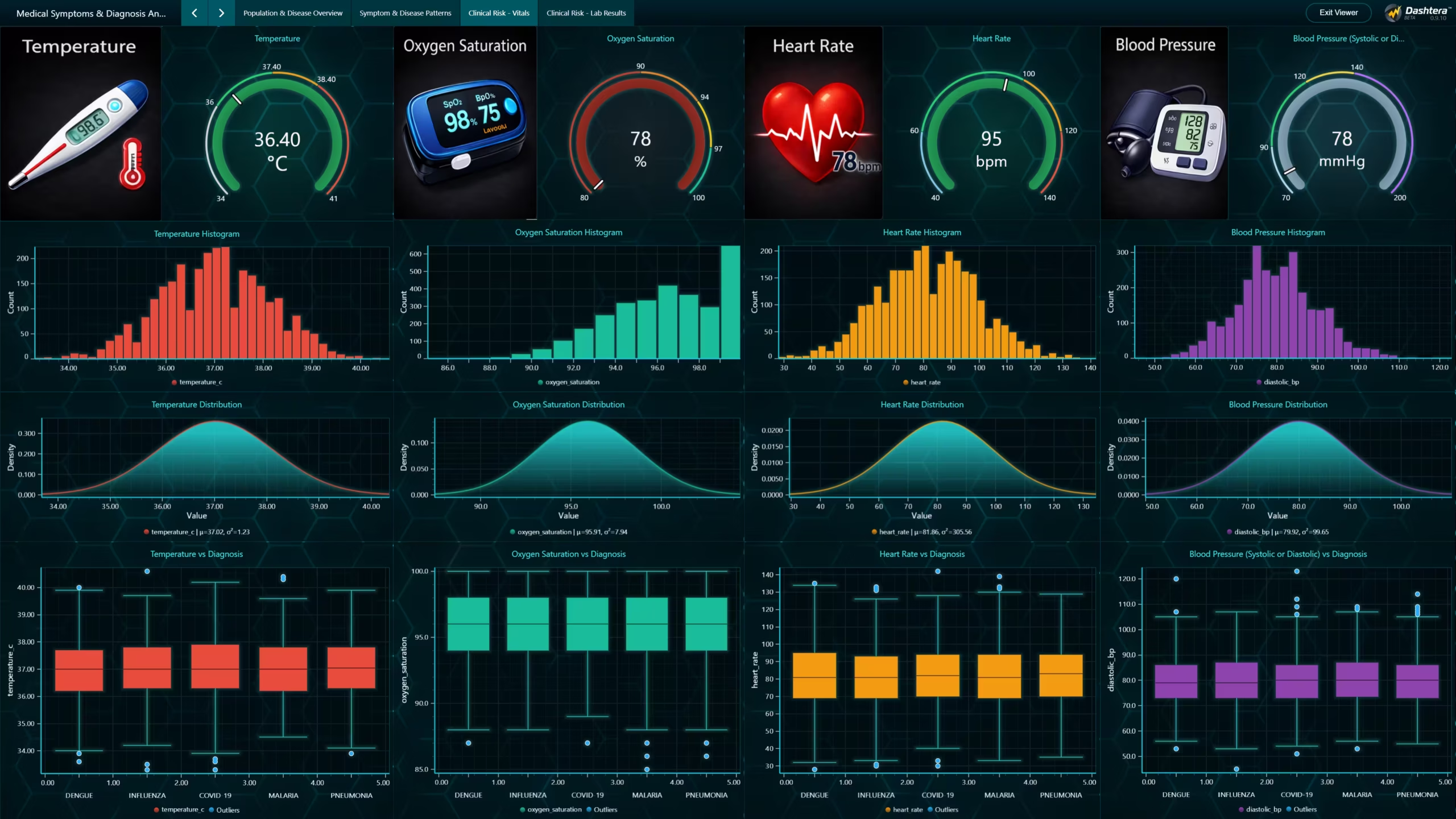
The third dashboard page transitions from demographic and symptom analysis to physiological risk interpretation using clinical vitals. Gauge charts are used to visualize the most recent patient readings for temperature, oxygen saturation, heart rate, and blood pressure. These gauges are designed with clinically meaningful thresholds, allowing for the intuitive identification of abnormal values.
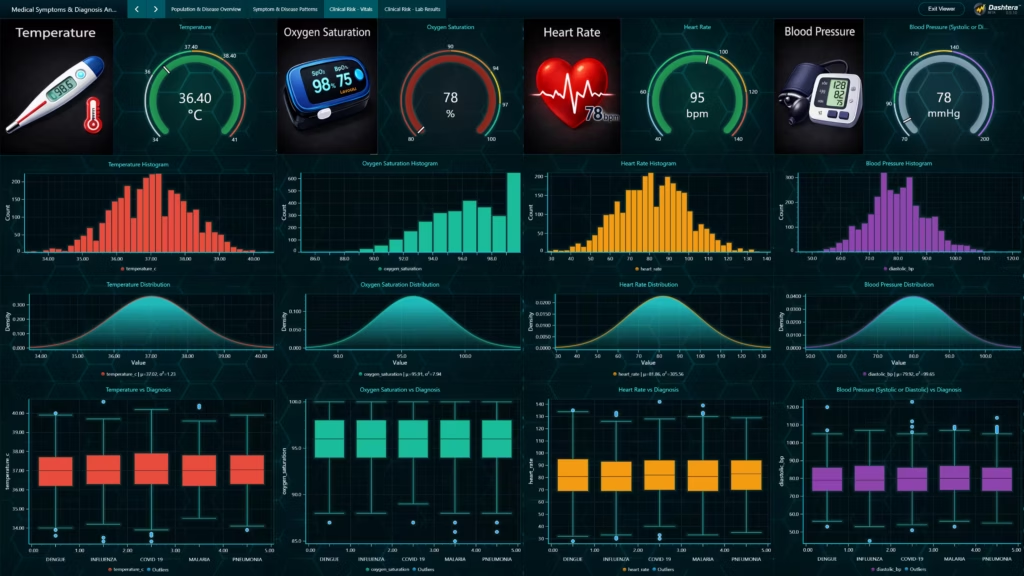
In addition to gauges, histograms, and distribution plots are used to examine the population-level behavior of each vital sign. These visualizations reveal the central tendencies, variability, and presence of outliers within each physiological measure. The inclusion of distribution curves further supports the statistical interpretation of the data.
Box plots are used to compare each vital sign across diagnostic categories. Through these visualizations, differences in distributions can be observed, such as variation in oxygen saturation among respiratory conditions or differences in temperature spread across diseases. This page demonstrates how standard clinical measurements can be transformed into analytical tools for risk interpretation.
The fourth dashboard page extends clinical risk analysis to laboratory biomarkers. Gauge charts are used to present individual-level readings for white blood cell count, platelet count, CRP level, and hemoglobin. These gauges are configured with appropriate value ranges to allow clear differentiation between normal and abnormal levels.
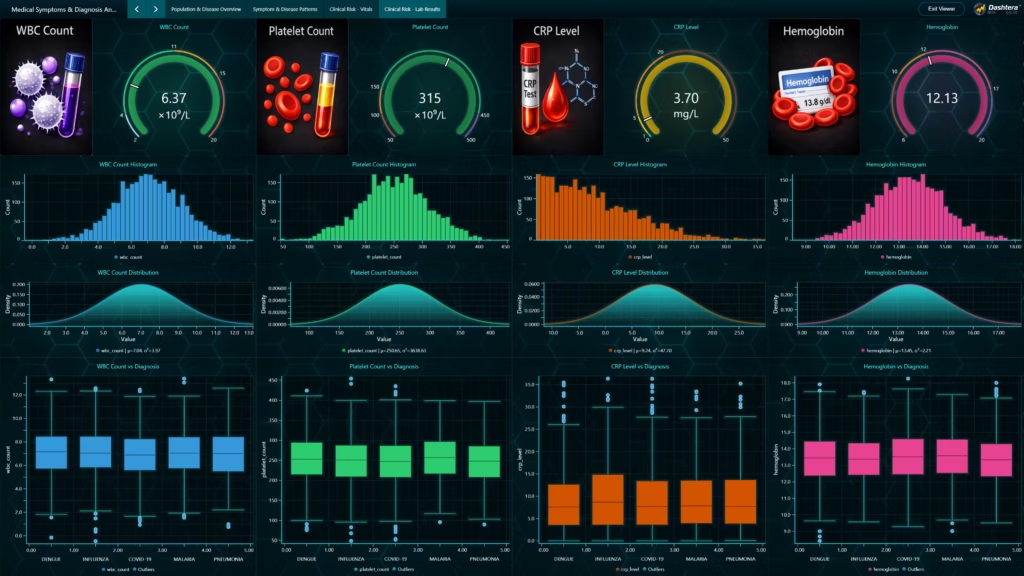
Distribution analysis using histograms and statistical curves provides insight into the overall behavior of each laboratory measure across the population. These visualizations reveal natural biological variation and highlight potential outliers.
Box plots are employed to compare laboratory values across diagnoses. This allows the identification of meaningful clinical patterns, such as platelet variation relevant to dengue, elevated CRP associated with inflammation, and differences in immune markers across conditions. Through this page, laboratory data is transformed into interpretable analytical evidence.
The four-page dashboard demonstrates a structured, layered approach to healthcare data exploration. Population-level demographic analysis establishes contextual understanding, while symptom and severity analysis reveals disease behavior. Clinical vitals provide insight into physiological risk, and laboratory results contribute to a deeper biological interpretation.
The integration of KPIs, histograms, heatmaps, spider charts, Pareto charts, box plots, and gauges illustrate how diverse visualization techniques can collectively support comprehensive healthcare storytelling. The project also highlights the capability of Dashtera to support complex analytical narratives without requiring traditional programming.
The Medical Symptoms & Diagnosis Analysis Dashboard demonstrates the effective use of Dashtera as a no-code analytics platform for healthcare-focused data exploration. The dashboard supports population-level analysis, symptom pattern recognition, severity-based stratification, clinical vitals interpretation, and laboratory risk evaluation.
By combining demographic, clinical, and analytical perspectives into a coherent multi-page structure, the project provides a scalable framework that could be extended toward predictive modeling, risk scoring, or clinical decision-support simulations.
Share: