The Global Child Malnutrition: Stunting Data Analysis Dashboard powered by Dashtera provides an in-depth look at global stunting rates among children under five years old. Stunting, a measure of chronic malnutrition, reflects impaired growth and development due to poor nutrition, repeated infection, and inadequate psychosocial stimulation. This dashboard visualizes the 2025 UNICEF dataset “Stunting estimates: National and Disaggregated”, focusing on national, regional, and income group disparities across time.
Through interactive visualization, the dashboard enables users to:
Examine stunting trends across years (2000, 2010, and 2019).
Compare global, regional, and income-group disparities.
Analyze gender-based and urban–rural differentials.
Explore how child age and household wealth impact stunting rates.
By leveraging Dashtera’s analytical capabilities, the dashboard helps policymakers, researchers, and global health organizations understand patterns and inequalities in child nutrition from different perspectives – gender, residence (urban/rural), wealth, and child age.
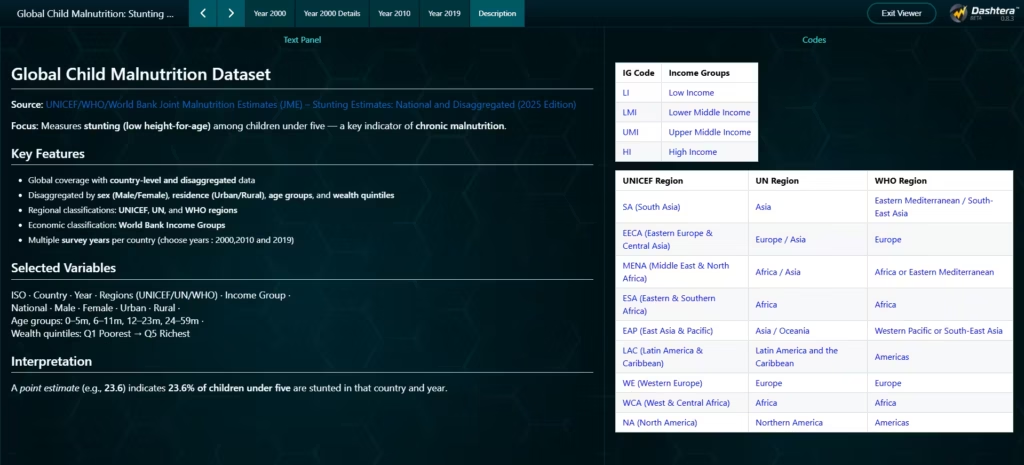
Dataset
The dashboard uses data from UNICEF’s Joint Malnutrition Estimates (JME) 2025 Edition.
Key details:
Title: Stunting estimates: National and Disaggregated (2025 Edition)
Source: UNICEF, WHO, and World Bank Joint Child Malnutrition Estimates
Coverage: Global (All WHO, UNICEF, and UN regions)
Indicators Used: Stunting prevalence (% of children under five years)
Disaggregation: By gender, residence type, wealth quintiles, and age groups
Selected Attributes for Analysis:
Country / Area (ISO)
UNICEF, WHO, and UN Regions
Income Groups (World Bank classification)
National, Male, Female, Urban, Rural
Age Groups: [0–5], [6–11], [12–23], [24–35], [36–47], [48–59] months
Wealth Quintiles: Q1 (Poorest) – Q5 (Richest)
About Dashtera
Dashtera is a cloud-based, no-code analytics platform that empowers users to transform large datasets into meaningful dashboards without requiring programming knowledge. It allows interactive exploration of multidimensional datasets through maps, regressions, line plots, and statistical summaries.
Key Features
Connects directly to WHO datasets, CSVs, or APIs.
Wide range of visualization types (maps, Pareto charts, line charts, bar charts).
Interactive drill-downs for regional and country-level analysis.
Dynamic filtering by region, income group, and gender.
Easy-to-share dashboards for global collaboration.
Advantages Over Similar Tools
Requires minimal technical expertise.
Allows rapid development and deployment of dashboards.
Combines advanced chart types with an easy drag-and-drop interface.
Lightweight and flexible, offering faster insights than heavyweight BI tools like Tableau or Power BI.
Dashboard
Stunting Analysis of Year 2000
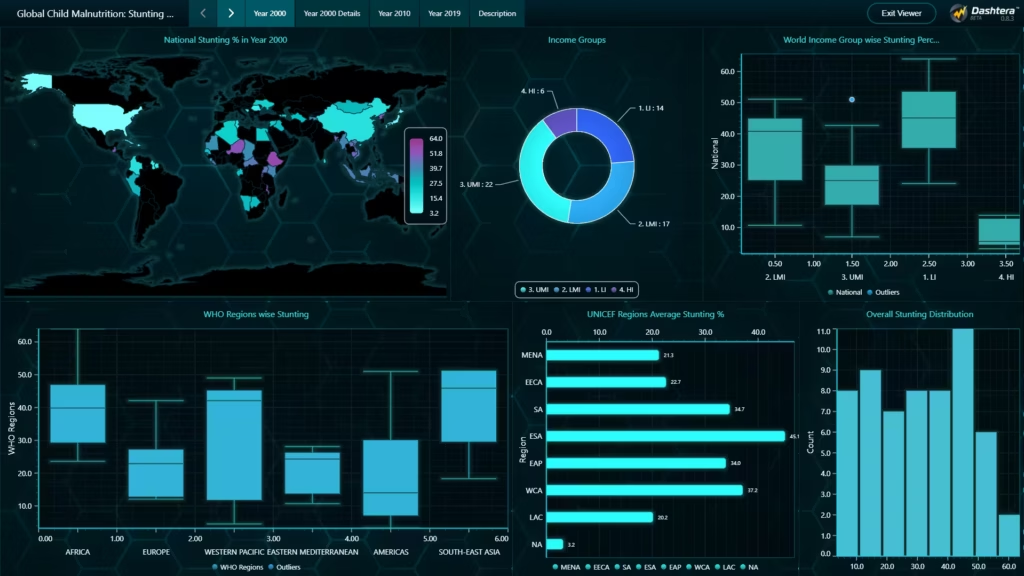
This dashboard provides a baseline look at global stunting in the year 2000.
Charts Included:
Map chart – National Stunting % by Country
Pie chart – Distribution across Income Groups
Box plot – Income Group-wise Stunting Percentage
Box plot – WHO Region-wise Stunting
Horizontal bar chart – UNICEF Region-wise Average Stunting %
Histogram – Overall Stunting Distribution
Insights:
The year 2000 revealed extremely high stunting levels, with low-income countries averaging above 50%.
Regions like Sub-Saharan Africa and South Asia recorded the highest prevalence.
Urban–rural disparity was wide, with rural children facing much higher risk.
Income inequality played a strong role — the poorest quintiles (Q1 and Q2) showed roughly double the stunting rates of the richest quintile (Q5).
Detailed Stunting Analysis of Year 2000
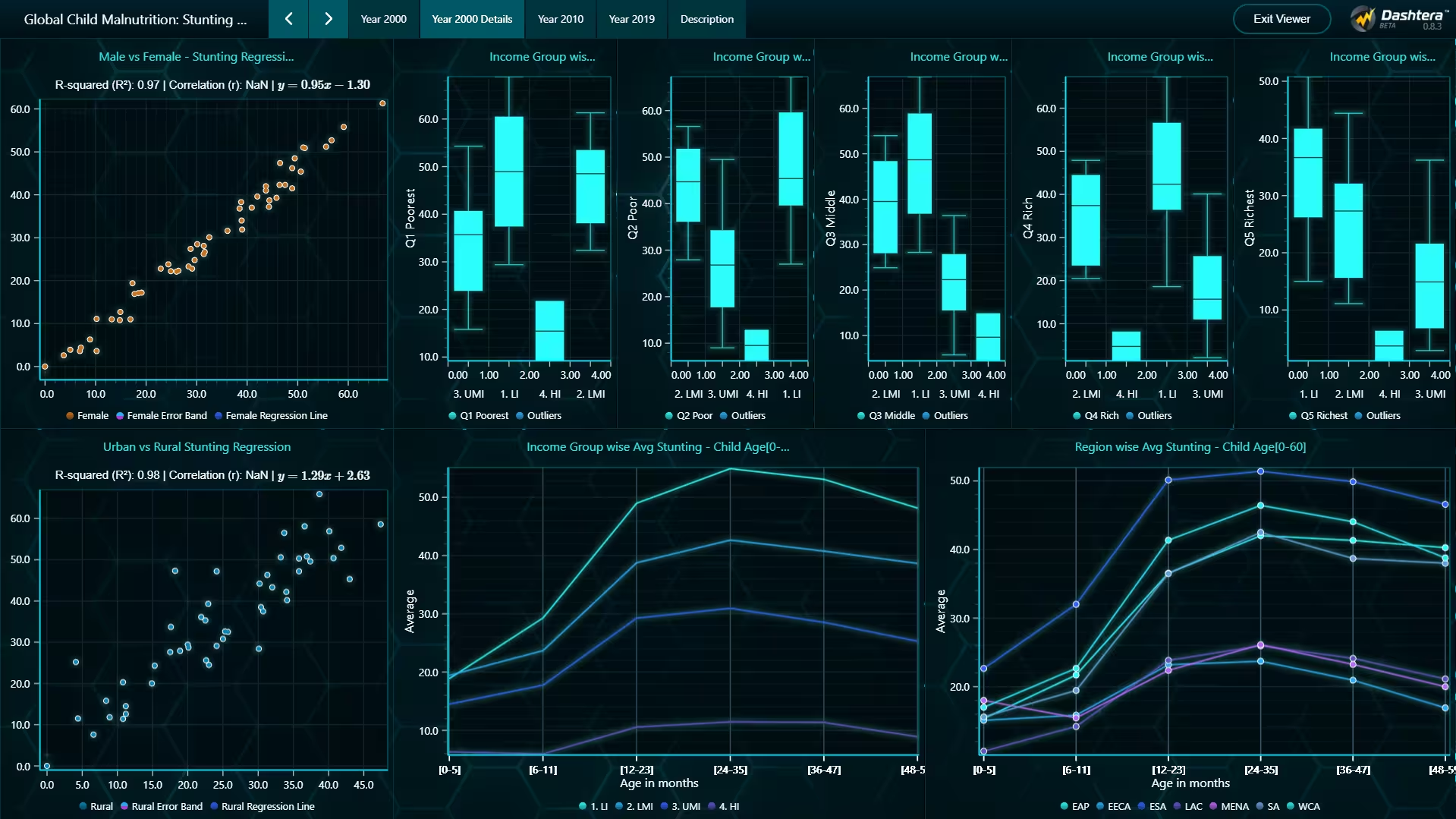
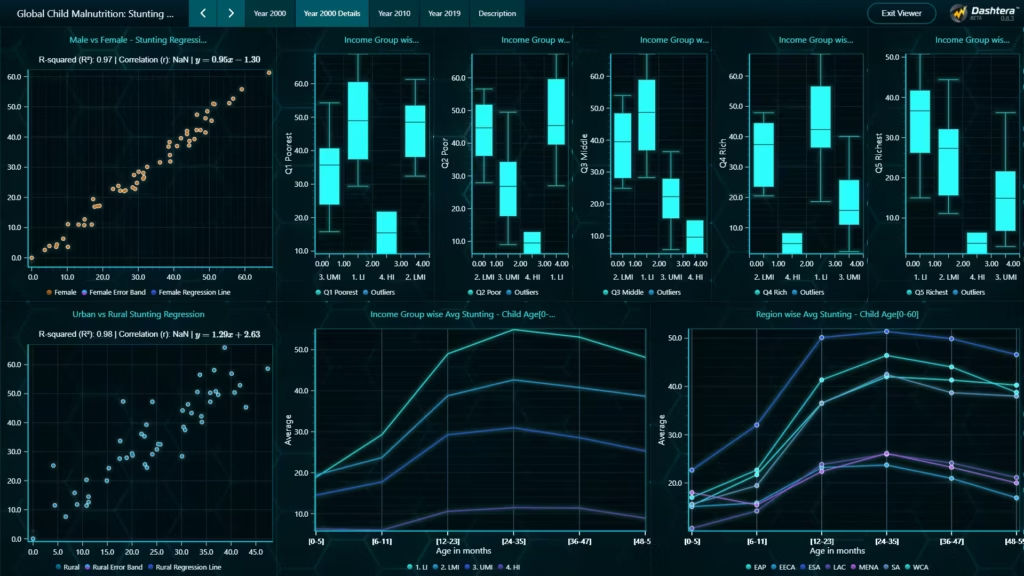
This dashboard dives deeper into disaggregated aspects of stunting.
Charts Included:
Regression: Male vs Female Stunting → y = 0.95x – 1.30
Regression: Urban vs Rural Stunting → y = 1.29x + 2.63
Box plots: Stunting distribution across wealth quintiles (Q1–Q5) for each income group
Line chart: Average stunting by income group and child age (0–60 months)
Line chart: Average stunting by UNICEF region and child age
Insights:
The gender regression line suggests male and female stunting rates were closely aligned, though males were slightly more affected in low-income settings.
The urban–rural regression indicates rural stunting rates increased roughly 1.3 times faster than urban ones.
Stunting peaked in the 12–35 month age range across all income groups, highlighting the critical window for nutritional intervention.
East and Southern Africa and South Asia exhibited severe stunting above 50% among children aged 24–35 months.
Stunting Analysis of Year 2010
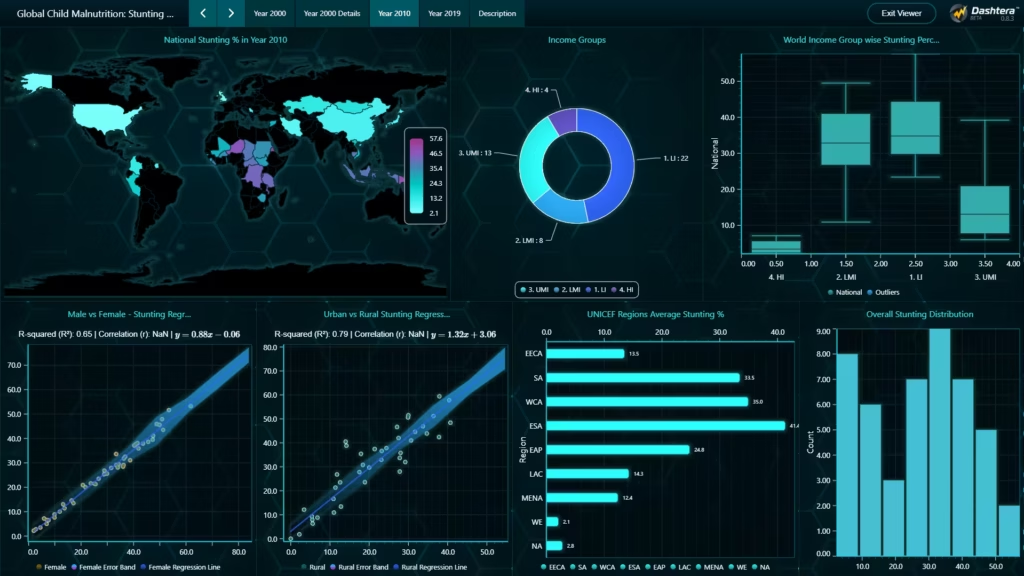
A decade later, the 2010 dashboard shows significant yet uneven progress.
Charts Included:
Map chart – National Stunting % in 2010
Pie chart – Income Groups
Box plot – Income Group-wise Stunting
Regression: Male vs Female (y = 0.88x – 0.06)
Regression: Urban vs Rural (y = 1.32x + 3.06)
Horizontal bar chart – UNICEF Region-wise Average Stunting %
Histogram – Overall Stunting Distribution
Insights:
Global stunting declined by approximately 5–10 percentage points, driven mainly by improvements in East Asia & Pacific and Latin America & the Caribbean.
The urban–rural gap persisted, showing that urbanization alone did not eliminate disparities.
High-income countries achieved near elimination of stunting (<5%), while low-income countries remained above 40%.
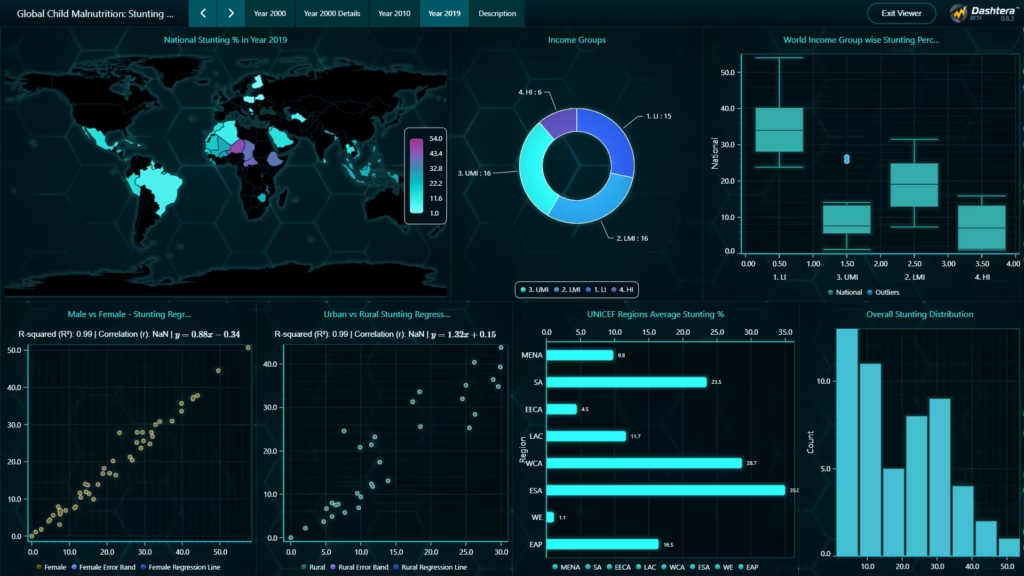
This dashboard captures the most recent pre-pandemic picture of child stunting.
Charts Included:
Map chart – National Stunting % in 2019
Pie chart – Income Groups
Box plot – World Income Group-wise Stunting
Regression: Male vs Female (y = 0.88x – 0.34)
Regression: Urban vs Rural (y = 1.32x + 0.15)
Horizontal bar chart – UNICEF Region-wise Average Stunting %
Histogram – Overall Stunting Distribution
Insights:
By 2019, global stunting had declined significantly, though still affecting roughly 1 in 5 children worldwide.
South Asia remained the most affected region, while East Asia & Pacific and Latin America achieved the sharpest reductions.
The urban–rural regression slope decreased, showing narrowing gaps, yet rural children still bore the greatest burden.
The wealth gradient remained consistent – the poorest quintiles continued to experience stunting rates up to four times higher than the richest.
Some progress plateaued in Sub-Saharan Africa, suggesting new strategies are required to sustain improvements.
Conclusion
Global Child Malnutrition: Stunting Data Analysis Dashboard with Dashtera transforms UNICEF’s rich dataset into a comprehensive and interactive analytical tool.
Key Takeaways:
Global stunting has steadily declined from 2000 to 2019, but disparities persist across regions, income levels, and residence types.
The strongest predictors of stunting are income level, rural residence, and younger child age (under 3 years).
Gender differences are minimal globally but can vary by region.
The steep drop among wealthier and urban populations highlights the importance of economic and social equity in combating malnutrition.
Despite progress, South Asia and Sub-Saharan Africa remain global hotspots, demanding sustained intervention.
By visualizing these trends interactively, Dashtera empowers policymakers, researchers, and global organizations to monitor progress toward SDG 2.2 – ending all forms of malnutrition – and to design data-driven interventions that ensure every child reaches their full growth potential.