



Commercial buildings consume significant amounts of energy through lighting, equipment operation, heating, cooling, and ventilation systems. Managing this energy consumption is important for controlling operating costs, reducing carbon emissions, and maintaining occupant comfort.
This project analyzes one year of operational data from 65 commercial buildings spanning healthcare, retail, office, education, and hospitality sectors. The objective is to understand how energy consumption varies across building types, identify seasonal HVAC demand patterns, and benchmark sustainability performance using key operational metrics.
The analysis was implemented using Dashtera and PostgreSQL. Three dashboard pages were developed to examine energy consumption, HVAC performance, and sustainability indicators. Together, these dashboards provide a structured view of building operations and highlight opportunities for improving energy efficiency and reducing environmental impact.
The analysis is based on a dataset inspired by the Building Data Genome Project 2 (BDG2), which contains building energy measurements collected from a large portfolio of commercial facilities. The original dataset includes electricity, heating, cooling, and other utility measurements across multiple building categories.
For this project, a realistic smart building dataset was generated using the structure and characteristics of BDG2. The resulting dataset contains daily observations for 65 buildings over a one-year period and includes both building attributes and operational performance metrics.
The dataset captures key operational indicators including:
The dataset supports multiple analytical objectives including:
The dataset contains approximately 23,700 daily observations collected from 65 simulated commercial buildings operating throughout a full calendar year. Each record represents a building-day combination and includes both static building attributes and dynamic operational measurements.
Building characteristics include building type, industry classification, floor area, occupancy levels, year of construction, Energy Star score, Site Energy Use Intensity (Site EUI), Source Energy Use Intensity (Source EUI), and LEED certification level.
Operational measurements include electricity consumption, cooling energy demand, heating energy demand, total energy consumption, energy costs, indoor temperature, outdoor temperature, humidity, carbon dioxide concentration, HVAC load factor, and occupant comfort score.
Several sustainability metrics are also incorporated into the dataset, including renewable energy contribution percentage, estimated carbon emissions, sustainability score, and HVAC fault indicators. These derived variables provide additional analytical dimensions that enable deeper investigation of building operational performance and environmental impact.
The dataset was designed to capture realistic seasonal effects, occupancy variations, weather-driven HVAC demand, and performance differences across building categories, thereby supporting comprehensive dashboard analytics.
Dashtera is a modern cloud-based no-code business intelligence platform that enables users to create interactive dashboards and analytical applications without extensive software development.
The platform integrates directly with PostgreSQL databases, allowing SQL queries to be executed dynamically while supporting real-time visualization of aggregated metrics and operational data.
Key Features
Advantages
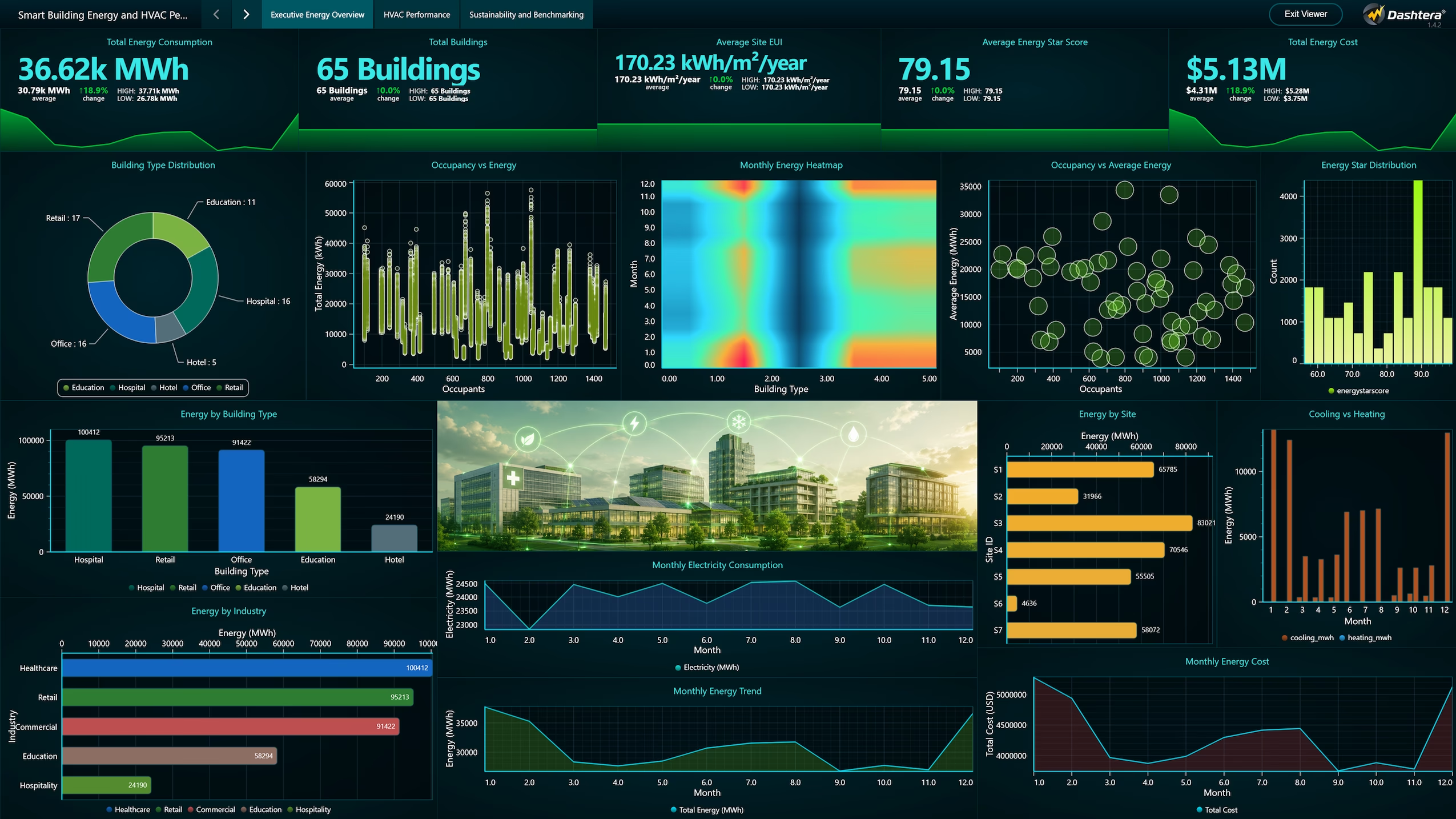
The Smart Building Energy and HVAC Performance Dashboard analyzes one year of operational data from 65 commercial buildings across healthcare, retail, office, education, and hospitality sectors. The analysis focuses on energy consumption patterns, HVAC performance, and sustainability indicators.
Annual energy consumption varies significantly throughout the year. January records the highest monthly energy usage at 37,706 MWh, followed by December at 36,619 MWh and February at 35,274 MWh. The lowest consumption occurs in September at 26,775 MWh. This pattern indicates that seasonal weather conditions are a major driver of building energy demand.
Energy costs closely follow consumption levels. January produces the highest monthly energy cost at approximately $5.28 million, while September records the lowest at approximately $3.75 million. The strong relationship between consumption and cost suggests that energy management initiatives implemented during winter periods could produce the greatest financial impact.
Hospitals are the largest energy consumers in the portfolio, accounting for approximately 100,412 MWh annually. Retail facilities consume approximately 95,213 MWh, while office buildings account for approximately 91,422 MWh. Educational facilities consume approximately 58,294 MWh and hotels approximately 24,190 MWh. The higher consumption observed in hospitals is consistent with their continuous operation, specialized equipment requirements, and strict environmental control standards.
Site-level analysis reveals substantial variation between facilities. Site S3 records approximately 83,021 MWh of annual energy consumption, making it the largest energy-consuming site in the portfolio. Site S6 records only 4,636 MWh, highlighting significant differences in operational scale and building composition.
The average Site Energy Use Intensity (EUI) across the portfolio is 170.23 kWh/m²/year, while the average Energy Star Score is 79.15. These values indicate generally efficient building performance while also revealing opportunities for improvement among higher-consuming facilities.
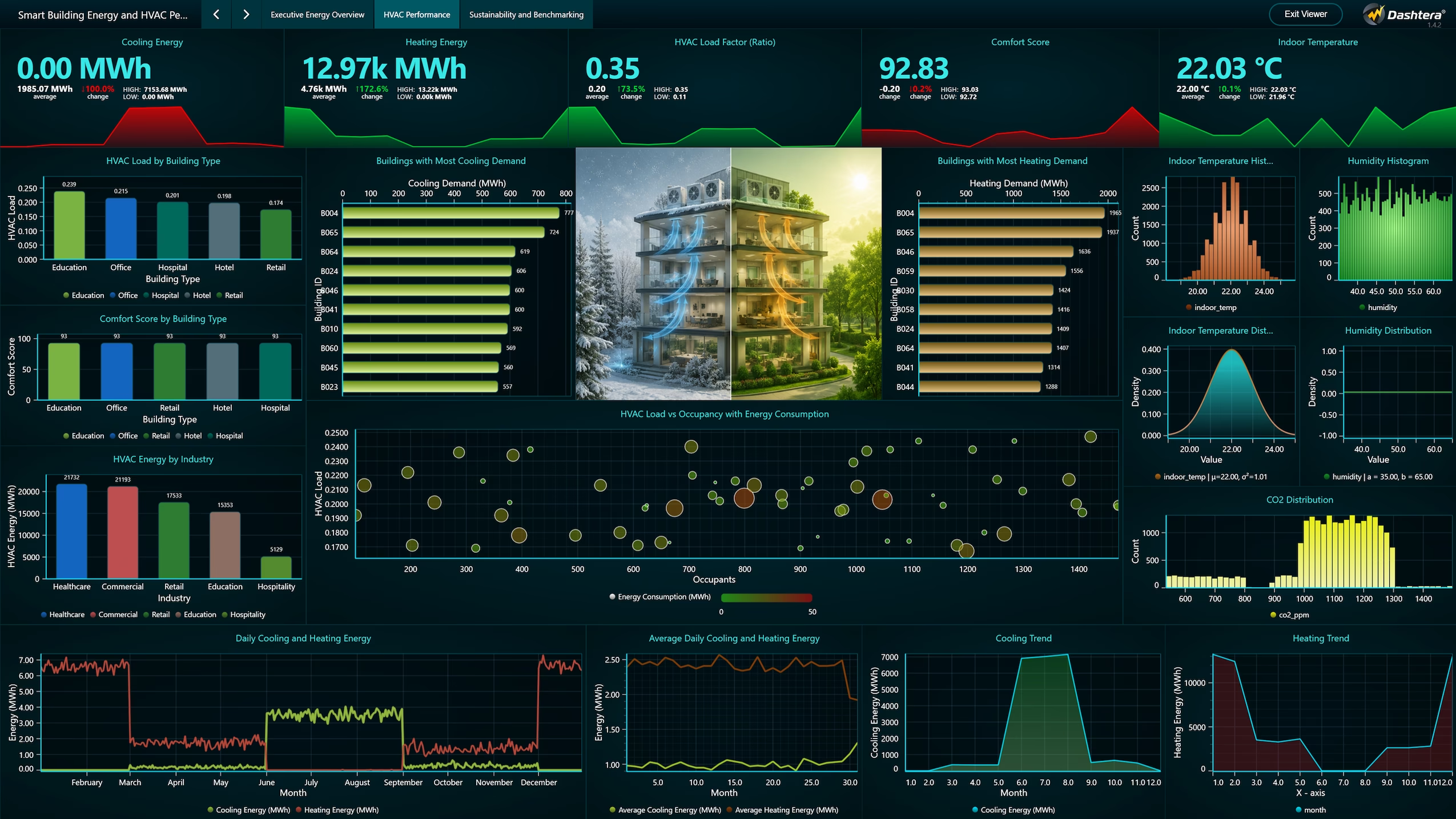
HVAC demand demonstrates clear seasonal behavior throughout the year. Heating energy dominates during winter months, reaching 13,222 MWh in January, 12,419 MWh in February, and 12,974 MWh in December. Cooling demand is negligible during these periods.
As outdoor temperatures increase, cooling demand rises substantially. Cooling energy peaks at 7,154 MWh in August and remains above 6,900 MWh during June and July. This shift illustrates the strong relationship between weather conditions and HVAC operation.
HVAC load factors further demonstrate seasonal variation. Winter months exhibit load factors close to 0.35, indicating that approximately one-third of total building energy consumption is associated with HVAC operation. During spring and autumn months, load factors decline significantly, reflecting reduced heating and cooling requirements.
Indoor environmental conditions remain stable throughout the year despite large variations in outdoor temperatures and HVAC demand. Average indoor temperatures remain close to 22°C across all months. Comfort scores consistently exceed 92%, suggesting that HVAC systems maintain occupant comfort effectively during both heating and cooling seasons.
Educational facilities record the highest HVAC load factor at approximately 0.239, followed by office buildings at 0.215. Retail facilities exhibit the lowest HVAC load factor at 0.174. These differences likely reflect variations in occupancy schedules, operating hours, and building usage patterns.
Healthcare facilities consume the largest amount of HVAC energy at approximately 21,732 MWh annually. Commercial office buildings follow closely at approximately 21,193 MWh. Together, these sectors account for a substantial proportion of total HVAC energy demand across the portfolio.
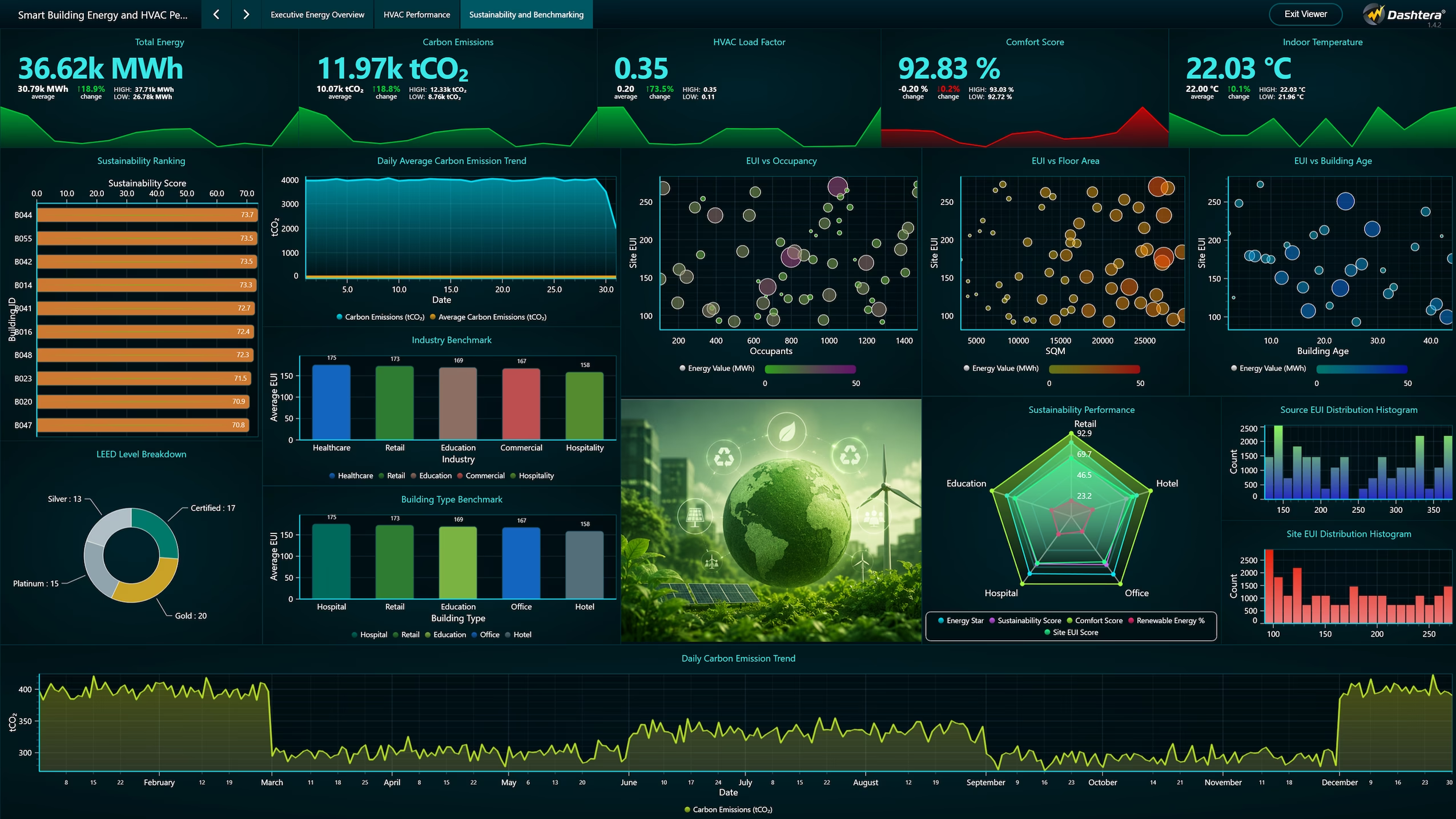
Carbon emissions closely mirror energy consumption trends. January records the highest monthly emissions at approximately 12,329 tCO₂, while September records the lowest at approximately 8,765 tCO₂. This relationship indicates that reductions in energy consumption would directly contribute to lower environmental impact.
Indoor environmental performance remains consistent throughout the year. Average indoor temperatures remain close to 22°C, while comfort scores remain above 92%. These results demonstrate that reductions in energy use do not necessarily require compromising occupant comfort when building systems are operated efficiently.
Industry benchmarking reveals measurable differences in energy intensity. Healthcare facilities record the highest average Site EUI at 175.16 kWh/m²/year. Retail buildings follow at 172.52 kWh/m²/year, while educational facilities average 169.38 kWh/m²/year. Office buildings average 167.13 kWh/m²/year, and hotels record the lowest energy intensity at 158.48 kWh/m²/year.
The higher EUI observed in healthcare facilities is expected due to 24-hour operation, medical equipment loads, and stringent environmental control requirements. Hotels demonstrate the lowest EUI values within the portfolio, suggesting comparatively efficient operation relative to floor area.
Sustainability benchmarking highlights opportunities for targeted energy-efficiency initiatives. Facilities with above-average energy intensity may benefit from HVAC optimization, equipment upgrades, occupancy-based controls, and energy management programs. Benchmarking also provides a framework for tracking performance improvements over time and identifying best-performing building categories.
Overall, the analysis shows that seasonal HVAC demand is the primary driver of energy consumption and carbon emissions across the portfolio. Healthcare and retail facilities account for the largest share of energy use, while indoor comfort remains consistently high throughout the year.
PostgreSQL was used as the primary data repository and analytical engine for the project. Raw building data and derived performance indicators were stored in relational tables and accessed directly through Dashtera using SQL queries.
Database-side aggregation enabled efficient calculation of monthly energy consumption, HVAC metrics, carbon emissions, and benchmarking indicators. This approach reduced data duplication and ensured consistent analytical results across all dashboard pages.
Several operational patterns emerged from the analysis.
First, energy consumption exhibited strong seasonal variation. Energy demand peaked during winter months and declined significantly during spring and autumn. This pattern was closely reflected in carbon emissions and operating costs.
Second, HVAC systems were the primary driver of seasonal energy variation. Heating demand dominated during winter, while cooling demand increased substantially during summer months. Despite these fluctuations, indoor temperatures remained close to 22°C and comfort scores consistently exceeded 92%.
Third, substantial differences were observed between building categories. Healthcare facilities recorded the highest energy intensity values, while hospitality buildings demonstrated comparatively lower energy intensity. These differences likely reflect variations in occupancy schedules, operating requirements, and equipment loads.
The results suggest that HVAC optimization initiatives may offer the greatest opportunity for reducing energy consumption and carbon emissions across the building portfolio.
The analysis of 65 commercial buildings over a one-year period revealed clear relationships between seasonal conditions, HVAC operation, energy consumption, and carbon emissions.
Energy demand was highest during winter months, with healthcare facilities representing the most energy-intensive building category. HVAC systems accounted for a significant proportion of total energy use throughout the year, although occupant comfort remained consistently high across all building types.
The results show that combining building operational data with interactive analytics can support benchmarking, sustainability reporting, and energy management activities. The dashboard provides a practical framework for identifying high-consumption facilities, monitoring HVAC performance, and prioritizing energy-efficiency improvements.
Dataset Reference
Original Dataset Inspiration:
https://www.kaggle.com/datasets/claytonmiller/buildingdatagenomeproject2
Synthetic Smart Building Dataset Generated for Dashboard Demonstration.