



The CNC Tool Wear Analysis Dashboard is a comprehensive analytics solution designed to monitor machining performance, track tool degradation, and improve production efficiency in modern smart manufacturing environments.
Built using the Dashtera no-code business intelligence platform, the dashboard empowers engineers and data analysts to explore machining behavior, identify tool wear patterns, and evaluate operational performance through interactive visualizations and SQL-driven insights.
In CNC machining, tool wear plays a critical role in product quality, dimensional accuracy, and production efficiency. As cutting tools degrade over time, they introduce variability into machining processes, resulting in increased surface roughness, dimensional deviations, and higher scrap rates. Therefore, real-time tool wear monitoring and prediction are essential to maintain consistent quality while reducing operational costs.
This advanced dashboard addresses these challenges by delivering actionable insights into machining conditions, tool performance, and production outcomes. The solution is structured across three integrated views: an executive overview, tool wear and process analysis, and quality, downtime, and maintenance insights.
Together, these components provide a holistic view of CNC machining operations, enabling data-driven decision-making, predictive maintenance strategies, and continuous process optimization.
The dataset used in this project is inspired by CNC machining experiments conducted in a controlled manufacturing environment and is adapted from a Kaggle dataset.
The dataset represents machining operations performed on CNC milling machines, capturing variations in process parameters such as spindle speed, feed rate, and clamping pressure. It also includes sensor measurements such as vibration, acoustic emission, and temperature, along with tool condition indicators.
The primary objective of the dataset is to support tool wear detection and process optimization by analysing relationships between machining parameters, sensor behaviour, and production outcomes.
Dataset Description
The dataset consists of enriched CNC machining records designed specifically for dashboard-driven analysis. It includes variables representing production performance, process conditions, tool behaviour, and quality indicators.
Production Variables
Process and Machine Variables
Tool and Sensor Variables
Quality and Performance Variables
Operational Metrics
Derived metrics such as scrap rate, completion rate, wear risk levels, and process averages were calculated using PostgreSQL queries to support advanced analytical visualizations.
Dashtera is a cloud-based business intelligence platform that enables users to build interactive dashboards using SQL queries without requiring extensive programming knowledge.
Key Features
Advantages
The dashboard is structured into three analytical pages: executive overview, tool wear and process analysis, and quality, downtime, and maintenance analysis.
Executive Overview
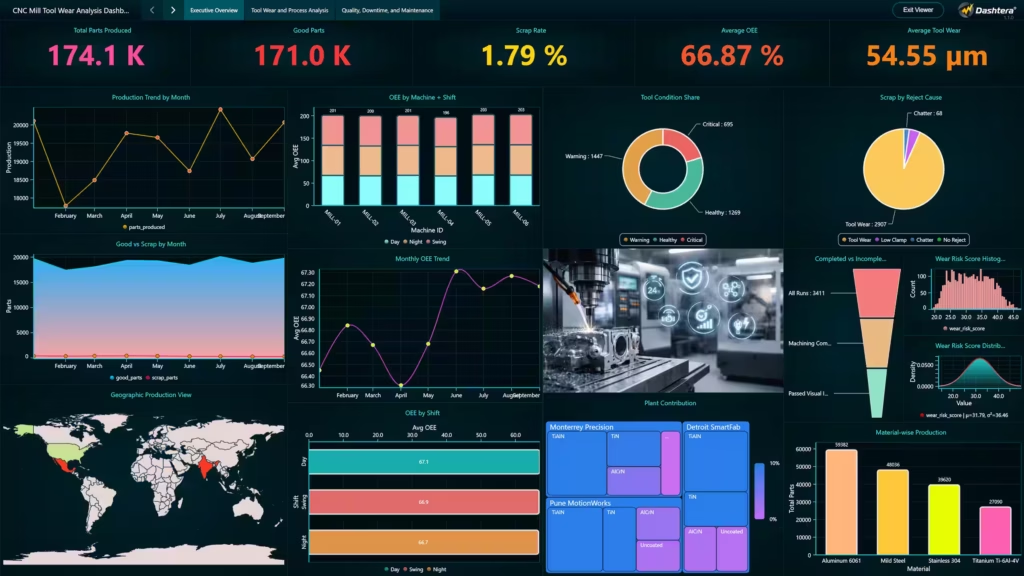
The first dashboard page provides a high-level summary of machining performance, production efficiency, and tool wear status.
A total of 174.1K parts were produced, with 171.0K good parts, resulting in a low scrap rate of 1.79%, indicating strong production quality. However, tool wear remains a key factor influencing performance.
The average OEE is 66.87%, suggesting moderate operational efficiency with potential for improvement. The average tool wear is 54.55 µm, reflecting varying tool conditions across machines.
Production trends show fluctuations in output across months, indicating variability in machining demand and performance. Machine-level and shift-based analysis reveal differences in efficiency, highlighting opportunities for targeted optimization.
Tool condition distribution shows a significant proportion of tools in warning and critical states, emphasizing the need for predictive maintenance strategies.
Geographic and plant-level analysis illustrates the distribution of production across locations, while scrap analysis identifies key rejection causes affecting output quality.
Overall, this page provides a concise overview of production performance, efficiency, and tool health.
Tool Wear and Process Analysis
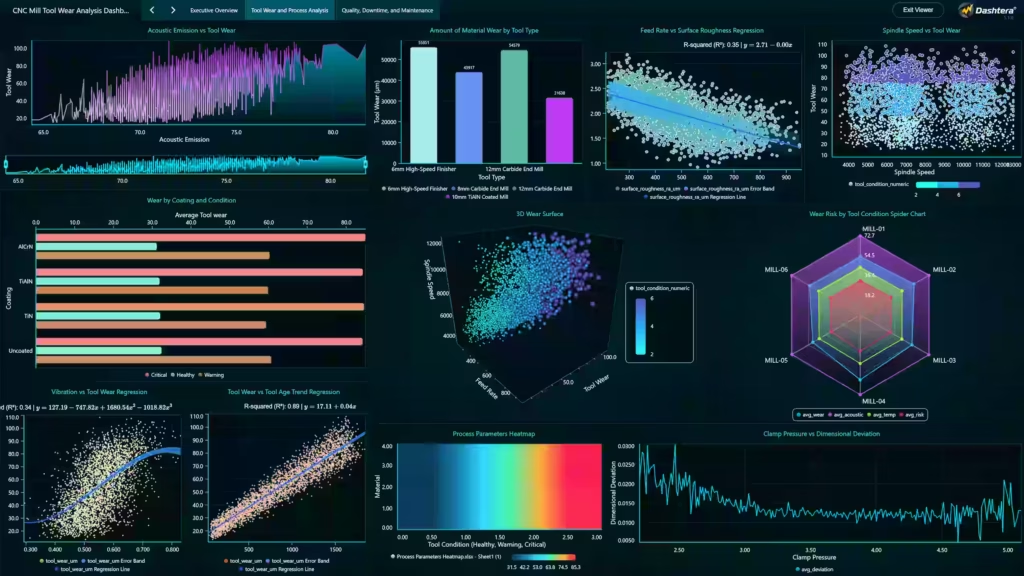
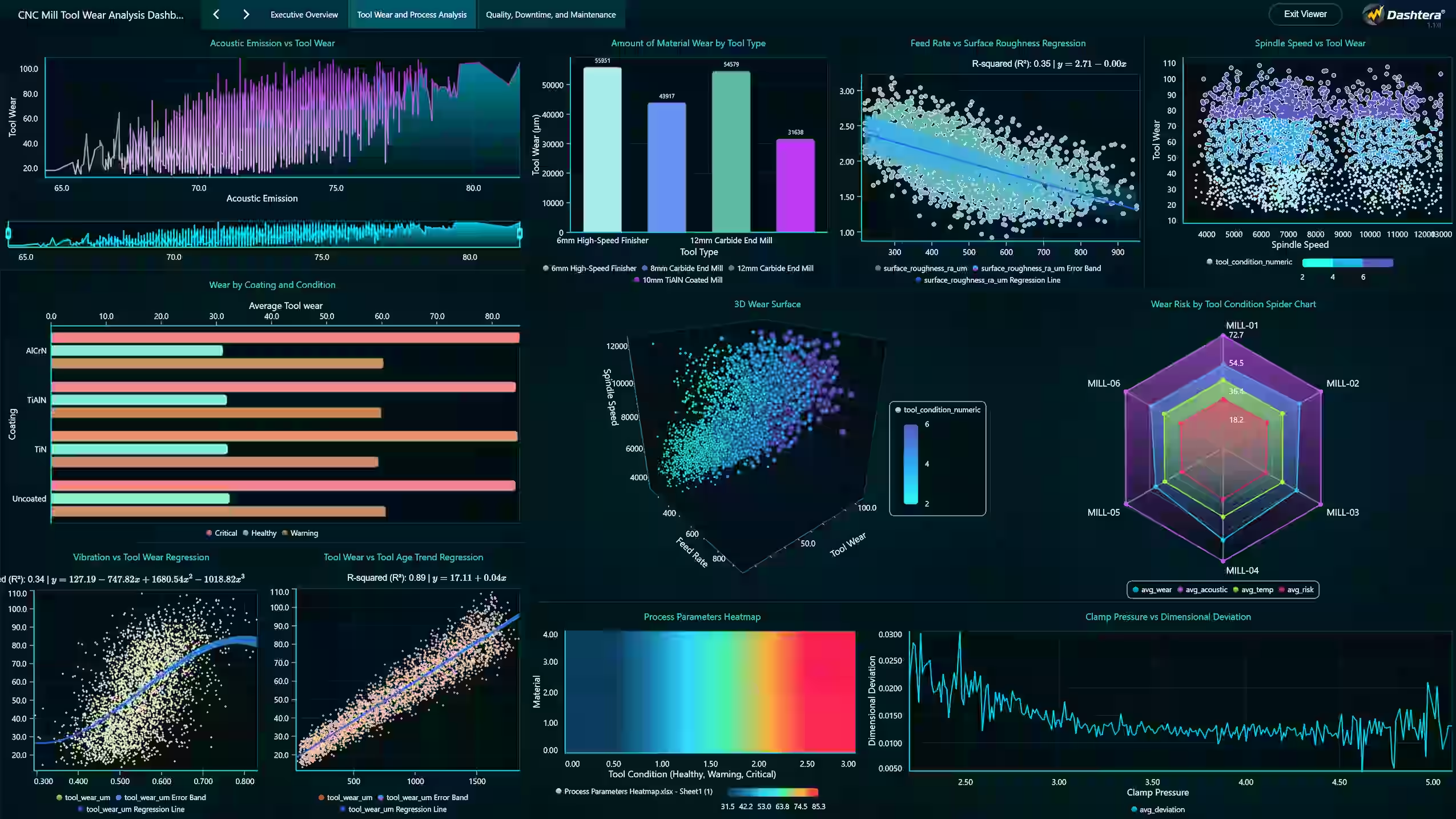
The second dashboard page focuses on understanding tool wear behaviour and its relationship with machining parameters and sensor data.
Strong relationships are observed between process variables and tool wear:
Regression analyses reveal that tool wear increases consistently with tool age, confirming expected wear progression patterns.
The 3D wear surface visualization highlights the combined effect of feed rate and spindle speed on tool wear, providing deeper insight into process optimization.
Coating and tool type analysis show that certain coatings (e.g., TiAlN, AlCrN) perform better under specific conditions, indicating opportunities for tool selection optimization.
The spider chart compares multiple performance metrics (wear, vibration, acoustic emission, temperature, and risk) across machines, enabling multi-dimensional performance evaluation.
Heatmap analysis reveals how tool condition affects wear across materials, helping identify combinations that lead to higher degradation.
Overall, this page emphasizes the importance of process parameters and sensor signals in predicting and managing tool wear.
Quality, Downtime, and Maintenance Analysis
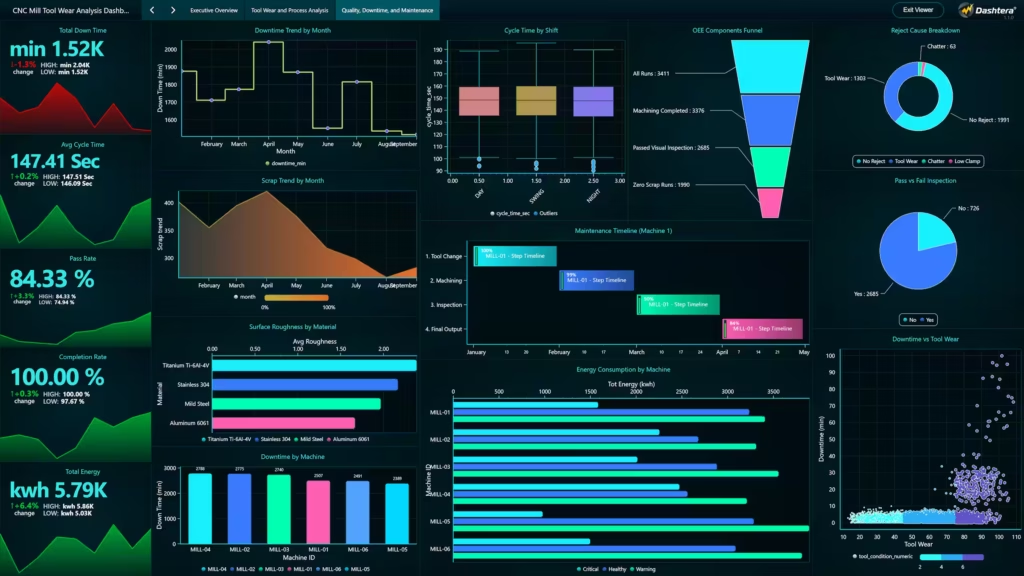
The CNC Tool Wear Analysis Dashboard’s third page focuses on operational efficiency, downtime behavior, and maintenance effectiveness across CNC machining operations. Within the CNC Tool Wear Analysis Dashboard, total downtime reaches approximately 1.52K minutes, indicating significant production interruptions, while the average cycle time of 147.41 seconds reflects generally stable machining performance with minor variability.
The CNC Tool Wear Analysis Dashboard reports a pass rate of 84.33% and a completion rate of 100%, showing that although most production runs finish successfully, not all meet required quality standards. This highlights the critical role of tool condition monitoring within the CNC Tool Wear Analysis Dashboard.
Monthly trend analysis in the CNC Tool Wear Analysis Dashboard reveals fluctuations in downtime and scrap rates, pointing to periods of reduced operational efficiency. Machine-level downtime insights from the CNC Tool Wear Analysis Dashboard show that specific machines contribute disproportionately to production delays, signaling areas for targeted maintenance intervention.
The CNC Tool Wear Analysis Dashboard uses a funnel chart to visualize production flow from total runs to completed runs, inspected parts, and zero-scrap outcomes, clearly illustrating efficiency losses at each stage. In addition, the CNC Tool Wear Analysis Dashboard incorporates a Gantt chart that maps maintenance activities and process steps along a sequential timeline, improving visibility into operational flow and maintenance scheduling.
Energy consumption analysis within the CNC Tool Wear Analysis Dashboard highlights variations across machines, with higher energy usage observed in machines operating under critical tool wear conditions. Scatter analysis in the CNC Tool Wear Analysis Dashboard further demonstrates that increased tool wear correlates strongly with higher downtime, reinforcing the importance of timely tool replacement.
Overall, the CNC Tool Wear Analysis Dashboard clearly illustrates the relationship between tool wear, downtime, energy consumption, and production quality, providing strong support for predictive maintenance strategies and data-driven process optimization.
Dashtera Integration with PostgreSQL
The dashboard is fully integrated with PostgreSQL, which serves as the backend data processing engine. All calculations, aggregations, and transformations are executed using SQL queries. This ensures:
The integration enables scalable analysis suitable for industrial applications where performance and reliability are critical.
The CNC Tool Wear Analysis Dashboard demonstrates how machining data can be transformed into actionable insights using modern business intelligence tools. The executive overview provides a clear snapshot of production efficiency while highlighting variability in tool conditions across operations.
Through advanced process analysis, the dashboard reveals how machining parameters and sensor data directly influence tool wear, enabling a deeper understanding of machining performance. The quality and maintenance analysis further uncovers the impact of tool degradation on downtime, production quality, and overall operational stability.
A key insight from the CNC Tool Wear Analysis Dashboard is the strong correlation between tool wear and operational inefficiencies, particularly increased downtime and reduced product quality. Machines operating under critical tool conditions show higher wear rates, elevated energy consumption, and noticeable performance degradation.
By integrating multi-dimensional visualizations and analytics, the dashboard enables a comprehensive view of machining behaviour, supporting predictive maintenance, improving production efficiency, and driving continuous process optimization in smart manufacturing environments.
This project demonstrates the effectiveness of combining Dashtera and PostgreSQL for analysing CNC machining data.
The structured three-page dashboard provides a logical progression from performance monitoring to process analysis and maintenance evaluation. It enables early detection of tool wear, identification of performance bottlenecks, and optimization of machining processes.
The analysis highlights the importance of:
By leveraging data-driven insights, manufacturing organizations can improve product quality, enhance operational efficiency, and reduce overall production costs.
Overall, this study illustrates the value of business intelligence tools in smart manufacturing environments, contributing to improved decision-making and process optimization.
Share: