



The mining process quality dashboard presents an analytical framework for monitoring and improving the performance of a flotation-based mineral processing system. Built with the Dashtera no-code business intelligence platform, the mining process quality dashboard enables engineers and analysts to explore efficiency through visual insights, evaluate quality outcomes, and support predictive decision-making through interactive visualizations and SQL-driven analytics.
In flotation operations, maintaining product quality is a critical objective. A major challenge is the delayed measurement of impurity levels, especially silica concentration, which is typically obtained through laboratory testing with a time lag. This delay reduces the ability of engineers to react quickly to process deviations. The mining process quality dashboard helps solve this issue by centralizing operational data and making trends visible in real time.
The mining process quality dashboard addresses this limitation by delivering real-time analytical insights into process variables and their relationships with output quality. The solution is structured across three connected dashboard pages: output quality overview, feed input analysis, and process control analysis. Together, these components provide a complete operational view of the flotation process and make the mining process quality dashboard a practical tool for data-driven optimization.
The dataset utilized in this study is obtained from a real-world flotation plant dataset available on Kaggle. The dataset contains time-series measurements collected between March 2017 and September 2017. It captures key operational variables across the flotation process, including feed composition, reagent flows, process conditions, and final product quality.
The primary objective of the mining process quality dashboard dataset is to enable prediction and analysis of silica concentration in the iron ore concentrate, which represents the impurity level of the final product. Lower silica content corresponds to higher product quality and improved process efficiency.
The dataset represents multiple stages of the flotation process and can be categorized into three main groups of variables.
Feed Variables
Process Variables
Output Variables
To enhance interpretability and reduce noise, the dataset was aggregated into daily observations. Additional derived metrics, such as rolling averages, variability measures, and feed quality ratios, were computed to support advanced analytical tasks.
Dashtera is a cloud-based business intelligence platform that enables users to build interactive dashboards using SQL queries without requiring extensive programming expertise.
Key Features
Advantages
The mining process quality dashboard is organized into three analytical sections corresponding to output quality, feed characteristics, and process control variables.
Output Quality Overview
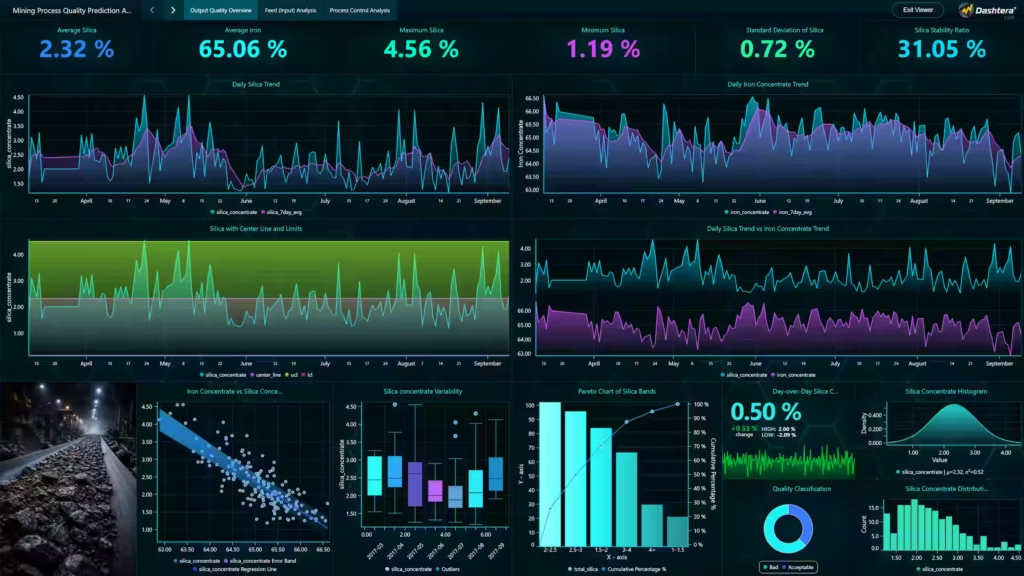
The first mining process quality dashboard page evaluates the quality of the final product, focusing on silica concentration as the primary impurity indicator. The average silica concentration is approximately 2.32%, with values ranging between 1.19% and 4.56%. A standard deviation of 0.72% indicates moderate variability in process output.
Temporal analysis reveals fluctuations in silica concentration over time, suggesting periods of process instability. Control charts further highlight deviations from expected operating ranges, indicating potential inefficiencies in process conditions.
A negative relationship between iron and silica concentration is observed, reflecting the trade-off between recovery and purity. Distribution-based analyses show that while most values fall within a moderate range, occasional extreme values indicate abnormal operating conditions.
Pareto analysis demonstrates that a limited number of silica ranges contribute disproportionately to total impurity, suggesting that targeted interventions could significantly improve quality.
Overall, this page provides a concise assessment of output behavior, highlighting variability, trends, and critical quality drivers.
Feed (Input) Analysis
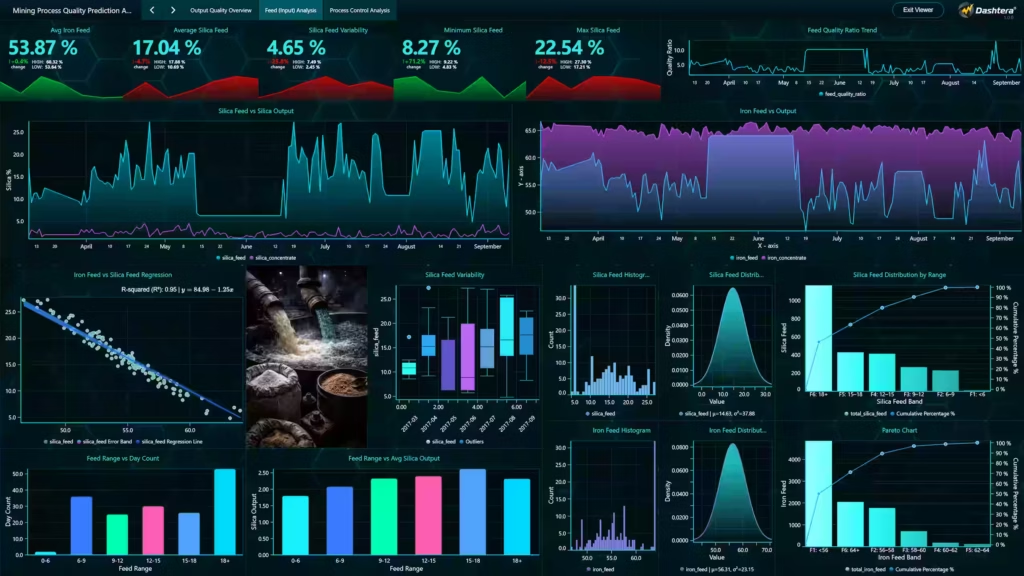
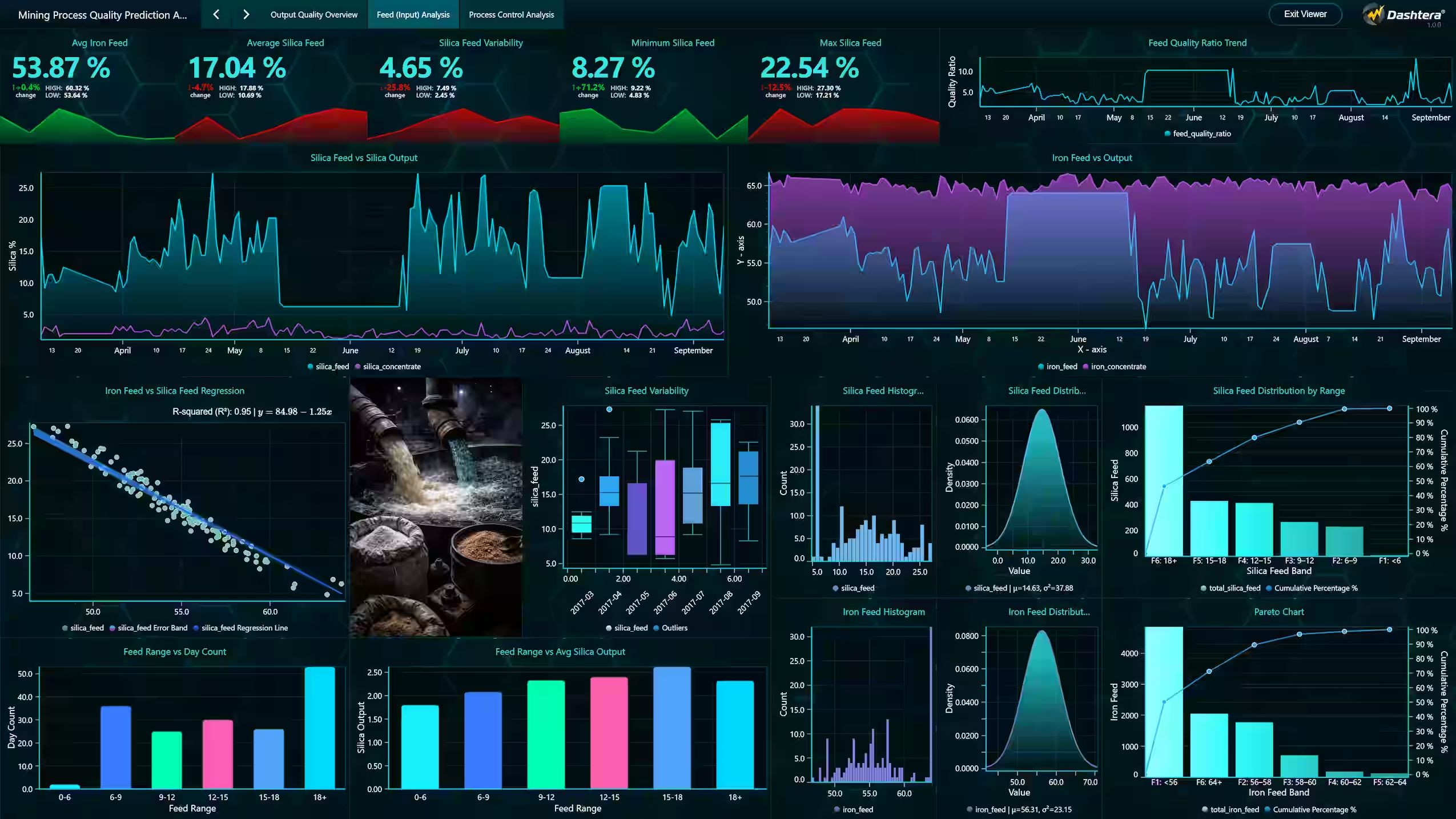
The second mining process quality dashboard page examines the impact of feed composition on process outcomes. The average silica feed is approximately 17.04%, while iron feed averages 53.87%, indicating variability in raw material quality.
Trend analysis shows fluctuations in feed composition over time, reflecting inconsistencies in upstream supply. A positive relationship between silica feed and silica concentrate confirms that higher impurity in the feed leads to increased impurity in the final product.
Grouped analysis of feed ranges indicates that certain silica feed bands contribute more significantly to higher output impurity levels. Pareto-based visualizations further support this observation, showing that a small number of feed categories dominate overall impurity contribution.
Distribution and variability analyses reveal a wide spread in silica feed values, suggesting that feed inconsistency is a key factor affecting process performance. Additionally, feed quality ratios provide further insight into the balance between iron and silica content.
This analysis highlights the importance of feed quality control in achieving consistent and optimal process performance.
Process Control Analysis
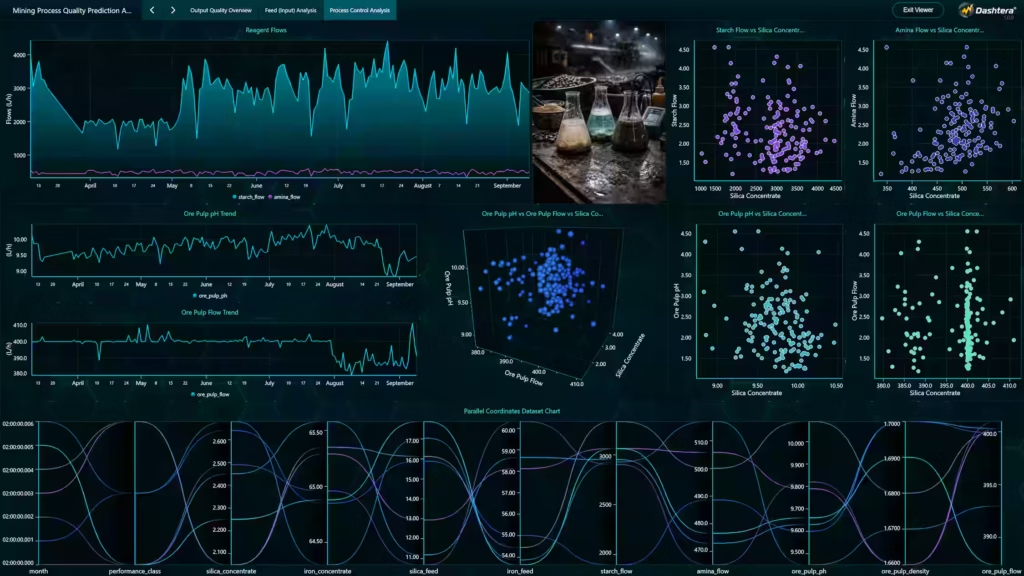
The third mining process quality dashboard page focuses on operational variables that can be adjusted to improve flotation performance. These include reagent flows and process conditions such as pH and pulp flow.
Reagent flow analysis shows variability in both starch and amine usage, which directly influences mineral separation efficiency. Variations in these inputs can lead to changes in flotation behaviour and output quality.
Process conditions, particularly pH, play a critical role in chemical interactions within the flotation system. While the observed pH values remain within an alkaline range, fluctuations may affect separation efficiency.
Scatter and multi-dimensional analyses indicate that relationships between process variables and silica concentration are complex and often influenced by multiple interacting factors. Parallel coordinates visualization provides a holistic view of these interactions, enabling comparison of process states across different time periods.
This page emphasizes the importance of optimizing controllable variables to mitigate variability and improve product quality.
The mining process quality dashboard utilizes PostgreSQL as the underlying data storage and analytical engine. All computations, aggregations, and transformations are executed using SQL queries directly within the database.
This integration enables efficient data processing, real-time filtering, and scalable analysis. It also ensures consistency and reproducibility of analytical results, making it suitable for industrial applications.
The Mining Process Quality Prediction Dashboard demonstrates how industrial process data can be effectively transformed into actionable insights using modern business intelligence tools, and demonstrates a mining introduction to dashboards using Dashtera.
The output quality analysis highlights variability and performance limitations, while the feed analysis emphasizes the influence of raw material composition. The process control analysis provides insights into how operational parameters can be adjusted to improve outcomes.
By integrating these perspectives, the dashboard supports a comprehensive understanding of the flotation process and enables informed decision-making for process optimization.
This project illustrates the effectiveness of combining Dashtera and PostgreSQL for analysing complex industrial datasets. The structured three-page dashboard provides a logical progression from quality monitoring to input evaluation and process optimization.
The mining process quality dashboard enables early detection of quality issues, identification of key influencing factors, and implementation of data-driven strategies to improve process efficiency.
Overall, the study demonstrates the applicability of business intelligence tools in industrial and engineering contexts, contributing to improved operational performance, reduced impurity levels, and enhanced decision-making capabilities.
Share: