



 Data Analytics Software QA
Janaka Alwis
Data Analytics Software QA
Janaka Alwis
The Turbofan Engine Reliability & Health Analytics Dashboard presents a structured, multi-dimensional exploration of engine health, degradation dynamics, sensor behavior, and reliability risk across a fleet of simulated turbofan jet engines. Developed using the Dashtera no-code business intelligence platform, the dashboard enables engineers and analysts to interpret complex prognostics and health management (PHM) data through visually intuitive analytical views.
This project leverages PostgreSQL as the centralized data warehouse, allowing Dashtera to query the turbofan dataset directly using SQL for aggregation and visualization. By integrating lifecycle metrics, degradation indicators, sensor measurements, and anomaly behavior across three analytical pages, the dashboard provides actionable insights into fleet stability, failure exposure, and predictive maintenance intelligence.
The project demonstrates how high-dimensional sensor-based engine data can be converted into a structured analytical narrative using visual analytics, making it suitable for reliability engineering, PHM studies, degradation modeling, and decision-support dashboards.
The dataset used in this project is a synthetically generated turbofan engine degradation dataset, designed to simulate realistic engine wear progression, sensor variability, operational condition effects, and anomaly emergence behavior.
While synthetic, the dataset follows realistic degradation logic commonly observed in prognostics and health management environments. The data models progressive engine health decline, Remaining Useful Life (RUL) dynamics, fault mode variation, sensor drift patterns, and anomaly formation mechanisms.
The dataset consists of operational cycle records derived from a fleet of 100 turbofan engines, each representing sequential degradation trajectories under varying fault conditions.
The dataset is suitable for:
Dataset Description
The dataset comprises engine-cycle level observations, where each record captures a structured snapshot of engine lifecycle progression, degradation state, operational settings, and sensor measurements. The attributes are organized into three primary analytical domains.
In addition, anomaly indicators identify abnormal operational behavior, enabling integrated analysis of degradation, sensor instability, and reliability risk.
Together, these attribute groups enable comprehensive analysis of engine health monitoring, sensor diagnostics, anomaly detection, and fleet reliability assessment.
Dashtera is a cloud-based, no-code dashboard platform designed to simplify data analytics and visualization. It supports data-driven decision-making by enabling the creation of intuitive dashboards, automated insights, and flexible drill-down analyses.
Key Features
Advantages Over Similar Tools
The Turbofan Engine Analytics Dashboard is structured into three analytical pages, each addressing a distinct decision layer. The design progresses from fleet-level degradation assessment to sensor and anomaly behavior, and finally to reliability and risk intelligence.
The first dashboard page provides a macro-level evaluation of fleet condition using aggregated degradation and lifecycle metrics.
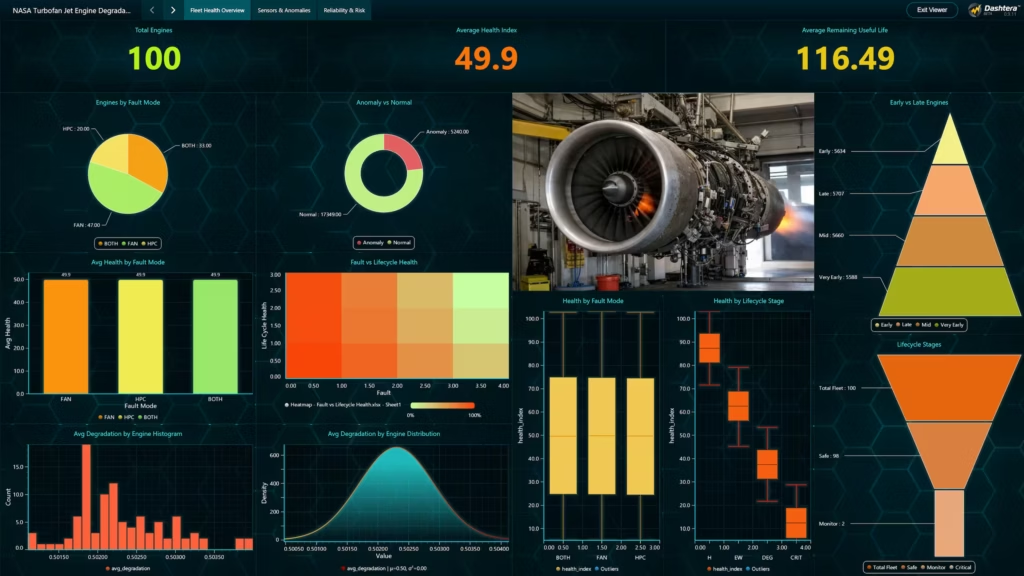
The Fleet Health KPI indicates an average Health Index of approximately 49.9, suggesting that the simulated engine population operates under moderate degradation exposure. This reflects a balanced reliability state rather than extreme early-life stability or near-failure collapse.
The Average Remaining Useful Life (RUL) Indicator reports a fleet mean of 116.49 cycles. When interpreted alongside the health index, this suggests that engines retain functional lifespan despite observable degradation progression.
The Fault Mode Distribution Chart reveals variability across FAN, HPC, and combined fault conditions. The relatively consistent health metrics across fault categories indicate that degradation behavior is structurally uniform while still capturing fault-specific dynamics.
Lifecycle segmentation visualizations demonstrate that engines are distributed across Healthy, Early Wear, Degrading, and Critical stages. This confirms that degradation progression is evenly simulated, enabling comparative lifecycle analysis.
The Fault Mode vs Lifecycle Heatmap highlights deterioration concentration effects. Combined fault modes exhibit stronger representation within advanced lifecycle stages, supporting the theoretical expectation of compounded degradation acceleration.
Collectively, Page 1 establishes a stable degradation baseline and validates the dataset’s lifecycle modeling logic.
The second dashboard page shifts analytical focus toward sensor variability and anomaly behavior.
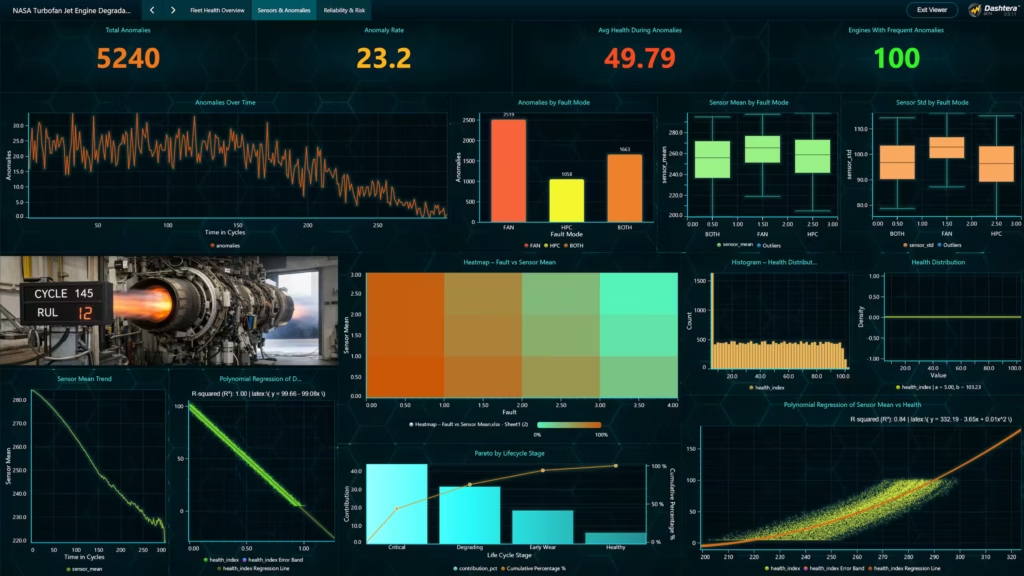
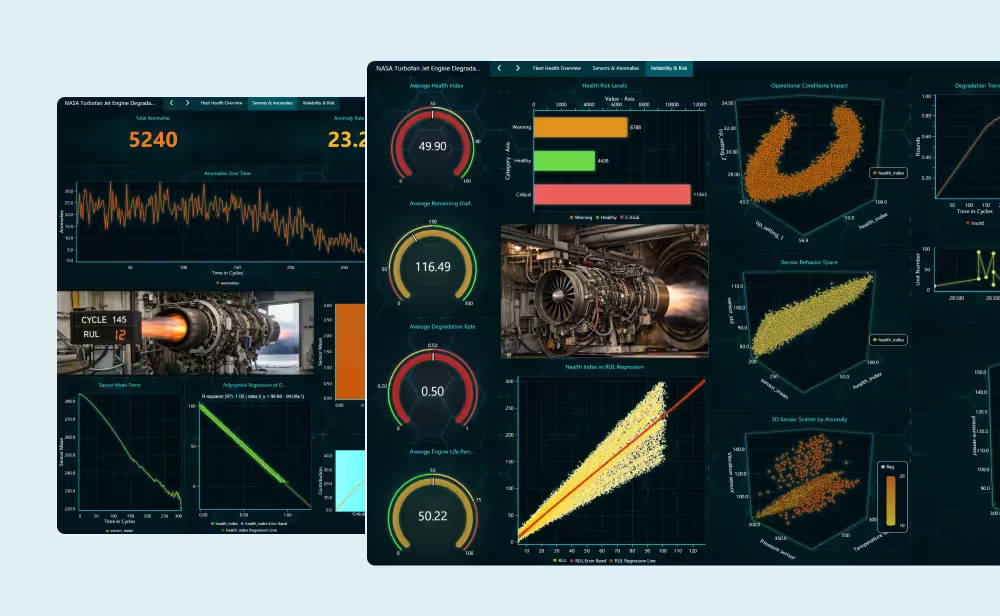
The Total Anomalies KPI quantifies 5,240 anomaly events, while the Anomaly Rate Indicator reports approximately 23.2%. This anomaly density reflects realistic PHM environments where abnormal patterns emerge gradually rather than dominating engine operation.
The Health During Anomalies Visualization indicates minimal deviation from fleet averages, suggesting that anomalies primarily represent localized sensor disturbances rather than immediate catastrophic failure states.
Sensor distribution charts and variability indicators reveal progressive dispersion patterns across operational cycles. Increased variance under degradation progression supports the hypothesis that sensor instability intensifies as engines age.
The Pareto Analysis by Lifecycle Stage demonstrates concentration effects, where Degrading and Critical engines contribute disproportionately to anomaly occurrence. This highlights the relationship between degradation severity and abnormal operational behavior.
Scatter plots examining the relationships among degradation rate, health index, and anomaly exposure show strong correlations. Engines with accelerated degradation exhibit higher anomaly densities, reinforcing predictive maintenance interpretations.
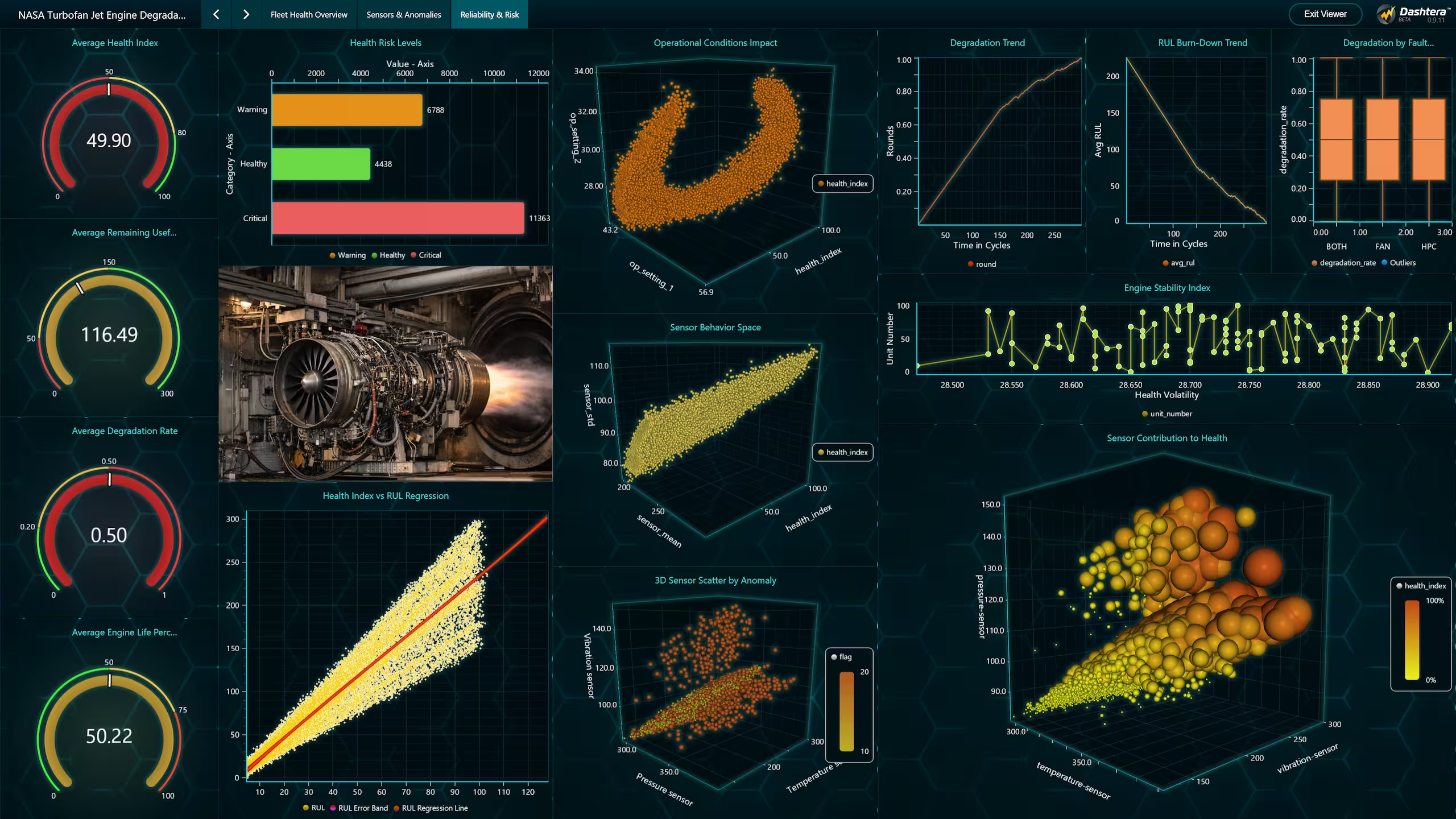
The third dashboard page synthesizes degradation, anomaly, and sensor patterns into reliability intelligence.
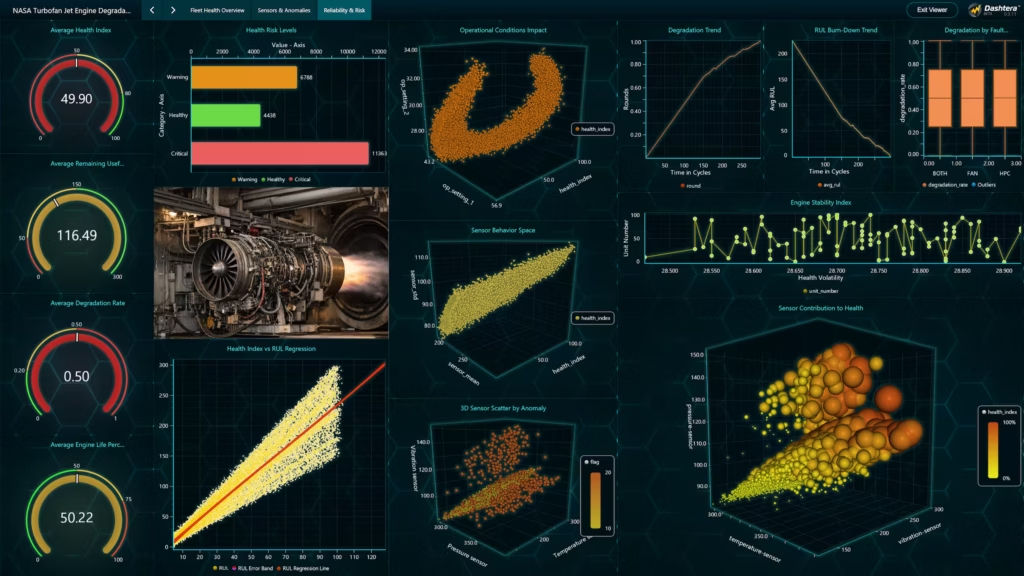
The RUL Burn-Down Chart visualizes systematic lifespan reduction across operational cycles. Engines exhibiting steeper RUL decline correspond to elevated degradation rates, confirming the consistency of degradation modeling.
The Health vs Degradation Scatter Visualization reveals inverse relationships, demonstrating that accelerated degradation directly impacts engine condition metrics.
Sensor contribution analytics identify variability patterns across sensor channels. Dispersion and clustering effects highlight potential indicators of reliability stress zones.
Correlation-based visualizations reveal structured dependencies between sensor measurements, degradation dynamics, and anomaly emergence. This supports multi-variable reliability modeling perspectives.
Risk segmentation charts indicate that engines classified within Warning and Critical states dominate instability patterns. This validates the reliability interpretation that degradation severity amplifies operational uncertainty.
Page 3 transitions the dashboard from descriptive monitoring toward predictive reliability diagnostics and risk evaluation.
This project leverages PostgreSQL as the data warehouse for turbofan dataset storage, connected directly to Dashtera for analysis and visualization.
Advantages of PostgreSQL Connection
User Benefits
The Turbofan Engine Analytics Dashboard illustrates how complex sensor-based PHM datasets can be transformed into actionable reliability intelligence.
Page 1 establishes systematic degradation behavior and fleet equilibrium. Page 2 demonstrates that sensor instability and anomalies are key indicators of evolving engine stress. Page 3 translates these patterns into reliability and risk insights, supporting predictive maintenance interpretations.
PostgreSQL integration enabled real-time querying, flexible aggregation, and efficient analytical computation. The combination of KPIs, heatmaps, scatter plots, box plots, Pareto charts, and sensor analytics highlights the analytical depth achievable using Dashtera’s no-code environment.
The Turbofan Engine Reliability & Health Analytics Dashboard demonstrates how Dashtera can deliver meaningful PHM and reliability intelligence when integrated with PostgreSQL.
By combining fleet degradation monitoring, sensor diagnostics, anomaly analysis, and reliability risk assessment into a coherent three-page dashboard, the project provides a scalable framework for engine health analytics.
The solution supports predictive maintenance interpretation, identifies degradation dynamics, and highlights sensor-driven reliability signals, forming a strong foundation for advanced PHM analytics and decision-support systems.
Share: