



 Senior Developer
Jarkko Tirkkonen
Senior Developer
Jarkko Tirkkonen
The landscape of data visualization has undergone a radical transformation over the last few years. As we move through 2026, the sheer volume of data produced by industrial IoT, financial markets, and real-time telemetry has rendered traditional charting libraries nearly obsolete for high-stakes applications. When performance is the baseline requirement, two names frequently surface in professional circles: Dashtera and LightningChart JS. While they share a common technological DNA, they serve fundamentally different purposes in the software ecosystem. Understanding which one to deploy is not just a matter of technical preference, it is a strategic business decision that dictates your time-to-market, development costs, and the ultimate user experience.
The Architectural Philosophy: Engine versus Vehicle

To understand the difference between Dashtera and LightningChart JS, one must first understand the relationship between a high-performance engine and a complete vehicle. LightningChart JS is, for all intents and purposes, the world’s fastest data visualization engine. It is built on a highly optimized WebGL-based rendering pipeline that communicates directly with the GPU. This allows it to handle hundreds of millions of data points with a fluidity that standard SVG or Canvas-based libraries simply cannot match. It is a tool for developers who need to build something entirely bespoke, where every pixel, interaction, and data pipeline is under their direct control.
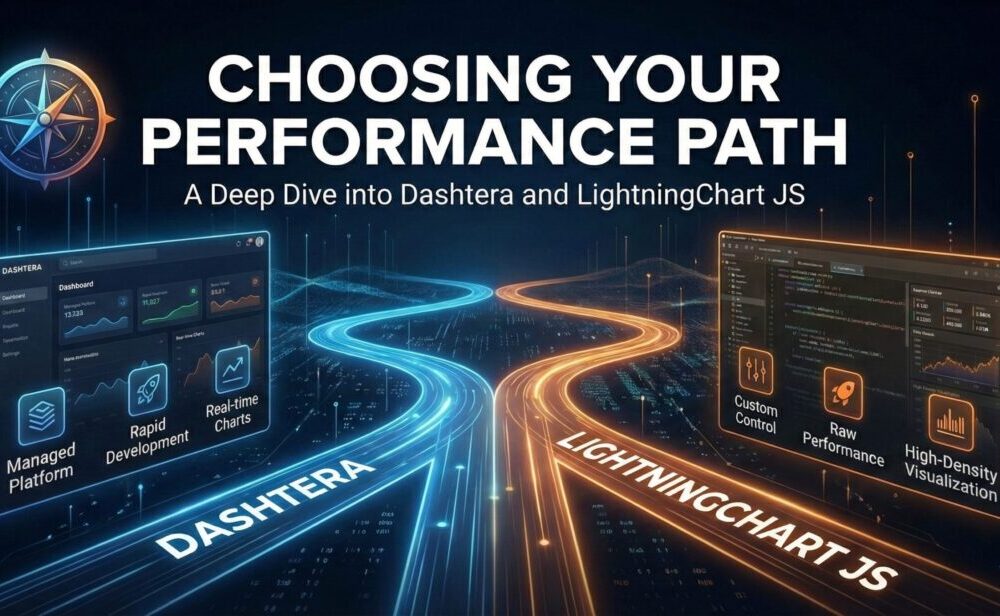
Dashtera, on the other hand, is the vehicle built around that engine. It is a high-level data visualization platform designed to remove the friction of building data-driven interfaces. While it leverages the same extreme performance capabilities found in the LightningChart ecosystem, it abstracts the complexity of the underlying code. Dashtera is designed for the rapid assembly of professional-grade dashboards and monitoring systems. It provides the chassis, the dashboard, and the connectivity, allowing the user to focus on the data and the insights rather than the intricacies of buffer management or shader optimization.
To illustrate the practical differences, let us consider a hypothetical scenario. Imagine a mid-sized engineering firm tasked with monitoring a network of high-frequency industrial sensors. These sensors produce thousands of data points per second, and the requirement is to visualize this data in real-time to detect anomalies before they lead to hardware failure. The firm has two teams: one will attempt the build using LightningChart JS, and the other will use Dashtera.
In the LightningChart JS path, the development team begins by setting up a dedicated front-end environment. They spend the first few days architecting the data ingestion layer, ensuring that the incoming WebSocket stream is efficiently mapped to the chart’s data buffers. They have total freedom to design a unique user interface that mirrors the physical layout of the factory floor. Every zoom level, every color gradient, and every custom tooltip is hand-coded. After several weeks of development, they have a highly specialized, proprietary application that is perfectly tuned to their specific hardware. This is a “product-level” build where the visualization is a core feature of their intellectual property.
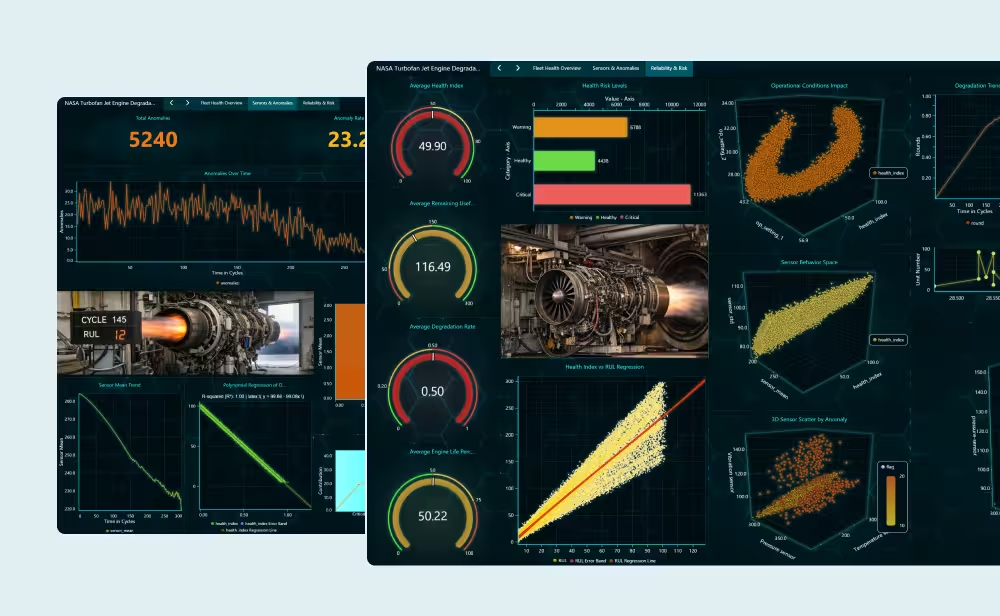
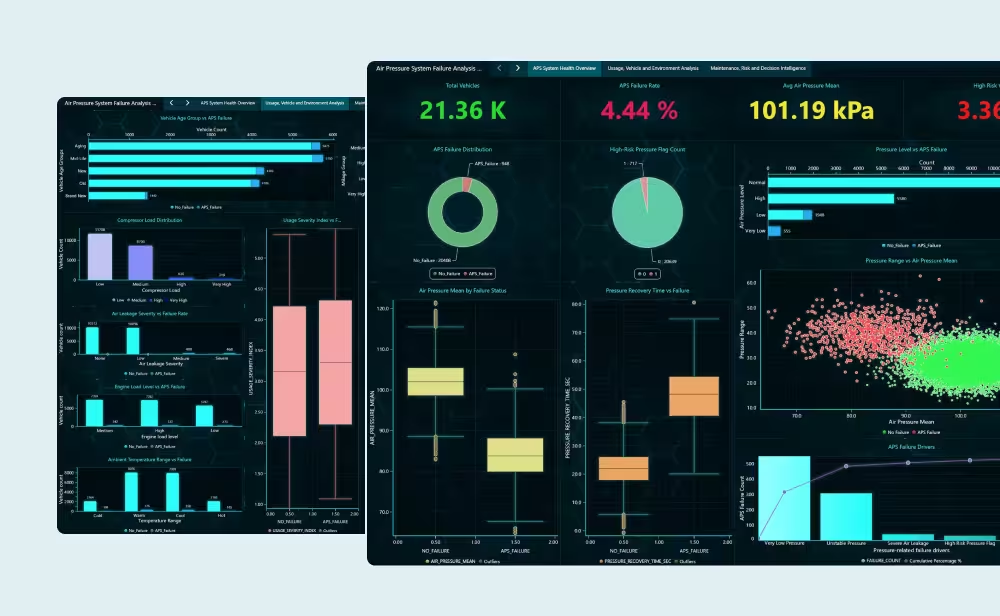
In the Dashtera path, the process looks entirely different. Instead of writing boilerplate code for data connectivity, the user connects Dashtera directly to their existing SQL database or streaming source via built-in connectors. Using a visual editor, they drag and drop the necessary high-performance components into place. Because Dashtera is pre-configured to handle massive data streams, the “wiring” of the data to the visuals happens almost instantaneously. Within a single afternoon, the team has a functioning, professional dashboard that is accessible via a web browser. While they might have less granular control over the internal “math” of the rendering compared to the LCJS team, they have reached a functional state in a fraction of the time.

Dashtera is the clear winner when the primary objective is time-to-value and operational efficiency. In many modern business environments, the need for a visualization arises suddenly, perhaps due to a new project requirement or a sudden need to monitor a specific metric. In these cases, spending weeks in a development cycle is not an option. Dashtera allows non-developers, such as data scientists or business analysts, to create high-performance views without waiting for a dedicated software engineering sprint.
Furthermore, Dashtera is ideal for internal tools and rapid prototyping. If you are testing a hypothesis or need to provide a management team with a live view of a project’s progress, the platform’s ability to integrate with common data sources like SQL, CSV, or live API feeds is invaluable. It removes the “deployment wall” that often exists between raw data and a visual insight. For organizations that value agility and need to iterate on their data views frequently, Dashtera provides a level of flexibility that a hard-coded library cannot match. It is about getting the right information to the right people as fast as possible, without sacrificing the performance needed to handle modern data loads.
Despite the speed and convenience of Dashtera, there are scenarios where the raw power and total control of LightningChart JS are indispensable. If you are building a commercial software product where the data visualization is the primary value proposition, such as a medical imaging suite, a professional trading platform, or a complex engineering simulation, you need to own the code. LightningChart JS is designed for software engineers who need to embed extreme performance into a larger, complex application.
The library shines when the requirements go beyond “standard” dashboarding. If your project requires custom rendering logic, unique mouse-interaction behaviors, or a highly specific visual aesthetic that must align with a strict corporate brand identity, the API provides the hooks to make that happen. LightningChart JS is also the choice for “edge” cases, visualizing datasets that are so large or complex that they require custom-tuned GPU shaders or specialized data thinning algorithms. It is a professional engineering tool for building the next generation of data-centric software products.
One common pitfall in high-performance visualization is the tendency for the output to look clinical or overly “robotic.” Both Dashtera and LightningChart JS have made significant strides in ensuring that, despite the underlying complexity, the final output remains “human-centric.” In Dashtera, this is achieved through a curated selection of themes and layouts that prioritize readability and cognitive ease. The platform is designed to present data in a way that the human brain can process quickly, avoiding the clutter that often plagues DIY dashboards.
In the LightningChart JS ecosystem, this human touch is delivered through the sheer smoothness of the interaction. When a chart responds instantly to a scroll or a zoom, even with millions of points on the screen, it creates a sense of “direct manipulation.” This tactile feedback makes the data feel more real and less like an abstract digital construct. Whether you choose the platform or the library, the end goal remains the same: to translate cold, hard data into a narrative that a human being can understand and act upon.
The final piece of the puzzle is the long-term lifecycle of the project. Choosing a solution is not just about the initial build, it is about who maintains it two years down the line. A custom build using LightningChart JS requires a developer who understands the library and the underlying data architecture. This represents a higher long-term investment in specialized talent but results in a highly optimized, proprietary asset.
Dashtera shifts the maintenance burden. Because the platform handles the underlying updates to the rendering engine and the data connectors, the organization can focus purely on the data logic. If a data source changes or a new metric needs to be added, it can be updated in minutes via the interface. This significantly lowers the total cost of ownership for many organizations, especially those that do not wish to maintain a large team of specialized front-end engineers just to keep their dashboards running.
The choice between Dashtera and LightningChart JS ultimately comes down to your project’s identity. If you are an engineer building a new software product that demands the absolute limit of what web technology can achieve, LightningChart JS is your foundation. It offers the depth and precision required to build world-class applications from the ground up.
However, if your goal is to solve a business problem, monitor a process, or visualize a complex dataset without getting bogged down in the mechanics of software development, Dashtera is the superior path. It provides the same world-leading performance but wraps it in a shell of accessibility and speed. In the modern world, the most successful organizations are those that know when to build and when to accelerate. Dashtera represents that acceleration, allowing you to turn data into a competitive advantage in a fraction of the time.
The decision to adopt either Dashtera or LightningChart JS often rests on the specific operational context of the project. To understand how these tools function in a professional environment, we must examine the practical scenarios where one clearly outshines the other based on the requirements for deployment speed versus the need for architectural ownership.
Scenario A: The Bespoke Medical Device Interface
In the development of a next-generation medical imaging system, the visualization is not merely a feature but the core product itself. A team of software engineers building an ultrasonic diagnostic tool requires absolute control over the rendering pipeline to ensure that every frame of the high-frequency scan is displayed with mathematical precision. In this context, LightningChart JS is the indispensable choice. The requirement for a custom, proprietary user interface that must pass strict regulatory certifications means that the team cannot rely on a high-level platform. They need the raw application programming interface to build a unique experience that integrates deeply with their hardware. The technical investment is high, but the result is a unique piece of intellectual property that the company owns and maintains.

Scenario B: The Rapid Deployment of Industrial Monitoring
Contrast this with a large-scale manufacturing plant that has just integrated five hundred new vibration sensors across its assembly line to prevent mechanical failure. The engineering lead does not have the luxury of a three-month development cycle to build a custom application. They need a high-performance monitoring solution that can ingest real-time streams from their SQL databases and display them immediately. Here, Dashtera is the superior path. By utilizing the platform’s pre-built acceleration layers, the team can bypass the software development lifecycle entirely. The focus shifts from coding the visualization to interpreting the data. Dashtera allows the plant to reach an operational state in days, providing the same millisecond-level responsiveness as a custom build but without the engineering overhead.

Comparative Advantages and Strategic Limitations
When evaluating these paths from a technical leadership perspective, the trade-offs involve more than just features. They involve long-term maintenance, total cost of ownership, and the allocation of specialized engineering talent.
The Strategic Advantages of LightningChart JS
The primary advantage of working directly with the LightningChart JS library is the absence of a performance or design ceiling. Because the developer is working with the low-level rendering engine, they can optimize the application for highly specific hardware configurations or unique data structures that a general platform might not support. This level of granular control extends to the user experience, allowing for the creation of unconventional interaction models or specialized 3D environments. Furthermore, since the code is integrated into the organization’s own repository, there is a high degree of ownership and no reliance on an external dashboarding environment for the end-user experience.
However, these advantages come with a significant technical burden. The requirement for senior-level front-end expertise means that the cost of development is high. The organization also takes on the permanent responsibility of maintaining the code. Every browser update or change in the data source requires manual intervention by a developer who understands the intricacies of the library. For many organizations, this “technical debt” can eventually become a bottleneck that prevents them from iterating on their data views quickly.
The Strategic Advantages of Dashtera
Dashtera excels by shifting the focus from technical maintenance to data agility. The most significant advantage for a professional user is the reduction of friction between the data source and the insight. Because the platform handles the complexity of WebGL rendering and data ingestion, a single data engineer can manage a fleet of high-performance dashboards that would otherwise require an entire team of front-end developers. This democratization of high-performance visuals is a major strategic benefit for organizations that need to stay lean and move fast.
The integrated connectivity layer is another technical advantage. Dashtera is designed to work natively with the high-speed data pipelines common in technical fields, such as streaming APIs and time-series databases. This removes the need for building custom “plumbing” for every new project. The platform’s responsiveness ensures that even as data volume increases, the user experience remains fluid and professional without the need for manual optimization.
The trade-off for this speed and efficiency is a more structured environment. While Dashtera offers a high degree of configuration, it is not a “blank canvas” in the same way a raw library is. Users work within a professional framework designed for technical analytics, which means that while the dashboards are highly functional and performant, they follow the platform’s established architectural patterns. For the vast majority of technical use cases, this is a beneficial trade-off, as it ensures a consistent and high-quality output without the risks associated with custom-coded interfaces.
Final Technical Evaluation
Choosing between these two paths is a matter of determining whether your organization is a “product builder” or a “data consumer.” If you are building a commercial software product where the chart is the product, the depth of LightningChart JS is required. If you are an engineering team that needs to see, monitor, and analyze complex data to make mission-critical decisions, Dashtera provides the most efficient and performant route to that goal. Both solutions represent the peak of what is possible in web-based graphics, ensuring that even the most demanding technical datasets can be visualized with the clarity and speed they deserve.
Share: