



 Data Analytics Software QA
Janaka Alwis
Data Analytics Software QA
Janaka Alwis
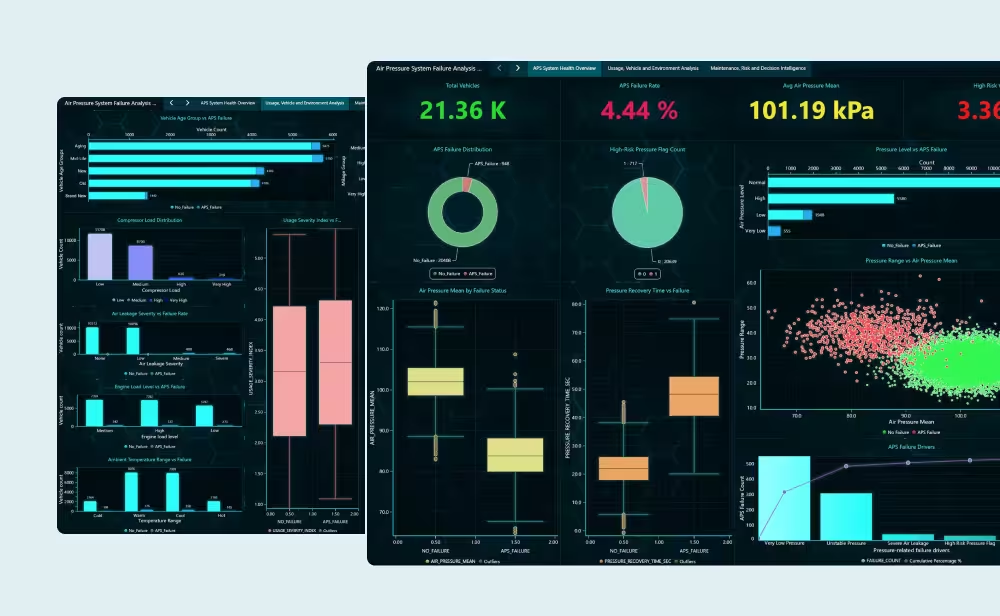
The Air Pressure System (APS) Failure Analytics Dashboard presents a structured, multi-dimensional exploration of air pressure system health, operational stress, and maintenance risk across a fleet of heavy vehicles. This project enables fleet managers and engineers to analyze system reliability, usage behavior, and failure risk intuitively.
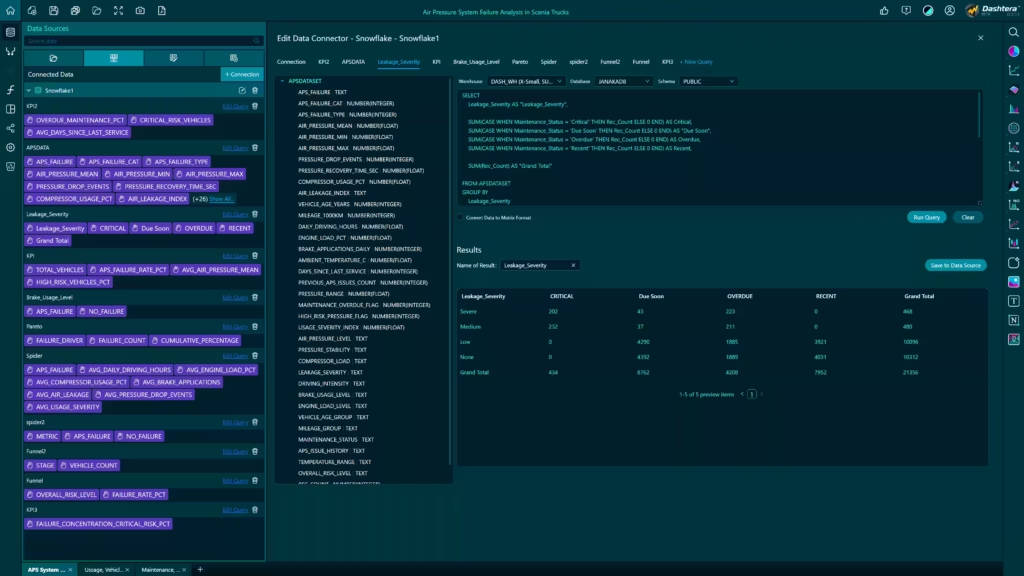
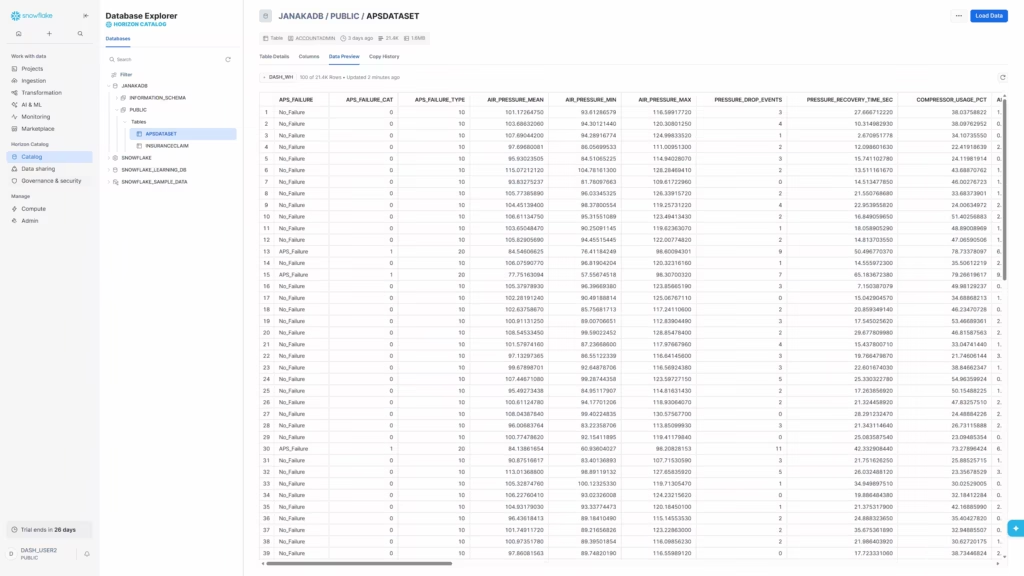
The Snowflake AI Data Cloud and the Dashtera no-code data analytics platform were used to develop this APS failure diagnostics dashboard. This project leverages Snowflake enabling breaking data data silos and facilitating the external data and applications integration. This project’s APS dataset was stored in the Snowflake platform, allowing Dashtera to query the data directly using SQL for summarization and visualization.
By combining system-level KPIs, vehicle usage metrics, pressure stability indicators, and maintenance risk factors across three analytical pages, the dashboard provides actionable insights for preventive maintenance and operational optimization.
The project demonstrates how sensor-style vehicle data can be converted into a structured analytical story using Dashtera’s graphs, making it suitable for fleet analytics, reliability engineering, predictive maintenance, and decision support dashboards.
You can access the Snowflake-powered air pressure system project and interact with it.
The dataset used in this project is a synthetically generated APS monitoring dataset designed to simulate realistic air pressure system behavior in commercial vehicles. While the data is synthetic, it follows realistic operational logic commonly observed in fleet maintenance and vehicle reliability environments.
The data set consists of 21,356 vehicle records, each representing a unique operational snapshot of a vehicle’s air pressure system condition, usage profile, and maintenance state. The data captures realistic relationships between air pressure stability, compressor usage, leakage severity, brake behavior, driving intensity, and maintenance history.
The dataset is suitable for:
Dataset Description
The dataset comprises vehicle-level observations, where each record captures a structured snapshot of APS system health, operational usage behavior, and maintenance condition. The data is designed to support failure analysis, risk stratification, and maintenance decision modeling at the fleet level.
APS System Metrics
APS system metrics describe the operational behavior and stability of the air pressure system. These include measures of air pressure mean and variability, indicators of pressure stability, the frequency of pressure drop events, and pressure recovery time following drops. In addition, a high-risk pressure flag is provided to identify vehicles operating under potentially unsafe pressure conditions.
Usage and Operational Factors
Usage and operational factors capture the intensity and stress imposed on the APS during vehicle operation. These variables include average daily driving hours, engine load percentage, compressor utilization rate, and brake application frequency. A composite usage severity index summarizes overall operational intensity.
Maintenance and Risk Indicators
Maintenance and risk indicators reflect the service condition and failure exposure of each vehicle. These attributes include days since last service, categorical maintenance status (Recent, Due Soon, Overdue, Critical), leakage severity classification, and an aggregated overall risk level. The target outcome variable, APS failure, indicates whether a vehicle experienced a system failure.
Together, these attribute groups enable integrated analysis of mechanical behavior, operational stress, and maintenance effectiveness, forming a robust foundation for system health monitoring and predictive risk assessment.
Dashtera is a cloud-based, no-code analytics platform designed to simplify data analysis and visualization. It supports data-driven decision-making by enabling the creation of intuitive dashboards, automated insights, and flexible drill-down analyses.
Key Features
Dashtera connects directly to structured data sources such as WHO datasets, CSV files, APIs, and platforms such as the Snowflake AI Data Cloud.
Dashtera also supports a wide range of visualization types, including maps, Pareto charts, line charts, and bar charts
Dashtera enables interactive drill-down analysis at regional and country levels and provides dynamic filtering capabilities based on region, income group, and gender.
It also allows easily sharing dashboards to support stakeholder collaboration, whether publicly or password protected.
Dashtera advantages
Dashtera requires minimal technical expertise, making analytics accessible to non-technical users. It enables rapid dashboard development and deployment.
Dashtera also combines advanced visualization capabilities with a user-friendly drag-and-drop interface. Dashtera is lightweight and flexible, delivering faster insights compared to traditional BI tools such as Tableau or Power BI.
The APS Failure Analytics Dashboard is structured into three analytical pages, each addressing a distinct decision layer. The design progresses from system-level health assessment to usage-driven risk behavior, and finally to maintenance prioritization and decision intelligence.
APS System Health Overview
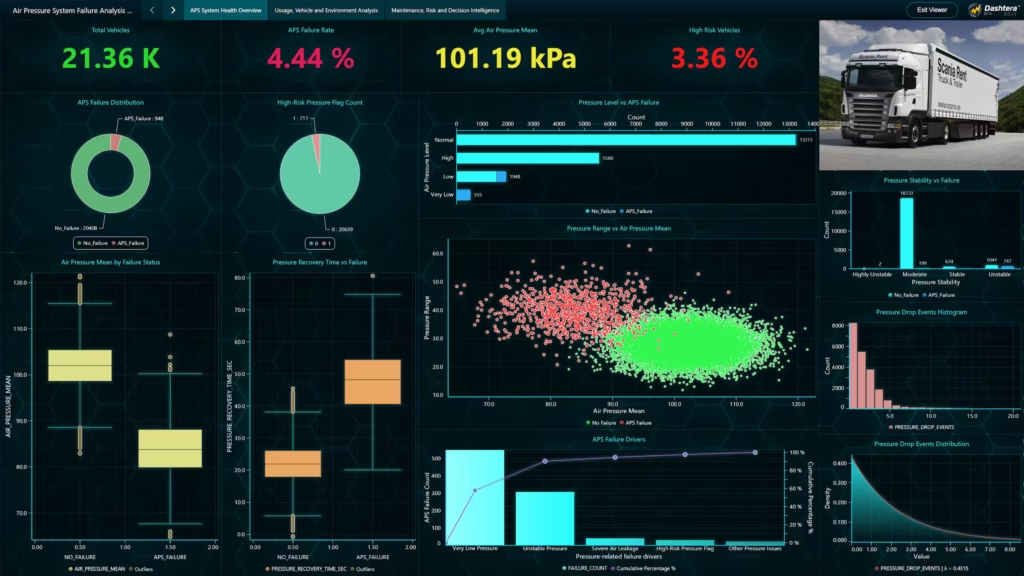
The first dashboard page provides a macro-level assessment of the overall health of the Air Pressure System (APS) across the fleet. The dataset contains 21,356 vehicles, of which 948 experienced APS failures, resulting in an overall APS failure rate of 4.44%.
The average air pressure mean across the fleet is 101.19 units, indicating that most vehicles operate within expected nominal pressure ranges. However, 3.36% of vehicles are flagged as high-risk, signaling a small but critical subset requiring attention.
Distribution analysis shows that the majority of vehicles operate without APS-related issues, yet failures are not randomly distributed. Box plot analysis of air pressure mean by failure status indicates that failed vehicles tend to operate at lower pressure levels and exhibit greater variability.
This pattern suggests pressure instability rather than absolute pressure loss as a key precursor to failure.
Pressure-related categorical analysis reinforces this finding. Vehicles classified with very low or unstable pressure levels show disproportionately higher failure occurrence compared to those operating under normal or high pressure conditions.
Similarly, clustered analysis of pressure stability versus failure rate demonstrates a sharp increase in failures among vehicles with unstable pressure behavior.
Histogram analysis of pressure drop events reveals a right-skewed distribution, where most vehicles experience few drops, while a smaller subset exhibits frequent pressure losses.
These high-frequency pressure drop vehicles align closely with observed APS failures, indicating repetitive stress cycles as a critical failure mechanism. This is further supported by box plot analysis of pressure recovery time, where failed vehicles show significantly longer recovery durations.
A Pareto analysis of failure drivers highlights strong concentration effects. Very low-pressure alone accounts for 57.91% of all APS failures, while unstable pressure conditions raise cumulative failure contribution to 90.3%.
Additional contributors such as severe air leakage and high-risk pressure flags collectively account for the remaining failures. This confirms that a small number of pressure-related failure modes dominate APS breakdowns.
Overall, Page 1 establishes that APS failures are relatively infrequent at the fleet level but are highly concentrated around pressure instability, repeated pressure drops, and slow recovery behavior, forming a clear technical foundation for deeper behavioral and maintenance analysis.
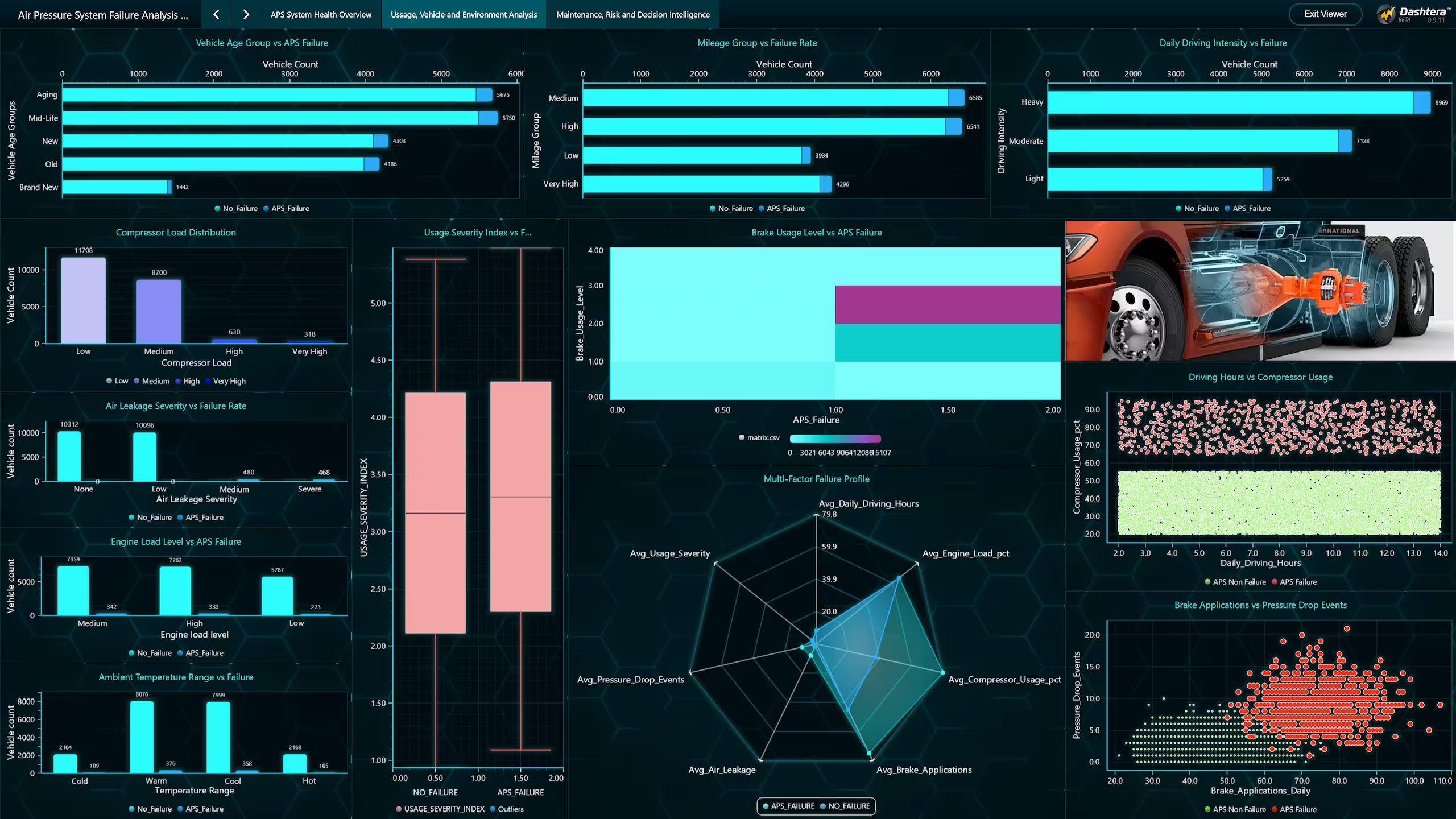
This dashboard page analyzes how vehicle usage intensity, operational behavior, and environmental conditions influence APS failure risk across the fleet. The dataset contains 21,356 vehicles, of which 948 experienced APS failures, allowing meaningful comparison between failure and non-failure populations across multiple usage dimensions.
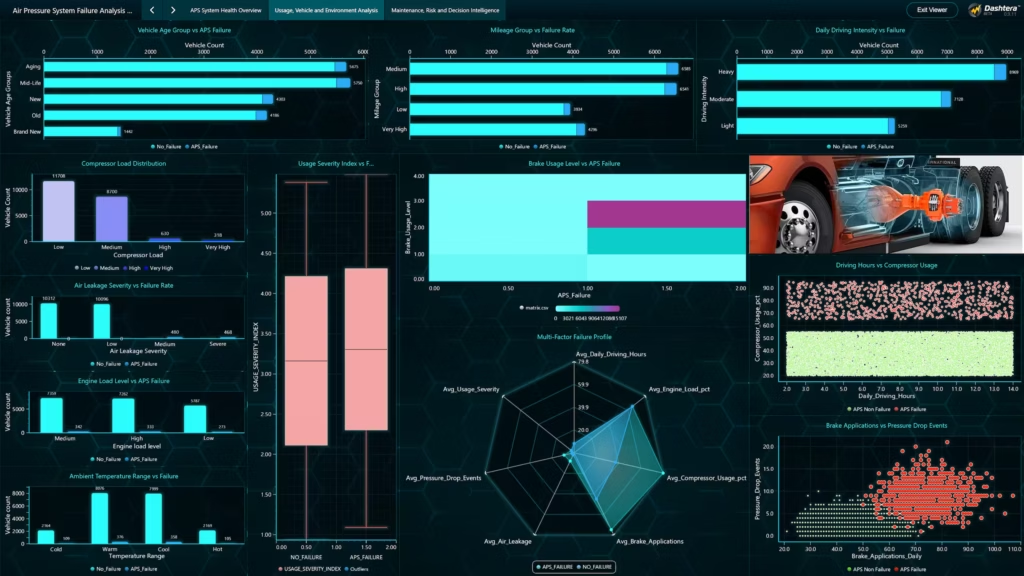
Analysis by vehicle age group shows that APS failures are distributed across all lifecycle stages. Mid-life (262 failures) and aging vehicles (217 failures) contribute the largest shares, reflecting their higher population sizes, while new and brand-new vehicles together still account for over 260 failures. This indicates that APS failures are not exclusively age-driven and may occur even under relatively low chronological wear.
Mileage-based analysis reinforces this finding. High and very high mileage vehicles account for 502 failures, yet 446 failures still occur in low- and medium-mileage categories. This confirms that accumulated mileage increases exposure but does not independently determine APS failure risk.
Operational usage intensity shows a stronger relationship with failures. Vehicles operating under heavy daily driving intensity account for 400 APS failures, compared to 327 in moderate and 221 in light usage categories. Similarly, heatmap analysis of brake usage level versus APS failure reveals that failures are highly concentrated among vehicles with high and very high brake usage, while low brake usage vehicles exhibit negligible failure occurrence.
Mechanical stress indicators further amplify this pattern. Vehicles with higher engine load levels and compressor load show disproportionately higher failure counts. Bar chart analysis of air leakage severity demonstrates a sharp escalation in failure exposure as leakage severity increases, confirming leakage as a critical mechanical risk driver rather than a secondary symptom.
The Usage Severity Index consolidates multiple stress indicators into a single metric. Box plot comparison shows that failed vehicles have a consistently higher median usage severity than non-failure vehicles, indicating sustained multi-dimensional stress rather than isolated extreme events.
Environmental analysis shows that APS failures occur across all ambient temperature ranges, with no single temperature band dominating failure counts. This suggests that environmental conditions act primarily as secondary stress amplifiers, increasing risk when combined with heavy mechanical and usage load.
Scatter plot analysis of brake applications versus pressure drop events reveals a strong positive relationship, confirming that aggressive braking behavior directly increases pressure instability. In contrast, the relationship between daily driving hours and compressor usage is weak, indicating that system strain is driven more by pressure recovery cycles than by driving duration alone.
The spider chart provides an integrated comparison between failure and non-failure vehicles. While average daily driving hours (8.09 vs 8.02) and engine load (65.17% vs 65.01%) remain nearly identical, failed vehicles exhibit dramatically higher compressor usage (79.83% vs 37.39%), brake applications (74.71 vs 44.96), air leakage (7.98 vs 1.99), pressure drop events (9.04 vs 2.01), and overall usage severity (3.29 vs 3.16). These differences clearly demonstrate that APS failures are driven by cumulative system stress rather than operational duration.
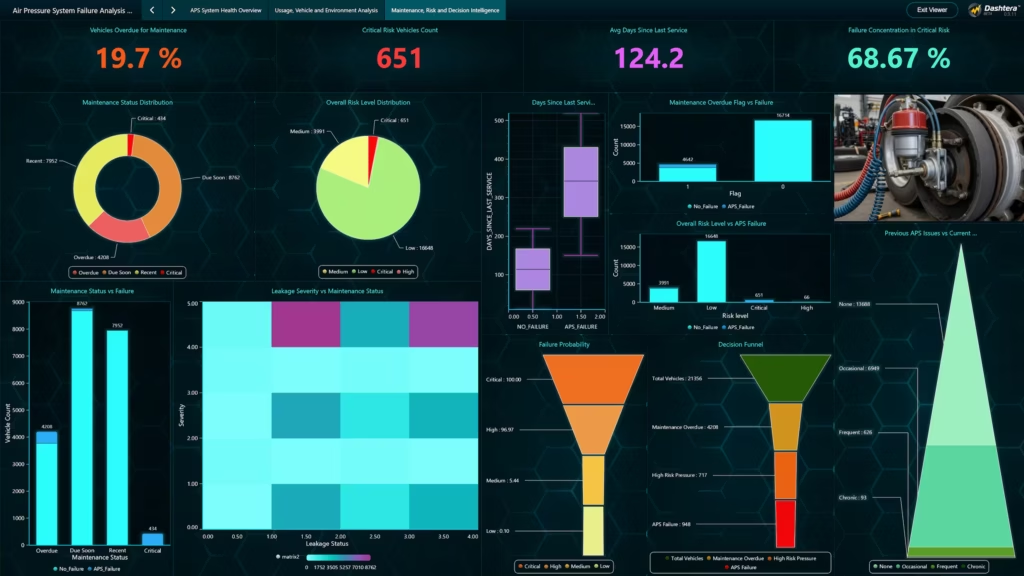
The third dashboard page translates operational and mechanical insights into maintenance prioritization and decision intelligence. The analysis shows that 19.7% of vehicles are overdue for maintenance, with an average of 124.2 days since last service, indicating significant deviation from optimal service intervals.
Risk stratification reveals 651 vehicles classified as critical risk, representing a small fraction of the fleet but a disproportionately high source of APS failures. In fact, 68.67% of all APS failures originate from vehicles already flagged as critical risk, confirming the effectiveness of risk classification as a predictive mechanism rather than a reactive label.
Failure probability analysis by overall risk level further reinforces this conclusion. Vehicles classified as critical risk exhibit a 100% failure rate, while high-risk vehicles show a failure probability of 96.97%.
In contrast, medium-risk vehicles show a sharply reduced failure rate of 5.44%, and low-risk vehicles exhibit near-zero failure occurrence. This steep gradient demonstrates a highly non-linear escalation of APS failure risk once vehicles cross defined risk thresholds.
Maintenance status analysis reveals a strong interaction between delayed service and mechanical degradation. Heatmap analysis of leakage severity versus maintenance status shows that severe and medium leakage cases are almost exclusively concentrated among overdue and critical maintenance vehicles, while recently serviced vehicles exhibit predominantly low or no leakage. This pattern highlights maintenance delay as a structural amplifier of mechanical risk rather than a coincidental correlate.
The decision funnel visualization consolidates these insights into a clear operational narrative. Starting from 21,356 total vehicles, the funnel narrows to 4,208 overdue vehicles, then to 717 high-risk pressure vehicles, and finally to 948 APS failures. This structured reduction demonstrates how targeted maintenance interventions at earlier stages could significantly reduce downstream failures.
Collectively, Page 3 demonstrates that APS failures are highly predictable when maintenance delay and risk signals are combined. The findings support a shift from reactive repair toward proactive, risk-based maintenance prioritization, where a relatively small subset of vehicles accounts for the majority of operational risk.
This project leverages the Snowflake platform for APS dataset storage, connected to Dashtera for analysis and visualization.
Integrating Dashtera with the Snowflake platform ensures real-time, high-performance analytics, making complex engineering datasets accessible and actionable, and reinforcing Dashtera’s value as a platform for advanced operational intelligence.
Integrating your data between the Snowflake platform and Dashtera provides real-time access to up-to-date data breaking down data silos. The integration also supports scalability for large and complex datasets that leverage the Snowflake AI Data Cloud computing.
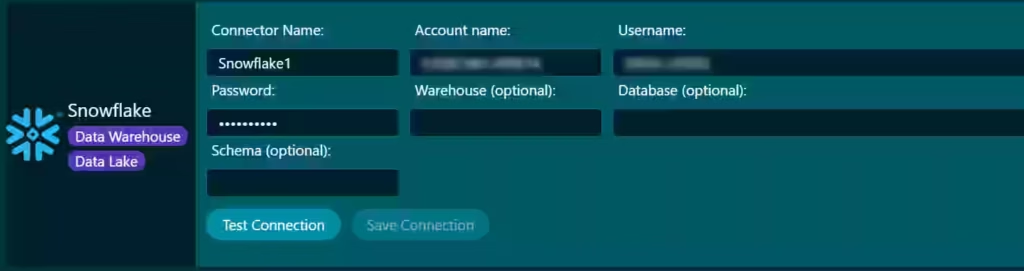
Integrating Dashtera with the Snowflake platform ensures real-time, high-performance analytics, making complex engineering datasets accessible and actionable, and reinforcing Dashtera’s value as a platform for advanced operational intelligence.
Integrating your data between the Snowflake platform and Dashtera provides real-time access to up-to-date data breaking down data silos. The integration also supports scalability for large and complex datasets that leverage the Snowflake AI Data Cloud computing.
I can also highlight the Snowflake’s platform secure access with authentication and role management which helps maintain a single source of truth for analytics. Whereas Dashtera makes it easy to share dashboards with stakeholders password-protected or publicly.
The APS Failure Analytics Dashboard illustrates how complex sensor-based vehicle datasets can be transformed into actionable intelligence.
Page 1 shows APS failures are rare but highly concentrated in pressure instability and repeated pressure drops. Page 2 demonstrates failures are driven by cumulative operational stress rather than single usage metrics, confirmed by spider charts, scatter plots, and Usage Severity Index. Page 3 translates these insights into proactive maintenance prioritization, showing that targeting critical and high-risk vehicles could prevent the majority of failures.
Snowflake integration enabled real-time querying, high performance, and single-source data access, streamlining dashboard development and enhancing reliability of operational insights. The combination of KPIs, box plots, Pareto charts, spider charts, scatter plots, heatmaps, and funnel visualizations highlights the analytical depth achievable with Dashtera’s no-code environment.
The APS Failure Analytics Dashboard demonstrates how Dashtera can deliver actionable fleet reliability and maintenance intelligence when integrated with the Snowflake platform. By combining system health assessment, operational usage analysis, and risk-based maintenance prioritization into a coherent three-page dashboard, the project provides a scalable framework for fleet monitoring.
This dashboard supports proactive maintenance, identifies risk concentration, and highlights operational stress drivers, forming a strong foundation for predictive failure modeling, remaining life estimation, and optimized maintenance planning.
Share: