

Medical Appointment No-Shows Dashboard

Medical-appointment-no-shows-booking-appointment

On this page

Introduction

The Medical Appointment No-Shows Dashboard with Dashtera is an advanced interactive analytics tool designed to uncover patterns and drivers behind missed medical appointments. Built using Dashtera’s no-code platform, this dashboard transforms a large, real-world dataset of appointment records into actionable insights through dynamic charts, visual filters, and drill-down capabilities. 

This dashboard aims to help healthcare administrators, policymakers, and researchers to: 

  • Identify demographic, medical, and logistical factors that influence patient attendance. 
  • Analyze the impact of waiting time, reminder messages, and health conditions on no-show rates. 
  • Support data-driven scheduling strategies to reduce wasted appointment slots and improve care delivery. 

The dataset contains 110,527 appointment records from Brazil, each capturing patient demographics, appointment booking details, medical history, and whether the patient attended or missed their appointment. 

Dataset

The Medical Appointment No-Shows Dataset provides rich contextual information on patient behavior and attendance patterns. Data cleaning removed erroneous entries and ensured date differences between booking and appointment were within the range of 0–180 days. 

Feature Description Value / Unit
PatientId
Unique anonymized patient ID (patients may appear multiple times).
Alphanumeric
AppointmentID
Unique appointment record ID.
Alphanumeric
Gender
Patient gender.
M = Male, F = Female
ScheduledDay
Date & time when the appointment was booked.
YYYY-MM-DD hh:mm:ss
AppointmentDay
Date when the appointment is scheduled.
YYYY-MM-DD
Age
Age of patient in years (0–115).
Numeric
Neighbourhood
Clinic location.
Text
Scholarship
Indicates Bolsa Família social welfare enrollment.
1 = Yes, 0 = No
Hipertension
Hypertension diagnosis.
1 = Yes, 0 = No
Diabetes
Diabetes diagnosis.
1 = Yes, 0 = No
Alcoholism
Alcoholism diagnosis.
1 = Yes, 0 = No
Handcap
Disability level.
0–4
SMS_received
Number of SMS reminders sent prior to appointment.
Numeric
No-show
Whether patient missed the appointment.
Yes = No-show, No = Attended

Derived & Processed Fields 

For deeper analysis, additional calculated columns were generated: 

  • Waiting_Days = AppointmentDay − ScheduledDay 
  • Waiting_Group: 
    • Same Day (0 days) 
    • 1–7 days 
    • 8–14 days 
    • 15–30 days 
    • 31–60 days 
    • 61–180 days 
  • Age_Group: 
    • Child (0–12) 
    • Teen (13–19) 
    • Young Adult (20–35) 
    • Adult (36–50) 
    • Senior (51–65) 
    • Elderly (66+) 

About Dashtera

What is Dashtera? 

Dashtera is a no-code, cloud-based dashboarding platform that allows users to connect data sources, perform transformations, and build interactive visualizations without writing code. It’s ideal for quick insights, KPI tracking, and storytelling with data. 

Key Features 

  • Connects to various data sources (CSV, Excel, APIs, etc.) 
  • Wide range of chart types, including advanced statistical visuals 
  • Interactive drill-downs and dynamic filters 
  • Shareable dashboards with flexible layouts 
  • Supports calculated fields and transformations 
  • User-friendly drag-and-drop interface 

Advantages Over Similar Tools 

  • Extremely easy to use—minimal technical expertise required 
  • Rapid dashboard creation and deployment 
  • Suitable for both beginners and advanced users 
  • Lightweight yet powerful compared to Tableau or Power BI 

Dashboards

Patient Demographics and Attendance 

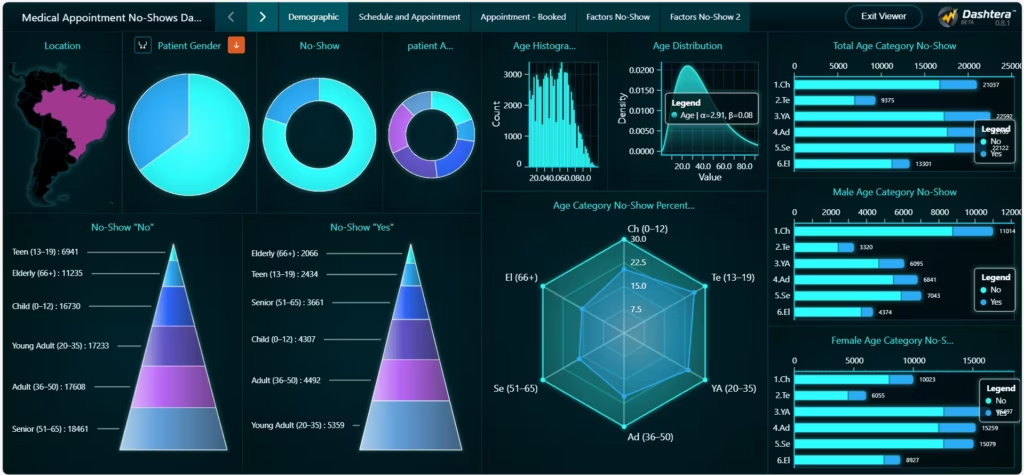
This dashboard examines the relationship between gender, age categories, and appointment attendance. 
Medical-appointment-no-shows-patient-demographic
  • Gender Distribution 
    The patient population consists of 38,687 males and 71,840 females, indicating a higher female representation. No-show rates differ slightly by gender but remain significant in both groups. 
  • No-Show Overview 
    Out of all appointments, 22,319 (20.2%) resulted in no-shows, while 88,208 (79.8%) were attended. 
  • Age Categories 
    Patients were grouped into six meaningful categories: 
    • Child (0–12) – 21,037 patients. Often dependent on parental scheduling; parental availability may strongly influence attendance (20.5%). 
    • Teen (13–19) – 9,375 patients. Higher no-show tendency (26%) possibly linked to school schedules and lower self-perceived urgency. 
    • Young Adult (20–35) – 22,592 patients. A high no-show rate (23.7%), often due to work or lifestyle conflicts. 
    • Adult (36–50) – 22,100 patients. Moderate no-show rate (20.3%), often balancing family and work commitments. 
    • Senior (51–65) – 22,122 patients. Lower no-show rate (16.5%), possibly due to increased health prioritization. 
    • Elderly (66+) – 13,301 patients. Lowest no-show rate (15.5%), though mobility issues may impact attendance. 
  • Age Distribution Patterns 
    The histogram and gamma distribution (α=2.91, β=0.08) reveal that most patients are between 20–65, with a gradual decline in the older age brackets. 
  • No-Show Rates by Age Group 
    The spider chart shows teenagers have the highest no-show percentage, while elderly patients have the lowest. Stacked horizontal bar charts break this down further into total, male-only, and female-only categories. 

Appointment Schedule Time and Date Patterns

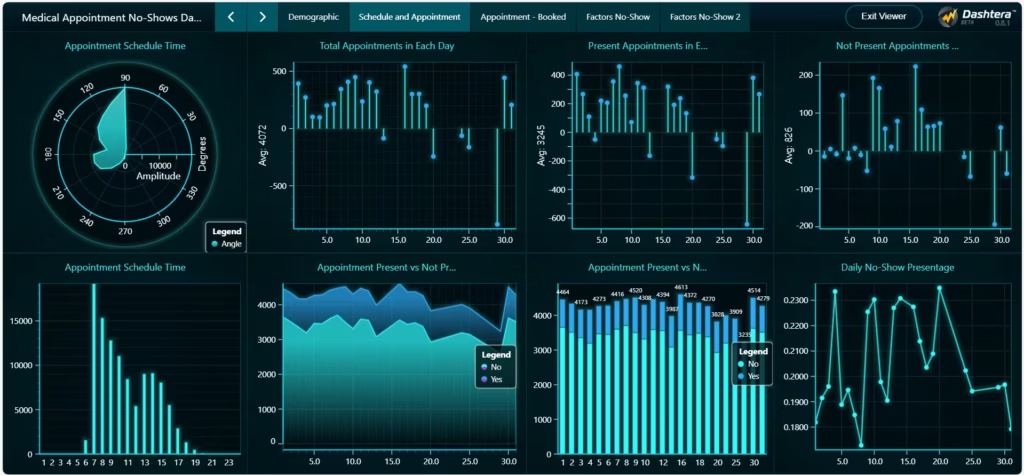
This dashboard focuses on appointments based on the time of day and day of the month.
  • Time of Day Distribution 
    Early morning and late afternoon slots show lower appointment volumes. The peak booking hours are: 
    • 7:00 AM – 19,213 appointments 
    • 8:00 AM – 15,349 
    • 9:00 AM – 12,823
    • Appointment volumes steadily decline after midday, with very few evening appointments. 
  • Day-by-Day Trends 
    Stem charts track total appointments (baseline avg = 4,072/day), attended appointments (avg = 3,245/day), and missed appointments (avg = 826/day). 
  • Attendance Patterns by Day 
    The area chart and stacked bar chart illustrate that missed appointments remain proportionally consistent across the month. The no-show percentage line chart reveals specific spikes — e.g., days 4, 9, 10, 13, 14, and 16 show rates above 23%, suggesting possible date-specific influences. 

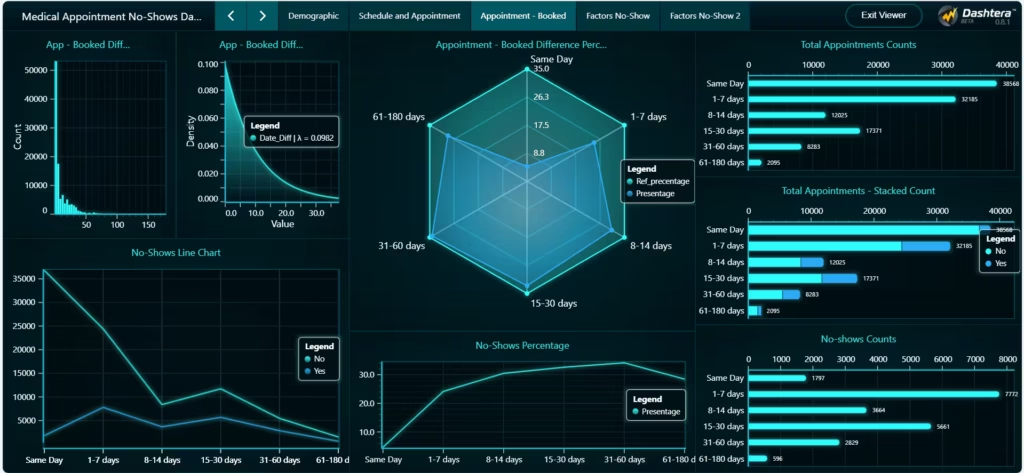
Appointment Date vs. Booking Date Difference

This dashboard explores how the gap between booking and appointment date affects attendance. 
Medical-appointment-no-shows-booking-appointment
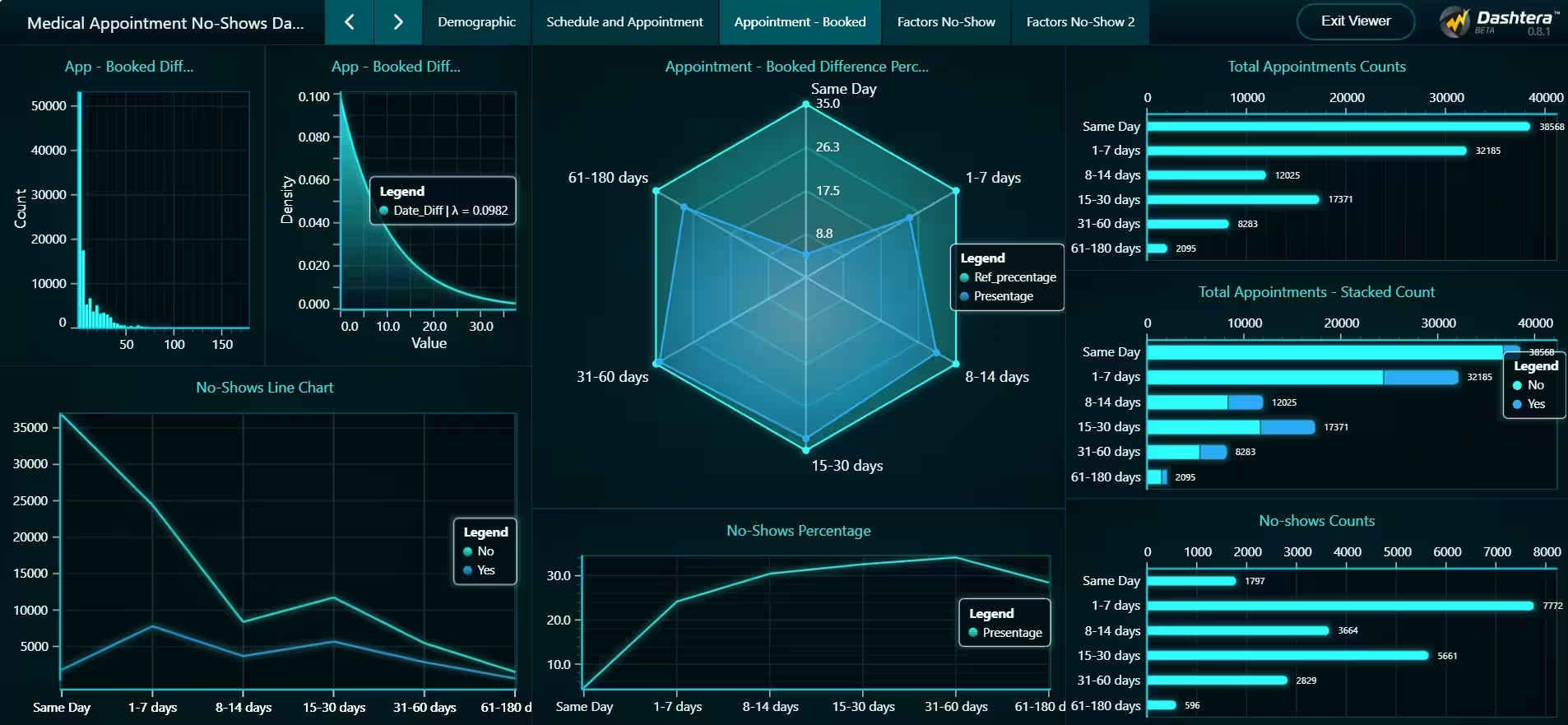
  • Booking Lead Time Distribution 
    Most bookings occur within 1–30 days of the appointment. The histogram and exponential distribution (λ=0.0928) highlight that shorter lead times are more common. 
  • Cross-Analysis with Age 
    Line charts compare total appointments and no-show percentages by age group across lead time categories. 
  • Attendance by Lead Time Category 
    Longer gaps generally correlate with higher no-show rates, peaking in the 31–60 day range. 
Lead Time Attended Missed No-Show %
Same Day
36,771
1,797
4.66%
1–7 days
24,413
7,772
24.15%
8–14 days
8,361
3,664
30.47%
15–30 days
11,710
5,661
32.59%
31–60 days
5,454
2,829
34.15%
61–180 days
1,499
596
28.45%

Medical and Social Factors Related to No-Shows (Part 1) 

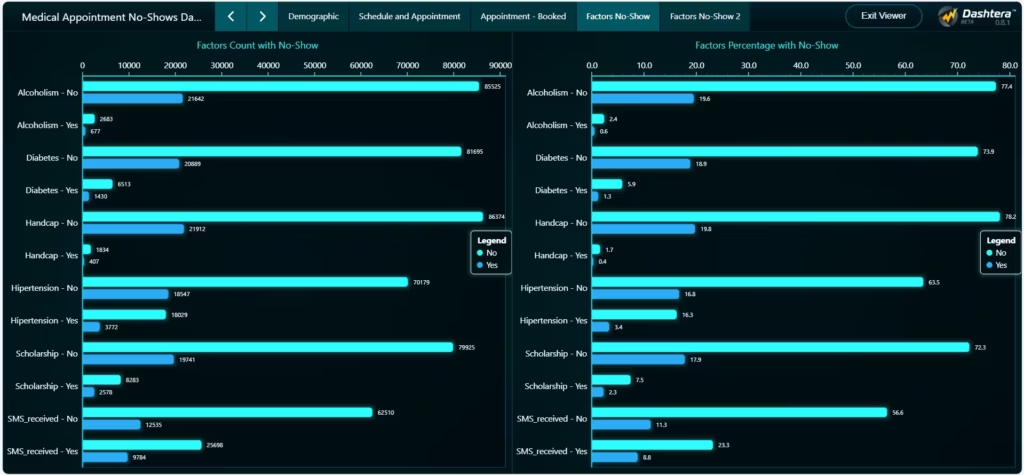
This dashboard analyzes health and socioeconomic factors that may influence attendance. 
Medical-appointment-no-shows-socioeconomic-factors
  • Factors examined: Alcoholism, Diabetes, Handicap, Hypertension, Scholarship, SMS reminders 
  • In most cases, having the condition (Factor = Yes) slightly increases no-show likelihood, except for SMS reminders, where Factor = Yes shows higher no-shows (8.85%), suggesting reminder messages may be sent to higher-risk patients. 
  • Example: Alcoholism 
    • No alcoholism + attended: 77.38% of total 
    • No alcoholism + missed: 19.58% 
    • Alcoholism + attended: 2.43% 
    • Alcoholism + missed: 0.61% 
  • Grouped Horizontal Bar Charts 
    Visualize both counts and percentages for each factor across no-show categories, showing clear differences in impact strength. 

Findings

  • Hypertension and diabetes are associated with slightly higher attendance rates, possibly due to regular care needs. 
  • Patients with alcoholism have marginally higher no-show rates. 
  • Those who received SMS reminders show higher no-show rates, likely because reminders are targeted toward higher-risk patients rather than causing absences. 

Medical and Social Factors Related to No-Shows (Part 2) 
Medical-appointment-no-shows-medical-and-social-factors

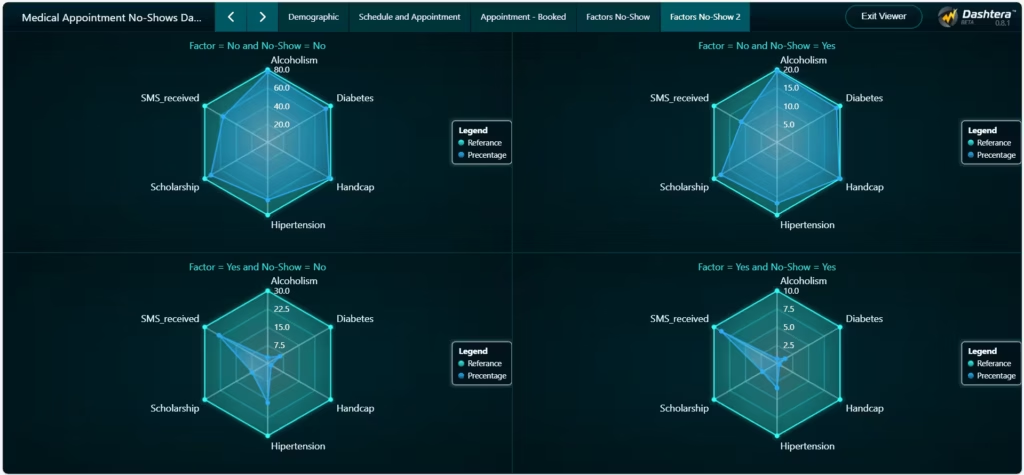
This dashboard extends the factor analysis by segmenting it into four combinations: 

  • NN: Factor No, No-Show No 
  • NY: Factor No, No-Show Yes 
  • YN: Factor Yes, No-Show No 
  • YY: Factor Yes, No-Show Yes 
  • Spider charts reveal that certain factors (e.g., lack of SMS reminders, absence of scholarship) dominate the NN category, while conditions like hypertension and alcoholism are more proportionally represented in YY. 
  • This breakdown helps identify which patient subgroups should be targeted for intervention strategies — e.g., patients without chronic conditions but with high no-show rates might need different outreach compared to those with multiple conditions. 

Findings

  • Most patients fall into the NN category, indicating no condition and attendance. 
  • YY patterns (condition + no-show) are more visible for alcoholism, hypertension, and SMS-receipt groups. 
  • Scholarship status shows a nuanced pattern — patients without scholarship tend to dominate attended appointments, but the no-show rate among scholarship recipients is proportionally high. 

Overall Insights & Recommendations 

Demographic Targeting – Teens and young adults are the highest no-show groups, suggesting the need for more personalized reminders and flexible scheduling. 

Reduce Long Lead Times – The steep rise in no-shows after 1 week suggests encouraging earlier appointment availability. 

Chronic Condition Monitoring – Patients with chronic illnesses may benefit from more structured follow-up to maintain attendance consistency. 

Smart SMS Strategy – Rather than blanket reminders, SMS systems could be enhanced with behavior-based timing and personalized content. 

Localized Day-Specific Interventions – Investigating specific high no-show dates could uncover patterns tied to community events or public holidays. 

Conclusion

The Medical Appointment No-Shows Dashboard with Dashtera offers an interactive, data-driven approach to understanding and reducing missed appointments. By integrating waiting time analysis, demographics, medical conditions, and communication factors, healthcare providers can identify high-risk scenarios and implement targeted interventions. 

Using Dashtera’s no-code platform, this project transforms a raw dataset into a powerful, user-friendly analytics tool that can guide operational decisions, optimize patient scheduling, and ultimately improve healthcare service efficiency. 

Read More

Want to see your data come to life?

Begin building your dashboards now, and unleash your creativity!

Dashtera-logo-for-dark
Privacy Overview

This website uses cookies so that we can provide you with the best user experience possible. Cookie information is stored in your browser and performs functions such as recognising you when you return to our website and helping our team to understand which sections of the website you find most interesting and useful.