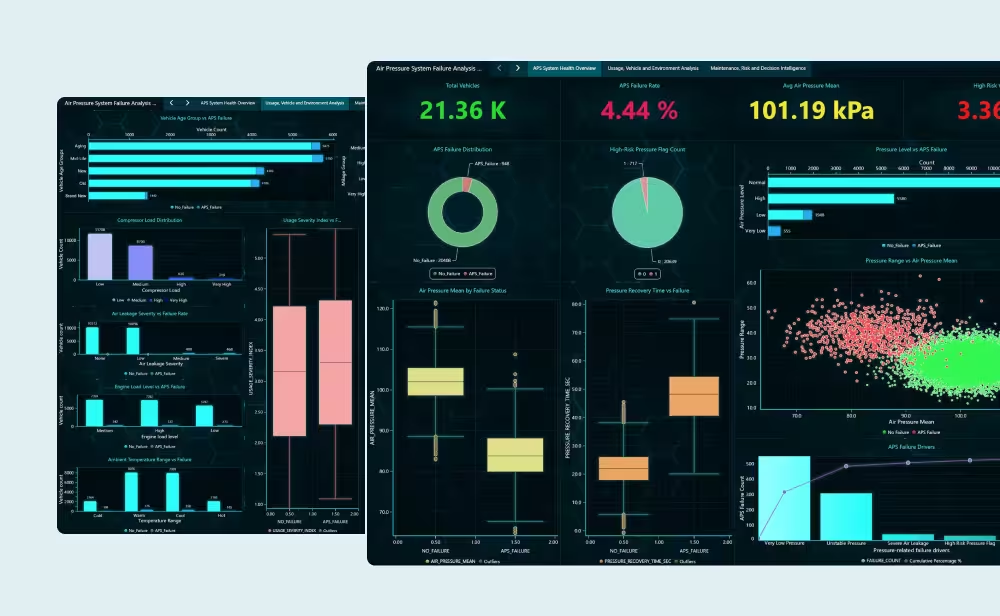
The Maternal and Reproductive Health Dashboard with Dashtera is an advanced analytical solution designed to explore global and regional trends in adolescent fertility rates, skilled birth attendance, and maternal mortality. By integrating three core health indicators into interactive dashboards, this platform enables policymakers, researchers, and healthcare professionals to identify critical gaps, monitor progress, and support evidence-based interventions.
Dashtera empowers users to:
Visualize country, regional, and global trends in maternal and reproductive health.
Compare patterns across demographic groups and timelines.
Track progress toward global health targets such as the Sustainable Development Goals (SDGs).
This article demonstrates how Dashtera transforms maternal health datasets into actionable dashboards, uncovering meaningful connections between adolescent fertility, maternal care, and mortality outcomes.
Dataset
The dashboards are based on international maternal and reproductive health datasets sourced from global monitoring frameworks. These datasets capture country-level, regional, and global statistics on early-age maternity, health service coverage, and maternal outcomes.
Adolescent Birth Rate (ABR): Number of live births per 1,000 women aged 10–14 and 15–19.
Births Attended by Skilled Health Personnel (BASHP): Percentage of births assisted by doctors, nurses, or trained midwives.
Maternal Mortality Ratio (MMR): Maternal deaths per 100,000 live births, here converted into percentages for comparative visualization.
About Dashtera
What is Dashtera?
Dashtera is a cloud-based, no-code dashboard platform that allows users to connect data sources and create interactive dashboards without programming. It empowers both beginners and advanced users to transform medical and behavioral datasets into insightful dashboards.
Key Features
Connects to various data sources (CSV, Excel, APIs, etc.)
Wide range of chart types, including advanced statistical visuals
Interactive drill-downs and dynamic filters
Shareable dashboards with flexible layouts
Supports calculated fields and transformations
User-friendly drag-and-drop interface
Advantages Over Similar Tools
Extremely easy to use—minimal technical expertise required
Rapid dashboard creation and deployment
Suitable for both beginners and advanced users
Lightweight yet powerful compared to Tableau or Power BI
Dashboard
Adolescent Birth Rate
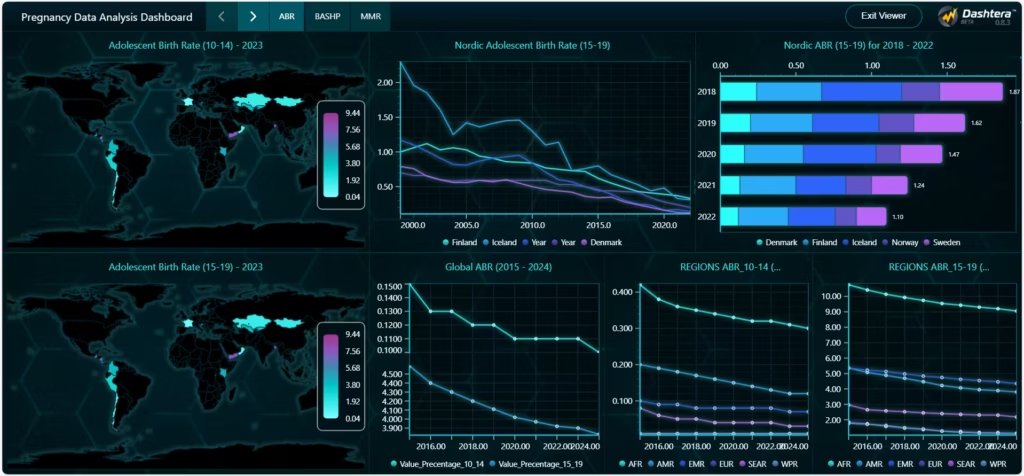
The Adolescent Birth Rate (ABR) Dashboard explores early-age maternity among two age groups, 10–14 years and 15–19 years.
Charts included
Adolescent Birth Rate (10–14), 2023 – World map chart
Adolescent Birth Rate (15–19), 2023 – World map chart
Nordic Adolescent Birth Rate (15–19) – Line chart
Nordic ABR (15–19), 2018–2022 – Horizontal bar chart
Global ABR (2015–2024) – Line chart
Regional ABR (10–14), 2015–2024 – Line chart
Regional ABR (15–19), 2015–2024 – Line chart
Insights
ABR varies widely across regions, with the highest rates observed in low- and middle-income countries.
Nordic countries demonstrate consistently low adolescent maternity rates, highlighting the impact of education and healthcare access.
Global trends suggest a gradual decline in adolescent birth rates, though disparities remain significant across regions.
Births Attended by Skilled Health Personnel
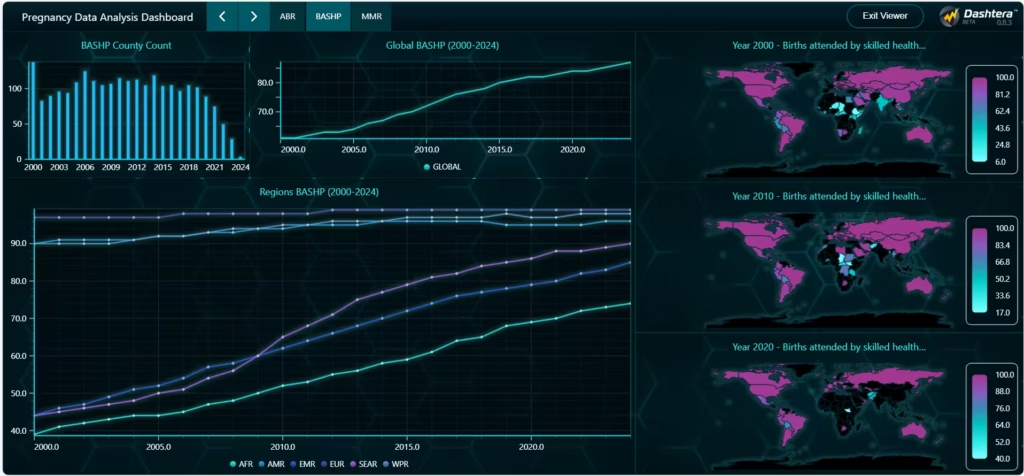
The Skilled Health Personnel Dashboard highlights access to professional care during childbirth – a critical determinant of maternal and newborn outcomes.
Charts included
BASHP Country Count – Bar chart
Global BASHP (2000–2024) – Line chart
Regional BASHP (2000–2024) – Line chart
Births Attended by Skilled Personnel, 2000 – Map chart
Births Attended by Skilled Personnel, 2010 – Map chart
Births Attended by Skilled Personnel, 2020 – Map chart
Insights
Global coverage of skilled birth attendance has steadily increased over the last two decades.
Regional disparities persist, with sub-Saharan Africa and parts of South Asia lagging behind.
Progress is most visible when comparing 2000 vs. 2020 maps, reflecting improved access to maternal healthcare globally.
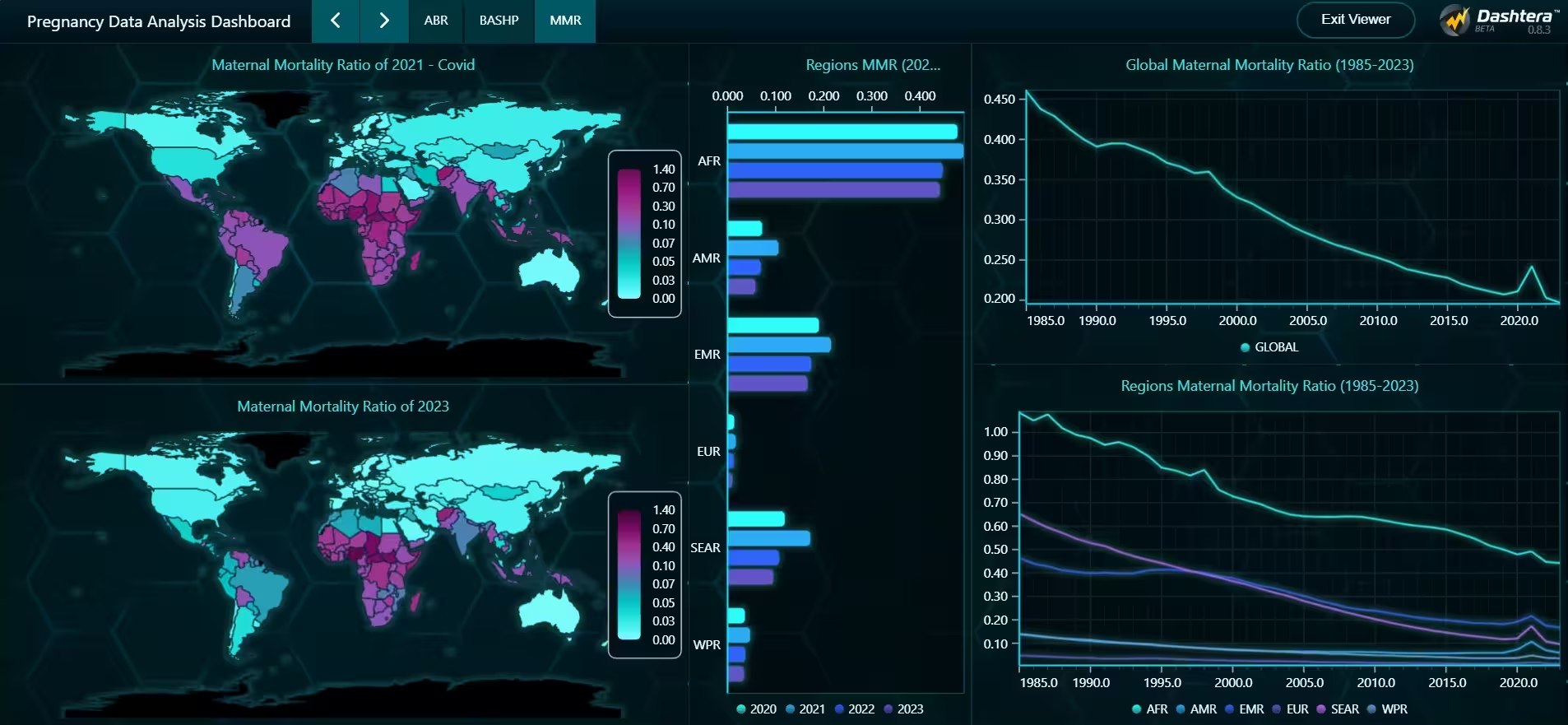
Maternal Mortality Ratio Dashboard
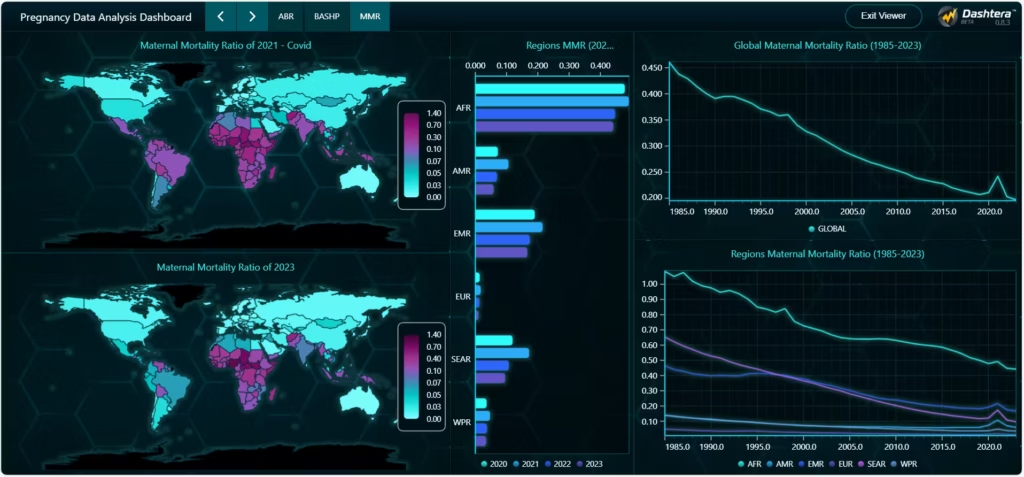
The Maternal Mortality Ratio (MMR) Dashboard visualizes the burden of maternal deaths and its evolution over time, adjusted to percentages for clearer interpretation.
Regional MMR (2020–2023) – Stacked horizontal bar chart
Global Maternal Mortality Ratio (1985–2023) – Line chart
Regional Maternal Mortality Ratio (1985–2023) – Line chart
Insights
The COVID-19 pandemic in 2021 disrupted maternal healthcare services, with some regions showing increases in maternal mortality.
Long-term global trends reveal a gradual decline in MMR, but the rate of progress has slowed in recent years.
Regional comparisons underline stark inequalities, with low-resource settings bearing a disproportionate burden.
Conclusion
The Maternal and Reproductive Health Dashboard with Dashtera brings together three interconnected indicators – adolescent fertility, skilled birth attendance, and maternal mortality – into a unified analytical tool.
By enabling interactive exploration of global, regional, and country-level data, Dashtera supports:
Policymakers in identifying regions requiring urgent intervention,
Researchers in uncovering relationships between fertility, maternal care, and it’s outcomes.
Healthcare professionals in advocating for improved maternal and reproductive health services.
This integrated approach transforms static datasets into actionable insights, helping accelerate progress toward maternal and reproductive health equity worldwide.