

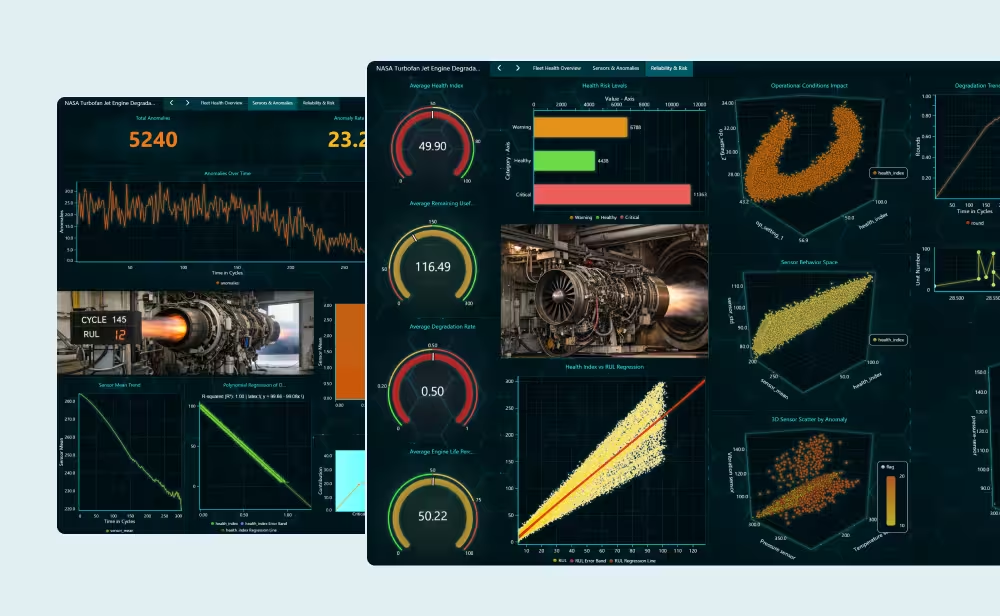
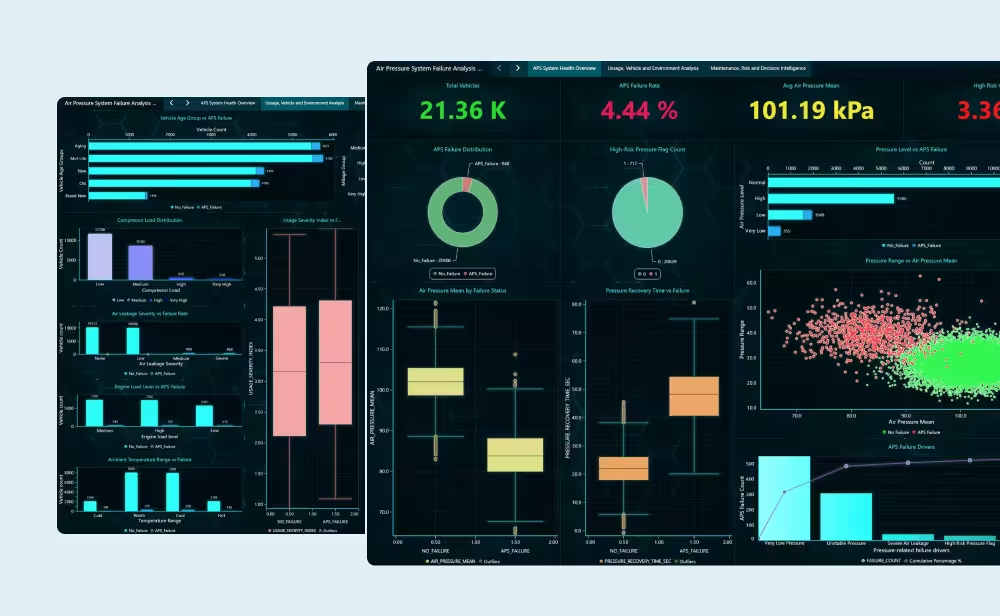
Want to see your data come to life?
Begin building your dashboards now, and unleash your creativity!


 Software Developer
Janaka Alwis
Software Developer
Janaka Alwis The Heart Disease Prediction Dashboard is a sophisticated interactive tool designed to analyze and visualize the critical factors influencing heart attack risk. Leveraging Dashtera’s powerful no-code platform, this dashboard transforms a comprehensive heart disease dataset into actionable insights through dynamic charts and intuitive exploration.
This dashboard aims to help healthcare professionals, researchers, and data scientists to:
The dashboard utilizes a merged heart disease dataset with 1,888 patient records, integrating multiple publicly available sources for robust analysis.
The Heart Disease Prediction Dataset combines five publicly available datasets, totaling 1,888 records and 14 features critical for heart attack risk prediction. The data was cleaned to remove missing or inconsistent records, ensuring high integrity for machine learning and analytical applications.
| Variable | Description | Value/Units |
|---|---|---|
age |
Age of the patient |
Numeric (years) |
sex |
Gender of the patient |
1 = male, 0 = female |
cp |
Chest pain type |
0 = Typical angina, 1 = Atypical angina, 2 = Non-anginal pain, 3 = Asymptomatic |
trestbps |
Resting Blood Pressure |
mm Hg |
chol |
Serum Cholesterol |
mg/dl |
fbs |
Fasting blood sugar > 120 mg/dl |
1 = true, 0 = false |
restecg |
Resting electrocardiographic results |
0 = Normal, 1 = ST-T abnormality, 2 = Left ventricular hypertrophy |
thalach |
Maximum heart rate achieved |
Numeric |
exang |
Exercise-induced angina |
1 = yes, 0 = no |
oldpeak |
ST depression induced by exercise |
Numeric |
slope |
Slope of the peak exercise ST segment |
0 = Upsloping, 1 = Flat, 2 = Downsloping |
ca |
Number of major vessels colored by fluoroscopy |
0-3 |
thal |
Thalassemia type |
1 = Normal, 2 = Fixed defect, 3 = Reversible defect |
target |
Heart attack risk |
1 = More risk, 0 = Less risk |
The following table outlines the original sources that contributed to the combined dataset.
| Dataset | Records | Reference |
|---|---|---|
Heart Attack Analysis & Prediction Dataset |
304 |
Rahman, 2021 |
Heart Disease Dataset |
1,026 |
Lapp, 2019 |
Heart Attack Prediction (Dataset 3) |
295 |
Damarla, 2020 |
Heart Attack Prediction (Dataset 4) |
271 |
Anand, 2018 |
Heart CSV Dataset |
290 |
Nandal, 2022 |
What is Dashtera?
Dashtera is a cloud-based, no-code dashboard platform that enables users to connect diverse data sources and build interactive dashboards without any coding. It offers drag-and-drop tools, dynamic filters, and advanced visualization options that suit both beginners and experts.
Key Features
Advantages Over Similar Tools
Patient Demographic Factors
This dashboard provides detailed demographic insights into how age and sex correlate with heart attack risk.
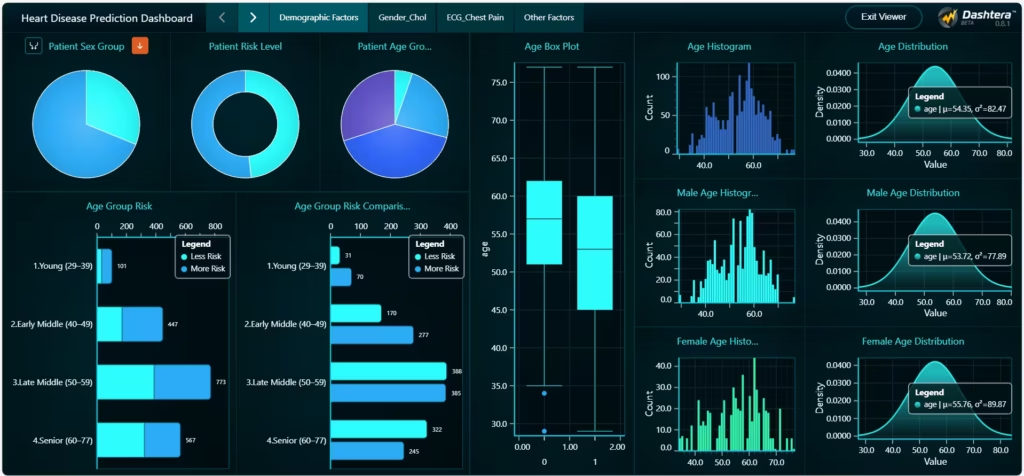
The visualization includes:
The male gender make up the majority of the dataset, with notable differences in risk levels across age and sex groups. Late middle-aged males appear heavily represented in both risk categories, while the influence of age on risk varies distinctly between men and women.
Serum Cholesterol with Gender, Age, and Risk
This dashboard explores serum cholesterol levels and their relation to heart attack risk, differentiated by gender and age.
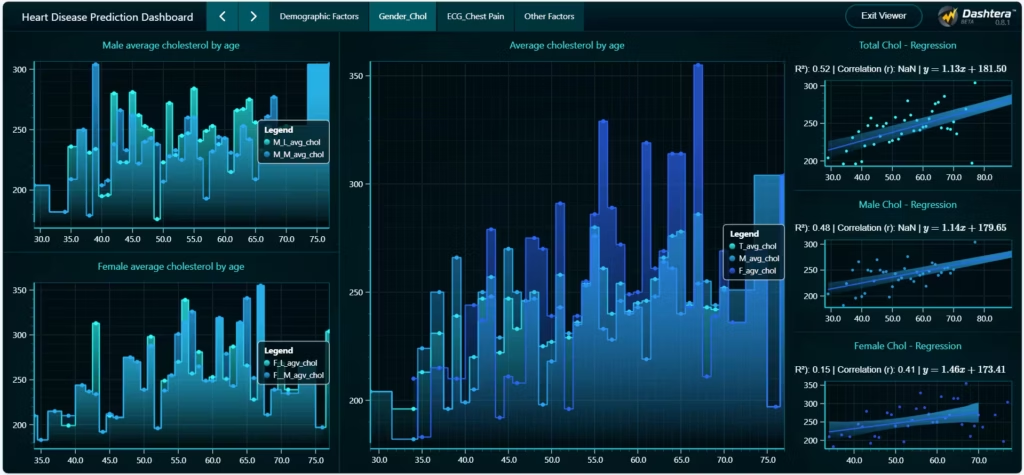
The visualization includes:
Higher cholesterol correlates with increased heart attack risk, with notable gender differences revealed by regression trends across age groups.
Resting ECG Results and Chest Pain Types
This dashboard focuses on how resting ECG results and chest pain types relate to heart attack risk.
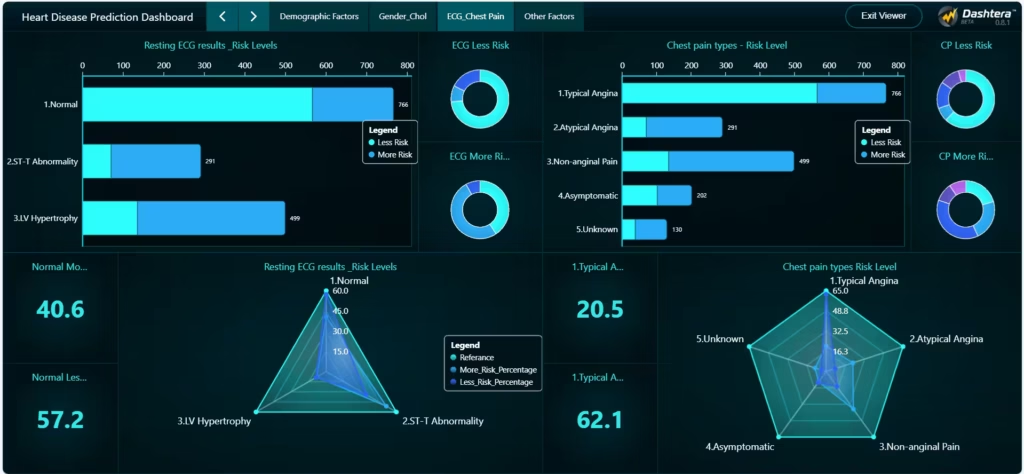
The visualization Includes:
ECG Results Summary:
| ECG Result | High Risk Count | Low Risk Count | High Risk % | Low Risk % |
|---|---|---|---|---|
Normal |
397 |
521 |
40.63% |
57.19% |
ST-T Abnormality |
502 |
310 |
51.38% |
34.03% |
LV Hypertrophy |
78 |
80 |
7.98% |
8.78% |
Chest Pain Types Summary:
| Chest Pain Type | High Risk Count | Low Risk Count | High Risk % | Low Risk % |
|---|---|---|---|---|
Typical Angina |
200 |
566 |
20.47% |
62.13% |
Atypical Angina |
221 |
70 |
22.62% |
7.68% |
Non-anginal Pain |
364 |
135 |
37.26% |
14.82% |
Asymptomatic |
100 |
102 |
10.24% |
11.20% |
ST-T abnormalities and non-anginal chest pain are strongly linked with higher risk, whereas normal ECG and typical angina are more common in lower risk patients.
Other Clinical Factors and Risk Relationship
This dashboard examines additional clinical factors and their relationship with heart attack risk.
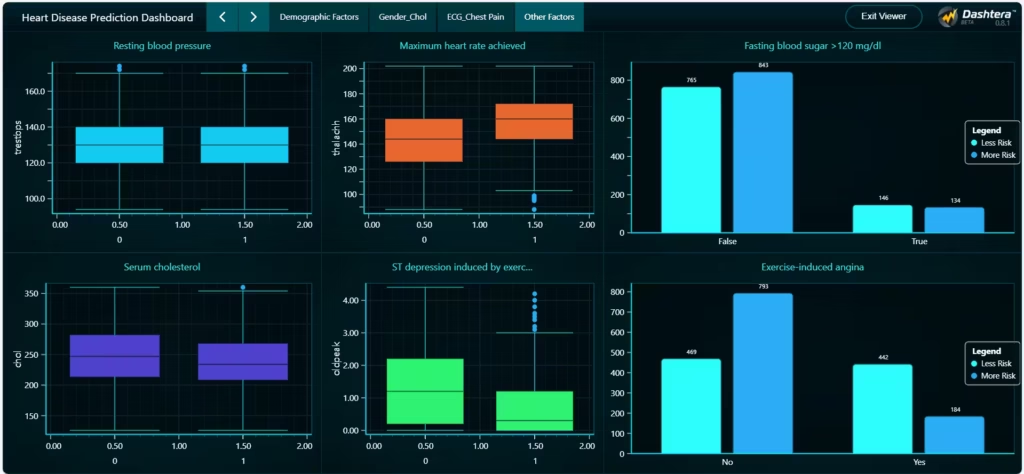
The visualization includes:
Fasting Blood Sugar >120 mg/dl results:
| Blood Sugar Level | Less Risk | More Risk |
|---|---|---|
False |
765 |
843 |
True |
146 |
134 |
Exercise-Induced Angina results:
| Exercise Angina | Less Risk | More Risk |
|---|---|---|
No |
469 |
793 |
Yes |
442 |
184 |
Elevated fasting blood sugar and exercise-induced angina levels differ significantly between risk groups. Other vital signs such as blood pressure, cholesterol, heart rate, and ST depression also vary noticeably with risk.
The Heart Disease Prediction Dashboard built with Dashtera provides a comprehensive and interactive platform for analyzing key factors influencing heart attack risk. By using MySQL queries to summarize and aggregate the data, the dashboard ensures that complex information is efficiently processed and organized before visualization. This approach allows for precise and meaningful insights while maintaining data accuracy and integrity.
Leveraging Dashtera’s no-code environment, the dashboard transforms this summarized data into dynamic, easy-to-explore visualizations that users can interact with without needing technical expertise. This combination of powerful data querying and user-friendly visualization empowers healthcare professionals, researchers, and data scientists to identify high-risk patients, understand complex relationships, and enhance clinical decision-making and preventive care strategies.
Share: