



 Data Analytics Software QA
Janaka Alwis
Data Analytics Software QA
Janaka Alwis
The Global Car Market Intelligence Dashboard provides a structured analytical overview of worldwide automobile manufacturing trends, pricing behavior, performance attributes, and manufacturer-level patterns. Using a dataset comprising 1,200 car models from major automotive countries, the dashboard enables comparative assessments across origin regions, fuel technologies, price segments, and vehicle performance categories.
Through integrated charts and statistical summaries, the dashboard supports evidence-based understanding of global market composition, technological diversity, and pricing structures across the automotive industry.
The dataset aggregates structured information on car models from nine major manufacturing countries: Germany (DEU), France (FRA), United Kingdom (GBR), India (IND), Italy (ITA), Japan (JPN), South Korea (KOR), Sweden (SWE), and the United States (USA).
Each record includes specifications such as vehicle price, speed, horsepower, torque, engine capacity, seating capacity, fuel type, engine type, and market segment classification.
Core Variables
The dataset’s diversity enables cross-country benchmarking as well as in-depth manufacturer-level and performance-based analysis.
Dataset Description
Key dataset characteristics:
The dataset spans a broad spectrum of vehicle classes, ranging from affordable mass-market cars to hypercars and ultra-luxury manufacturers, reflecting sectoral heterogeneity.
Dashtera is a cloud-based, no-code analytics platform designed to support the visual exploration and analysis of complex datasets. The platform enables users to construct interactive dashboards without programming, allowing for efficient examination of multidimensional data through line plots, bar charts, maps, regressions, and statistical summaries. Its interface allows data to be filtered, compared, and inspected from multiple perspectives, which makes it suitable for exploratory data analysis tasks.
Key Features
Global Overview
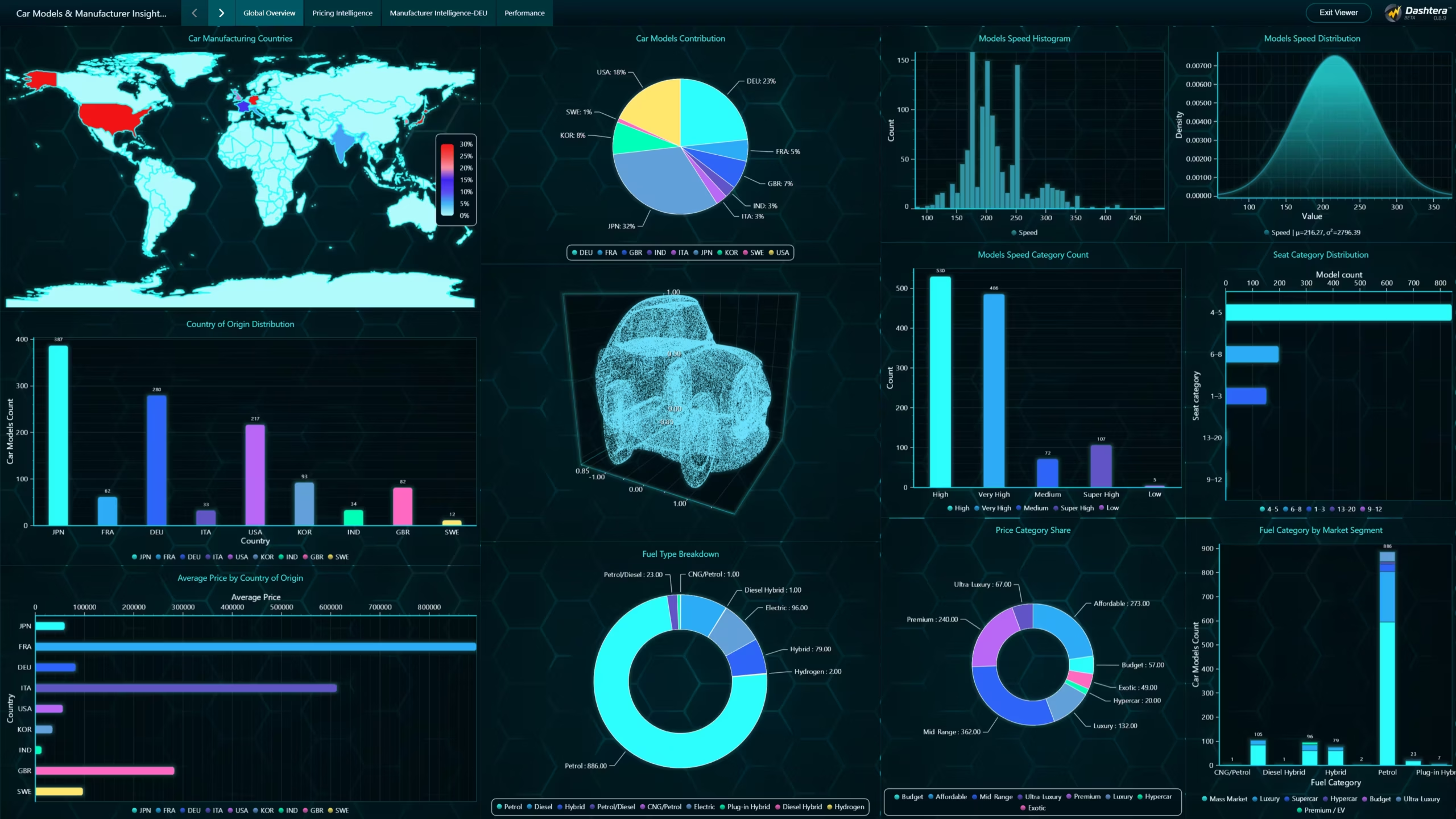
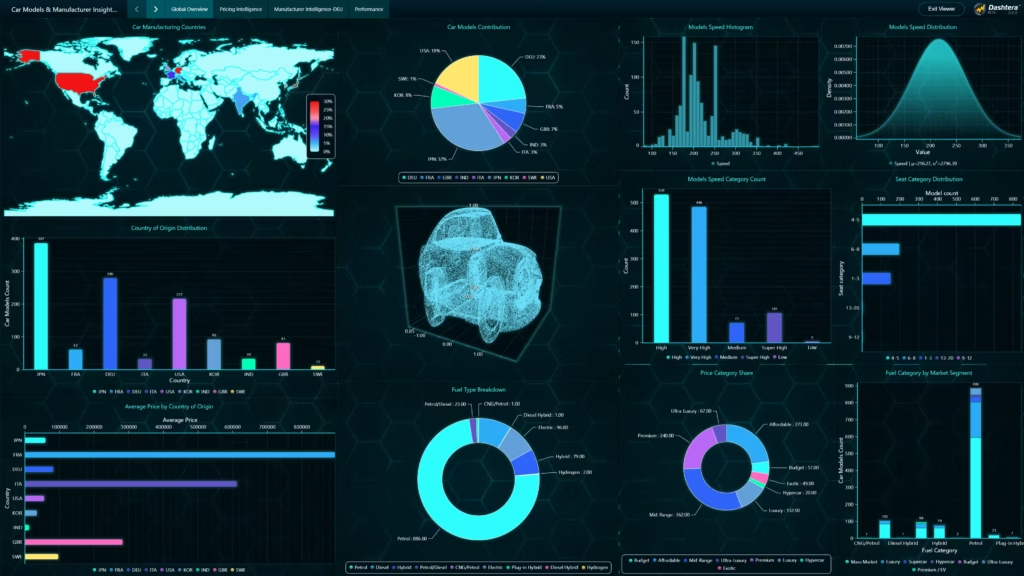
The Global Overview page summarizes country-level, fuel-level, and market-level distributions.
Country Contribution and Pricing
Fuel Type and Price Segment Distributions
Performance and Seating Capacity
Fuel Category × Market Segment
The stacked bar chart demonstrates that:
Overall, the dashboard establishes the structural composition of global production, pricing, technology, and performance.
Pricing Intelligence
Page 2 focuses on the drivers of price variation.
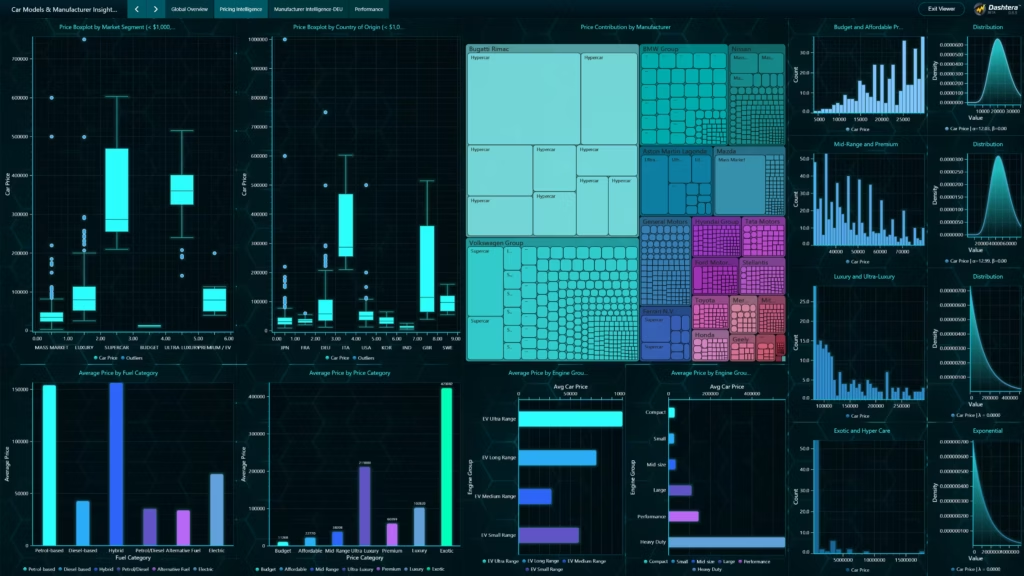
Price Distribution
• Boxplots (≤ $1M) reveal wide variability across both market segment and country of origin.
• Luxury-focused countries (FRA, ITA) display higher price dispersion than mass-market-heavy regions (IND, KOR).
Fuel-Based Pricing
Average prices indicate:
• Hybrid (156,515) and Petrol-based (154,203) cars are the most expensive categories.
• Alternative fuel and diesel-based cars remain closer to the lower-to-mid price bands.
Engine Group Price Comparison
• Heavy Duty (559,560) and Performance engines (144,314) drive premium pricing.
• Compact and Small engine groups have the lowest averages.
This dashboard highlights that price premiums are strongly associated with engine design, fuel technology, and country specialization.
Manufacturer Intelligence (Germany)
This page provides manufacturer-level insights within the German automotive sector.
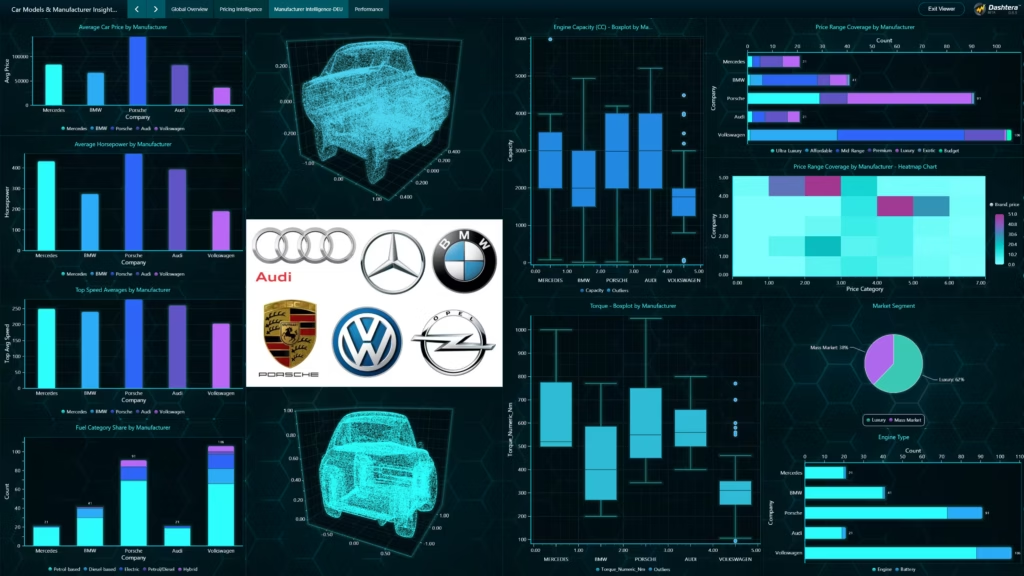
Average Pricing
• Porsche leads with the highest average price (141,291), far higher than Volkswagen (36,593).
• Mercedes and Audi occupy the upper-mid luxury range.
Horsepower and Speed
• Porsche also ranks highest in horsepower (469.2 HP) and top speed (279.2 km/h).
• Volkswagen remains the entry-level segment contributor with the lowest performance scores.
Fuel Share, Engine Capacity, and Torque
Boxplots show:
• Greater variability in engine capacities for performance-oriented brands.
• Torque distribution aligns strongly with horsepower, differentiating premium from mass-market manufacturers.
Price Range Coverage
Heatmap analysis shows that Porsche and Mercedes dominate high-end price brackets, whereas Volkswagen largely operates below the premium threshold.
Market and Engine Type
• Luxury and premium segments dominate the German market.
• Engine type distribution reflects emphasis on high-performance combustion engineering, with EV penetration still moderate.
Performance Analytics
Performance relationships are analyzed through scatter plots and histograms.
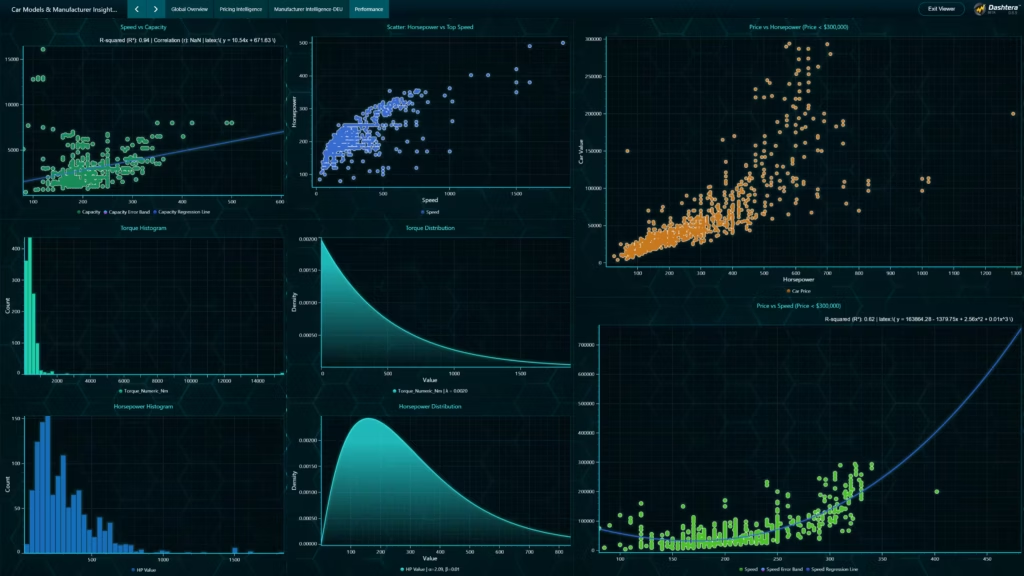
Speed × Capacity and Horsepower × Speed
• Models with larger engine capacity and higher horsepower demonstrate predictable increases in top speed.
• Performance clustering becomes visible for sports and supercar models.
Price Relationships (≤ $300,000)
• Price shows a positive association with both horsepower and speed, though with diminishing returns at higher performance levels.
Torque Distributions
• Torque histograms with exponential and gamma distributions indicate strong right-tail behavior, typical for performance and heavy-duty classes.
Overall, the dashboard highlights the mechanical factors that differentiate performance tiers and influence pricing.
The findings synthesized across the four dashboard pages illustrate several notable structural patterns within the global automotive landscape. First, the distribution of manufacturing activity displays a pronounced geographic concentration, with Japan, Germany, and the United States collectively representing the largest share of model production. This concentration reflects long-standing industrial capacities, technological maturity, and global market influence within these regions.
Second, substantial price stratification is evident across the dataset, driven by the interplay of engine configuration, market segment positioning, and national manufacturing profiles. Higher-performance engine groups and luxury-oriented segments consistently command elevated price levels, indicating that technological specifications and brand positioning are central determinants of market valuation.
Third, although petrol-powered vehicles constitute the predominant share of the global model inventory, the presence of electric and hybrid vehicles signals a shift toward alternative propulsion systems. While still emerging, these categories demonstrate growing relevance in markets that are increasingly shaped by environmental regulations and sustainable mobility initiatives.
Fourth, performance attributes-specifically horsepower, torque, and top speed-exhibit strong associations with pricing and brand segmentation. These metrics align closely with manufacturer strategy, differentiating mass-market producers from performance and luxury brands.
Finally, the manufacturer-specific analysis of Germany underscores clear internal stratification. Firms such as Volkswagen primarily target the mass-market segment, whereas brands like Porsche dominate high-performance and premium categories. This internal diversity highlights the heterogeneity and segmentation strategies within a single national automotive ecosystem.
The Global Car Market Intelligence Dashboard provides a coherent, multi-dimensional analytical framework for examining international automotive market dynamics. Through its interactive visualization environment, the dashboard enables rigorous comparative assessment of manufacturing regions, producers, fuel technologies, performance classes, and price structures.
The system effectively supports:
Collectively, these capabilities make the dashboard a valuable tool for market researchers, industry analysts, and strategic decision-makers. Its structured insights can facilitate competitive intelligence, inform product strategy, and support forecasting efforts within the global automotive sector.