This project presents an interactive analytics dashboard that visualizes global alcohol consumption trends among individuals aged 15 and above over the years 2000–2020. Built using Dashtera, the solution provides health analysts, policymakers, and researchers with an intuitive platform for exploring consumption patterns across regions, income groups, genders, and time.
Leveraging WHO’s Global Health Observatory dataset, the dashboard enables users to:
Compare alcohol consumption across regions and World Bank income groups.
Analyze male, female, and total per-capita consumption trends.
Identify the global peak year (2013) and compare it against recent data (2020).
Drill down to regional and country-level insights, with a spotlight on Europe & Central Asia and Finland.
Dashtera’s interactive charts and filters transform large WHO datasets into accessible intelligence for decision-making in public health and policy development.
Dataset
Dataset overview:
Source: WHO Global Health Observatory (GHO)
Metric: Per-capita total alcohol consumption (liters of pure alcohol), projected estimates
Population Scope: Individuals aged 15+
Time Span:2000–2020
Geographic Coverage: Global, segmented by income group, region, and country
Gender Segmentation: Male, Female, Total
Key Attributes
Country – Nation-level reporting unit.
Region – WHO region classification.
Income Group – World Bank income grouping (low, lower-middle, upper-middle, high).
Consumption (liters per capita) – Reported separately for male, female, and total population (15+ years).
Year – Annual reporting from 2000 through 2020.
About Dashtera
Dashtera is a cloud-based, no-code dashboard platform designed to simplify data analytics and visualization. It empowers decision-makers by providing intuitive dashboards, automated insights, and flexible drill-down options.
Key Features
Connects directly to WHO datasets, CSVs, or APIs.
Wide range of visualization types (maps, Pareto charts, line charts, bar charts).
Interactive drill-downs for regional and country-level analysis.
Dynamic filtering by region, income group, and gender.
Easy-to-share dashboards for global collaboration.
Advantages Over Similar Tools
Requires minimal technical expertise.
Allows rapid development and deployment of dashboards.
Combines advanced chart types with an easy drag-and-drop interface.
Lightweight and flexible, offering faster insights than heavyweight BI tools like Tableau or Power BI.
Dashboard
Global Overview (2000–2020)
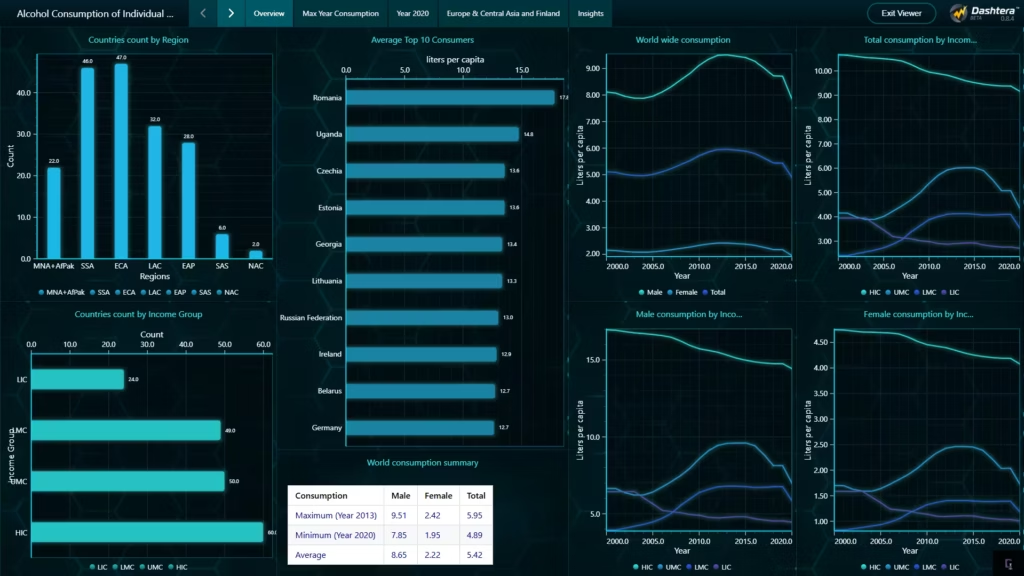
The first dashboard delivers a sweeping, world-scale perspective of alcohol consumption. Animated timelines and trend curves reveal a clear global pattern: consumption rose steadily through the early 2000s, peaked in 2013, and then declined through 2020. At its peak, average per-capita use reached 9.51 liters for males, 2.42 liters for females, and 5.95 liters overall, before falling to 7.85, 1.95, and 4.89 liters, respectively, by 2020.
These visuals make it easy to observe that high-income countries consistently record the highest consumption, while gender curves display a dramatic gap–men drink nearly four times more than women worldwide, a ratio that stays surprisingly stable across two decades.
Key insights from the overview dashboard:
2013 = peak global consumption, followed by a continuous decline
High-income nations dominate the global averages
Male consumption massively outweighs female consumption in every region and year
This top-level view sets the stage for deeper investigation into the cultural, economic, and policy forces at play.
Peak Year Focus: 2013
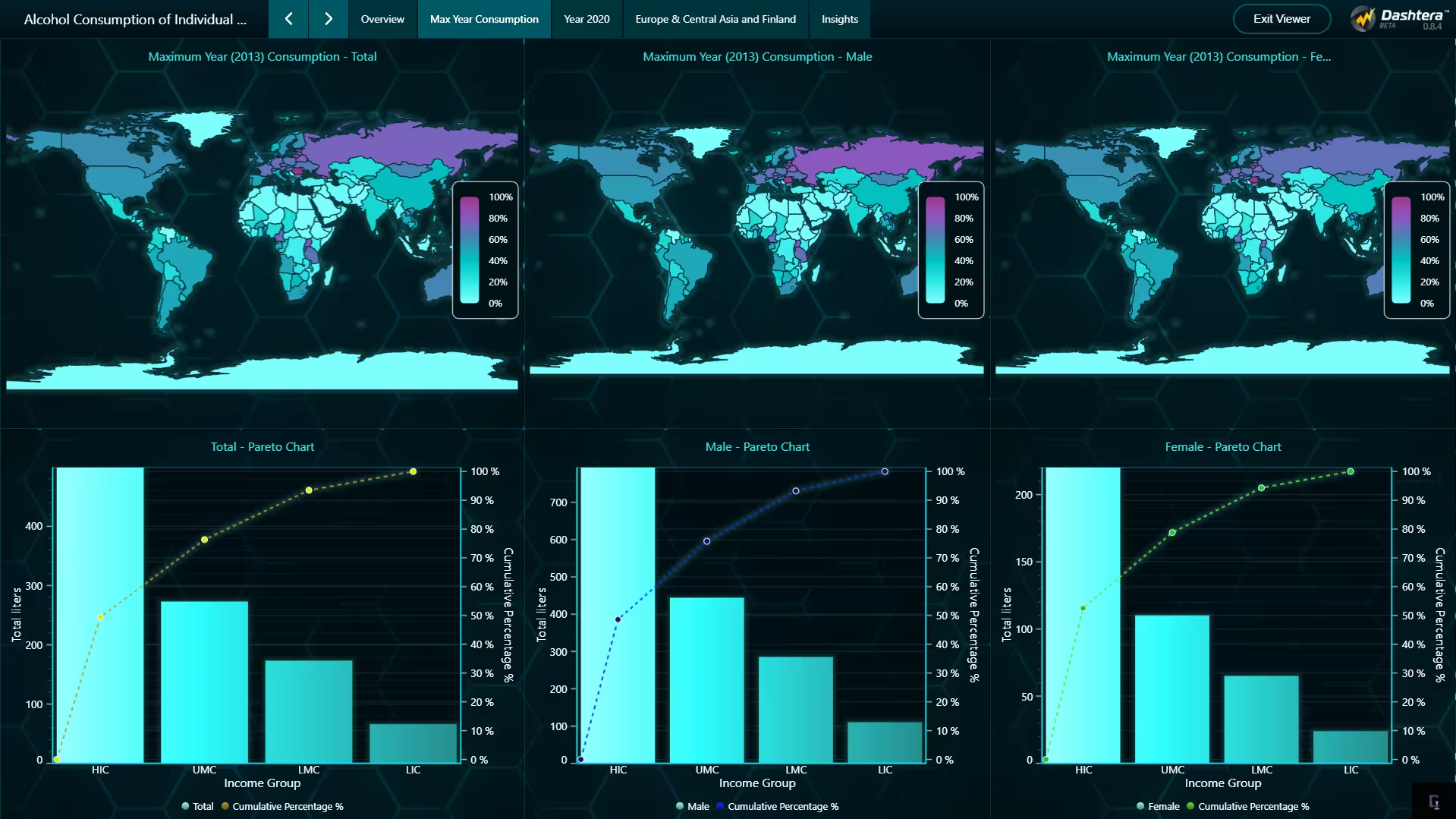
This dashboard highlights 2013, the global peak year for alcohol consumption.
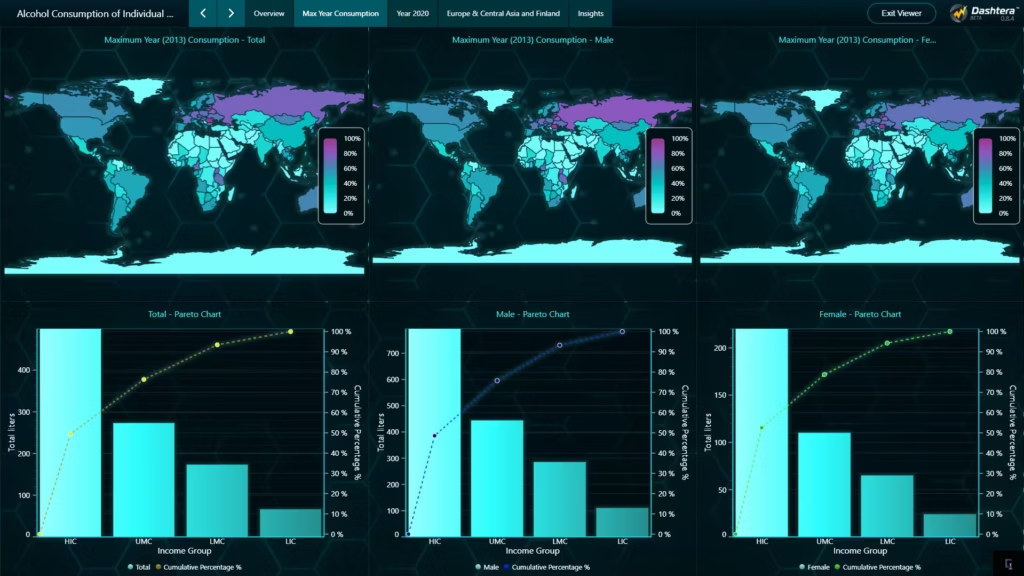
The second dashboard zooms into 2013, the most intense drinking year of the two-decade period. World maps for male, female, and total consumption immediately reveal a striking regional concentration:
Eastern Europe stands out as the world’s highest-drinking region, led by Romania, Belarus, Estonia, and Czechia. Pareto comparisons further show that high-income and upper-middle-income countries account for the vast majority of global alcohol consumption that year. Although women drink far less than men overall, the highest female consumption levels also appear in Europe, underscoring the region’s cultural influence on alcohol use.
Insights:
Eastern European countries (Romania, Belarus, Estonia, Czechia) recorded the highest per-capita levels in 2013.
Global alcohol consumption wasn’t just high-it was regionally concentrated and led overwhelmingly by Europe.
Female alcohol consumption peaks in Europe but remains much lower globally compared to male consumption.
Latest Year View: 2020
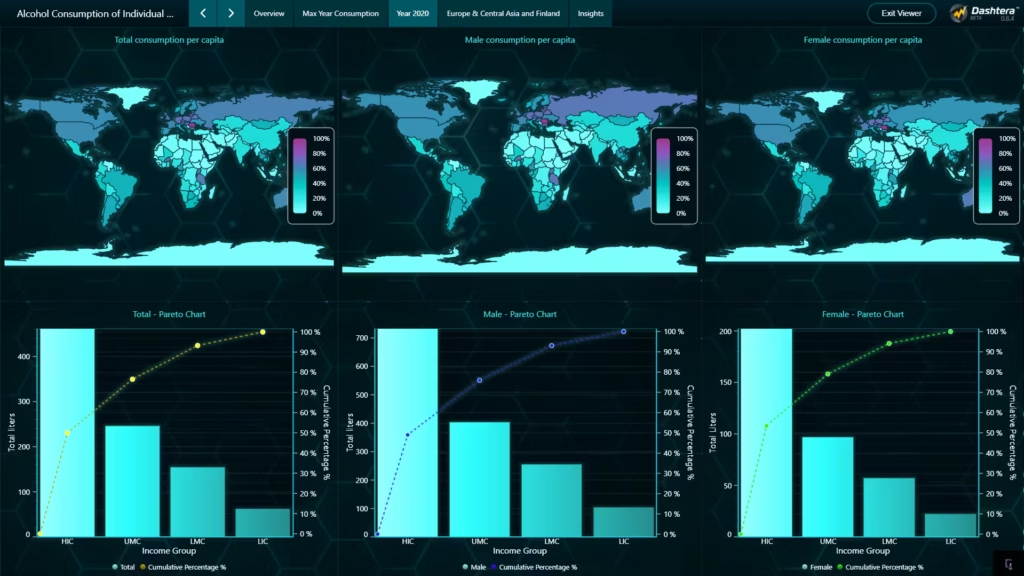
The third dashboard shifts to the most recent year in the dataset, offering a lens on how global drinking behavior has evolved.
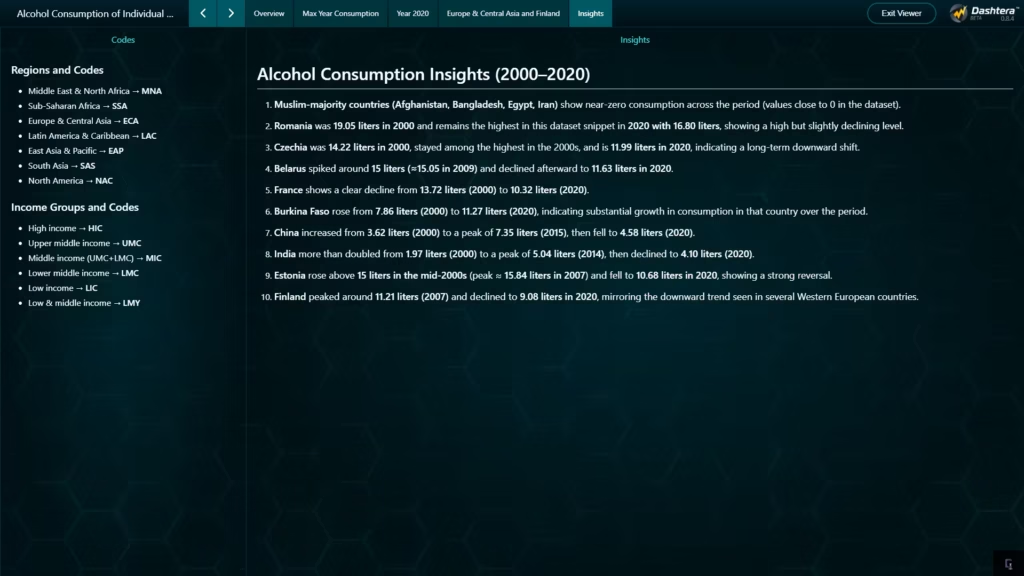
In 2020, Romania remains the world’s top per-capita consumer at 16.80 liters, even amid the global decline. Western European nations, including Finland, France, and Andorra, show clearly diminishing consumption levels, aligning with public-health strategies and evolving cultural norms. Meanwhile, nations like China and India, which climbed mid-decade, show visible drops by 2020. The most notable shift comes from Sub-Saharan Africa, where countries such as Burkina Faso show continued upward movement-suggesting that the future geography of heavy alcohol consumption may be changing.
Important insights from 2020:
Europe still leads globally, but with declining intensity
Emerging regions are rising, particularly in Africa
Long-term policies in Western Europe are producing measurable results
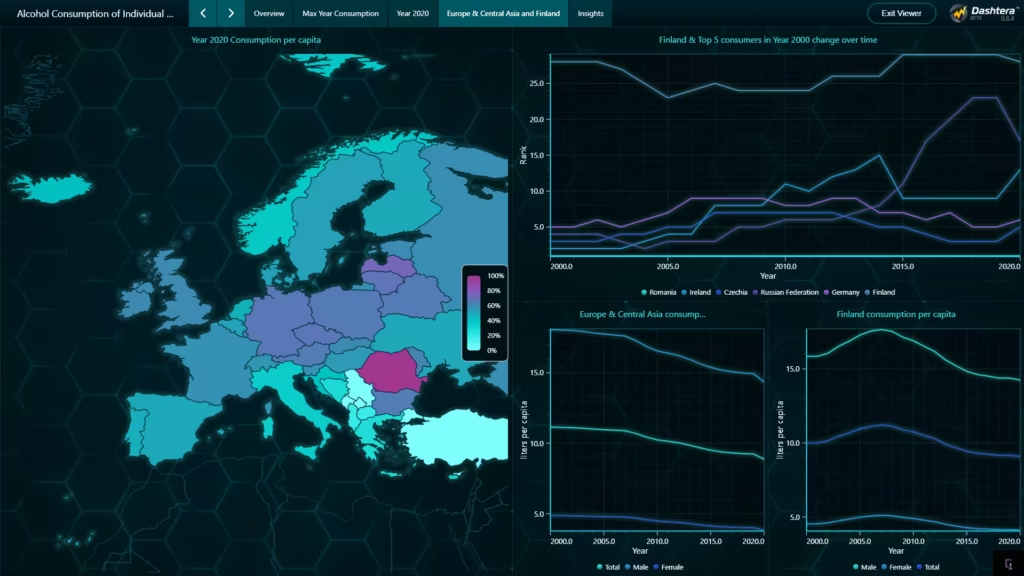
Regional Deep Dive: Europe & Central Asia + Finland
The final dashboard delivers a close-up of Europe & Central Asia, the world’s most influential region in alcohol consumption trends.
The regional timeline shows that consumption has fallen steadily since 2013, but remains well above other parts of the world. The dashboard then narrows in on Finland, where consumption peaked in 2007 at 11.21 liters, before dropping to 9.08 liters by 2020. This story mirrors that of the region as a whole: very high early levels, followed by proactive public health response and gradual decline.
Insightful observations from the regional dashboard:
Europe drives global averages, despite downward progress
Finland reflects the broader European curve—early peaks, steady decline
Historical heavy drinkers like Romania, Estonia, and Belarus are trending down, but still remain high
Conclusion
This interactive Dashtera dashboard transforms two decades of WHO data into a compelling visual narrative about human behavior, culture, and public health. The patterns are undeniable:
2013 was the global turning point, marking the height of consumption
Men consistently drink far more than women, in every region on Earth
Europe remains the world’s heaviest-drinking region, despite progress
Romania leads consumption in both 2000 and 2020
New growth areas-especially parts of Africa-signal a shifting future
With the ability to switch from the global picture to regional profiles and down to specific country trends, the dashboard equips decision-makers with the insight needed to shape policy, education, prevention strategies, and public health investment. Dashtera makes exploratory analysis intuitive, visual, and fast-turning raw health data into actionable understanding.