




The Geo-Logistics Analytics Dashboard presents a comprehensive analytical exploration of delivery operations across five Finnish regions using a structured synthetic logistics dataset. The dashboard was developed using the Dashtera no-code business intelligence platform and is designed to support interactive, multi-dimensional exploration of shipment activity, driver performance, operational efficiency, and geospatial delivery behavior.
By integrating operational KPIs, driver-level performance analytics, temporal delivery trends, and geographic intelligence across three structured dashboard pages, the system enables meaningful exploratory logistics analytics. The project demonstrates how logistics-style datasets can be transformed into structured analytical narratives using visual methods, making it suitable for learning business intelligence, transportation analytics, supply chain analysis, and dashboard storytelling.
The dataset used in this project is a synthetically generated logistics dataset designed to simulate realistic delivery operations within Finland. It covers shipments across five regions:
The dataset reflects realistic operational constraints such as delivery delays due to Nordic conditions (e.g., heavy snowfall, icy roads, reindeer crossings, and weather warnings). While the data is synthetic, it follows realistic distributions and operational logic commonly observed in logistics environments, making it suitable for educational analytics, dashboard development, and visualization practice.
The project focuses on analyzing deliveries handled by 7 drivers, operating vans and trucks, across the period from January 1st to April 30th, 2025.
Dataset Description
The dataset consists of 450 shipment records, each representing an individual delivery. Each record includes a structured combination of operational, temporal, geographic, and performance-related attributes.
Key attributes include:
This multidimensional structure enables comprehensive exploration across operational efficiency, driver performance, geographic behavior, and delay risk factors.
Dashtera is a cloud-based, no-code analytics platform designed to support visual exploration and interactive analysis of complex datasets. The platform allows users to build dashboards without traditional programming, enabling fast transformation of raw data into analytical stories.
Key Features
Dashtera’s flexibility makes it particularly suitable for operational analytics, logistics intelligence, and business performance dashboards.
The Geo-Logistics Analytics Dashboard is structured into three analytical pages, each designed to examine a distinct dimension of logistics operations. Together, these pages provide a layered analytical narrative progressing from organizational-level operational performance to individual driver behavior, and finally to geo-spatial and relational intelligence. This structured design supports systematic exploration of complex logistics data.
The first dashboard page focuses on macro-level operational characteristics of the logistics system. The primary objective of this page is to establish a high-level understanding of shipment volume, efficiency, temporal behavior, and regional distribution.
Key Performance Indicators
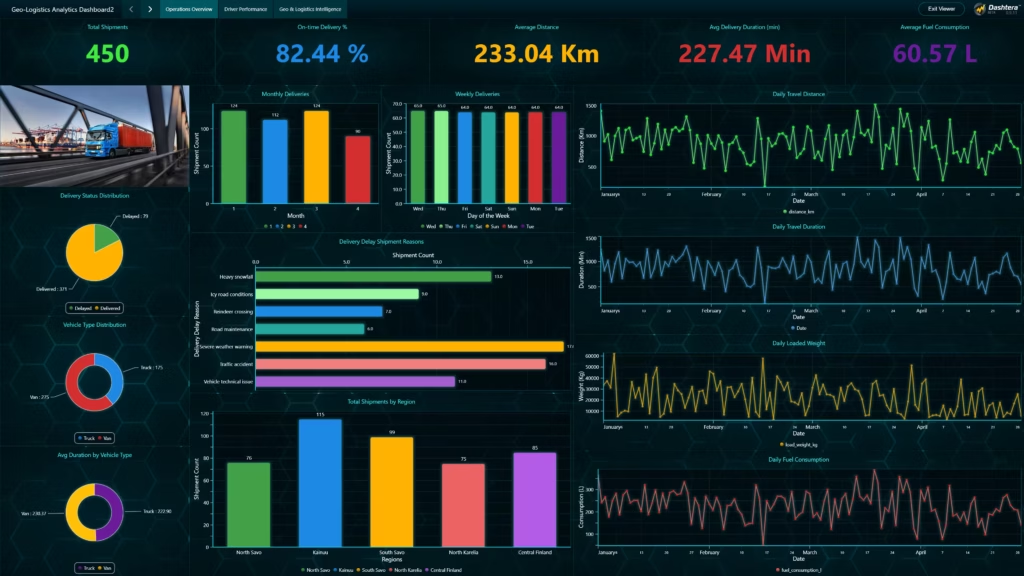
The top-level KPIs summarize overall system performance. The dataset contains 450 shipments conducted over a four-month period. The on-time delivery rate is 82.44%, indicating that the majority of operational activity meets expected delivery schedules. The average shipment distance is 233.04 kilometers, while the mean delivery duration is 227.47 minutes. The average fuel consumption per delivery is 60.57 liters. Collectively, these indicators suggest a moderately intensive logistics environment with consistent operational efficiency.
Delivery and Vehicle Composition
The distribution of delivery outcomes reveals that 371 shipments were successfully delivered on time, while 79 shipments experienced delays. This proportion reflects realistic operational variability. Vehicle utilization analysis indicates that vans account for 275 deliveries, whereas trucks account for 175 deliveries. This suggests a mixed fleet structure in which vans serve as the primary operational asset, supplemented by trucks for heavier loads and longer routes.
Temporal Distribution of Deliveries
Temporal analysis demonstrates a relatively balanced distribution of deliveries across both months and weekdays. Monthly delivery counts show stability across January (124), February (112), and March (124), with a moderate decline in April (90). Weekly delivery frequencies are nearly uniform, with approximately 64–65 shipments occurring on each weekday. Such regularity reflects a structured and continuous operational schedule rather than highly seasonal activity.
Analysis of Delivery Delays
The examination of delay reasons provides insight into operational risk factors. Weather-related causes (heavy snowfall, icy road conditions, and severe weather warnings) account for a substantial proportion of delays. Additional causes include traffic accidents, vehicle technical issues, road maintenance, and reindeer crossings. These factors are contextually consistent with transportation challenges specific to Finland and contribute to the realism of the dataset. The inclusion of a “None” category for on-time deliveries further allows clear differentiation between normal operations and disrupted deliveries.
Regional Distribution of Shipments
Regional analysis reveals that delivery activity is distributed across five Finnish regions, with the highest volume observed in Kainuu (115 shipments) and the lowest in North Karelia (75 shipments). South Savo (99), Central Finland (85), and North Savo (76) demonstrate comparable levels of activity. This distribution indicates that the dataset models a geographically diverse operational environment rather than a centralized delivery network.
Daily Operational Trends
Line chart analyses of daily distance traveled, delivery duration, loaded weight, and fuel consumption reveal natural day-to-day variation while maintaining stable overall patterns. These temporal fluctuations are consistent with real-world logistics operations, where workload and operational intensity vary across days while remaining within predictable ranges.
The second dashboard page examines performance characteristics at the individual driver level. This micro-level analysis complements the organizational overview by enabling evaluation of workload distribution, efficiency, and reliability among drivers.
Driver-Level Indicators
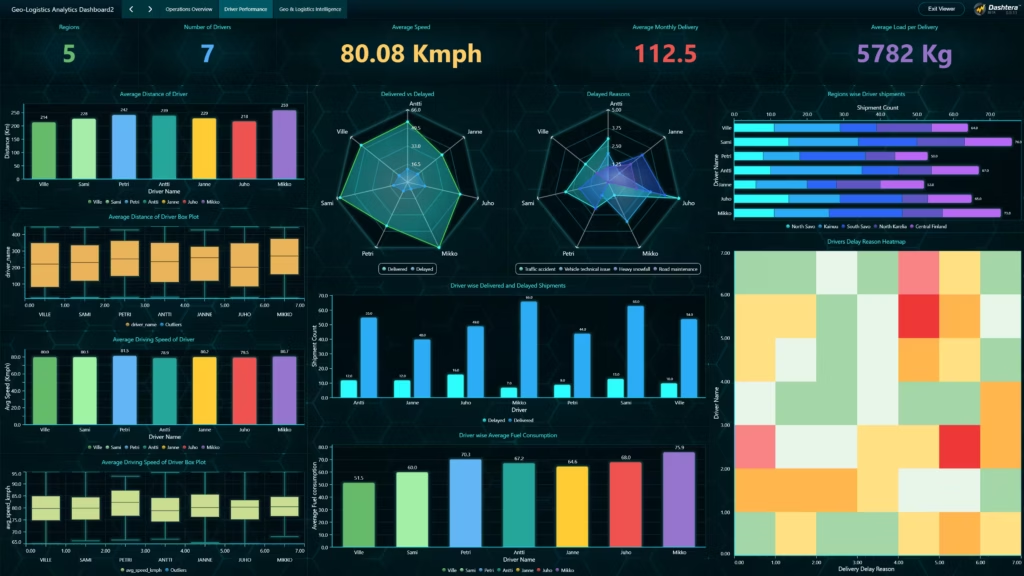
The system includes seven drivers operating across five regions. The average driving speed across all drivers is 80.08 km/h, reflecting consistent driving behavior. The average number of monthly deliveries per driver is 112.5, indicating a balanced distribution of operational responsibility. The average load per delivery is 5,782 kilograms, which suggests moderate cargo volumes appropriate for mixed van and truck operations.
Distance and Speed Consistency
Bar chart analysis of average delivery distance by driver reveals only moderate variation between drivers, with values ranging between approximately 214 km and 259 km. Similarly, average driving speeds for all drivers remain tightly clustered between 78.9 km/h and 81.5 km/h. Box plot visualizations confirm that extreme outliers are minimal, supporting the conclusion that workload and performance are relatively evenly distributed across the driver population.
Delivery Reliability and Delay Patterns
Spider chart analysis comparing delivered and delayed shipments indicates that all drivers experience some level of operational disruption. Driver-wise bar charts further illustrate differences in delay frequency, enabling comparative evaluation of reliability. This supports a realistic operational narrative in which performance varies slightly between individuals but remains broadly consistent across the team.
Fuel Consumption and Regional Behavior
Additional analyses explore driver-specific fuel consumption patterns and regional operational distribution. Bar charts of average fuel consumption by driver demonstrate consistency with distance traveled. Regional shipment distribution charts illustrate that each driver operates across multiple regions rather than being constrained to a single geographic area. A heatmap of delay reasons by driver reveals that weather-related disruptions affect all drivers, reinforcing the systemic nature of these risks.
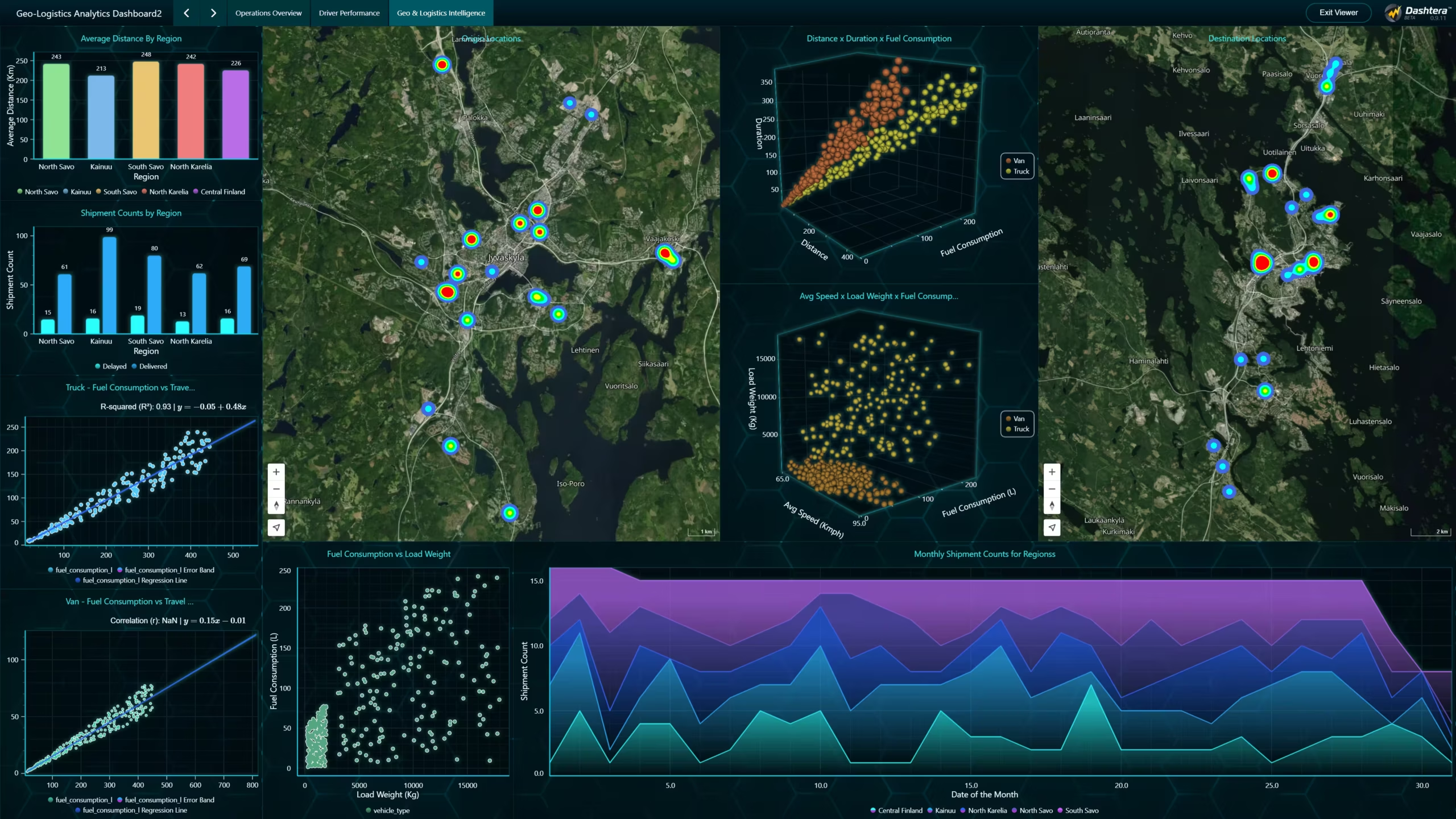
The third dashboard page focuses on analytical relationships between operational variables and on the geographic dimension of delivery activity.
Relationships Between Operational Variables
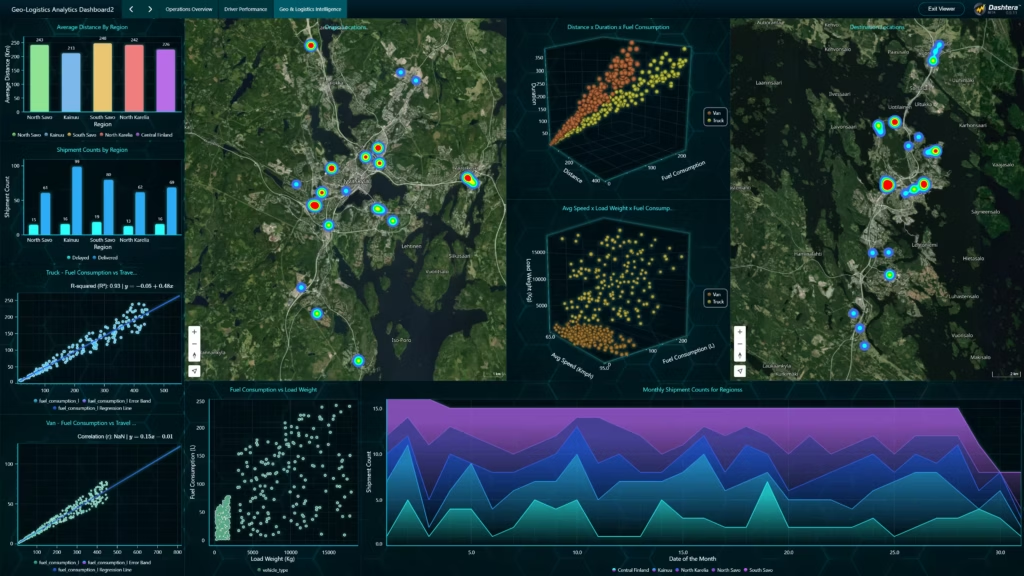
Regression analysis demonstrates a strong linear relationship between fuel consumption and travel distance. A three-dimensional visualization incorporating distance, duration, and fuel consumption further confirms this linear association. These results support the internal consistency of the dataset, as such relationships are expected in realistic logistics environments.
Conversely, scatter plot analysis between fuel consumption and load weight shows no strong correlation. This outcome reflects realistic conditions in which distance and vehicle characteristics exert a stronger influence on fuel consumption than moderate variations in load.
Geographic Distribution of Deliveries
Geographic visualizations of origin and destination coordinates illustrate spatial coverage across the five Finnish regions. These maps allow visual exploration of route dispersion and regional connectivity, reinforcing the geo-analytical dimension of the dashboard.
Regional Comparative Analysis
Comparative analysis of average delivery distance by region shows modest variation, ranging from approximately 213 km in Kainuu to approximately 248 km in South Savo. Grouped bar chart analysis comparing delivered and delayed shipments across regions demonstrates that delay proportions are relatively consistent geographically. Finally, area line charts of monthly shipment counts by region reveal stable regional participation across the observed period.
The three-page Geo-Logistics Analytics Dashboard demonstrates a structured, layered approach to logistics data exploration. The operational overview establishes scale and performance. Driver analytics reveal behavioral patterns and reliability. Geo-spatial and analytical relationships provide deeper intelligence into system dynamics.
The integration of KPIs, pie charts, bar charts, line charts, box plots, regression plots, heatmaps, spider charts, and geographic maps illustrates how diverse visualization techniques can collectively support comprehensive logistics storytelling.
The project also highlights Dashtera’s strength as a no-code analytics platform capable of supporting complex analytical narratives without programming.
The Geo-Logistics Analytics Dashboard demonstrates the effective use of Dashtera for logistics-focused data exploration and visualization. The dashboard supports operational monitoring, driver performance analysis, delay risk evaluation, and geographic delivery intelligence within a single cohesive analytical environment.
By combining operational, human, and geographic perspectives into a coherent multi-page structure, the project provides a scalable framework that could be extended toward predictive delivery analytics, route optimization simulations, cost optimization models, or operational decision-support systems.
This makes the project suitable not only as a portfolio dashboard but also as a conceptual prototype for real-world logistics intelligence platforms.
Share: