




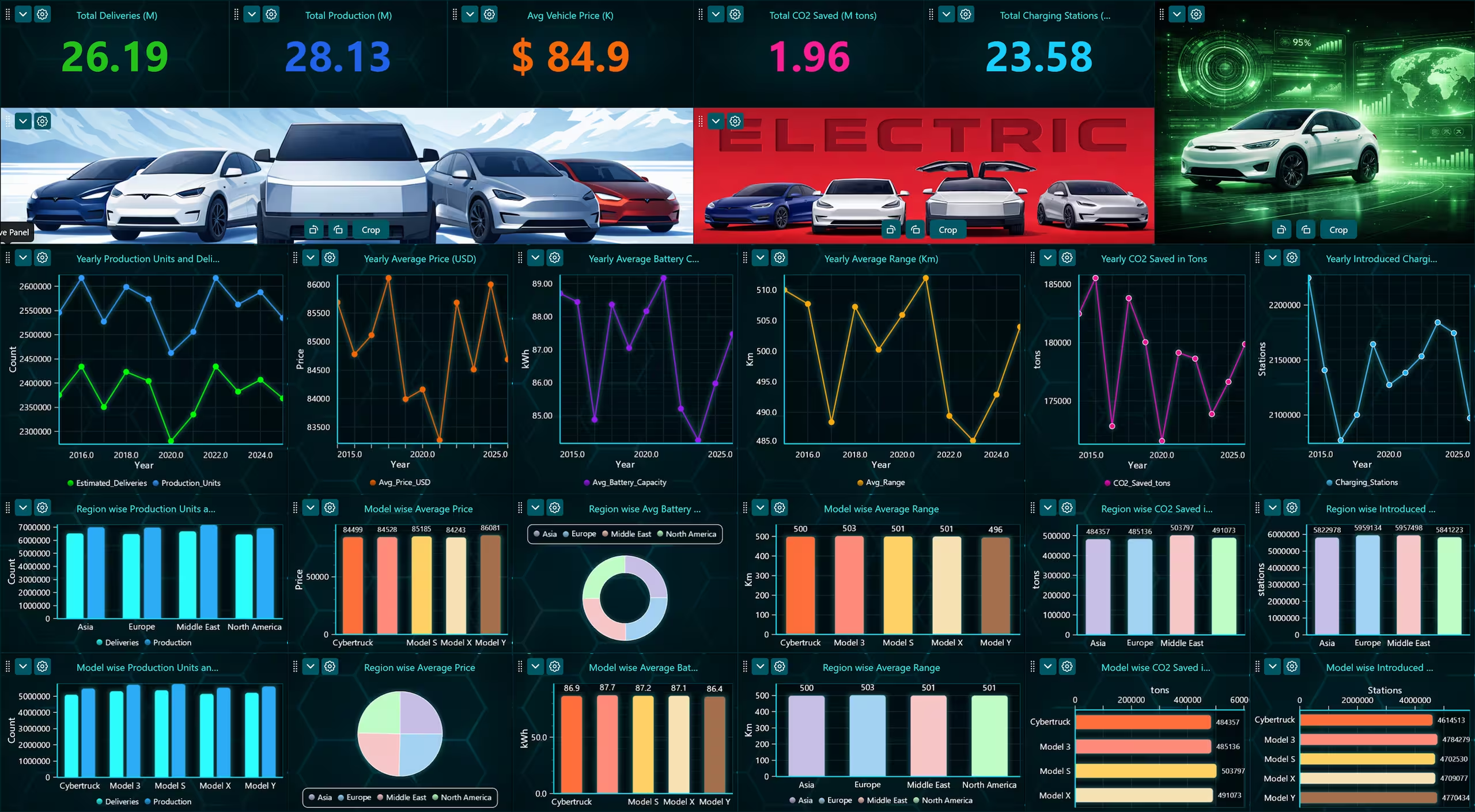
The Tesla Global Deliveries and Production Analysis Dashboard provides a comprehensive analytical review of Tesla’s electric vehicle performance across a ten-year period (2015–2025). By integrating monthly production, delivery counts, average pricing, battery capacity, driving range, sustainability outcomes, and charging infrastructure metrics, the dashboard offers a multi-dimensional exploration of Tesla’s operational growth trajectory.
Developed using the Dashtera no-code BI platform, the system supports interactive navigation through 2,640 dataset entries, enabling stakeholders to investigate long-term manufacturing trends, model-wise adoption rates, price evolution, energy efficiency, and CO₂ emission reduction outcomes. The dashboard is structured to support decision-making for analysts, researchers, and EV industry planners by transforming raw production metrics into interpretable statistical evidence and comparative visualizations.
This analysis is based on a publicly available dataset sourced from Kaggle (Tesla Dataset by Zubair Dhuddi), which contains monthly vehicle production and delivery records for five Tesla models (Cybertruck, Model 3, Model S, Model X, and Model Y) across major global regions including North America, Europe, Asia, and the Middle East.
The dataset includes operational, economic, and environmental indicators relevant to manufacturing analytics and sustainability research. Its time-series structure makes it suitable for trend analysis, battery-range correlation studies, and global market assessment. This dataset is used for analytical and educational purposes only, and this project is not affiliated with or endorsed by Tesla.
Core Variables
The dataset consists of the following major variable groups:
Dataset Overview
Global Summary Indicators
| Metric | Value |
|---|---|
|
Total Deliveries |
26.19 Million |
|
Total Production |
28.13 Million |
|
Avg Vehicle Price |
$84,907.34 (approx.) |
|
Total CO₂ Saved |
1.96 Million Tons |
|
Installed Charging Stations |
23.58 Million+ |
These aggregated indicators establish the foundation for multi-page analytical visualizations.
Dashtera is a cloud-based, no-code analytics platform designed to support the visual exploration and analysis of complex datasets. The platform enables users to construct interactive dashboards without programming, allowing for efficient examination of multidimensional data through line plots, bar charts, maps, regressions, and statistical summaries. Its interface allows data to be filtered, compared, and inspected from multiple perspectives, which makes it suitable for exploratory data analysis tasks.
Key Features
Dashtera’s flexibility makes it particularly suitable for exploratory data analysis and predictive insight presentation in healthcare and insurance domains.
The first dashboard provides a macro-level representation of Tesla’s performance over a decade. The KPI indicators reveal that Tesla has achieved 26.19 million total deliveries against 28.13 million production units, reflecting a mature supply capacity and sustained market penetration. The average vehicle price stands at approximately $84.9K, indicating a persistent orientation toward mid-to-premium segment consumers. Environmental impact is also noteworthy, with 1.96 million tons of CO₂ emissions saved, supported by an extensive charging infrastructure of 23.58 million stations, which illustrates the scalability of EV adoption globally.
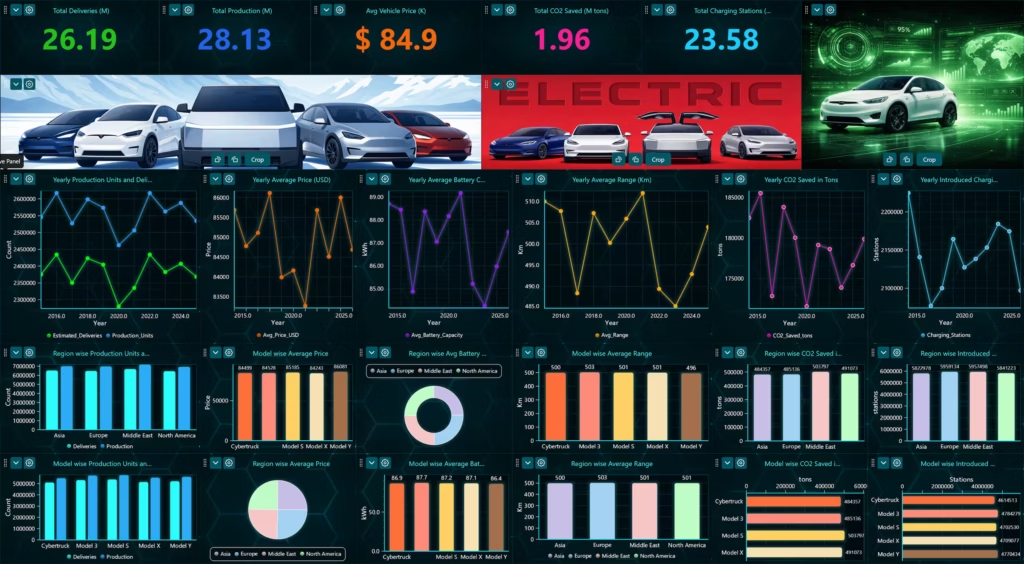
The temporal line graphs capture year-wise progression in production, deliveries, pricing, battery capacity, driving range, CO₂ savings, and charging stations from 2015 to 2025. Although minor fluctuations appear across price and range, overall trends indicate incremental technological refinement. Production and deliveries follow closely related upward trajectories, suggesting efficiency in supply chain utilization. The gradual rise in charging stations aligns positively with improvements in battery capacity and range, demonstrating infrastructure-technology co-development.
The region-wise bar and pie visualizations compare performance across Asia, Europe, Middle East, and North America. Production and deliveries are largely evenly distributed, with the Middle East slightly leading in production at 7.19 million units. Price variations are narrow across regions, reflecting global pricing stability. Range and battery capacity also remain consistent, denoting product standardization. Model comparisons show similar patterns, where all five models—Cybertruck, Model 3, Model S, Model X, and Model Y—exhibit competitive performance. In particular, Model 3 and Model S demonstrate comparatively higher production and delivery volumes, while Cybertruck offers balanced pricing with strong environmental savings contributions.
This dashboard collectively presents an integrated snapshot of Tesla’s global growth, highlighting operational maturity, technological enhancement, and environmental alignment.
The second dashboard transitions from global assessment to individual model analysis. Line graphs depicting production-delivery gaps reveal that although disparities exist annually, they remain within manageable limits, indicating effective inventory and distribution management. For example, in 2025, the gap is smallest for Model Y (≈34K) and relatively higher for Cybertruck (≈32K), implying varying consumer uptake rates per segment.
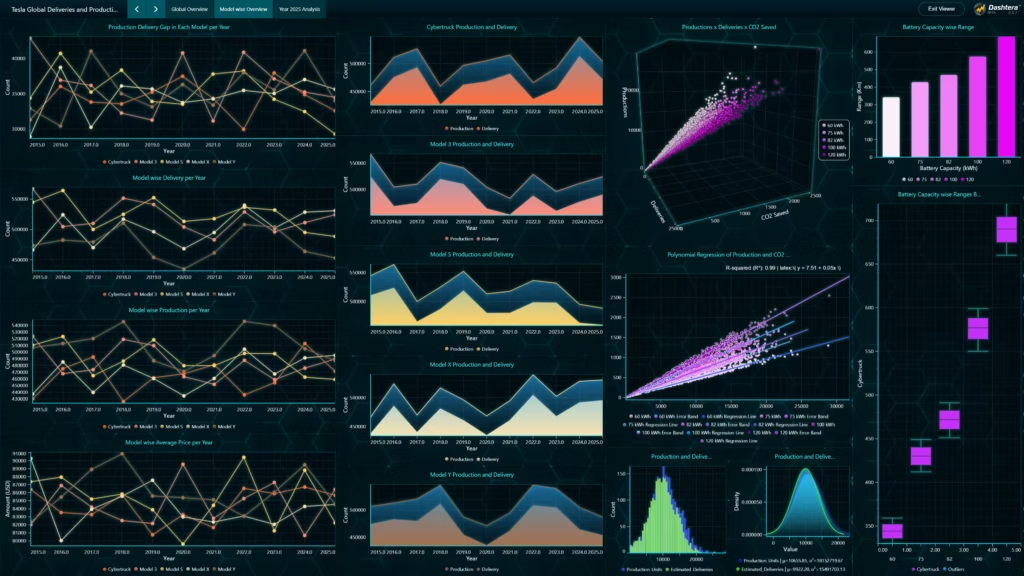
Trend analysis of production and delivery by model over time highlights that Model 3 and Model S consistently maintain strong annual outputs, while Cybertruck and Model Y display periodic accelerations, possibly linked to evolving consumer preference toward performance-utility blends. Price-trend visualizations show modest fluctuations, with notable surges in certain years (e.g., Model 3 price increase in 2025). Such variation suggests that market pricing strategies may respond dynamically to component costs and innovation adoption.
Area charts, histograms, and distribution plots further contextualize production–delivery behaviour, illustrating volume concentration in middle-to-recent years. A 3D relational model between production, deliveries, and CO₂ savings shows positive correlation, reflecting sustainability gains scaling with manufacturing expansion.
Battery-range analysis highlights that range increases proportionately with capacity – rising from ≈344 km at 60 kWh to ≈690 km at 120 kWh – confirming energy density improvements. The range box plot reinforces consistency in performance delivery across vehicle classes.
This dashboard, therefore, provides model-centric visibility, allowing comparative interpretation of efficiency, pricing strategy, energy capacity, and environmental performance across Tesla’s lineup.
The third dashboard isolates 2025 as a focal year, enabling month-wise operational performance evaluation. Grouped bar charts illustrate production and delivery patterns for each model across twelve months. A seasonal rhythm is observable, where mid-year periods (March–August) exhibit relatively higher production and deliveries across most models. For instance, Cybertruck production peaks during November (~58K), while deliveries peak in the same month (~52K). This suggests production alignment with demand cycles or sales events.
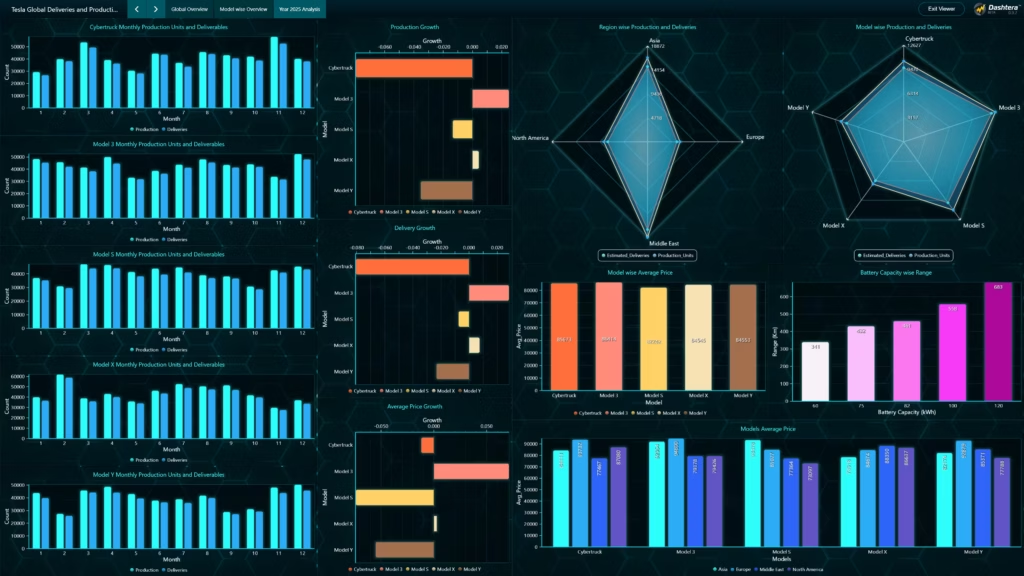
Growth comparison charts between 2024 and 2025 demonstrate divergent performance outcomes. Model 3 shows positive growth in both production (3%) and delivery (3%), while Cybertruck experiences an 8% decline, indicating strategic or market-driven variance. Price growth comparison reveals notable increments for Model 3 (+7%), contrasting with decreased prices for Model S (-7%) and Model Y (-6%), possibly implying repositioning to maintain demand elasticity.
Spider charts further establish regional production-delivery distribution for 2025, maintaining patterns consistent with global data. Additional bar charts reinforce battery-capacity-to-range relationships, evidencing that higher capacities provide improved real-world driving range. Grouped range-capacity bars strengthen the argument that engineering progression in 2025 continued to prioritize performance optimization.
Overall, the 2025 dashboard provides micro-level operational insight, highlighting monthly production-delivery behavior, growth differentials, pricing shifts, and efficiency correlations, facilitating near-term strategic assessment.
The comparative interpretation of the three dashboards indicates that Tesla has grown from a region-focused manufacturer to a globally scaled EV leader over the 2015–2025 period. The first dashboard highlighted Tesla’s aggregate operational success, where production capacity steadily increased alongside deliveries, reflecting effective demand fulfillment. The second dashboard illustrated that the Model 3 and Model S dominate volume metrics, confirming their sustainable consumer acceptance across markets. Conversely, Cybertruck and Model Y show more pronounced year-to-year variation, suggesting sensitivity to external factors such as market positioning or utility-based purchase patterns.
The third dashboard isolated 2025 as a decisive year, offering evidence of seasonal production peaks, price adjustments, and model-wise performance variability. Growth deviations between 2024 and 2025 reveal pricing and delivery strategies shifting dynamically, potentially driven by cost, technology integration, and competitive placement. The year-wise and model-wise trend correlation further demonstrates that increases in production generally lead to proportional rises in deliveries and CO₂ savings, confirming Tesla’s operational efficiency and its contribution to sustainability targets.
Across all dashboards, battery capacity and driving range exhibit a strong positive association, indicating continuous innovation in energy storage. Regional comparison shows that contributions are broadly balanced, supporting Tesla’s global market equity and infrastructure deployment.
The dashboards collectively provide a comprehensive analytical narrative of Tesla’s decade-long evolution. The visual insights confirm a consistent rise in production, deliveries, and environmental benefits, supported by progressive improvements in vehicle efficiency and charging infrastructure expansion. Model-centric evaluation shows that Tesla’s lineup maintains competitive output, with Model 3 and Model S demonstrating long-term stability, while Cybertruck and Model Y reflect dynamic growth behavior. The 2025 analysis reinforces short-term operational patterns, pricing changes, and growth indicators valuable for strategic planning.
Future work may integrate forecasting models, anomaly detection, or demand-supply prediction analytics to enhance decision-making. Further dashboard expansion could incorporate profitability metrics, regional market share, supply chain lead times, or battery degradation studies. With the richness of the dataset extending through 2025, predictive modelling or AI-driven optimization could offer valuable scope for operational simulation, policy impact analysis, and sustainability planning.
Share: