


The Smart Manufacturing IoT-Cloud Monitoring Dashboard is a cloud-based industrial analytics solution built using the Dashtera no-code visualization platform. The objective of this project is to monitor machine health, analyze operational behavior, detect early signs of failure, and support predictive maintenance activities in modern smart manufacturing environments.
The dashboard integrates multi-sensor IoT data-including temperature, vibration, humidity, pressure, and energy consumption-collected continuously from industrial machinery. Each record is enriched with derived attributes such as anomaly flags, downtime risk indicators, maintenance requirement status, and predicted remaining life estimates.
Using Dashtera’s interactive visualization capabilities, this project transforms raw IoT streams into operational intelligence through seven interconnected dashboards. Together, these dashboards allow engineers, maintenance teams, and plant supervisors to monitor machine health in real time, explore parameter-specific behaviors, and evaluate maintenance-critical insights supported by multidimensional and 3D visual analytics.
By combining sensor monitoring, failure profiling, and predictive modeling, the system demonstrates how no-code platforms can accelerate the development of scalable industrial IoT ecosystems for proactive decision-making and optimized operational efficiency.
Modern smart manufacturing infrastructures rely heavily on IoT-enabled sensors to monitor the stability, efficiency, and health of machinery. Parameters such as temperature, vibration, humidity, pressure, and electrical load are critical for diagnosing degradation, predicting failures, and scheduling maintenance operations before downtime occurs.
The dataset used in this project consists of cloud-logged industrial sensor readings captured at periodic intervals. Each observation contains:
Raw Sensor Measurements
Machine State Annotations
Predictive Maintenance Attributes
This metadata supports a wide range of diagnostic and predictive analytics, giving the dashboard the versatility required for production-scale monitoring.
Description
The dataset comprises continuous time-series readings across five major environmental and mechanical parameters. The diversity of variables allows a broad evaluation of machine behavior:
Core Sensor Ranges
These ranges represent normal, transitional, and stressed operating states typical of industrial manufacturing lines.
Machine Status & Condition Attributes
The dataset includes multiple condition markers:
Aggregated Condition Averages:
| Status | Avg Temp | Avg Vib | Avg Humidity | Avg Pressure | Avg Energy |
|---|---|---|---|---|---|
|
0 |
75.26 |
48.13 |
54.31 |
2.91 |
2.71 |
|
1 |
74.77 |
50.27 |
54.78 |
2.93 |
2.74 |
|
2 |
74.47 |
49.46 |
54.92 |
2.97 |
2.68 |
These averages provide a foundation for exploring behavior across different machine states.
Dashtera is a cloud-based, no-code analytics platform designed to support the visual exploration and analysis of complex datasets. The platform enables users to construct interactive dashboards without programming, allowing for efficient examination of multidimensional data through line plots, bar charts, maps, regressions, and statistical summaries. Its interface allows data to be filtered, compared, and inspected from multiple perspectives, which makes it suitable for exploratory data analysis tasks.
Key Features
The Health Overview serves as the executive-level summary of the machine’s current condition and historical operational behavior.
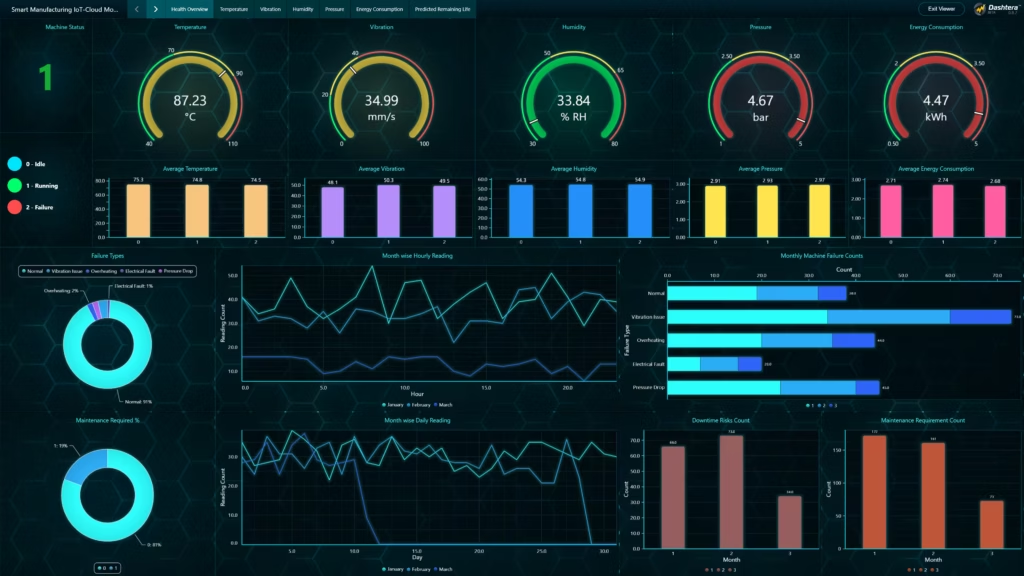
The Health Overview provides a high-level assessment of current machine conditions and historical behavior. Real-time gauges display the most recent temperature, vibration, humidity, pressure, and energy consumption measurements, offering immediate situational awareness. Comparative bar charts summarize average sensor readings across machine states, helping users identify deviations from normal behavior. Pie charts display distributions of failure categories and maintenance requirements, while time-based line charts reveal monthly and daily fluctuations in sensor readings. Additional charts summarize monthly failure counts and the relationship between downtime risks and maintenance indicators, establishing a comprehensive view of machine stability.
Temperature Reading
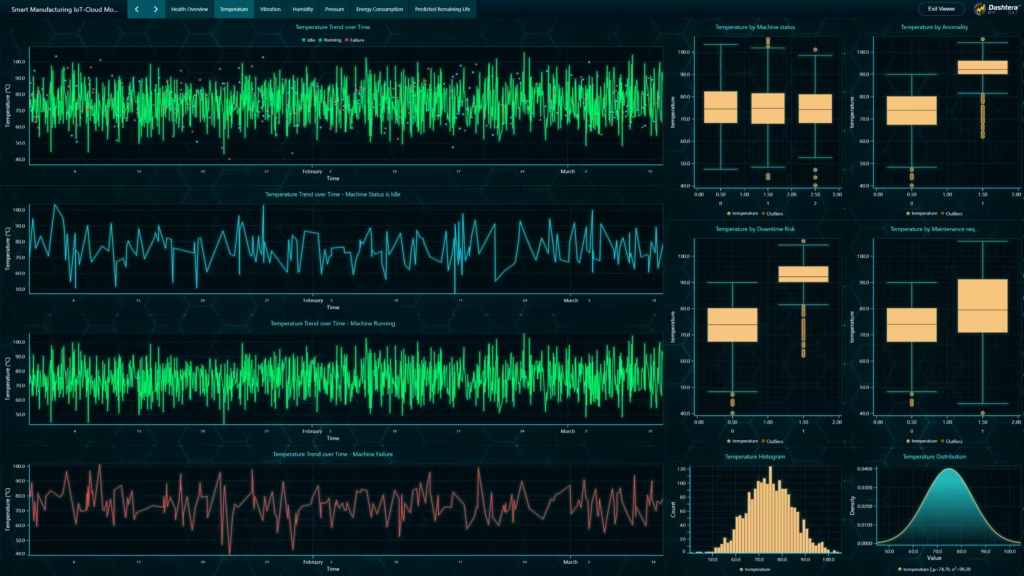
This dashboard focuses exclusively on temperature behavior. Line charts illustrate temperature evolution across the entire timeline and within Idle, Running, and Failure states, highlighting periods of overheating or thermal instability. Box plots further characterize temperature distributions by machine status, anomaly occurrence, downtime risk, and maintenance requirement, while histograms and density curves describe the overall statistical distribution of temperature values. These visualizations collectively support the diagnosis of thermal stress and environmental impacts.
Vibration Reading
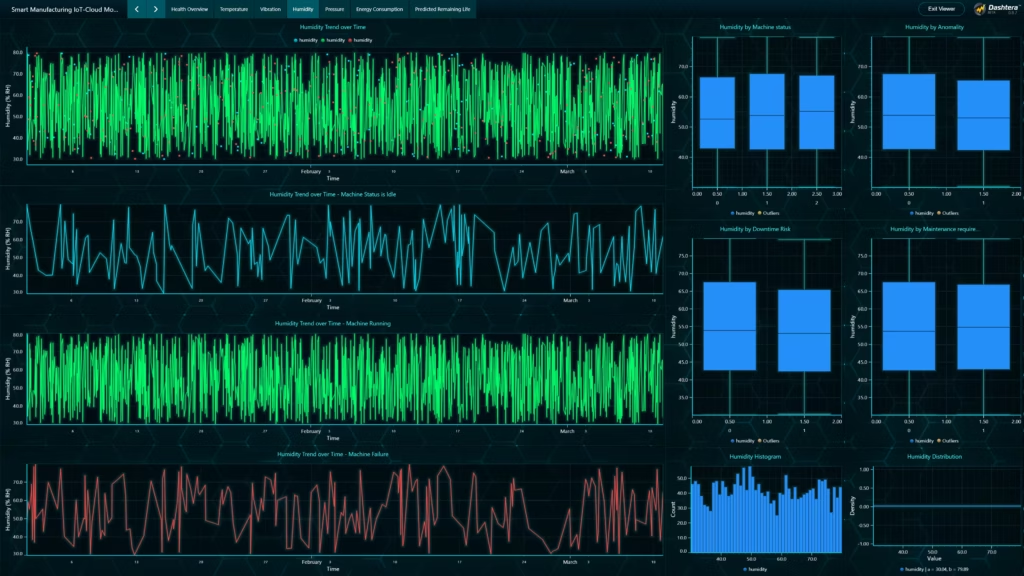
Mechanical integrity and rotational balance are examined through the vibration dashboard. Temporal line charts show vibration trends overall and within each machine state, helping identify moments of elevated mechanical stress. Box plots compare vibration levels across diagnostic categories, while histograms and density distributions describe overall vibration behavior. These analyses are useful for detecting issues such as misalignment, mechanical wear, and bearing degradation.
Humidity Reading
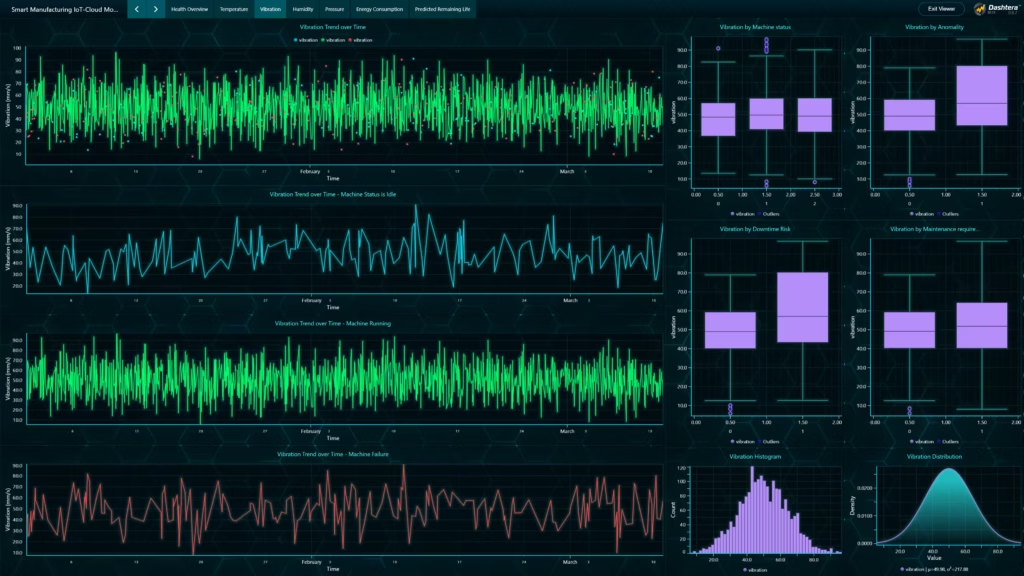
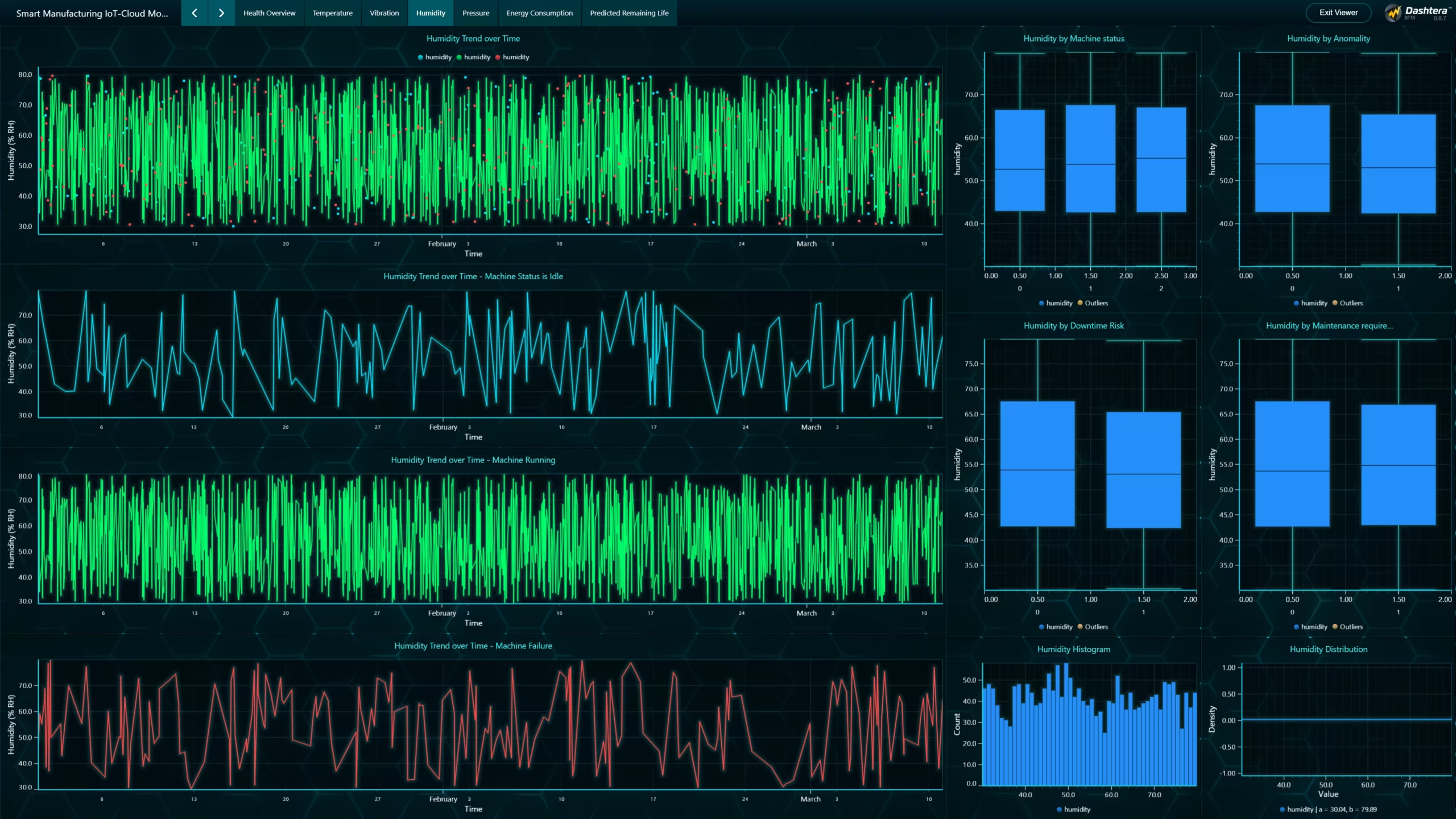
Humidity plays a crucial role in determining insulation health, corrosion risks, and sensor reliability. The humidity dashboard presents time-based behavior across all states, allowing users to relate fluctuations to operational or environmental changes. Box plots grouped by status, anomaly flags, downtime risk, and maintenance requirements enable comparisons of humidity exposure in different scenarios, while distribution charts characterize the overall variability in moisture levels.
Pressure Reading
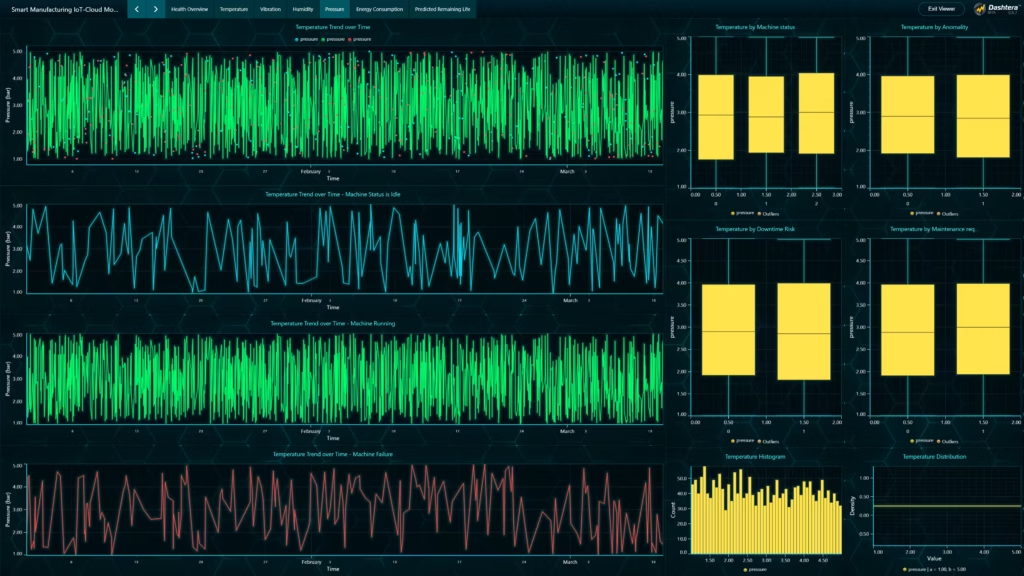
Pressure stability is essential for hydraulic and pneumatic systems. The pressure dashboard displays time-series pressure variations across machine states and offers diagnostic box plots segmented by status, anomaly presence, downtime risk, and maintenance requirements. Distribution charts–both histogram and smooth density profile–capture the broader pattern of pressure behavior, enabling users to detect unstable pressure conditions that may precede system failures.
Energy Consumption
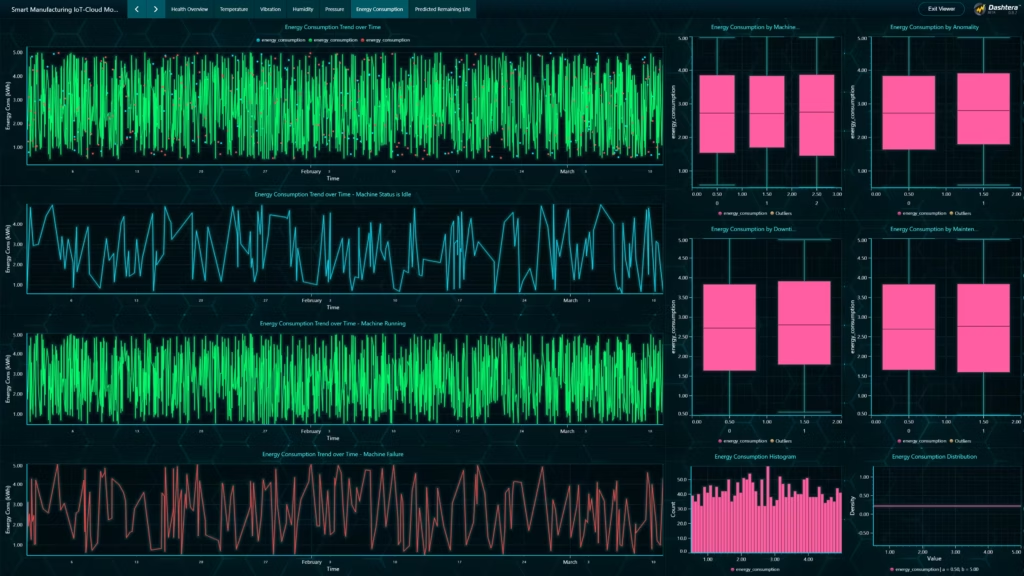
Energy consumption provides insights into electrical load efficiency and potential internal faults. Line charts show overall consumption trends and separate profiles for Idle, Running, and Failure conditions. Box plots and distribution charts allow comparisons across diagnostic categories, helping detect abnormal consumption peaks that may indicate inefficiency, electrical imbalance, or component degradation.
Predicted Remaining Life
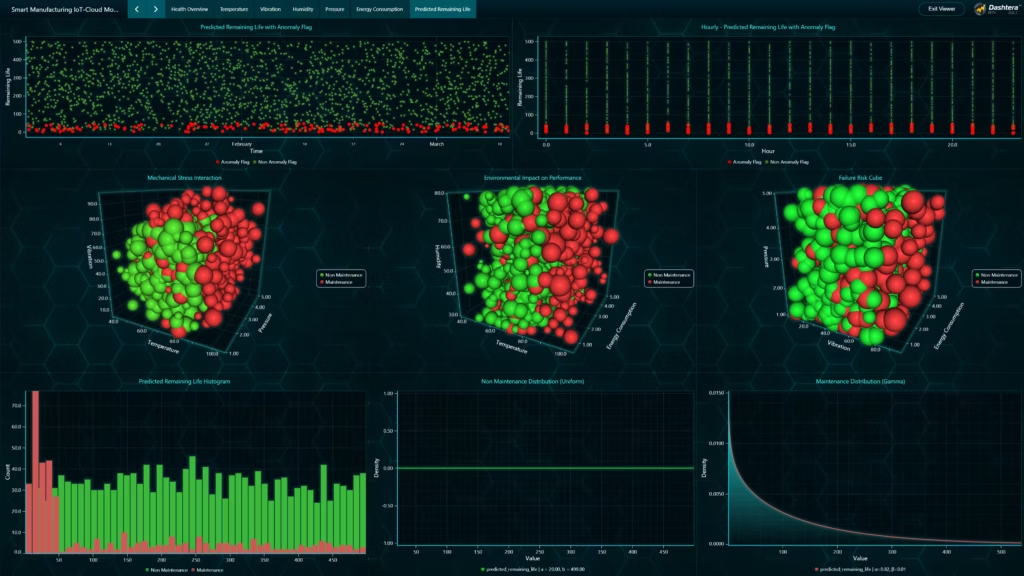
This dashboard focuses on predictive maintenance insights, highlighting degradation patterns and future machine longevity. Scatter plots illustrate predicted remaining life values alongside anomaly indicators, allowing users to identify clusters of rapid deterioration.
Three interactive 3D models present complex interactions between multiple sensors, maintenance requirements, and failure patterns. The first model visualizes the relationship among temperature, vibration, and pressure, colored by maintenance status and scaled by energy consumption.
The second emphasizes environmental drivers by mapping humidity, temperature, and energy consumption. The third explores mechanical-pressure-energy interactions, revealing high-risk clusters. Distribution comparisons between maintenance-required and healthy machines (Gamma vs. uniform patterns) further illustrate how degradation accelerates under stressed conditions.
The Smart Manufacturing IoT-Cloud Monitoring Dashboard demonstrates how integrating real-time sensor streams with predictive attributes can provide actionable insights into machine health. The analyses show that machine failures are influenced by the combined effects of temperature, vibration, humidity, pressure, and energy consumption.
Comparing Idle, Running, and Failure states highlight operational stresses, while predicted remaining life enables proactive maintenance planning. The 3D visualizations, in particular, reveal multidimensional interactions that are difficult to detect using conventional 2D plots. Together, these capabilities enhance situational awareness and support data-driven decisions aimed at minimizing downtime and improving manufacturing efficiency.
The dashboard developed using Dashtera illustrates the potential of no-code platforms for building industrial IoT monitoring systems. Through seven structured dashboards, it offers a seamless analytical progression from real-time sensing to predictive diagnostics. The system enhances maintenance planning, strengthens asset reliability, and supports the transition toward intelligent manufacturing environments.
Future extensions may incorporate real-time streaming architectures, deep-learning-based anomaly detection, automated maintenance scheduling, and faster cloud-to-edge communication–all of which can be supported through Dashtera’s flexible design.
Ziya07. (2023). Industrial IoT Fault Detection Dataset in Kaggle.