


 Data Analytics Software QA
Janaka Alwis
Data Analytics Software QA
Janaka Alwis
The Industrial IoT Fault Detection Dashboard was developed using the Dashtera no-code analytics platform to analyze machine health parameters and fault patterns within an industrial automation environment. This dashboard visualizes time-series sensor data consisting of vibration, temperature, and pressure readings to support predictive maintenance and operational reliability analysis. The dataset comprises 1,000 sensor observations collected from industrial machinery, each annotated with a fault label identifying whether the equipment was operating normally, exhibiting bearing failure, or experiencing overheating.
The primary objective of this project is to transform raw sensor data into interpretable visual analytics for engineers, data analysts, and maintenance professionals. By leveraging Dashtera’s dynamic visualization capabilities, the dashboard enables users to explore correlations between key operating parameters, identify abnormal signal behaviors, and monitor fault trends across multiple conditions. Through this process, it demonstrates how no-code platforms can support industrial data interpretation, enhance situational awareness, and improve decision-making in predictive maintenance systems.
Industrial IoT (IIoT) environments rely on continuous monitoring of sensor parameters to detect performance degradation and prevent equipment failures. The dataset used in this study represents a simplified yet realistic industrial monitoring scenario, where vibration, temperature, and pressure are tracked over time to identify emerging fault patterns. Each record contains sensor readings at one-minute intervals, along with derived features such as RMS vibration and mean temperature, which assist in assessing long-term stability and mechanical integrity.
The fault label column categorizes machine states into three groups:
This structured labeling allows the dataset to serve as a foundation for fault detection and classification research, particularly for condition-based maintenance systems. With approximately 61% of records labeled as “No Fault,” 30% as “Bearing Fault,” and 9% as “Overheating,” the data distribution reflects a realistic imbalance typical in predictive maintenance datasets, where normal conditions dominate.
Description
The Industrial IoT Fault Detection dataset contains 1,000 records with six key features and one categorical fault label. The core sensor variables include vibration (mm/s), temperature (°C), and pressure (bar), each providing unique insights into machine operation. Two derived variables-RMS vibration and mean temperature-serve as aggregated indicators of mechanical and thermal stability, respectively.
A summary of the data distribution shows that vibration values typically range between 0.1 and 1.0 mm/s, temperature readings span 50°C to 130°C, and pressure values vary between 7 and 10 bar. The dataset exhibits mild stochastic variation, suggesting realistic sensor noise and operational fluctuation patterns.
Fault class proportions are as follows:
These proportions establish a strong foundation for visual pattern recognition and anomaly detection, aligning with industrial reliability assessment frameworks.
Dashtera is a cloud-based, no-code analytics platform designed to support the visual exploration and analysis of complex datasets. The platform enables users to construct interactive dashboards without programming, allowing for efficient examination of multidimensional data through line plots, bar charts, maps, regressions, and statistical summaries. Its interface allows data to be filtered, compared, and inspected from multiple perspectives, which makes it suitable for exploratory data analysis tasks.
Key Features
Relevance to This Project
In this project, Dashtera enabled the integration of time-series, statistical, and categorical analyses across three dashboard pages: Overview, Signal Variation, and Readings. Each page provides a unique analytical perspective-from overall data patterns to fault-type segmentation and sensor-level health interpretation-forming a coherent narrative for fault detection and predictive maintenance monitoring. The platform’s ability to combine diverse visualization types allowed for a comprehensive representation of mechanical, thermal, and pressure dynamics under various fault conditions.
The Overview dashboard provides a holistic view of all sensor data and their relationship to the three defined fault types. The page includes twelve visualizations per sensor, covering time-series behavior, statistical distributions, and categorical relationships.
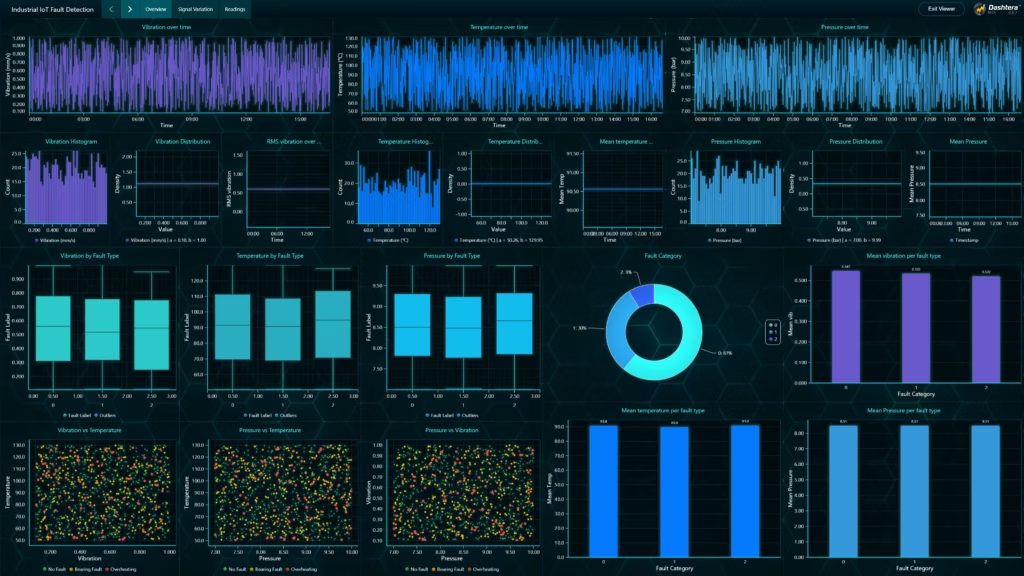
For vibration, the dashboard presents a time-series line chart displaying fluctuations over time, complemented by a histogram and a continuous uniform distribution chart that summarize amplitude variability. A box plot comparing vibration by fault type reveals that the mean vibration levels are marginally lower in faulted states (0.535 mm/s for Bearing Fault and 0.522 mm/s for Overheating) compared to normal operation (0.547 mm/s), suggesting that fault events do not necessarily coincide with higher vibration magnitudes but may reflect specific frequency-domain anomalies not visible in this dataset.
The temperature analysis follows a similar structure, with charts depicting temporal variation, statistical distributions, and mean values over time. Box plots and mean comparisons across fault categories indicate stable mean temperatures (approximately 90–91°C across all fault types), suggesting that while overheating events are labeled as such, they may be localized or transient rather than reflected in overall averages.
The pressure section demonstrates consistent readings across fault types, with mean pressures around 8.51 bar for all categories. This stability suggests that pressure alone may not serve as a primary indicator of mechanical faults but can still provide supporting context in multi-sensor fault diagnosis.
Cross-variable scatter plots-Vibration vs Temperature, Pressure vs Temperature, and Pressure vs Vibration-illustrate interdependencies between the three sensors. Finally, a pie chart visualizes the distribution of fault categories, emphasizing the predominance of non-fault conditions and the relative rarity of overheating cases.
Signal Variation
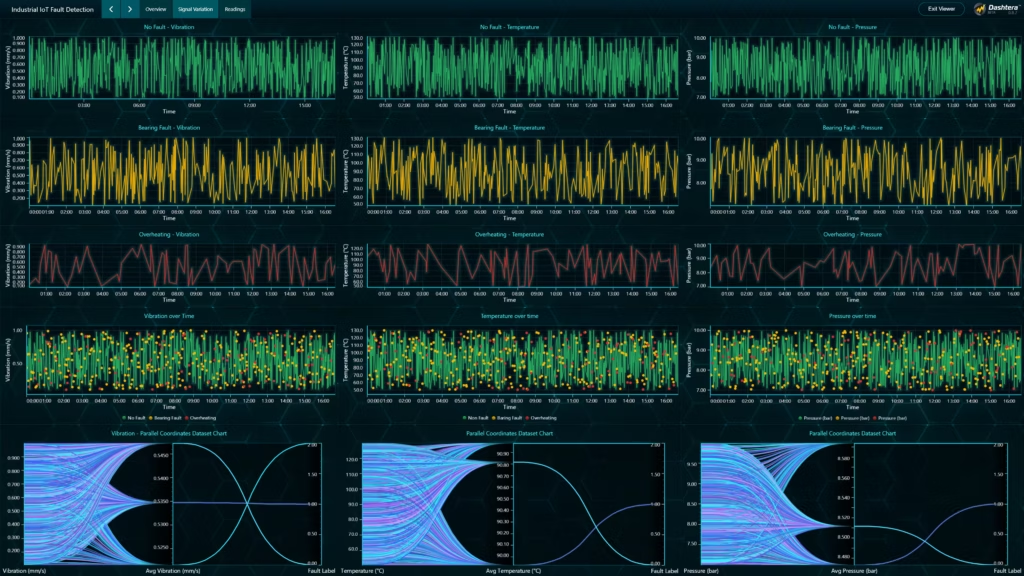
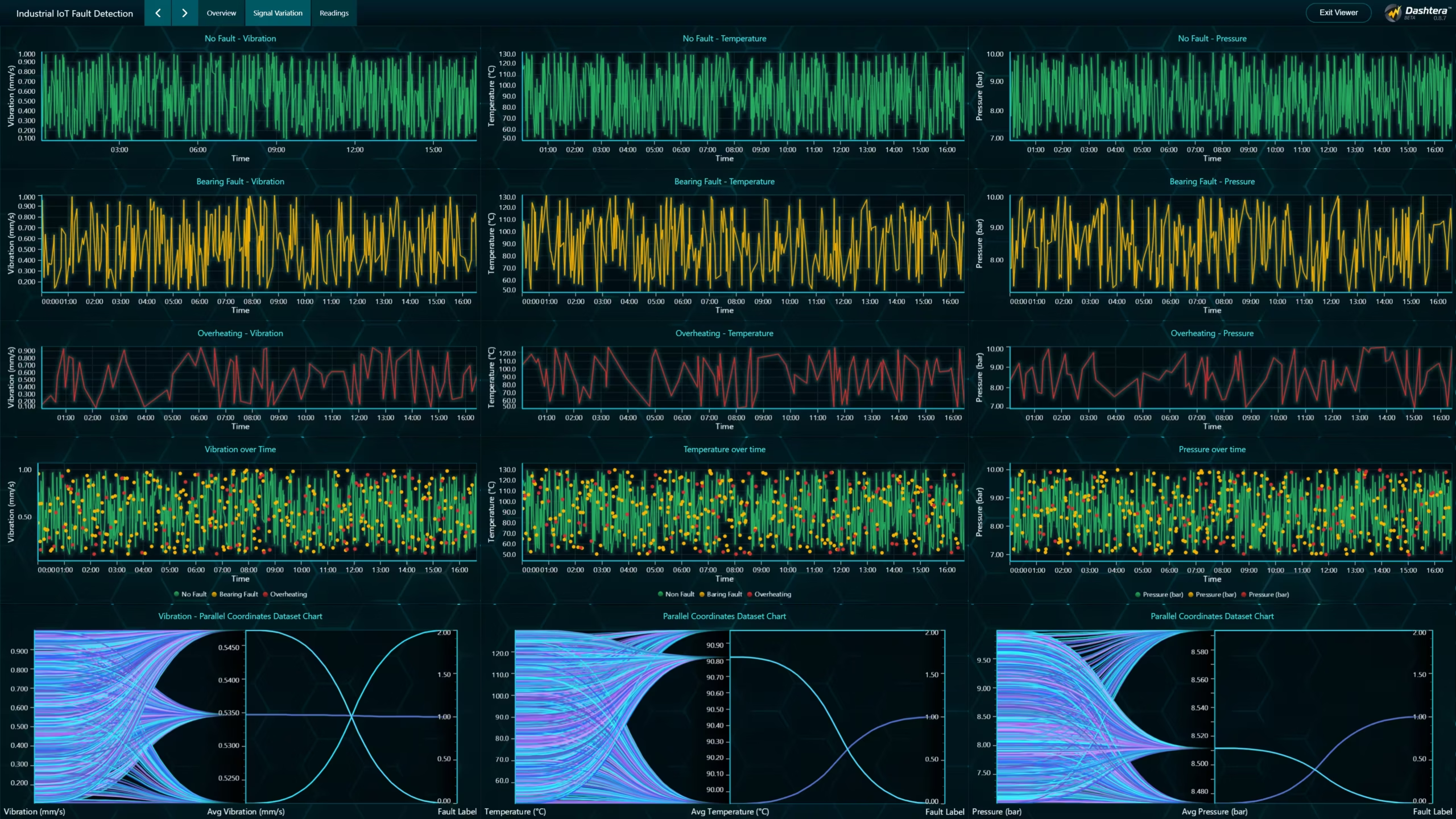
The Signal Variation dashboard disaggregates the dataset by fault type to highlight signal behaviors specific to each operational condition. Time-series line charts are separated for “No Fault,” “Bearing Fault,” and “Overheating” cases, enabling comparative examination of how vibration, temperature, and pressure vary under each fault category.
Parallel coordinate charts further enhance interpretability by displaying multi-dimensional relationships between sensor readings and fault states. This visualization allows users to trace overlapping or divergent sensor paths across operational modes, revealing whether certain fault types cluster within specific sensor value ranges. The inclusion of these charts provides a powerful tool for identifying transitional states-periods where readings begin to deviate toward fault thresholds-thus supporting early anomaly detection.
Readings
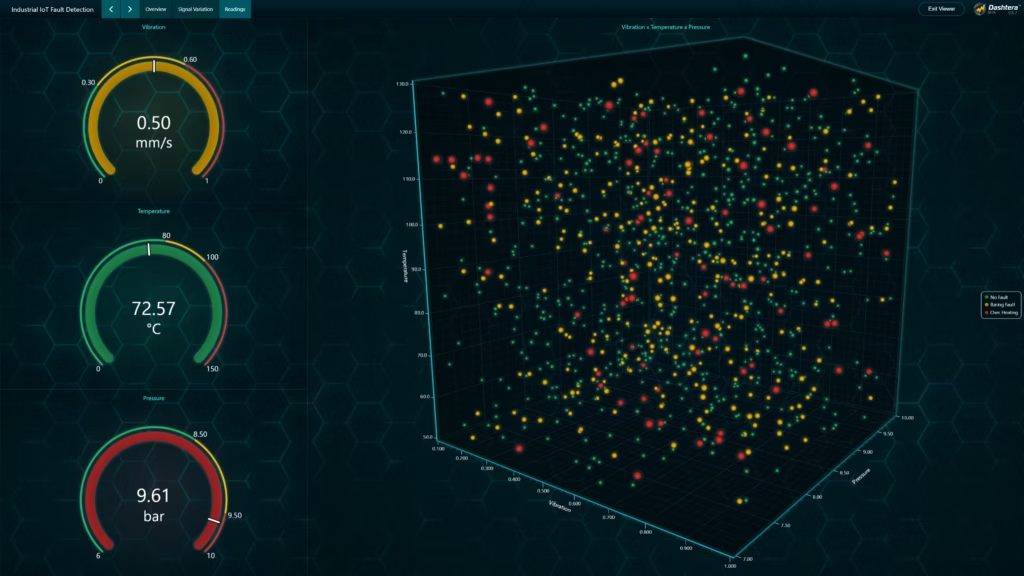
The Readings dashboard serves as a reference guide for interpreting sensor values in real time. It defines normal, warning, and critical ranges for each parameter, corresponding to green, yellow, and red zones, respectively.
| Sensor | Unit | Normal Range | Warning Range | Critical Range | Description |
|---|---|---|---|---|---|
|
Vibration |
mm/s |
0.0–0.30 |
0.30–0.60 |
0.6–1.0 |
Indicates mechanical balance; higher values suggest wear or misalignment. |
|
Temperature |
°C |
0–80 |
80–100 |
100–150 |
Reflects normal operation below 80°C; overheating risk beyond 100°C. |
|
Pressure |
bar |
6.0–8.5 |
8.5–9.5 |
9.5–10 |
Stable operation between 6–8.5 bar; deviations signal potential faults. |
A 3D scatter chart visualizing Vibration × Temperature × Pressure provides a multidimensional overview of the sensor relationships. Clusters near normal ranges correspond to non-fault conditions, while points in the higher temperature or vibration regions align with recorded fault cases, reinforcing the interpretive utility of the range-based classification.
The Industrial IoT Fault Detection Dashboard illustrates how structured sensor data can be transformed into meaningful operational insights through visual analytics. Despite modest dataset size, the system effectively captures the relationships among vibration, temperature, and pressure parameters, revealing both their stability and interdependence across different fault states. The inclusion of both time-series and categorical analyses allows for both temporal and comparative perspectives, essential for understanding the onset of faults.
The observed uniformity in mean temperature and pressure across fault classes indicates that fault manifestations in this dataset are more likely to arise from specific transient or localized behaviors, such as short-duration vibration spikes or temperature surges, rather than steady-state deviations. This finding underscores the importance of time-domain monitoring and real-time alerting in industrial fault detection systems.
From a methodological standpoint, the use of Dashtera demonstrates the advantages of no-code analytics in industrial applications. It allows engineers and domain experts-who may lack programming experience-to rapidly construct dashboards that integrate descriptive statistics, distribution analysis, and multi-sensor correlation plots. This capability supports faster decision cycles, reduced dependence on data science teams, and enhanced operational visibility.
The Industrial IoT Fault Detection Dashboard with Dashtera exemplifies how no-code analytical platforms can transform industrial sensor data into actionable insights for predictive maintenance. Through its three interconnected dashboards-Overview, Signal Variation, and Readings-the project provides both high-level summaries and detailed diagnostic views, enabling users to transition seamlessly from monitoring to analysis.
By integrating vibration, temperature, and pressure data into cohesive visual frameworks, the system enhances situational awareness, facilitates early fault detection, and supports the development of data-driven maintenance strategies. Future work could expand this foundation by integrating real-time data streaming, anomaly detection algorithms, or machine learning-based fault classification modules. Dashtera’s flexibility makes such extensions feasible without extensive reconfiguration, reaffirming its value as a tool for industrial analytics and operational intelligence.