



This study presents the development of a Nurse Stress Prediction Dashboard using the Dashtera no-code analytics platform. The system visualizes and analyzes physiological signals collected from wearable sensors kto identify stress patterns among nurses. The dataset comprises more than 11 million time-stamped records from 15 participants, including measurements of electrodermal activity (EDA), heart rate (HR), temperature (TEMP), and triaxial accelerometer data (X, Y, Z). Through the integration of Dashtera’s visual analytics capabilities, this project demonstrates a scalable framework for stress detection and behavioral pattern analysis based on physiological and contextual indicators.
The increasing prevalence of occupational stress among healthcare professionals has motivated the use of wearable sensor analytics to monitor physiological responses during work activities. Nurses, in particular, experience high levels of cognitive and physical stress, which can affect both performance and well-being.
To support data-driven assessment of these phenomena, this project introduces the Nurse Stress Prediction Dashboard, an interactive, no-code analytical interface developed using Dashtera. The dashboard enables exploratory analysis of stress-related physiological signals to uncover relationships between electrodermal activity, cardiovascular response, temperature variation, and movement intensity.
By transforming high-frequency sensor data into interpretable visual representations, the system provides an evidence-based approach for studying stress patterns, activity levels, and physiological correlations in nursing practice.
The dataset used in this project was obtained from continuous physiological monitoring of 15 nurses using wearable sensor devices. Each record represents a synchronized time sample containing accelerometer, electrodermal, cardiac, and thermal data, along with a categorical stress label.
Variables and Measurements
| Variable | Description |
|---|---|
|
X, Y, Z |
Triaxial accelerometer readings representing wrist orientation and movement |
|
EDA |
Electrodermal Activity (microsiemens), a proxy for sympathetic nervous system arousal |
|
HR |
Heart Rate (beats per minute) |
|
TEMP |
Skin Temperature (°C) |
|
id |
Unique nurse identifier |
|
datetime |
Timestamp of observation |
|
label |
Stress classification (0 = Calm, 1 = Mild Stress, 2 = High Stress) |
The dataset captures multi-day recordings spanning April to June 2020, resulting in a total of 11,988,051 records. The large-scale temporal structure of the dataset allows for fine-grained analysis of stress trends and physiological dynamics at both individual and group levels.
Dataset Description
A summary of the dataset distribution across participants is provided below:
| Nurse ID | Record Count |
|---|---|
|
nurse_15 |
309,131 |
|
nurse_5C |
865,930 |
|
nurse_6B |
825,549 |
|
nurse_6D |
591,363 |
|
nurse_7A |
1,377,342 |
|
nurse_7E |
253,447 |
|
nurse_83 |
1,372,819 |
|
nurse_8B |
423,763 |
|
nurse_94 |
586,096 |
|
nurse_BG |
608,655 |
|
nurse_CE |
814,087 |
|
nurse_DF |
908,168 |
|
nurse_E4 |
1,487,871 |
|
nurse_EG |
549,124 |
|
nurse_F5 |
535,706 |
|
Total |
11,988,051 |
This distribution highlights the varying recording durations and data volumes across participants, which may correspond to differences in shift length, device uptime, or sampling continuity.
Dashtera is a cloud-based, no-code analytics platform designed to support the visual exploration and analysis of complex datasets. The platform enables users to construct interactive dashboards without programming, allowing for efficient examination of multidimensional data through line plots, bar charts, maps, regressions, and statistical summaries. Its interface allows data to be filtered, compared, and inspected from multiple perspectives, which makes it suitable for exploratory data analysis tasks.
Key Features
Built-in options
For this project, Dashtera facilitated the transformation of raw physiological data into interactive visual formats, supporting both macro-level summaries and micro-level signal exploration.
Overview
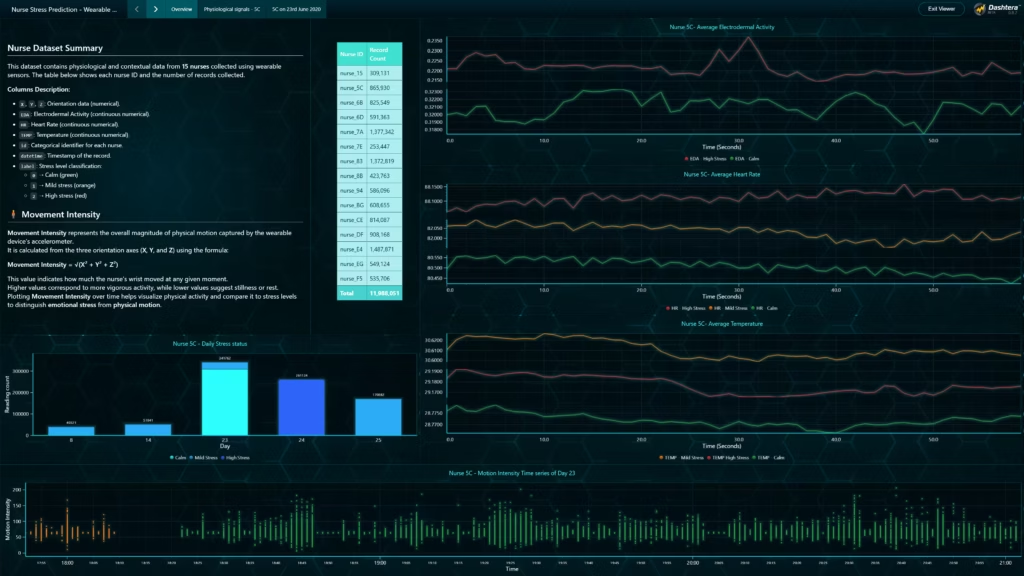
The Overview Page introduces the dataset structure and global trends. A table summarizes record counts per nurse, providing an overview of data completeness and distribution.
A derived metric, Movement Intensity, quantifies physical motion using triaxial accelerometer data:
Movement Intensity = √(X² + Y² + Z²)
This measure reflects the magnitude of motion at each timestamp, enabling differentiation between physical activity and rest. When analyzed alongside stress labels, it supports the identification of emotionally induced stress versus activity-driven physiological variation.
Visualization Components
Collectively, these visualizations provide an initial overview of nurse-specific physiological states and their temporal progression.
Physiological Signals – Nurse 5C
This section focuses on the physiological signal analysis of Nurse 5C, who contributed one of the largest and most continuous datasets in the study, totaling approximately 865,930 records. The analysis centers on identifying temporal trends and correlations among the principal physiological parameters-Electrodermal Activity (EDA), Heart Rate (HR), and Skin Temperature (TEMP)-across multiple observation days.
The data for Nurse 5C were recorded over five distinct days: 14th April 2020, 8th May 2020, 23rd June 2020, 24th June 2020, and 25th June 2020. Each record contains minute-level temporal granularity, allowing for detailed examination of short-term physiological variations throughout the nurse’s work shifts.
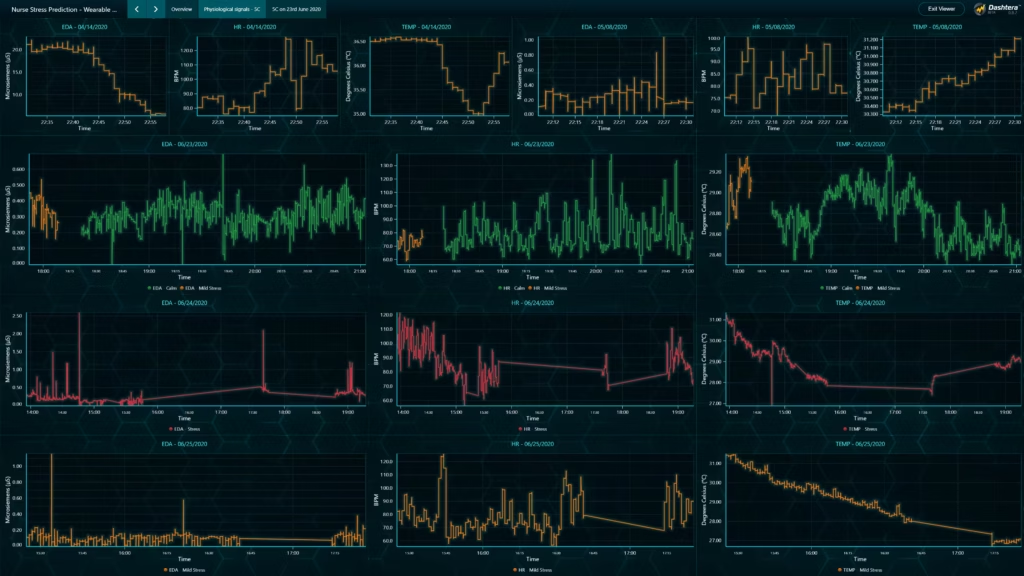
Each parameter is visualized as a continuous signal over time, revealing fluctuations associated with daily work activities and potential stress episodes. This level of granularity allows for temporal segmentation and cross-comparison between physiological markers.
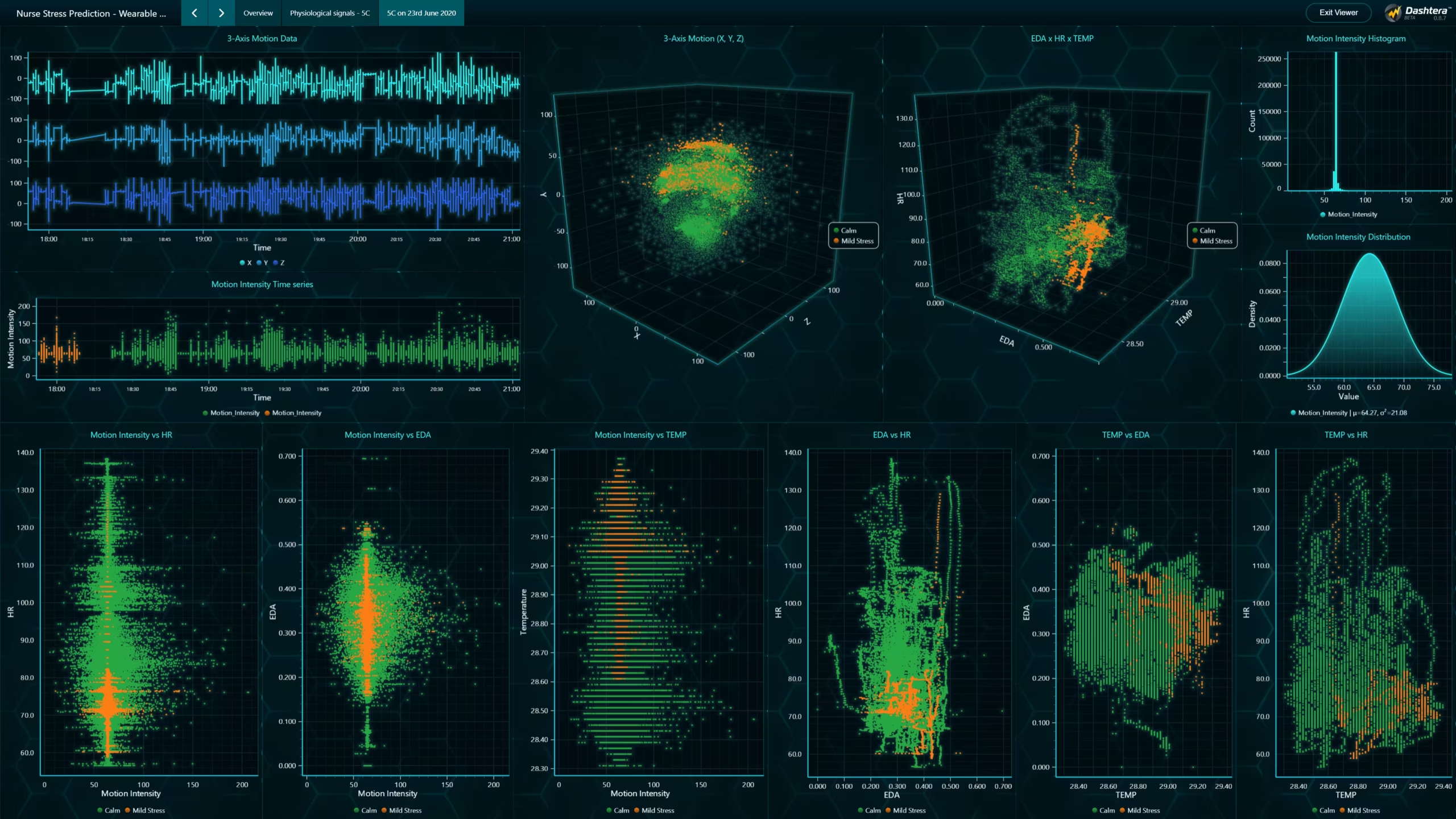
Detailed Analysis – 23rd June 2020 (Nurse 5C)
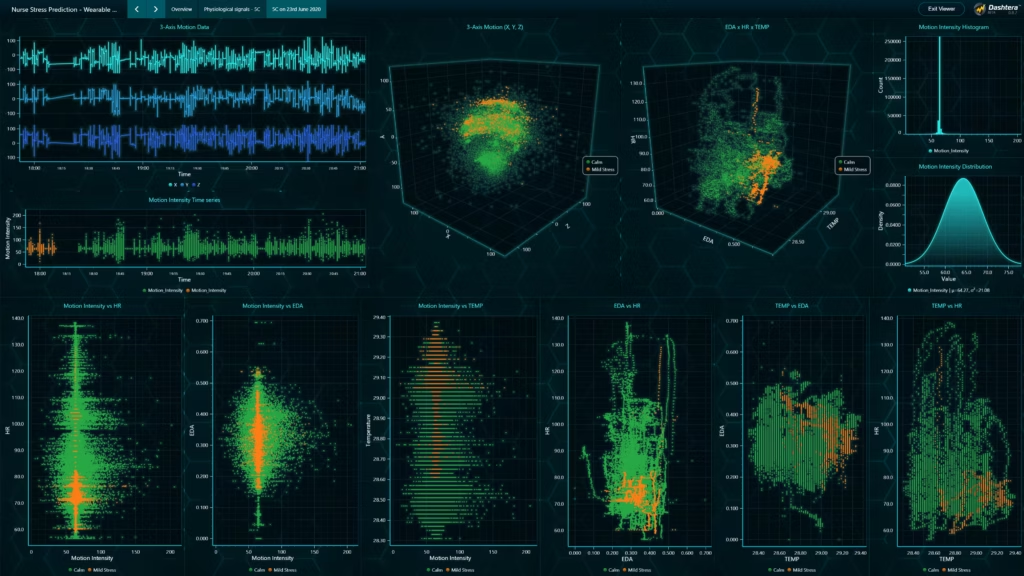
The final dashboard page provides an in-depth examination of 23 June 2020, integrating spatial motion data with physiological variables.
Visual Components
Correlation Analyses
These visual analyses enable identification of co-activation patterns, such as simultaneous peaks in EDA and HR without corresponding motion, indicative of emotional rather than physical stress responses.
The Nurse Stress Prediction Dashboard demonstrates the feasibility of integrating multimodal physiological data into a unified analytical environment using a no-code platform. The analysis highlights several key observations:
These findings align with existing literature on psychophysiological stress detection, supporting the use of EDA and HR as reliable indicators of autonomic arousal.
This study demonstrates the application of Dashtera as a no-code analytical framework for stress prediction and physiological data visualization. By consolidating accelerometer, electrodermal, cardiac, and temperature data into a coherent dashboard structure, the system enables real-time exploratory analysis of occupational stress among nurses.
The approach underscores the value of combining wearable sensor data with interactive visualization tools to support health monitoring and workplace well-being. Future extensions of this work may involve predictive modeling, anomaly detection, and cross-subject pattern generalization using the same data infrastructure.
Share: