The Stress Analysis and Monitoring Dashboard was developed using the Dashtera no-code analytics platform to explore physiological and psychological responses across four experimental conditions: baseline, stress, amusement, and meditation.
The dataset contains measurements from 15 participants, capturing autonomic and cardiovascular dynamics through wearable sensors, along with emotional responses quantified using the PANAS_total score. By transforming raw sensor data and participant feedback into interactive visualizations, the dashboard enables systematic exploration of stress responses and physiological variability.
This supports researchers and analysts in comparing conditions, identifying patterns, and extracting meaningful features related to stress and emotional regulation.
Dataset
This analysis is based on the WESAD (Wearable Stress and Affect Detection) dataset, a controlled laboratory dataset designed to study stress and affective states using multimodal wearable sensing. For each participant, physiological signals were recorded continuously during four sequential conditions-baseline, stress, amusement, and meditation-while emotional responses were captured through the PANAS questionnaire, summarized here as PANAS_total to represent self-reported affective state.
The physiological data include HR, HRV, EDA, TEMP, ACC, RESP, and BVP, collected from wearable chest and wrist devices. Participants ranged from 24 to 55 years of age with variation in BMI and gender distribution. The meditation condition appears twice for each subject, reflecting repeated trials within the experimental protocol. This dataset is well suited for time-series comparison, stress pattern identification, and emotional state monitoring through physiological dynamics.
This study focuses on the following components of the WESAD dataset:
Stress Score: Derived index based on multimodal physiological behavior
The dataset provides a rich combination of slow-varying trends (e.g., TEMP and HRV) and fast-changing signals (e.g., HR, EDA_phasic, ACC), enabling both short-term stress spike
About Dashtera
Dashtera is a cloud-based, no-code analytics platform designed to support the visual exploration and analysis of complex datasets. The platform enables users to construct interactive dashboards without programming, allowing for efficient examination of multidimensional data through line plots, bar charts, maps, regressions, and statistical summaries. Its interface allows data to be filtered, compared, and inspected from multiple perspectives, which makes it suitable for exploratory data analysis tasks.
Key Features
Integration with multiple data sources, including CSV files, APIs, and external repositories.
Support for a wide range of visualization types, such as line charts, bar charts, Pareto charts, and geographic maps.
Interactive drill-down capabilities for detailed examination of specific data segments.
Dynamic filtering that enables focused analysis based on selected criteria.
Built-in options for sharing dashboards to facilitate collaborative research and analysis.
Relevance to This Project
Dashtera was selected for this study due to its ability to rapidly generate interactive, sensor-focused dashboards without additional software development overhead. Its lightweight configuration and visual workflow make it well suited for time-series comparison, motion pattern inspection, and exploratory analysis of multichannel sensor data. Its capability to handle synchronized multichannel data (e.g., HR, HRV, EDA, RESP, and BVP) allowed for straightforward comparison of sensor behaviors over time, while its dynamic filtering and layered visualization options supported condition-based inspection, participant-level tracking, and exploratory pattern discovery.
Dashboard
Subject Information
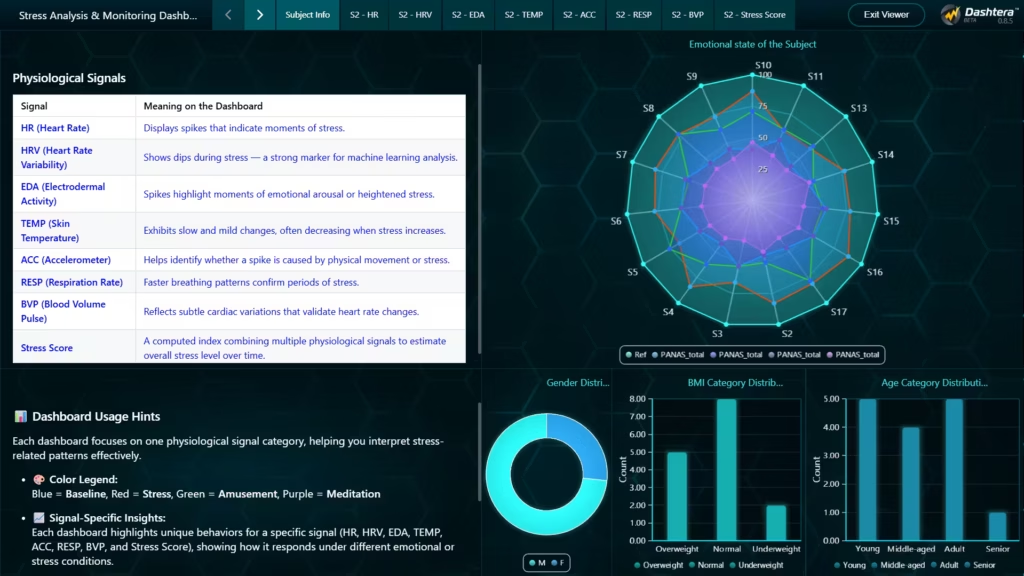
The initial dashboard provides a summary of participant demographics and psychological scores. Key observations include:
Participants span ages 24–55, with BMI categories ranging from underweight to overweight.
Gender distribution is balanced across the cohort.
This overview establishes context for physiological signal interpretation.
The Subject Information dashboard presents an integrated view of demographic and emotional attributes. Spider charts illustrate condition-specific variations in PANAS_total. Age and BMI distributions are visualized with bar charts, while gender distribution is shown with a donut chart.
Key Insights:
Emotional responses vary strongly across conditions: stress shows high PANAS_total meditation shows reduced stress metrics.
Most participants fall into normal-to-overweight BMI categories, providing consistency in physiological interpretation.
Gender representation ensures generalizability across male and female participants.
HR (Heart Rate)
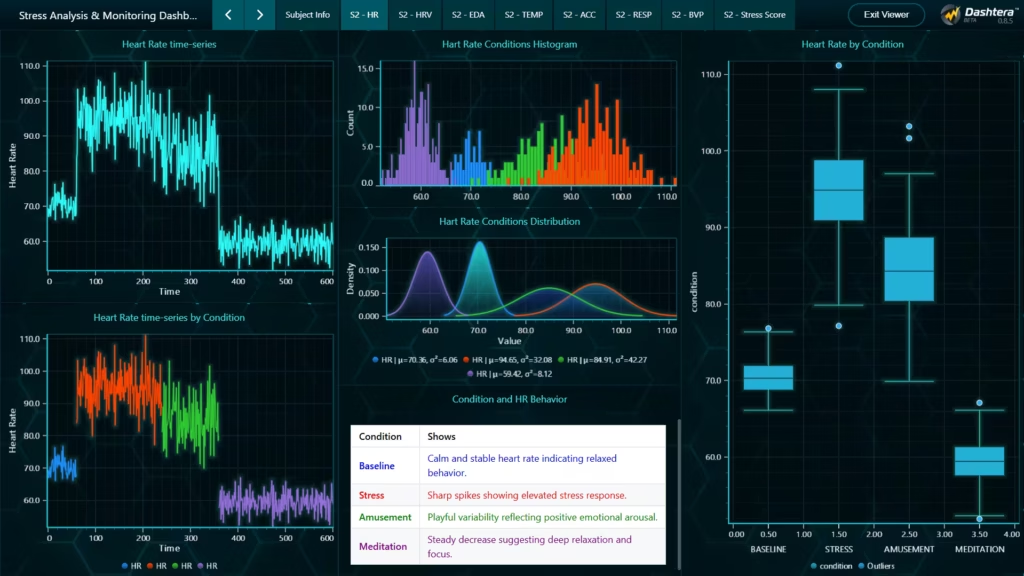
The HR dashboard visualizes participants’ heart rate across conditions using time-series plots, condition-specific line plots, histograms, distributions, and box plots. Time-series charts highlight transient HR spikes, while condition-based line plots aggregate HR trends for each state. Histograms and distributions depict the frequency and range of HR values, and box plots summarize central tendencies and outliers.
Key Insights:
HR spikes are pronounced during stress, reflecting sympathetic arousal.
Baseline and meditation conditions maintain stable HR.
Amusement induces moderate HR elevations due to positive emotional engagement.
Histograms and box plots confirm higher variability during stress.
HRV (Heart Rate Variability)
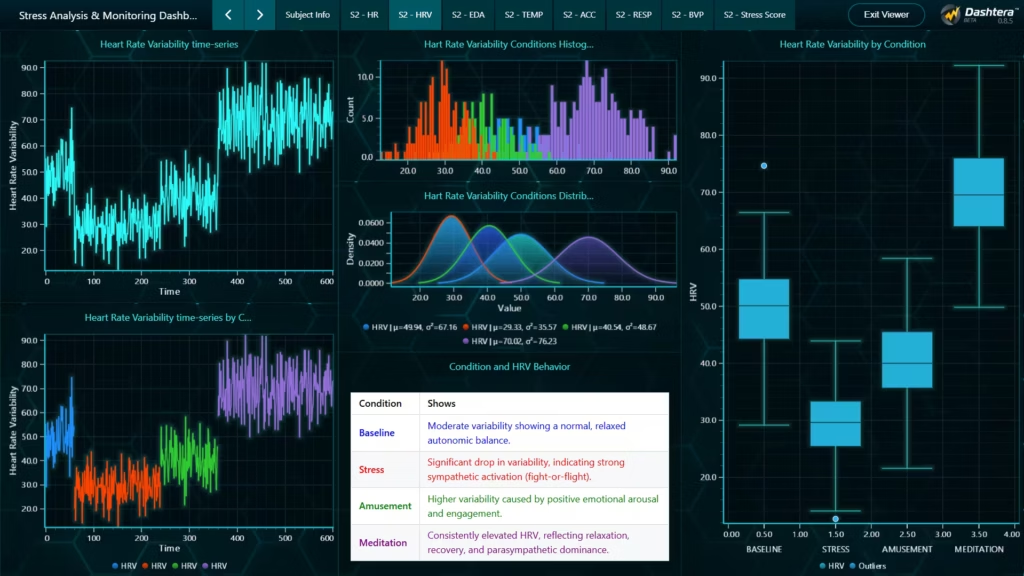
HRV is visualized using the same approach as HR. Time-series plots show fluctuations over time, while condition-specific plots reveal decreases during stress and increases during relaxation or meditation. Histograms, distributions, and box plots illustrate overall variability.
Key Insights:
HRV decreases significantly during stress, confirming reduced parasympathetic activity.
Meditation and baseline show higher HRV, indicating relaxation.
Amusement induces moderate HRV changes.
EDA (Electrodermal Activity)
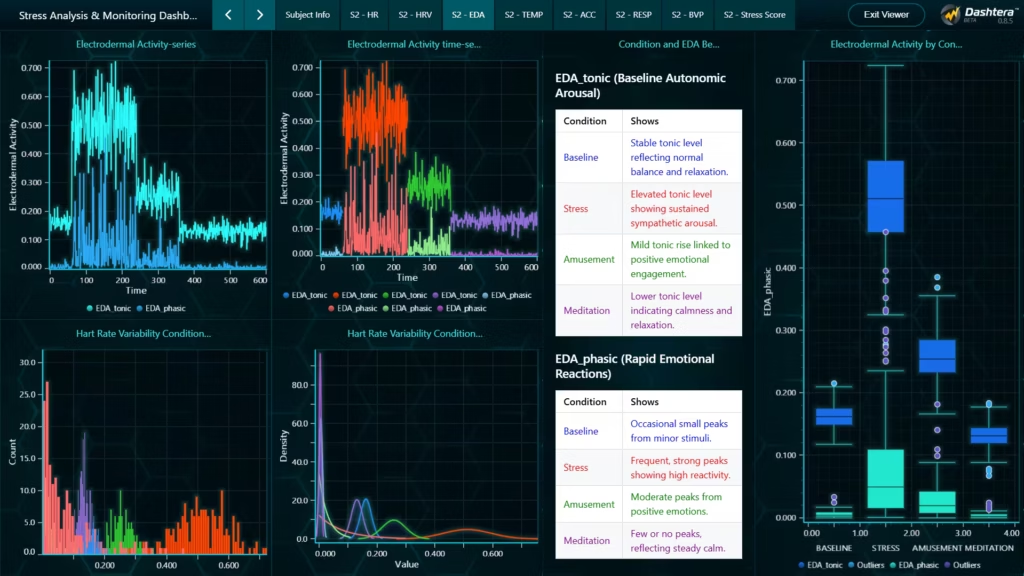
EDA_tonic and EDA_phasic signals are displayed together. Time-series plots track overall arousal (tonic) and rapid emotional responses (phasic) across conditions. Condition-specific line plots highlight trends, and histograms/distributions show amplitude and frequency of peaks. Box plots summarize variability across participants.
Key Insights:
Tonic EDA rises during stress and drops during meditation.
Phasic EDA shows frequent high-amplitude peaks under stress and minimal peaks during meditation.
Amusement produces moderate tonic and phasic responses.
TEMP (Skin Temperature)
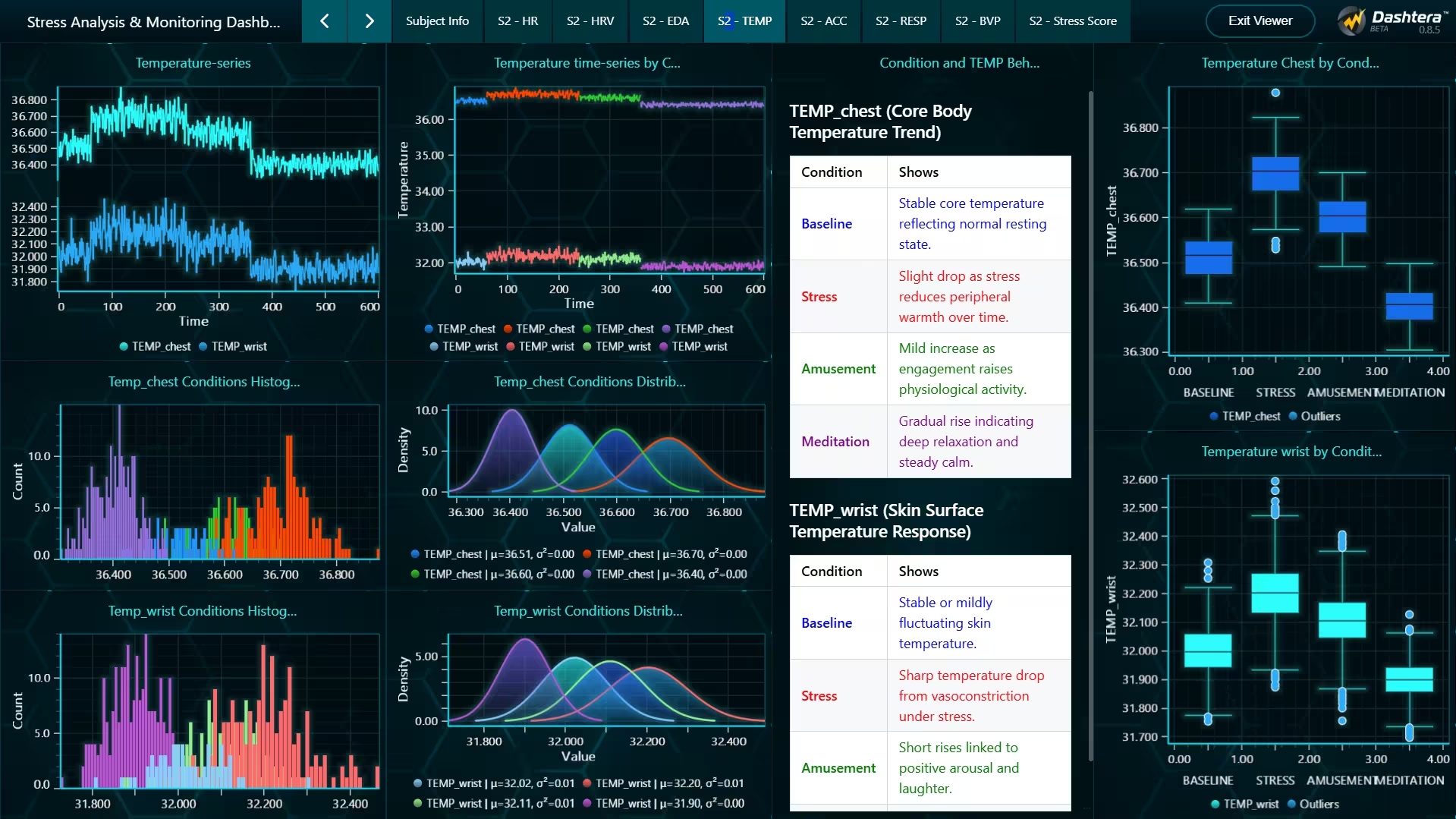
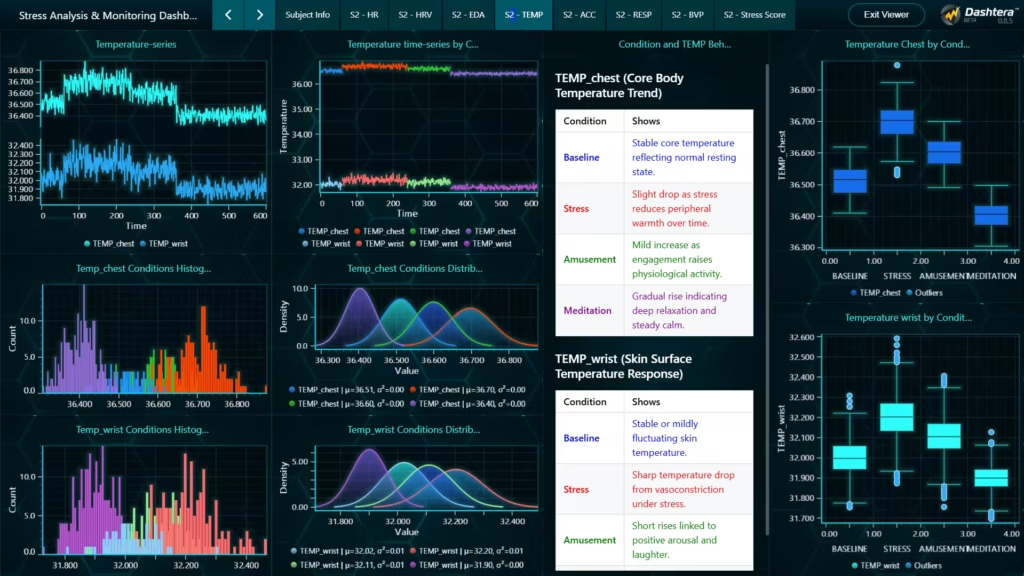
TEMP_chest (core) and TEMP_wrist (surface) are plotted together. Time-series plots display slow temperature changes, while condition-specific charts highlight differences between core and peripheral responses. Histograms and box plots summarize variability and trends across participants.
Key Insights:
Chest temperature remains relatively stable but may slightly drop under stress.
Wrist temperature fluctuates more, reflecting peripheral vasoconstriction during stress.
Meditation and baseline conditions maintain stable temperatures.
ACC (Accelerometer)
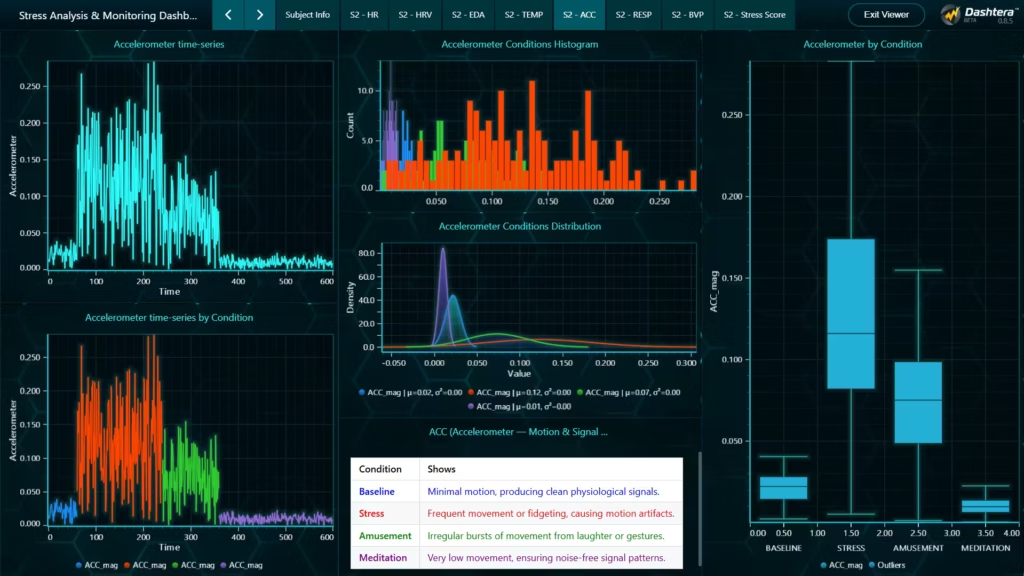
ACC data visualizes participants’ movement. Time-series plots show linear acceleration along three axes, with condition-specific charts highlighting motion patterns. Histograms and box plots summarize amplitude and variability.
Key Insights:
Movement is minimal during baseline and meditation.
Stress and amusement induce more frequent motion, observable in ACC spikes.
ACC helps differentiate physiological spikes caused by stress versus physical activity.
RESP (Respiration Rate)
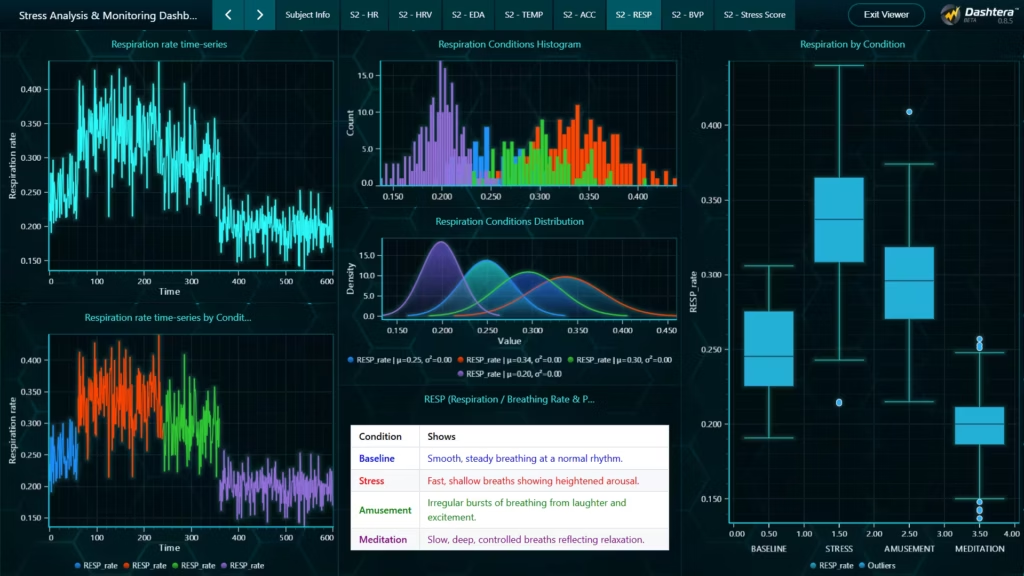
Respiration rate is shown via time-series and condition-specific plots, with histograms, distributions, and box plots summarizing changes. The data highlights changes in breathing patterns across emotional states.
Key Insights:
Respiration accelerates under stress and amusement.
Baseline and meditation show slower, steady breathing.
Variability in RESP aligns with HR and EDA patterns.
BVP (Blood Volume Pulse)
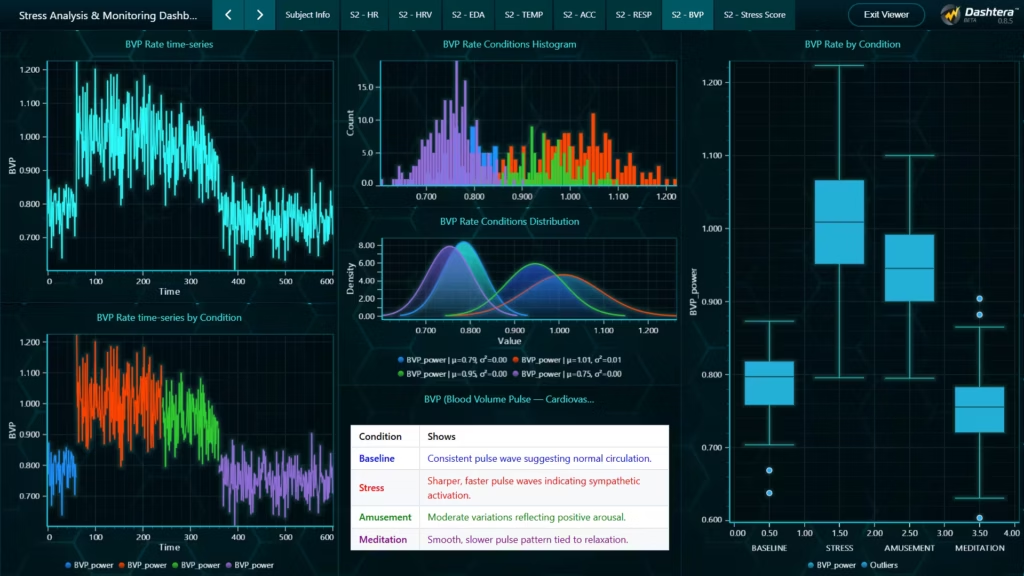
BVP time-series plots visualize micro-cardiac variations. Condition-specific plots, histograms, and box plots show differences in cardiac behavior across states.
Key Insights:
Stress increases BVP amplitude variability.
Meditation and baseline conditions demonstrate stable BVP patterns.
BVP corroborates HR changes and physiological arousal levels.
Stress Score
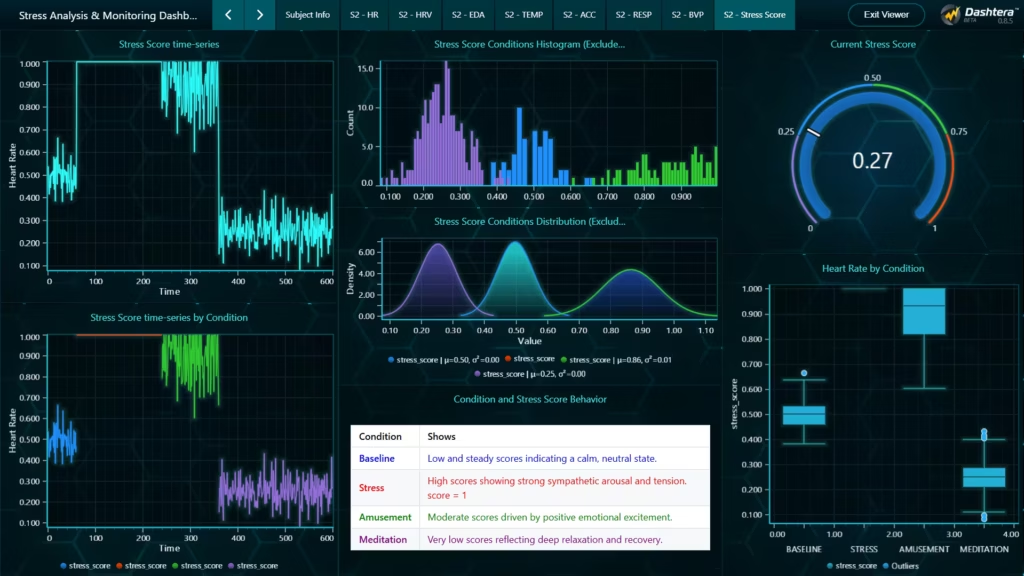
Stress scores are presented using time-series plots, condition-specific line plots, histograms, distributions, box plots, and an additional gauge meter representing real-time stress intensity. This provides a combined view of physiological and subjective stress responses.
Key Insights:
Stress scores peak during stress conditions and are lowest during meditation.
Baseline shows moderate, stable stress values.
Gauge meters allow quick identification of participants experiencing high stress.
The dashboards collectively demonstrate the dataset’s utility for stress and emotional state monitoring. Each physiological modality contributes unique information:
HR and HRV capture cardiac autonomic balance.
EDA differentiates sustained and phasic sympathetic responses.
TEMP reflects slow systemic and local changes.
ACC ensures motion-related confounds are accounted for.
RESP and BVP complement cardiac and sympathetic measures.
The Stress Score synthesizes multimodal inputs into a single metric for intuitive interpretation.
This multimodal approach allows detailed examination of both inter-subject and intra-subject variability across experimental conditions.
Conclusion
The Stress Analysis & Monitoring Dashboard demonstrates the effectiveness of Dashtera for interactive, no-code exploration of complex physiological datasets. By combining time-series, distributions, and composite metrics:
Researchers can evaluate condition-dependent autonomic and emotional responses.
Clinicians can rapidly identify stress peaks and relaxation responses.
Data scientists can integrate multimodal signals for feature extraction and predictive modeling.
Dashtera enables rapid visualization, interactive analysis, and data-driven insights, supporting both research and applied stress monitoring applications.