
Autism Spectrum Disorder Analysis Dashboard

Autism-spectrum-disorder-analysis-dashboard-demographic

On this page

Introduction

The Autism Spectrum Disorder (ASD) Analysis Dashboard with Dashtera is an advanced analytical solution designed to explore the relationships between behavioral traits, demographic factors, and autism screening results in adults. Dashtera serves as the backbone of this analysis, leveraging interactive visualizations to transform raw ASD screening data into actionable insights. 

With its user-friendly interface, Dashtera enables healthcare professionals, researchers, and data scientists to: 

  • Visualize demographic and regional ASD screening patterns.
  • Identify key behavioral and medical risk factors.
  • Support predictive modeling and decision-making for autism screening. 

This article demonstrates how Dashtera uses the Autistic Spectrum Disorder Screening Data for Adults to create factor-specific dashboards, uncovering meaningful connections between behavioral features, demographics, and ASD outcomes. 

Dataset

The dashboards are based on the Autistic Spectrum Disorder Screening Data for Adults, originally curated by Fadi Fayez Thabtah at the Manukau Institute of Technology, New Zealand. 

The dataset combines behavioral screening scores (AQ-10 questionnaire) with demographic and individual characteristics to help classify adults as likely ASD-positive or ASD-negative. 

  • Total Records: 704 individuals 
  • Attributes: 21 features (10 behavioral + 10 demographics + 1 class variable) 
  • Target Variable: ASD screening result (YES = Likely ASD, NO = Not likely ASD) 
  • Contains Missing Values: Yes (e.g., ethnicity, relation fields) 

Key Variables

Variable Description
A1–A10 Scores
Ten binary behavioral traits from the AQ-10 screening test
age
Age of the individual (numeric, ≥18)
gender
Male or Female
ethnicity
Ethnic background (multiple categories)
jundice
Whether the individual had neonatal jaundice
austim
Family history of autism
contry_of_res
Country of residence
used_app_before
Whether the individual previously used the ASD app
relation
Who filled in the test (Self, Parent, Healthcare Professional, Relative, Others)
result
Screening score (0–10, sum of A1–A10)
Class/ASD
Target outcome (YES = ASD-positive, NO = ASD-negative)

About Dashtera

What is Dashtera? 

Dashtera is a cloud-based, no-code dashboard platform that allows users to connect data sources and create interactive dashboards without programming. It empowers both beginners and advanced users to transform medical and behavioral datasets into insightful dashboards. 

Key Features 

  • Connects to various data sources (CSV, Excel, APIs, etc.) 
  • Wide range of chart types, including advanced statistical visuals 
  • Interactive drill-downs and dynamic filters 
  • Shareable dashboards with flexible layouts 
  • Supports calculated fields and transformations 
  • User-friendly drag-and-drop interface 

Advantages Over Similar Tools 

  • Extremely easy to use—minimal technical expertise required 
  • Rapid dashboard creation and deployment 
  • Suitable for both beginners and advanced users 
  • Lightweight yet powerful compared to Tableau or Power BI 

Dashboard

Demographic Analysis 

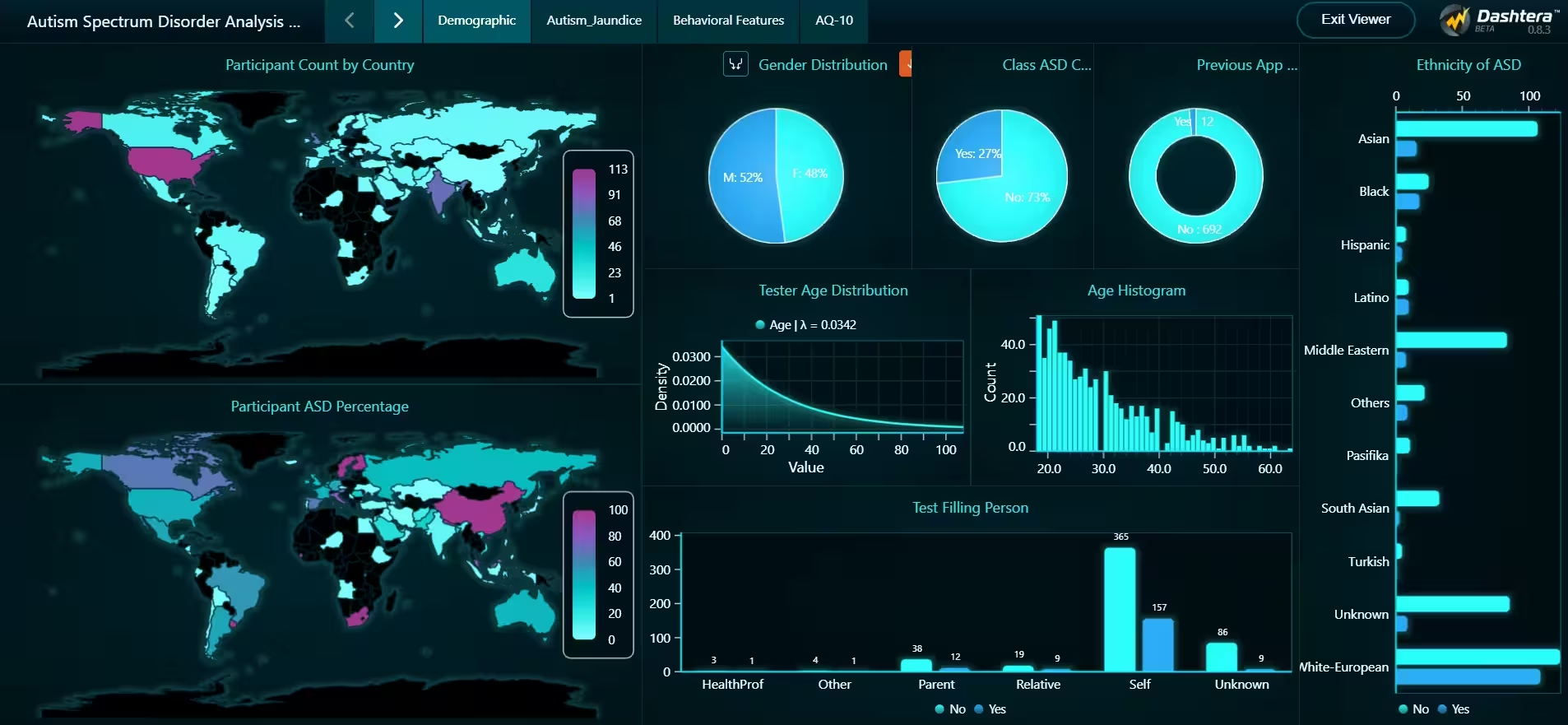
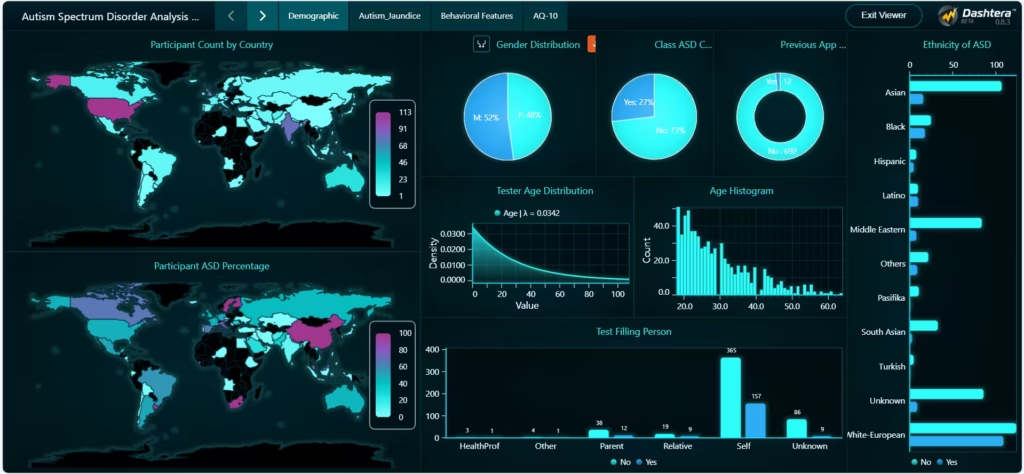
The Demographic Analysis Dashboard focuses on understanding participant distribution, demographics, and general ASD prevalence. 
Charts Included 

  • Participant Count by Country (Map chart) 
  • ASD Percentage by Country (Map chart) 
  • Gender Distribution (Pie chart) → Male: 52%, Female: 48% 
  • ASD Class Distribution (Pie chart) → Yes: 27%, No: 73% 
  • Previous App Usage (Pie chart) → Only 12 of 704 participants had used the app before 
  • Ethnicity of ASD (Bar chart) 
  • Relation vs Class (Bar chart) 

Insights 

  • Most participants are from Western countries, but representation spans over 50 nations. 
  • Only 27% screened positive for ASD, while the majority (73%) screened negative. 
  • The gender split is nearly even, reflecting balanced participation. 
  • The relation factor shows that self-report dominates: 
    • Self-reported: 522 participants (365 No, 157 Yes). 
    • Parents, relatives, and healthcare professionals contribute smaller counts. 
  • Missing/unknown relations appear in 95 cases, mostly with negative ASD classification. 

Risk Factors Analysis

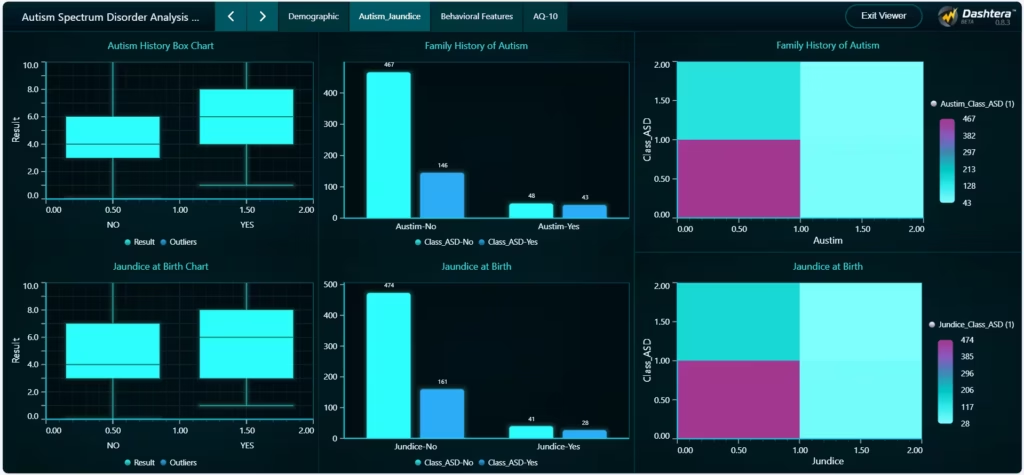
The Risk Factors Dashboard investigates medical and family-related risk factors, such as autism history and neonatal jaundice. 
Autism-spectrum-disorder-analysis-dashboard-factors

Charts Included 

  • Autism Family History (Box Plot, Bar chart, Heatmap) 
  • Jaundice at Birth (Box plot, Bar chart, Heatmap) 

Insights 

  • Family history of autism shows a significant correlation with positive ASD outcomes, confirming its role as a strong predictive factor. 
  • Jaundice at birth displays weaker but noticeable differences in ASD prevalence. Participants with jaundice have slightly higher ASD screening positivity compared to those without. 
  • Heatmaps make it easy to see clusters of high-risk categories when combining family history and jaundice with other factors. 

Behavioral Features Analysis

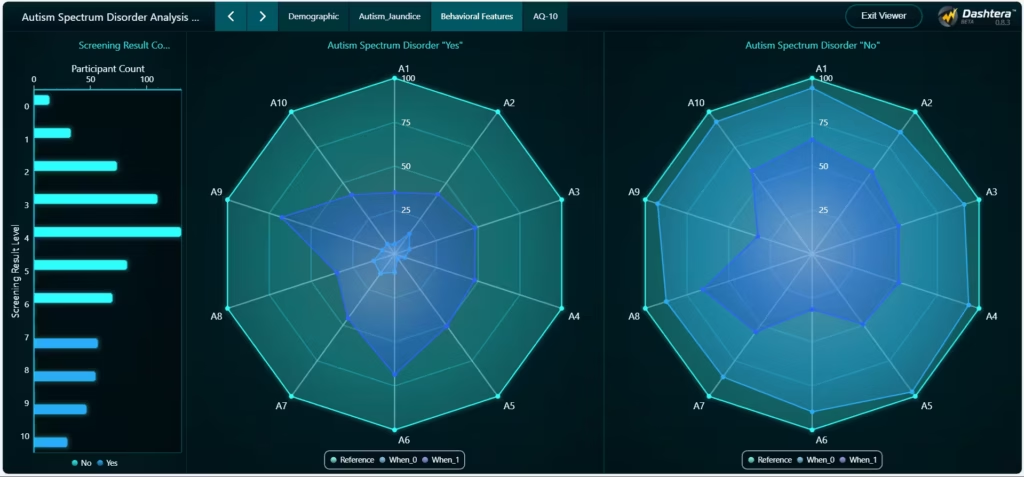
The Behavioral Features Dashboard focuses on the AQ-10 screening results, which are the strongest indicators of ASD. 
Autism-spectrum-disorder-analysis-dashboard-behavioral-features

Charts Included 

  • Screening Result vs Class (Bar chart) 
  • ASD “Yes” Spider Chart (AQ-10 item analysis) 
  • ASD “No” Spider Chart (AQ-10 item analysis) 

Insights 

  • Screening Score Trends: 
    • Scores 0–6 are mostly classified as NO (negative). 
    • Scores 7–10 strongly align with YES (positive). 
    • Threshold of ≥7 appears to be the cutoff for likely ASD. 
  • Spider Chart (YES group): 
    • High agreement on A6, A9 (above 65%), showing strong autistic trait indicators. 
    • Traits like A5 and A8 have moderate agreement but still contribute. 
  • Spider Chart (NO group): 
    • Opposite trends—participants mostly answered “0” (no autistic trait) across AQ-10 items. 
    • For example, A1, A3, and A4 show over 90% “0” responses, indicating typical behavioral patterns. 

Autism-Spectrum Quotient

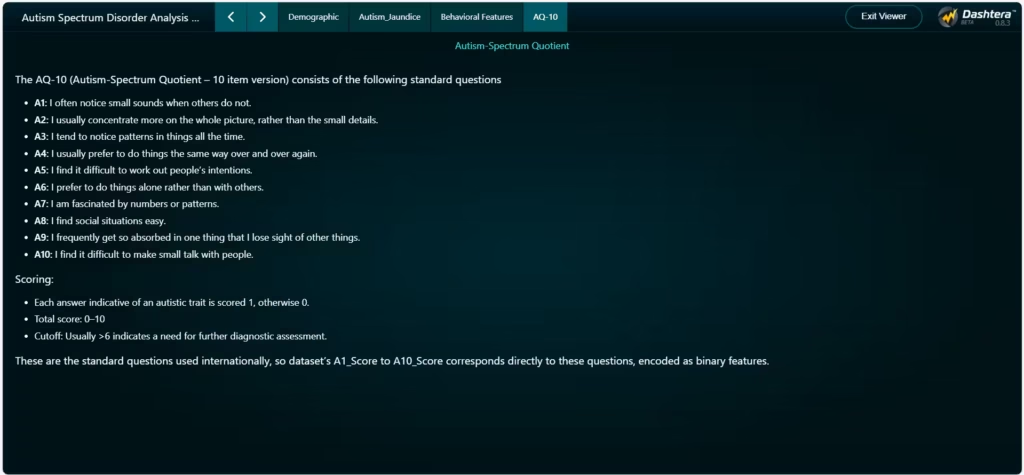
The AQ-10 (Autism-Spectrum Quotient – 10 item version) consists of the following standard questions.
Autism-spectrum-disorder-analysis-dashboard-quotient

These are designed to quickly screen for autistic traits in adults: 

AQ-10 Item Question (paraphrased for clarity)
A1
I often notice small sounds when others do not.
A2
I usually concentrate more on the whole picture, rather than on the small details.
A3
I tend to notice patterns in things all the time.
A4
I usually prefer to do things the same way over and over again.
A5
I find it difficult to work out people’s intentions.
A6
I prefer to do things alone rather than with others.
A7
I am fascinated by numbers or patterns.
A8
I find social situations easy.
A9
I frequently get so absorbed in one thing that I lose sight of other things.
A10
I find it difficult to make small talk with people.

Scoring: 

  • Each answer indicative of an autistic trait is scored 1, otherwise 0. 
  • Total score: 0–10 
  • Cutoff: Usually >6 indicates a need for further diagnostic assessment. 

These are the standard questions used internationally, so your dataset’s A1_Score to A10_Score corresponds directly to these questions, encoded as binary features. 

Conclusion

The Autism Spectrum Disorder Analysis Dashboard with Dashtera bridges behavioral data analytics and medical screening, offering actionable insights into ASD prevalence and risk factors. It transforms the ASD screening dataset into an interactive tool that helps: 

  • Healthcare professionals identify high-risk adults for referral.
  • Researchers uncover correlations between behavioral traits and medical/demographic factors.
  • Data scientists build predictive models for ASD screening and diagnosis. 

By integrating demographic, risk factors, and behavioral dashboards with summary views, Dashtera empowers data-driven decision-making in autism screening research and healthcare. 

Share:

Read More

Want to see your data come to life?

Begin building your dashboards now, and unleash your creativity!

Dashtera-logo-for-dark
Privacy Overview

This website uses cookies so that we can provide you with the best user experience possible. Cookie information is stored in your browser and performs functions such as recognising you when you return to our website and helping our team to understand which sections of the website you find most interesting and useful.